Why It Happens Here
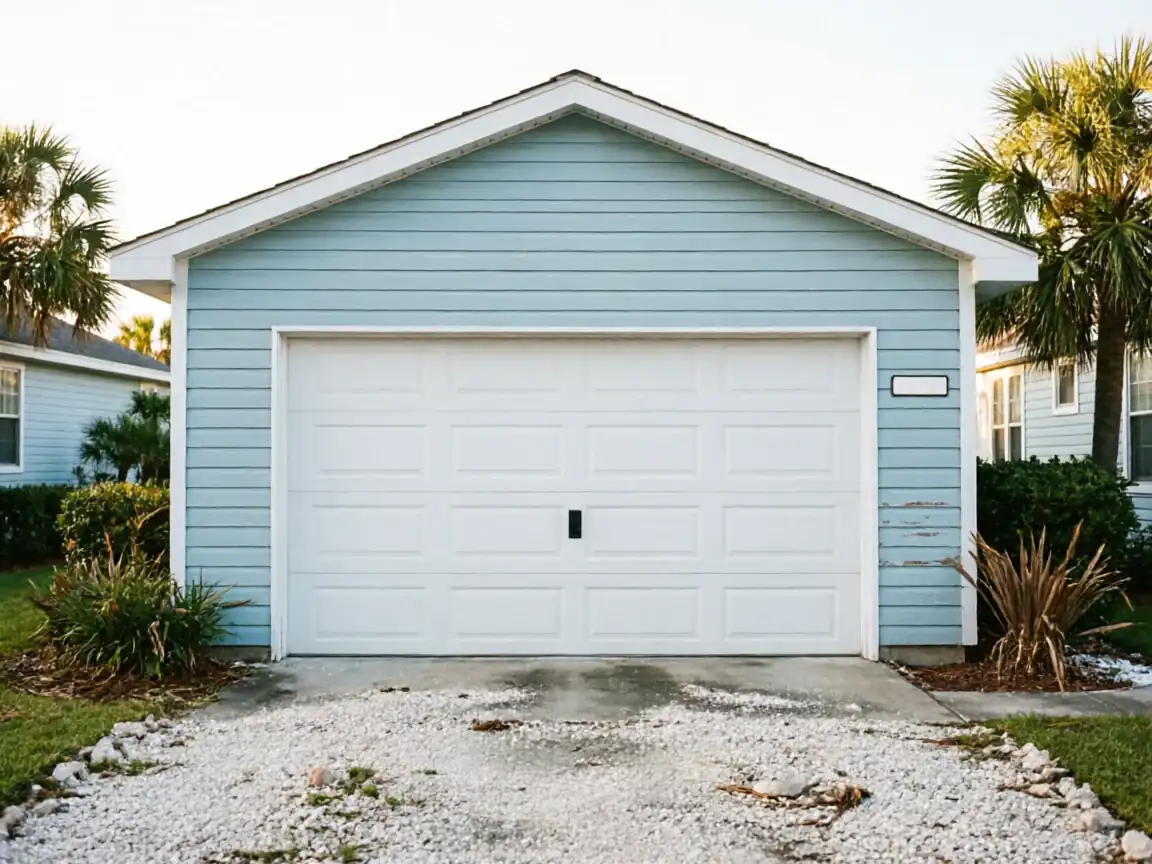
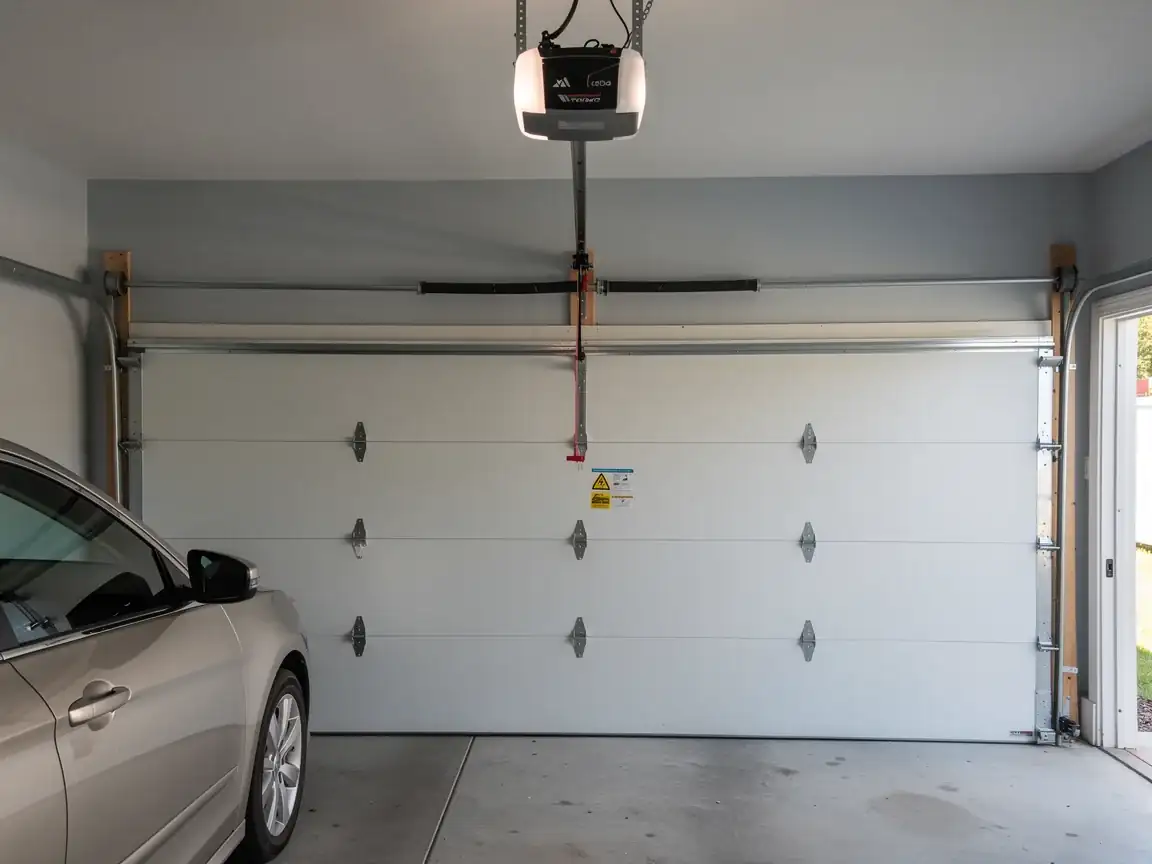
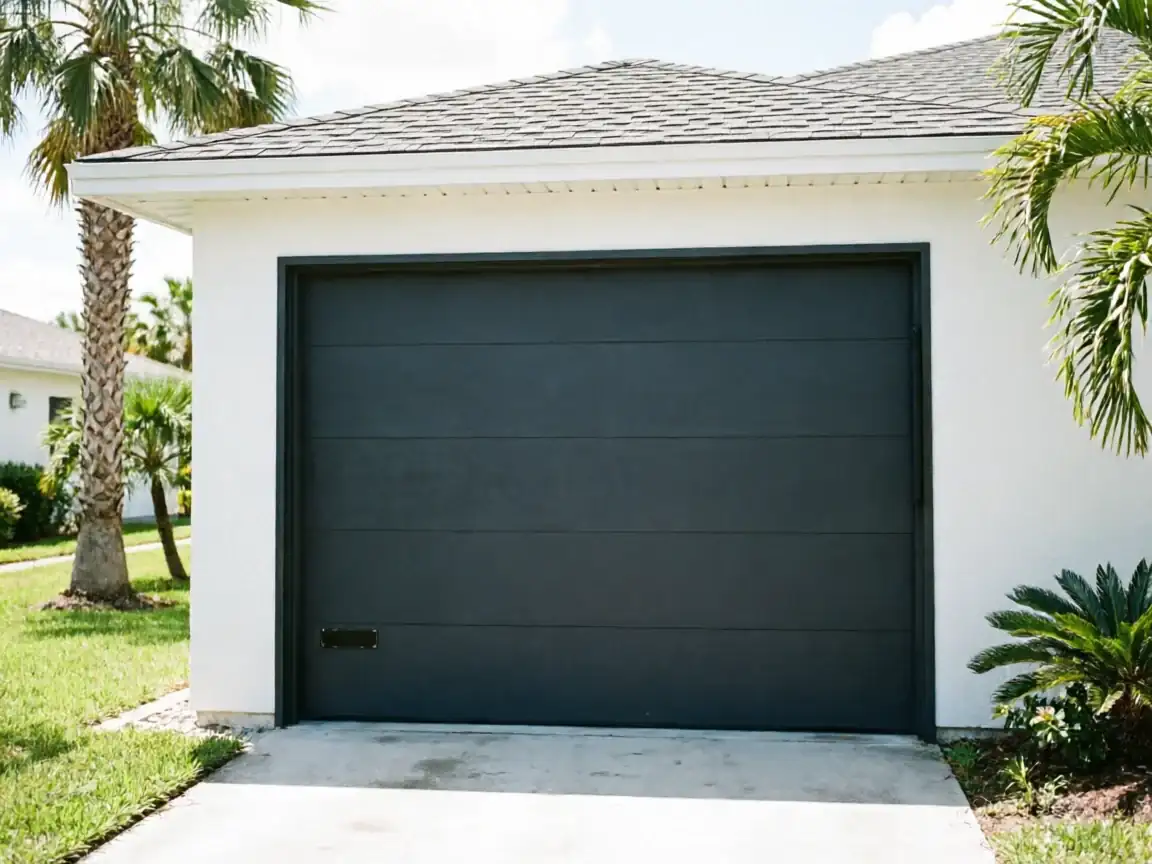
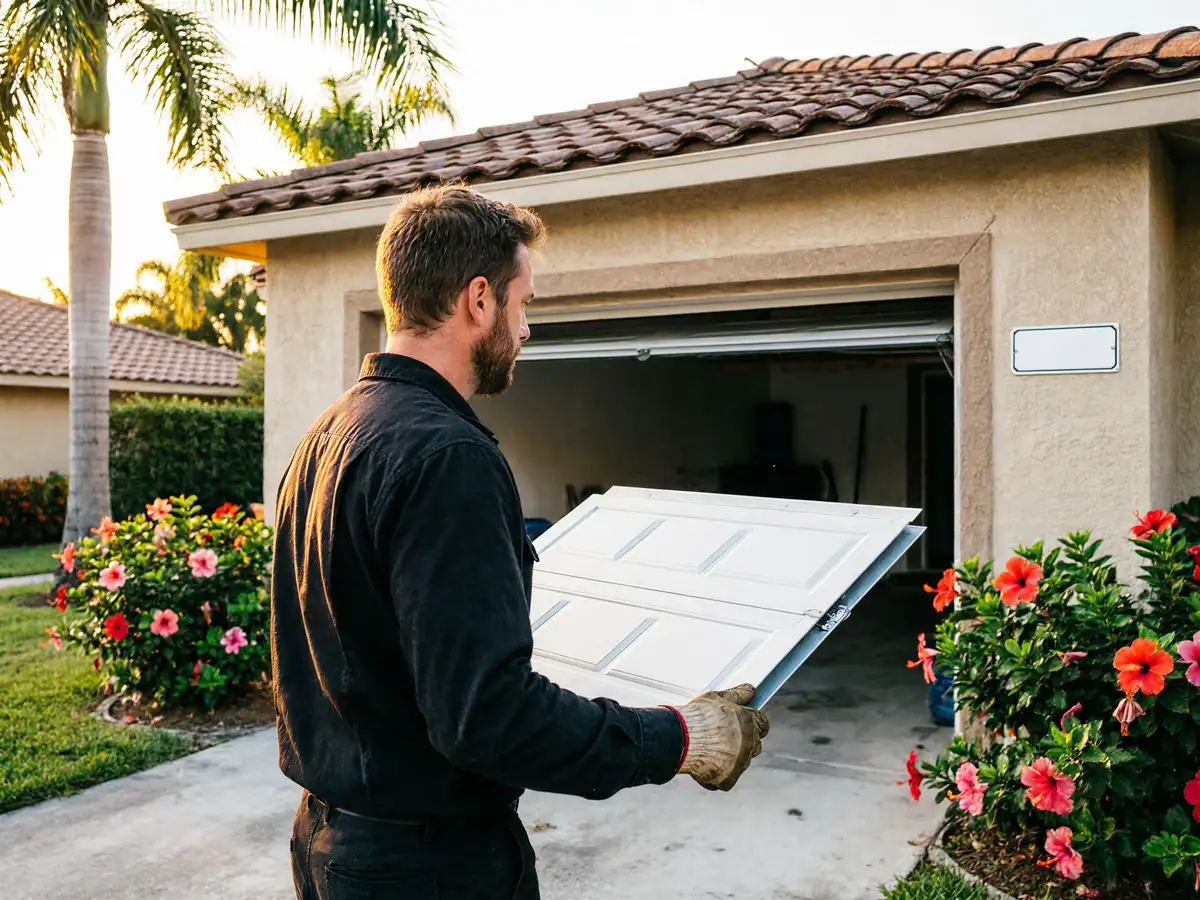
Trinity is one of the newer corners of the area this company covers. Most houses here went up around 2005, nearly a quarter-century newer than the typical home across the rest of the service area, where the median build year sits closer to 1979. That matters for rollers because a 2005-era garage almost always came with a factory steel door on a standard torsion system, usually a double-wide opening for a two-car garage, with stamped galvanized steel rollers riding in a 2-inch radius track rather than the older nylon-on-stem hardware you'd find on a house from the 1970s.
Steel rollers like that are built to last, but they're not built to last forever. Eighteen to twenty years of daily cycling wears the roller stem and flattens the wheel surface, and the sound changes before the door ever fails outright. Because Trinity's housing stock clustered around one build era, a lot of these doors are hitting that wear point at close to the same time, which is less about bad luck and more about every garage here being roughly the same age.
Getting It Booked In
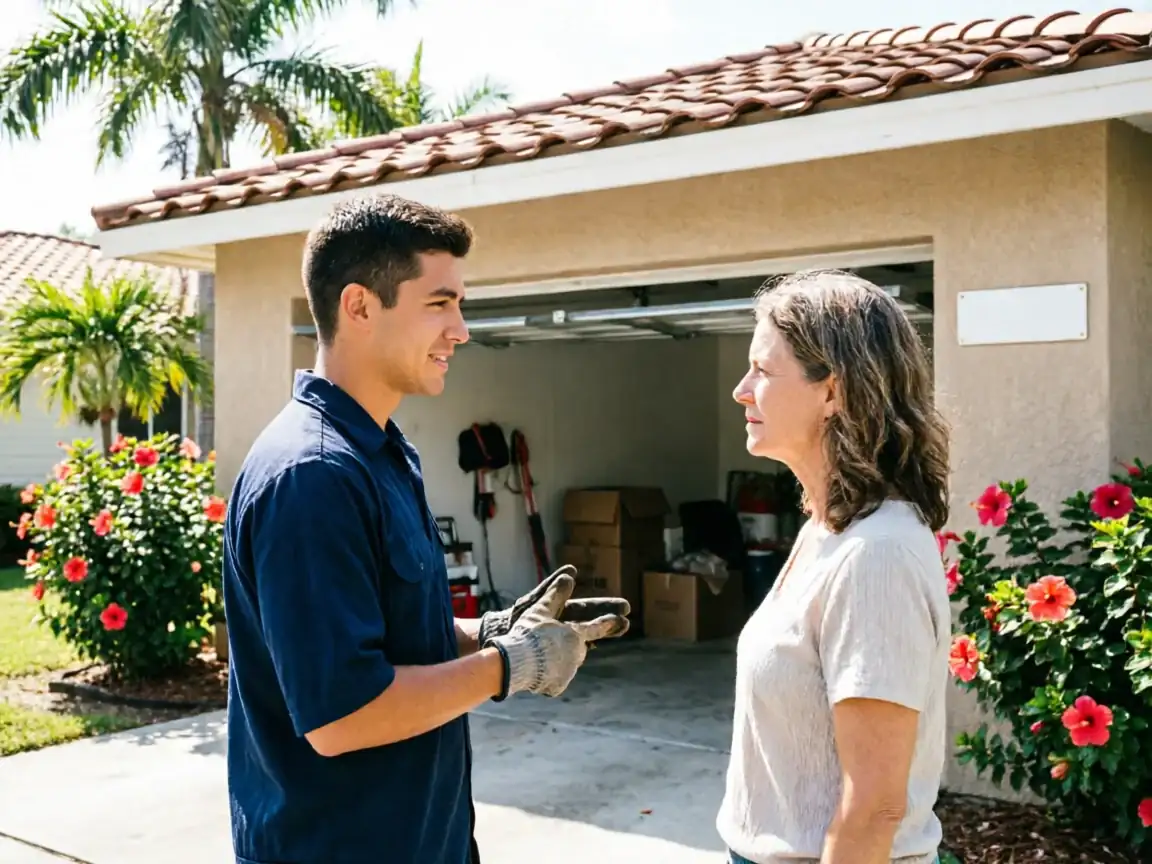
Trinity sits about 15 miles from Dunedin, which puts it at the outer edge of where the crew drives for a job. There's no branch or depot out here - every truck comes from Dunedin, so a roller job in Trinity gets scheduled on the route rather than treated as a drop-in call. That's not a knock on the work, just the honest layout of how the company covers this stretch of the service area.
Booking is straightforward: describe what the door is doing - grinding, catching, dropping unevenly on one side - and whether it's a single roller or the whole set that sounds rough. A set of worn rollers on a 2005-built door is one of the more predictable jobs the crew handles, since the hardware across most houses out here is the same generation and the parts fit is rarely a surprise.
The Cost of This Job
Roller replacement on a Trinity garage usually means swapping the full set rather than one or two
Since rollers from the same install date wear at close to the same rate - if one's bad, the rest aren't far behind. The job is priced by roller count and material (nylon versus steel) rather than by the house or the town, so the number doesn't move just because the address is Trinity instead of somewhere closer to Dunedin.
What can push the price around is whether the track itself is bent or worn from years of rollers dragging against it
Which sometimes shows up only once the old hardware is out. That's not something a phone call can price accurately - it gets confirmed on site.
What Can Go Wrong
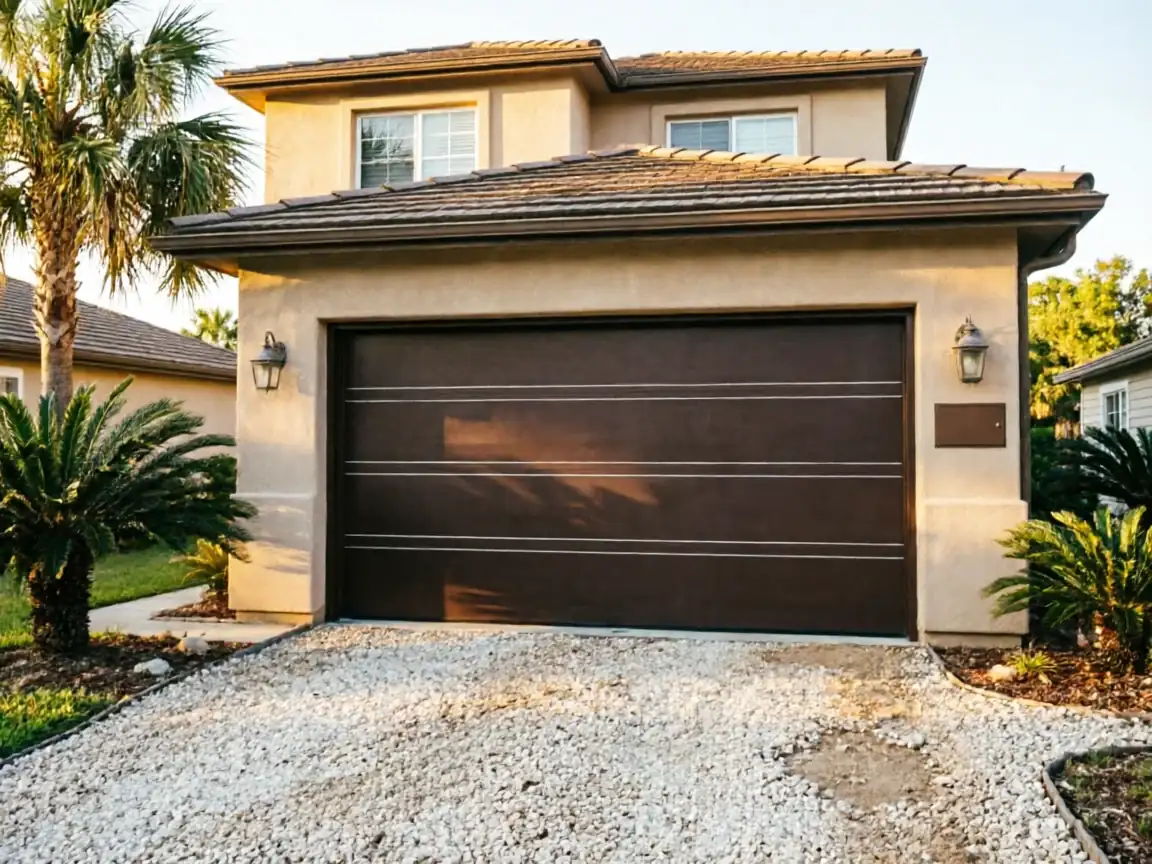
The most common issue on a door this age isn't the roller failing outright, it's the roller wearing unevenly and pulling the door off-square in the track. On a wider two-car door, which is the standard size out here, that uneven pull puts extra load on the opener and on the end hinges, since the door is heavier and the track span is longer than on a single-car opening. Left alone, a bad roller on one side will eventually bend the track rail, turning a parts swap into a track replacement.
The honest limitation here: once a track is bent, rollers alone won't fix the symptom, and pushing ahead with just a roller swap on a damaged track means it fails again within months. That's worth saying up front rather than letting a customer pay twice.
The Symptom
A worn roller usually announces itself before it fails completely. The door starts to grind or squeal partway through its travel, not at the very top or bottom but somewhere in the middle of the track where the wheel surface has flattened. On a house built around 2005 with steel rollers original to the install, that grinding sound at roughly the 15-to-20-year mark is less a warning sign and more an expected milestone.
Sometimes it shows as a visible wobble instead of a sound - the door looks like it's walking side to side as it travels, which is the track doing extra work to keep a flat-sided roller moving straight. Either symptom on a door this age, in a neighborhood where most garages share the same build year, points to the same cause.
What the Repair Takes
The mild coastal climate here means rollers fail from use and mileage
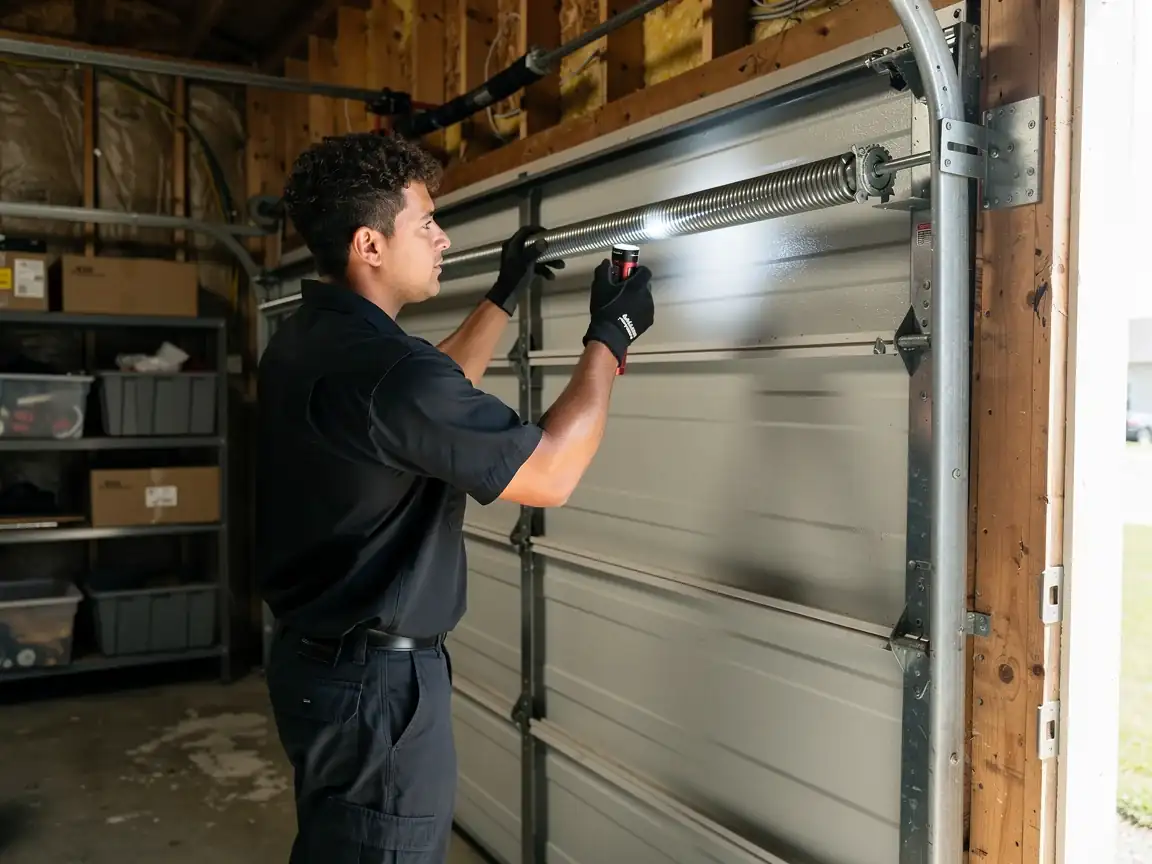
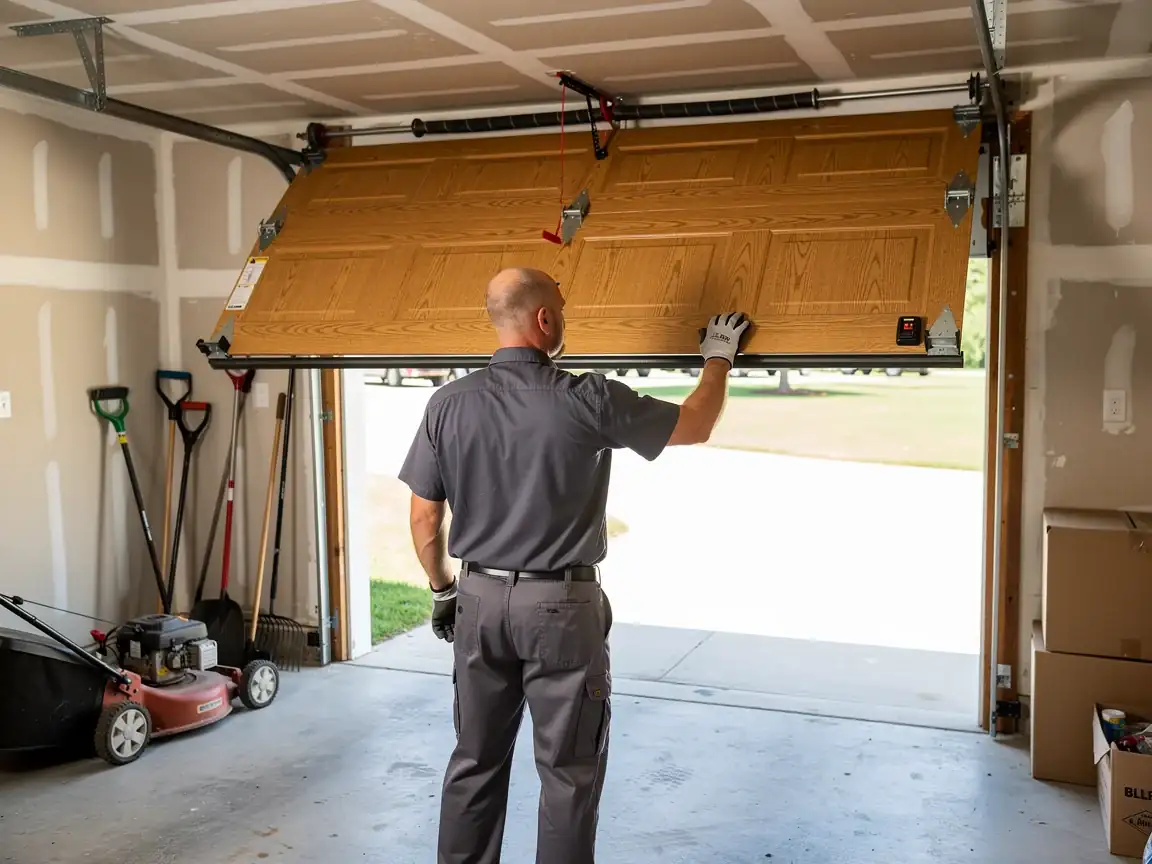
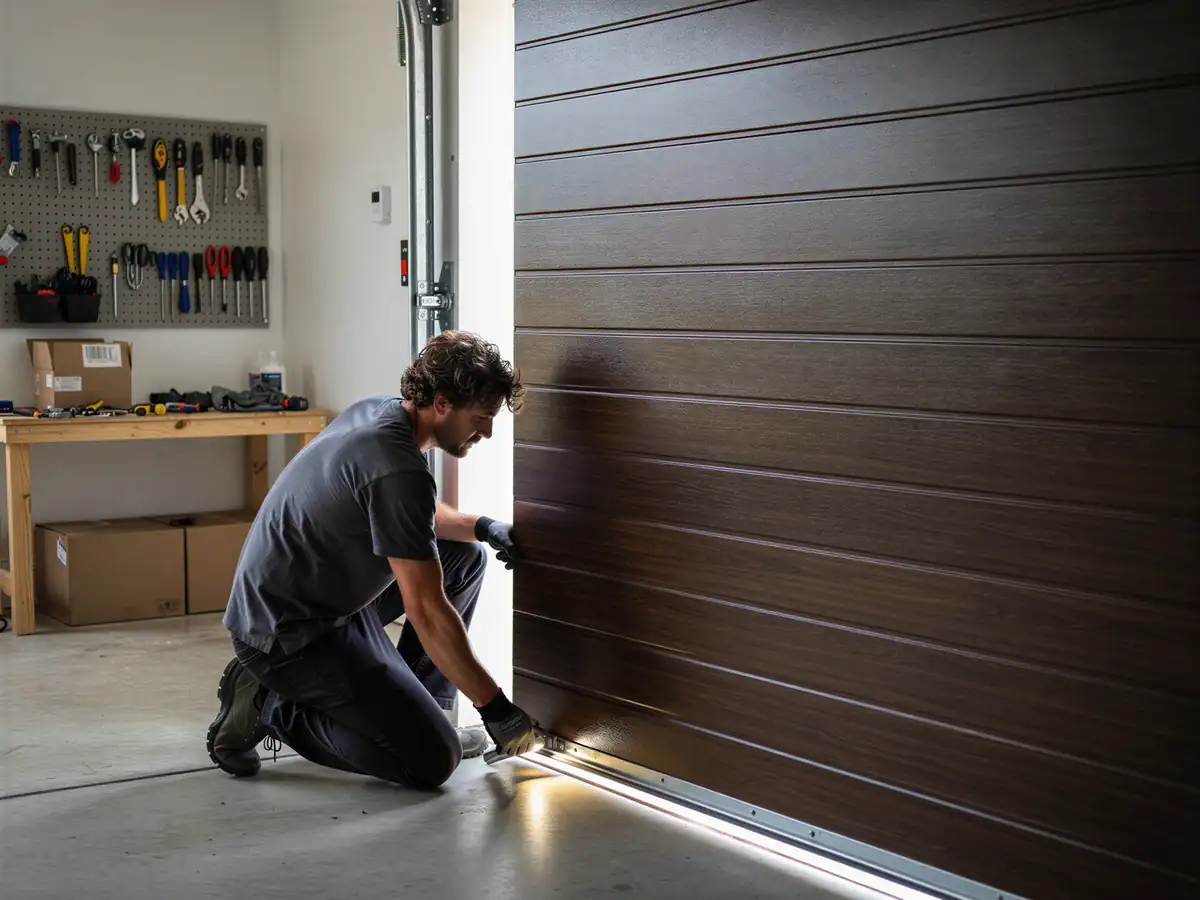
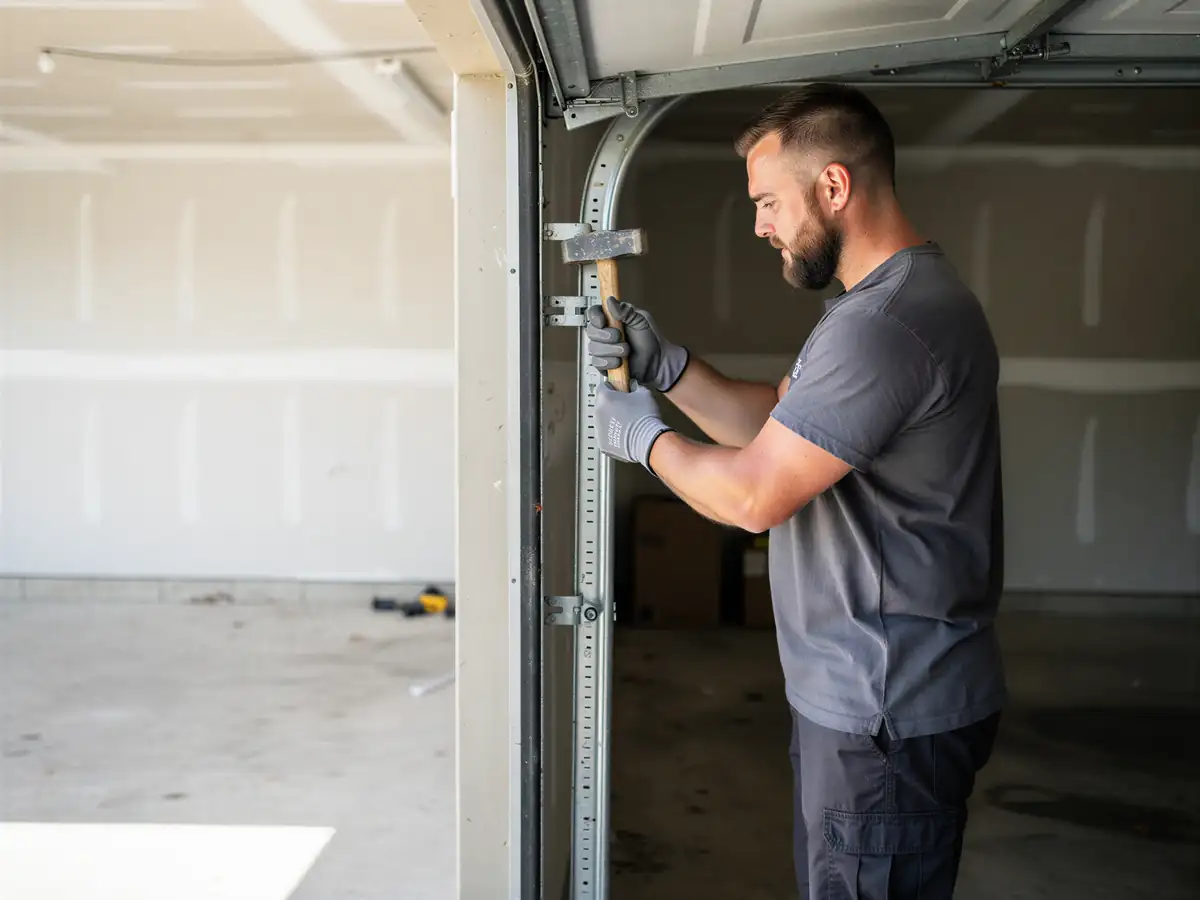
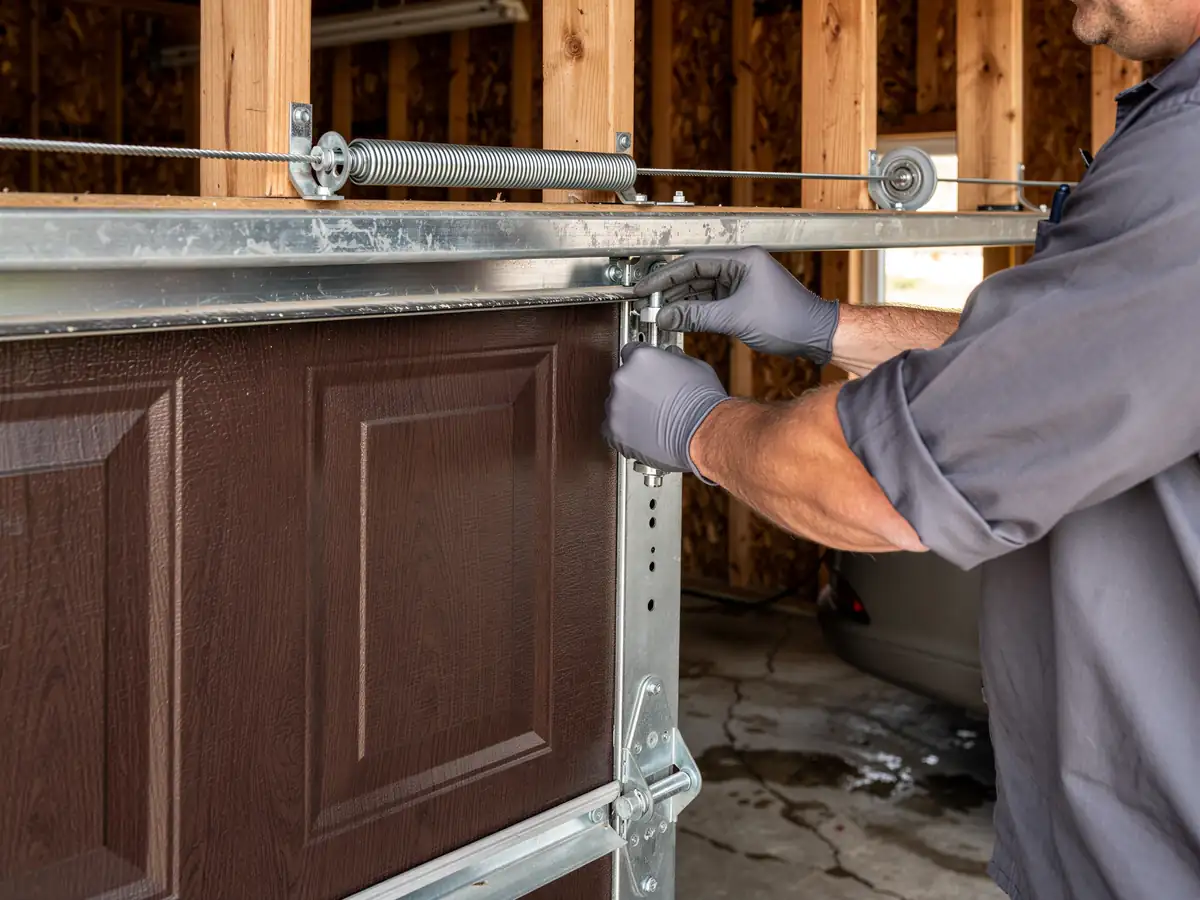
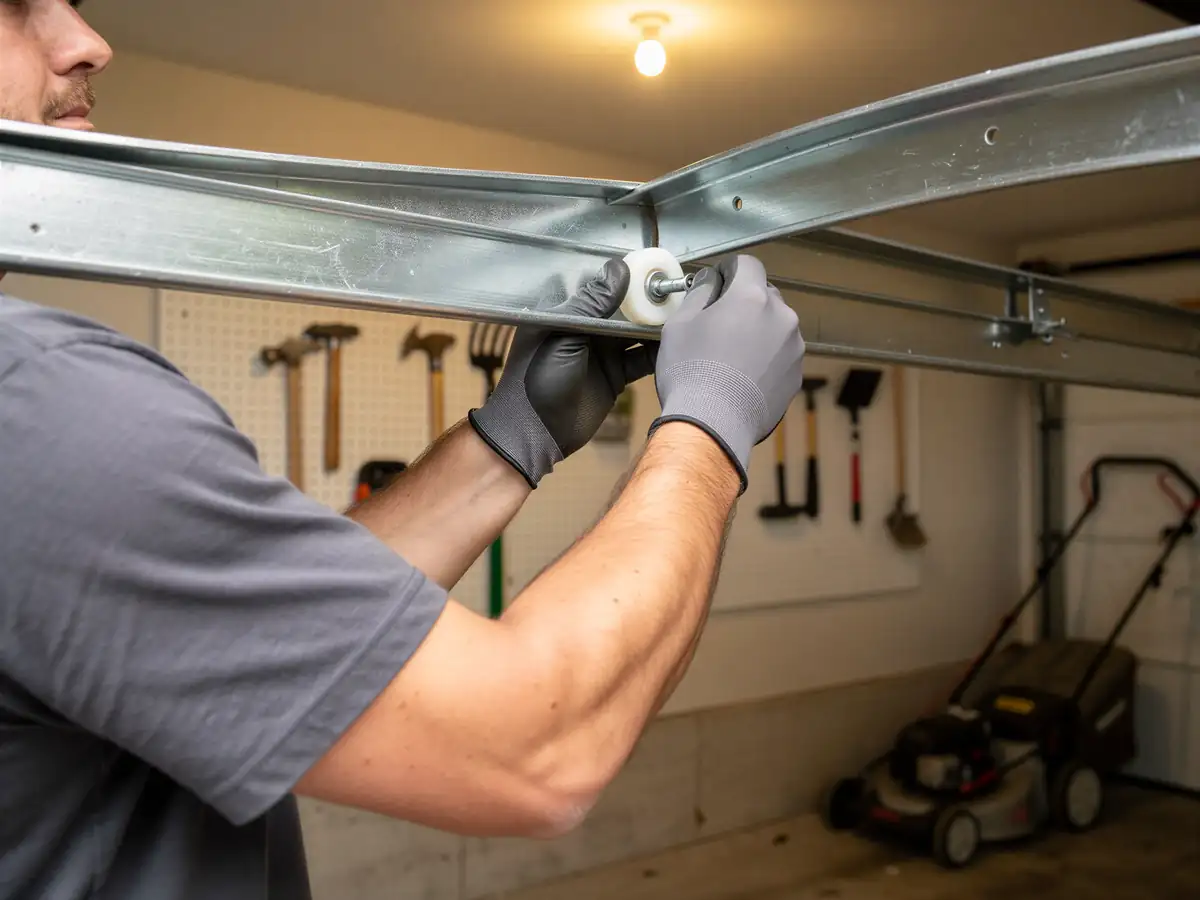
Not from rust eating through the stem the way it might in a harsher climate, so a Trinity roller job is usually a clean mechanical swap without corroded bolts or seized brackets slowing it down. The crew pulls the door's tension, drops the rollers out of the track one at a time, and sets new ones - steel or nylon depending on what's going back in - before resetting tension and running the door through a full cycle to check for drag.
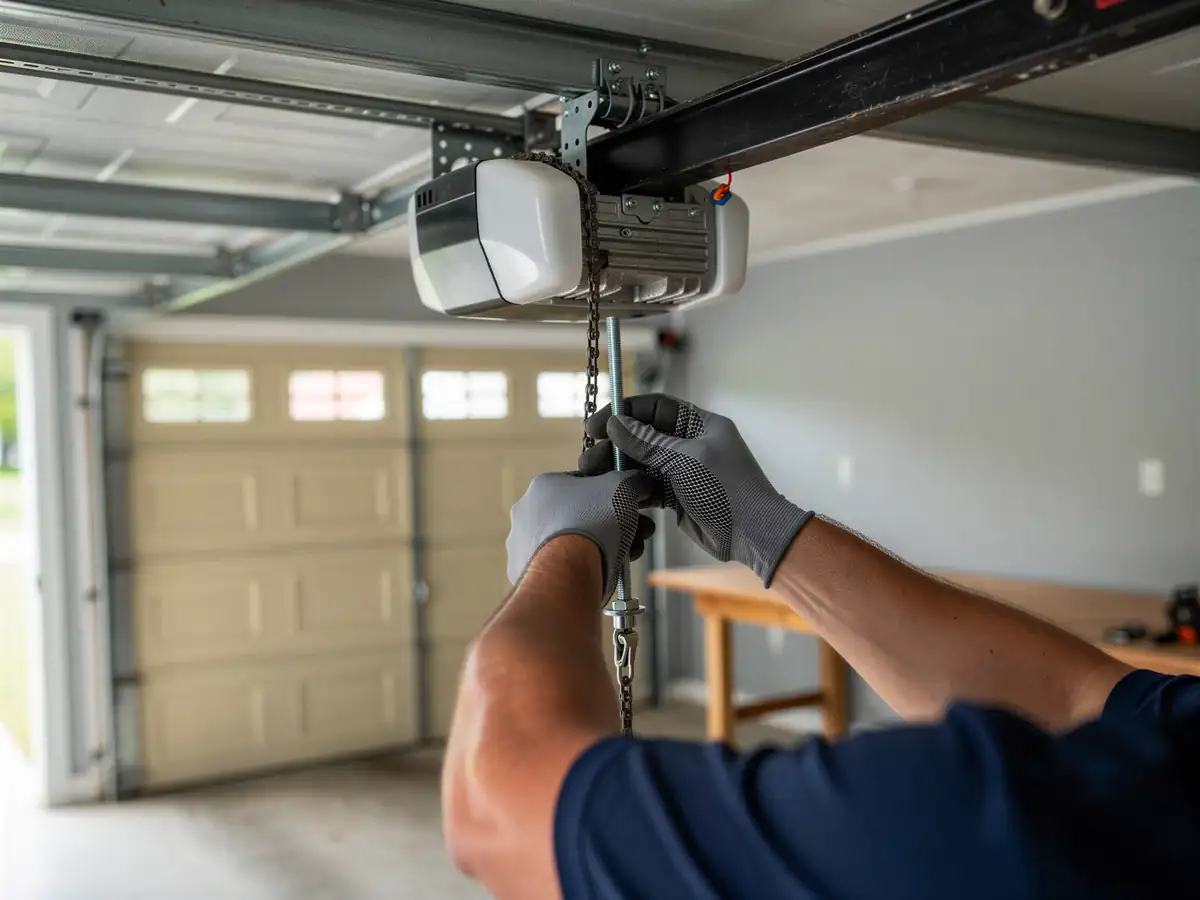
On these newer, heavier two-car doors, the job also includes checking that the opener's force settings still match once the new rollers are seated
Since a door that's been dragging for months sometimes has the opener compensating with extra force that needs to be dialed back down.