Why It Happens Here
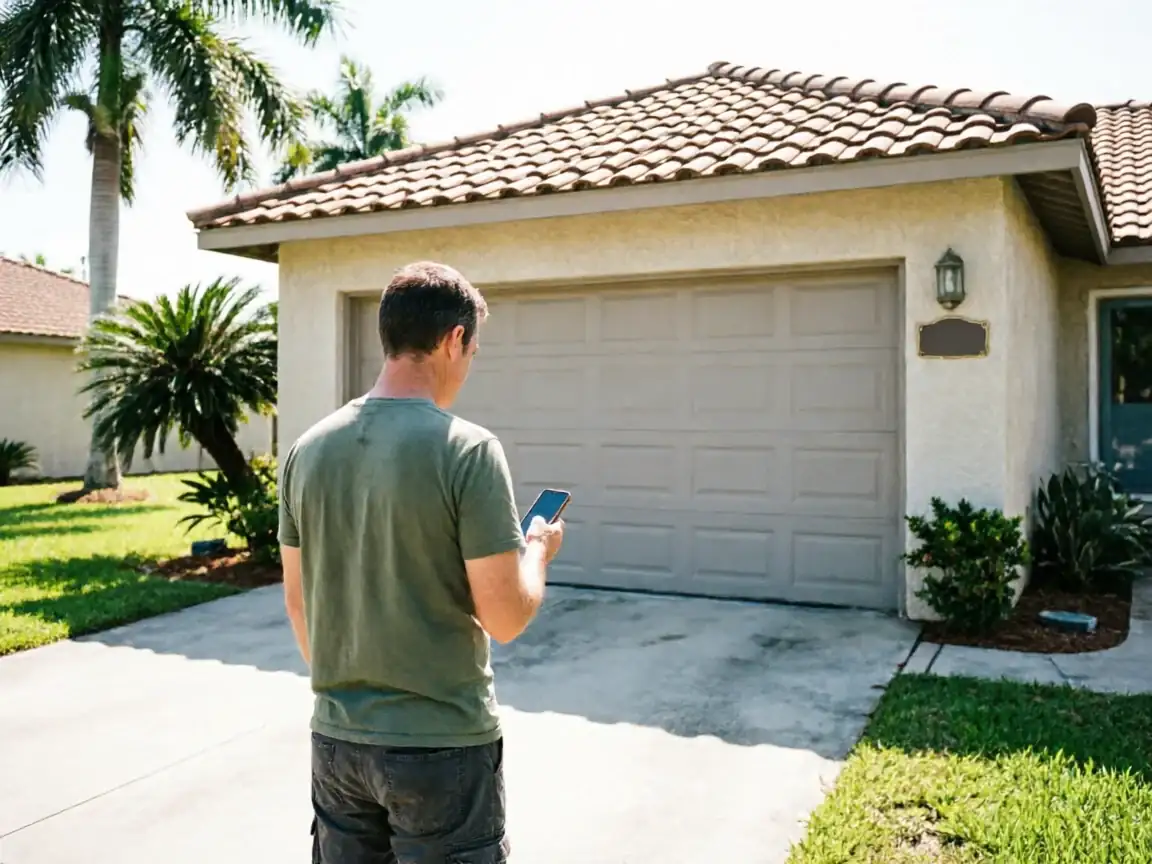
Dunedin's housing stock runs from 1958 to 2005, with the median build year sitting around 1979. That's not a small range - it means a lot of original garage door hardware is still bolted to the same jambs it went up on, especially across the mix of neighborhoods that make up this part of the county. A door and opener installed when a house was built in the late 60s or 70s has had four or five decades of cycles on the same torsion spring, the same rollers, the same cable.
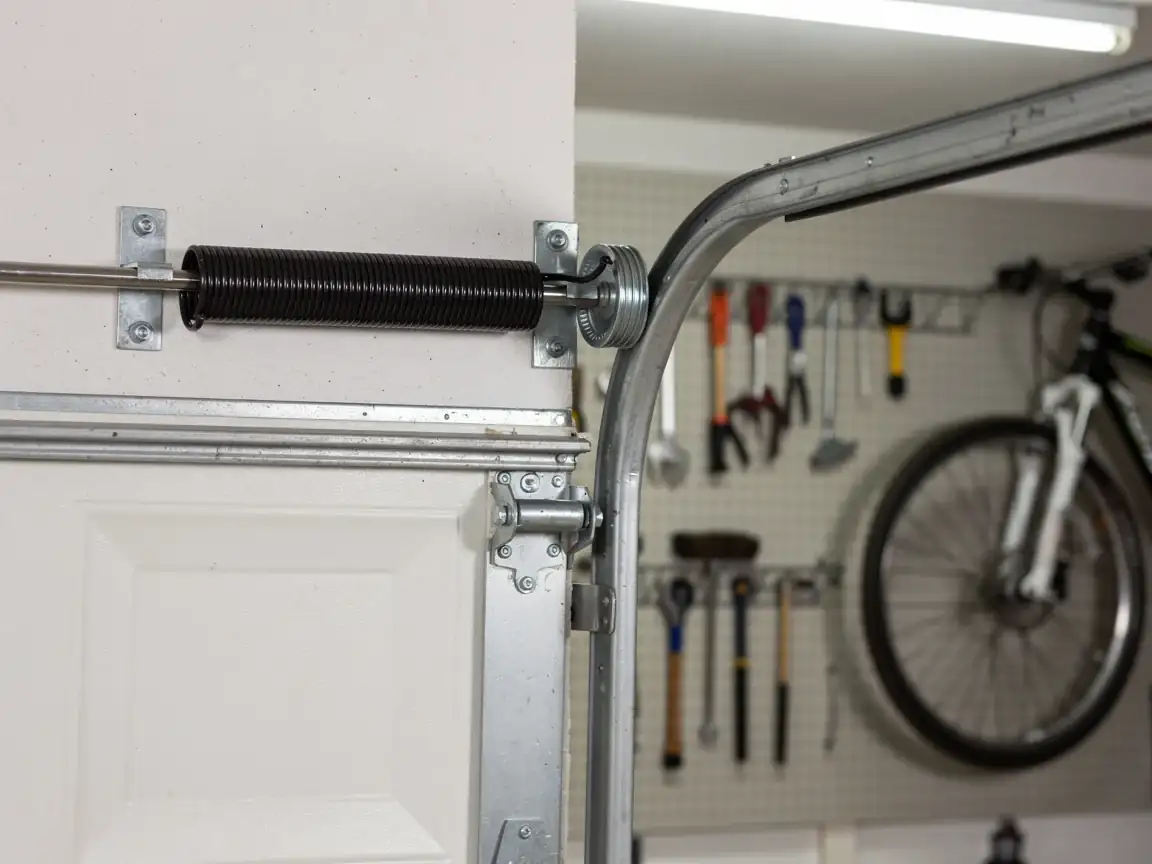
What makes Dunedin different from a colder market is the climate, not the calendar. This is a mild temperate zone - no hard freezes, no winter contraction cracking a spring that's already near the end of its life. Instead, the failure here is slower: humidity and salt-laden air off the Gulf side work into the spring coils and the track hardware year-round, and galvanized coating wears thin long before the spring's rated cycle count runs out. A spring that might last 10,000 cycles inland can go earlier here because rust gets a head start on fatigue. That's the pattern we see most: not a sudden snap in January, but a spring that's been weakening quietly for years before it finally lets go on an ordinary Tuesday.
What the Repair Takes
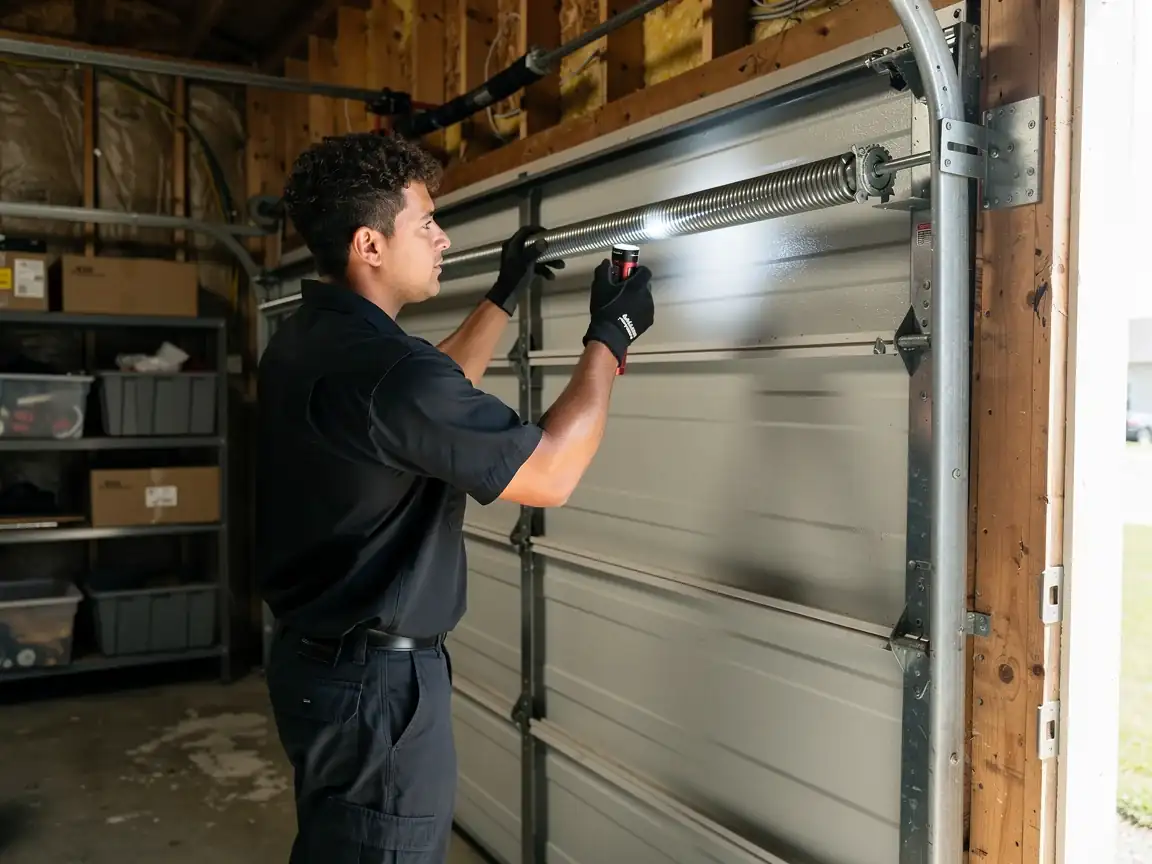
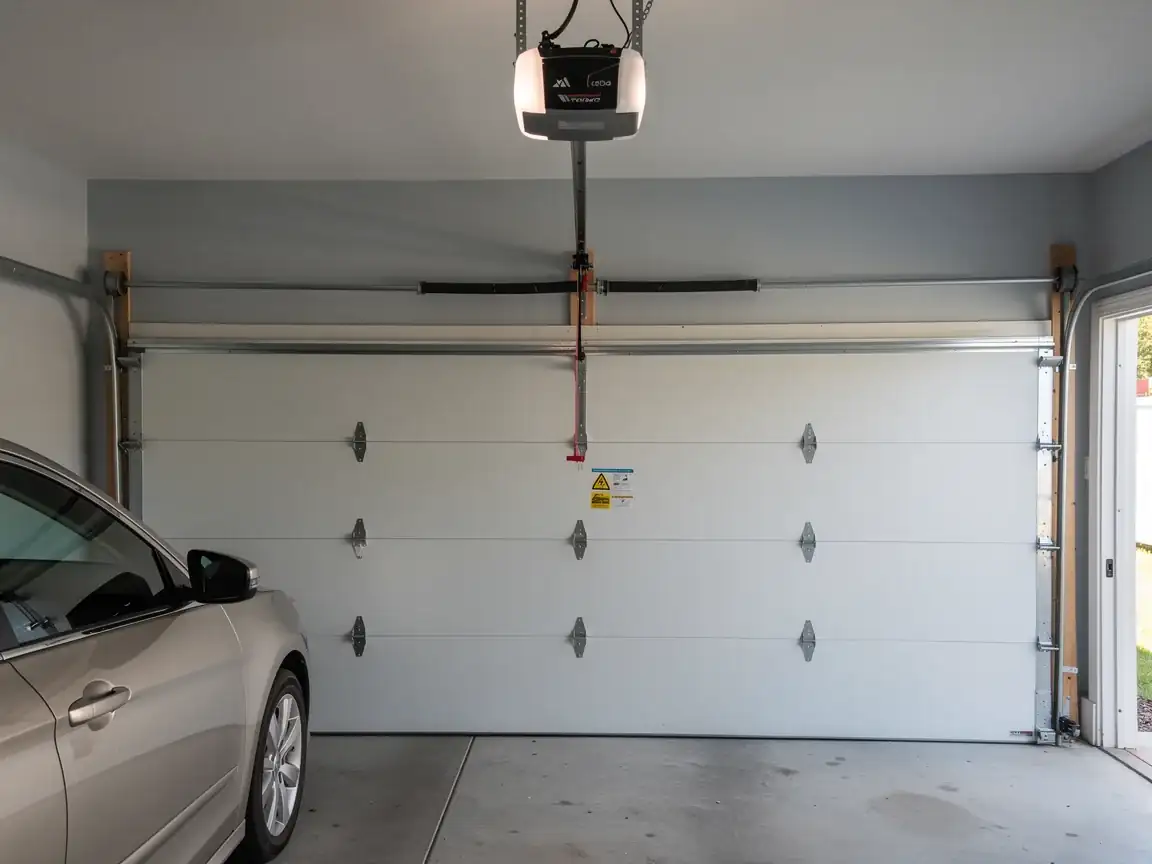
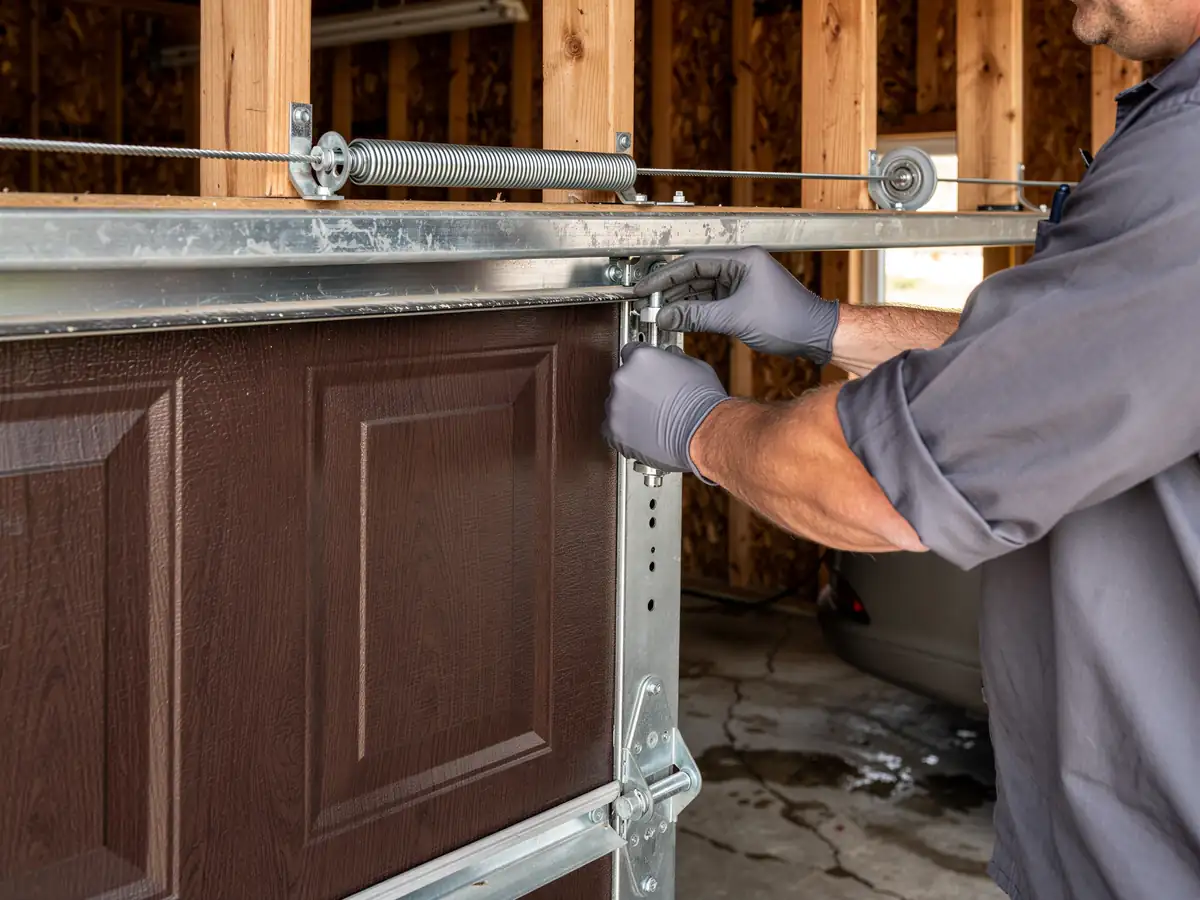
Most calls start the same way: we check the spring size and wind against the door weight and track configuration, because a lot of these older Dunedin doors were sized for hardware that isn't sold anymore. On a house from the 1960s or 70s stock, we're often matching a torsion spring to a door panel setup that predates the standard cable-drum ratios used today, which means a straight swap isn't always possible - sometimes the fix is upgrading the whole spring and drum assembly rather than just the part that broke.
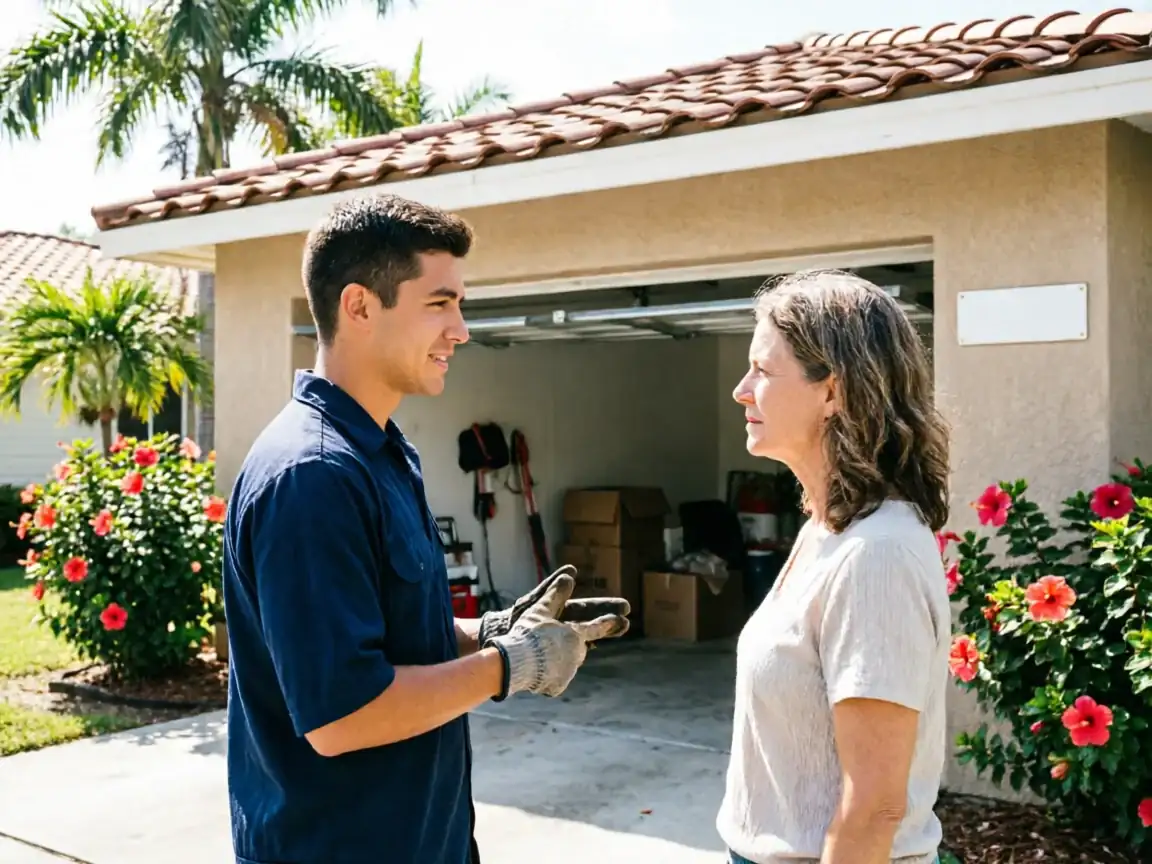
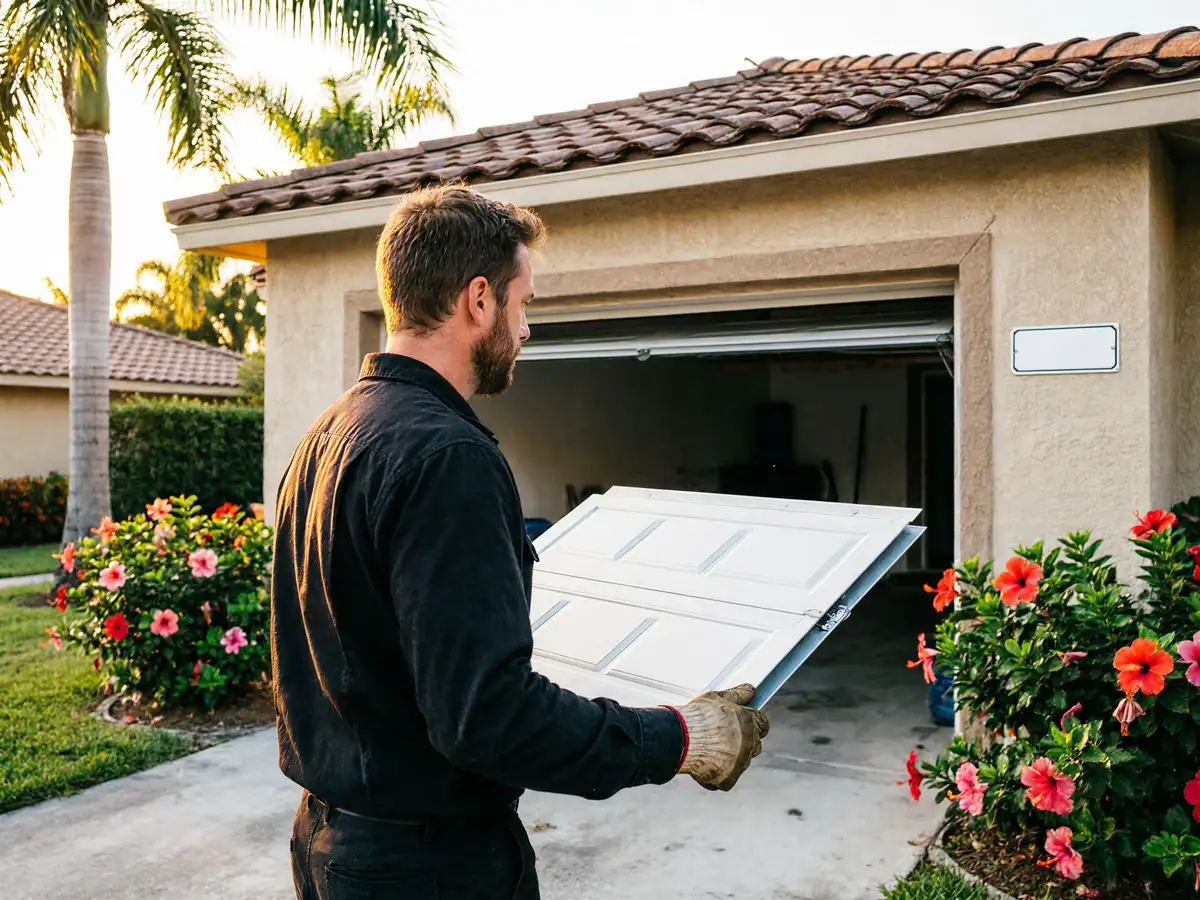
The honest limitation here: if your door itself is an original panel from that era and it's cracked, warped, or delaminating, we're not going to pretend a new spring fixes the real problem. At some point replacing the door is cheaper over five years than keeps feeding it. We'll tell you when we see that, rather than run the repair and have you call us back in eight months.
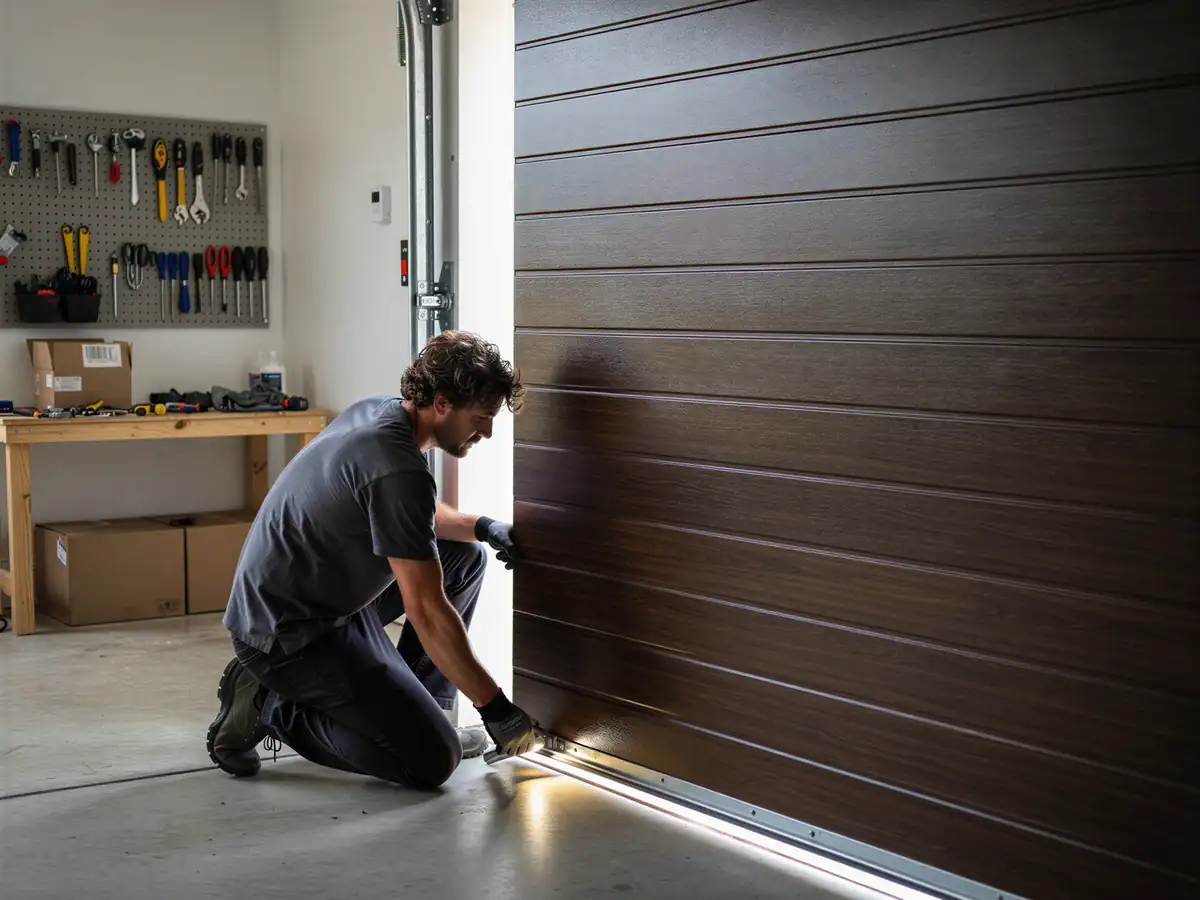
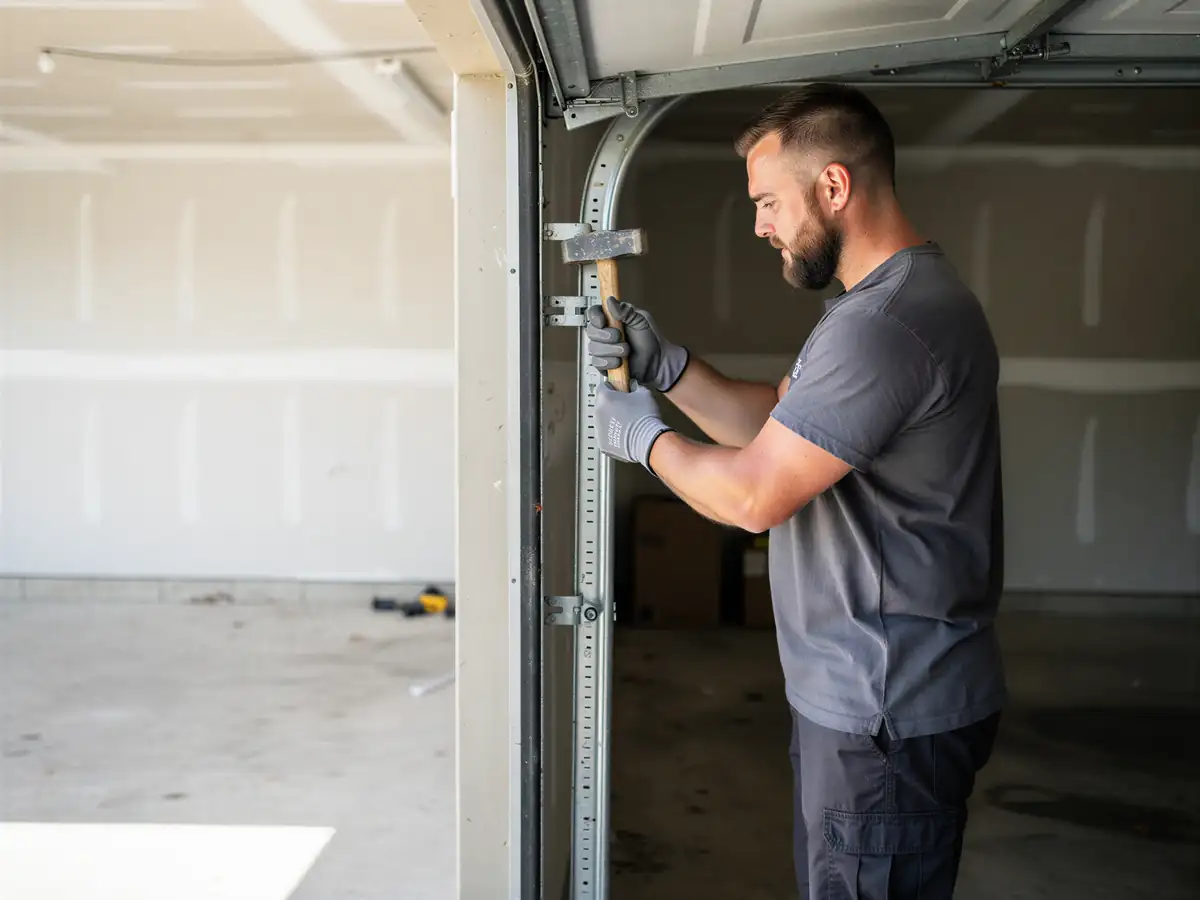
For a straightforward spring or cable job, the work itself is a few hours: unwind and remove the old spring under tension, inspect the drums and cables for wear, replace the failed part, re-tension, and cycle the door a dozen times checking balance before we leave.
What Can Go Wrong
The biggest risk with an aging torsion spring isn't the spring itself
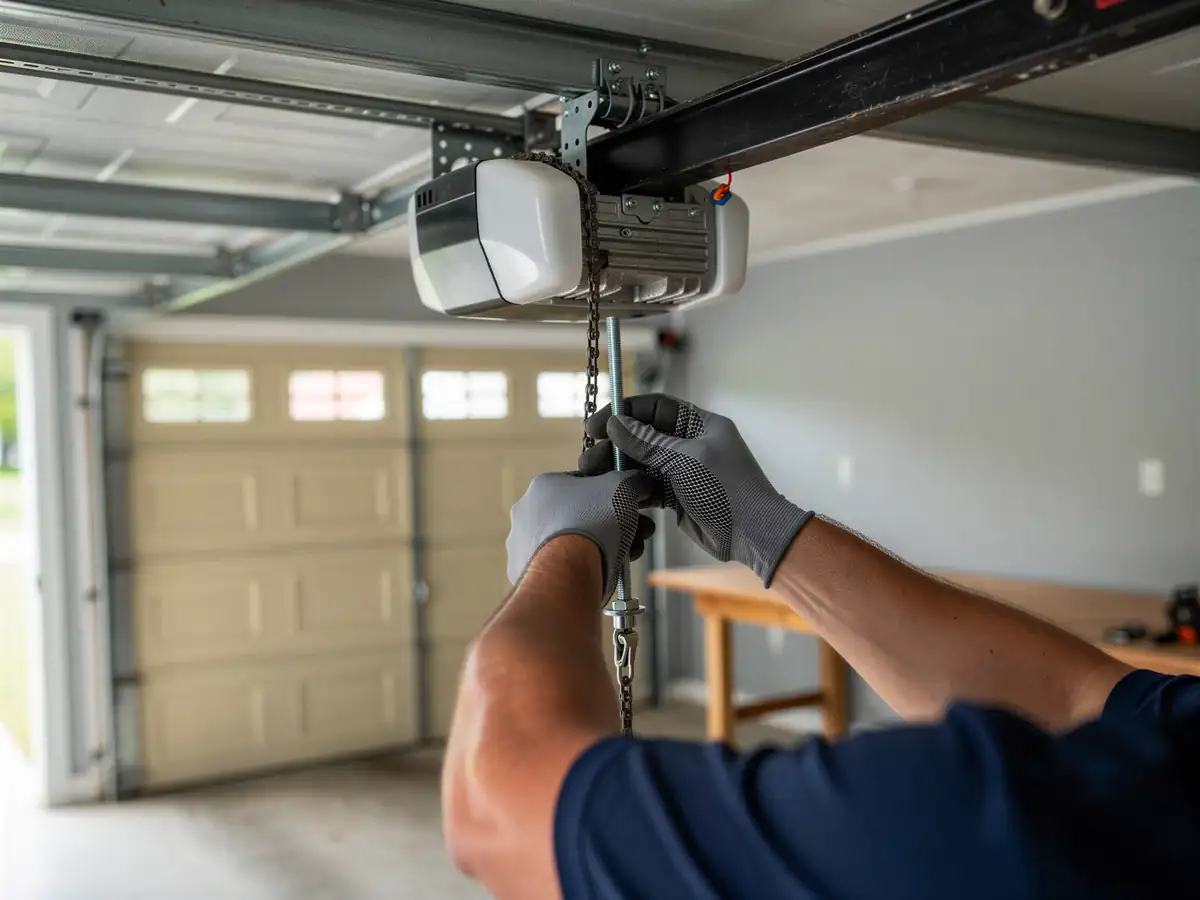
It's what it's been quietly loading onto everything else. When a spring corrodes and loses tension gradually, the opener compensates by working harder, which shortens the life of the drive gear. The cables take more load than they should on the way up, and we sometimes find one cable frayed near the drum on a door where the owner only noticed the spring as the problem.
On older Dunedin houses, the other thing we run into is mismatched hardware from a prior repair
A spring swapped out at some point that's close but not quite rated for the door weight. That shows up as a door that closes fine but is heavy to lift by hand, or an opener that strains and clicks before it moves the door at all. Left alone, that mismatch wears the opener's gear and chain early.
We also see rollers that have gone brittle rather than worn smooth
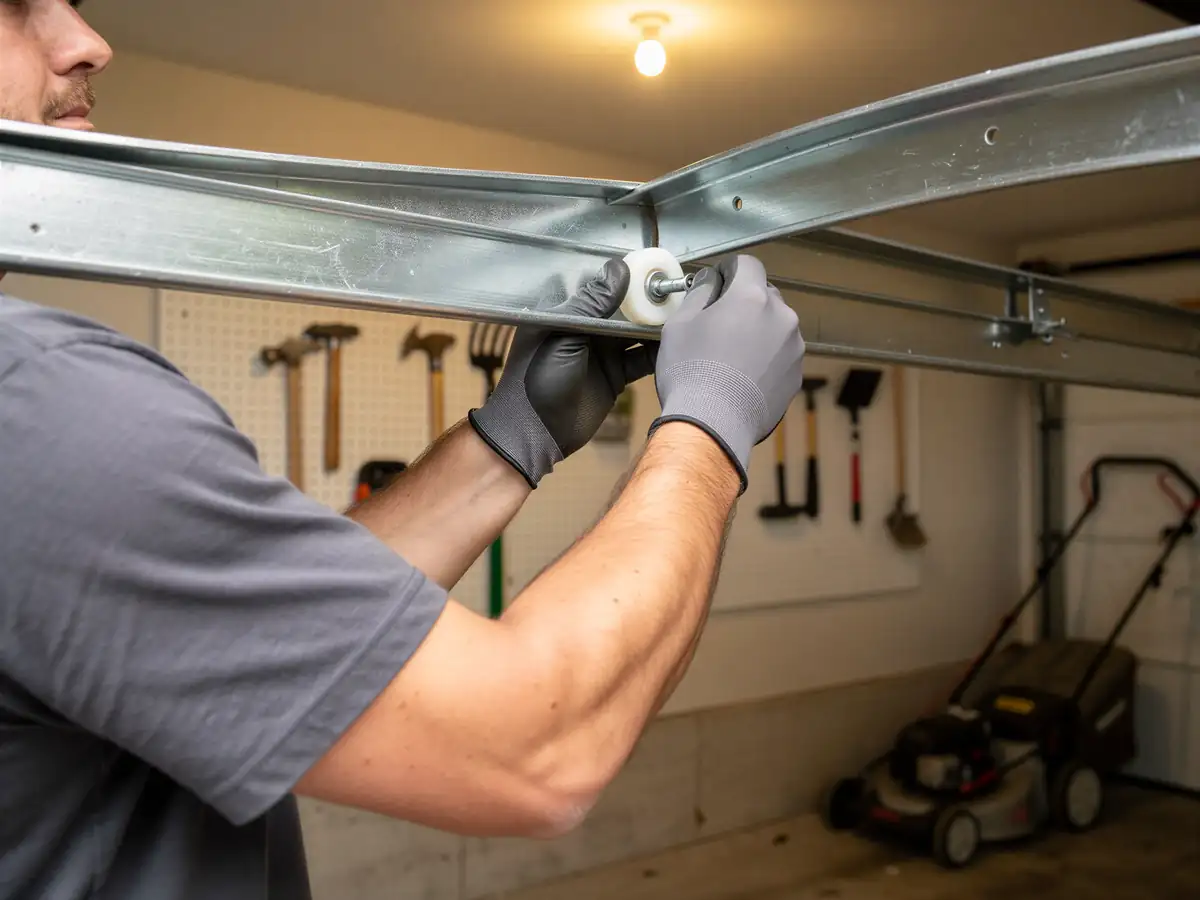
In this climate, the plastic on nylon rollers can degrade from UV and humidity exposure before the roller itself has done enough cycles to wear out mechanically. That's a small part, but it's often what's actually making the door sound rough even when everyone assumes it's the spring.
The Symptom
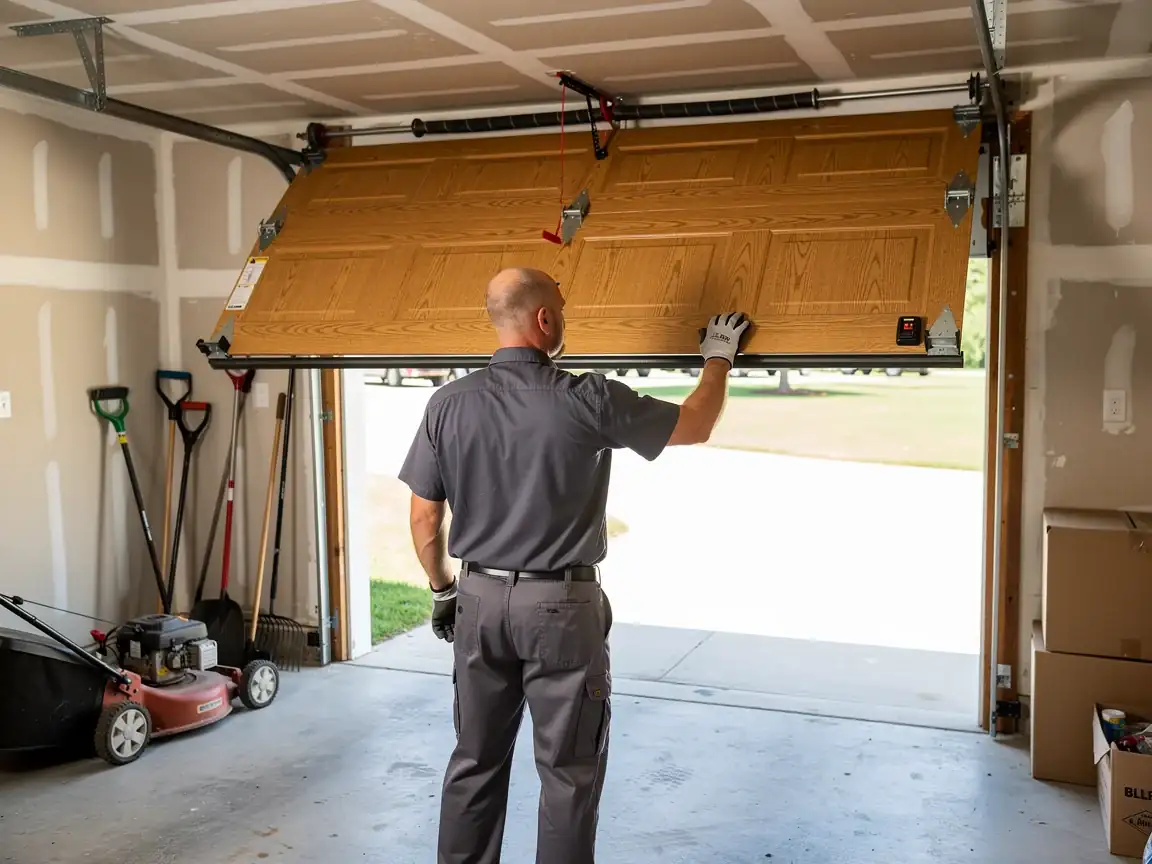
The call we get most from this stretch of Dunedin is a door that opens partway and stalls, or one side that visibly drops faster than the other on the way down. That uneven drop is a tension problem - one spring (on a double torsion setup) has lost strength relative to the other, and it's common on houses with original 1960s-70s hardware where one spring was replaced at some point and the other wasn't.
A second version of the same complaint: the door seems to work, but the opener groans and the chain or belt sounds like it's straining on the first foot of travel. That's usually the opener fighting a spring that's lost most of its tension and is barely helping lift the door anymore.
Either symptom means the spring is doing a fraction of the job it's rated for. It's not a lubrication problem and WD-40 on the track won't touch it. If your door is doing either of these, the spring assembly needs a look before anything else gets adjusted - and if it's been making noise for a while, the cables and drums need checking too, since they've likely been carrying load they weren't built for.