Why It Happens Here
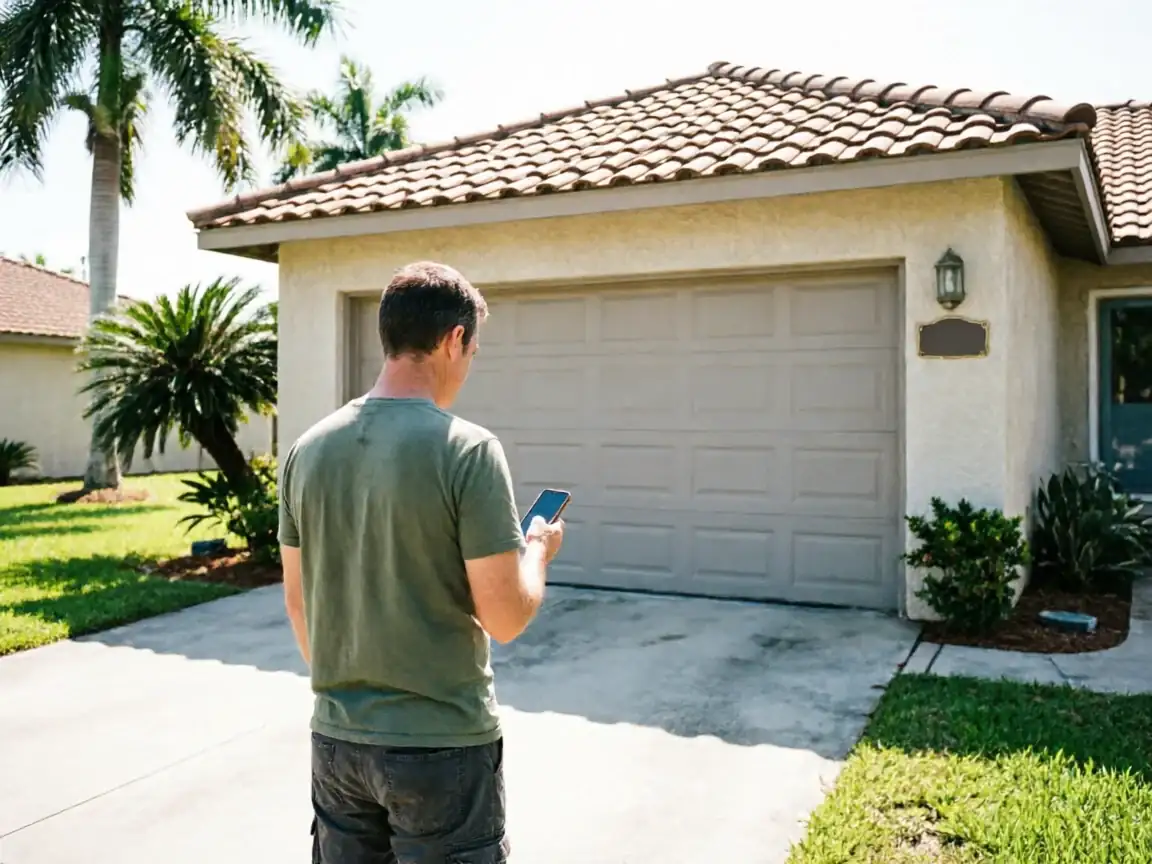
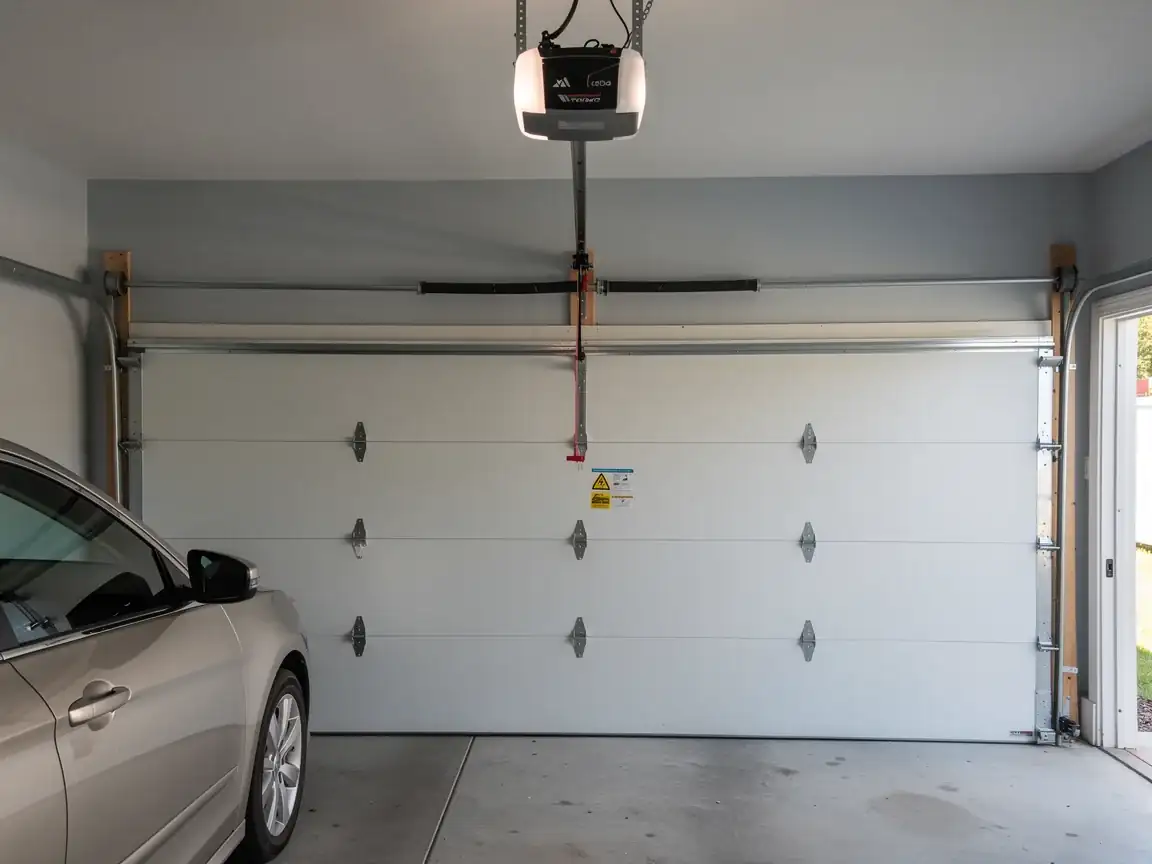
Most of the houses in this service area went up between 1958 and 2005, with the median landing around 1979, and a big share of what we see is 1960s and '70s stock spread across 27 named neighborhoods. That matters for a track problem specifically. Doors built or replaced during that stretch usually run on steel track that was never meant to flex much, hung with brackets that loosen a little every year the door cycles. Thirty, forty, fifty years of opening and closing wears the bracket bolts loose in the jamb framing, and once a bracket shifts even a quarter inch, the rollers start riding the edge of the track instead of the center of it.
The mild temperate climate here doesn't throw the same curveballs a colder region would - no frozen tracks, no ice packing into the roller channel - but it does mean humidity and salt air work on hardware year-round without a winter freeze to interrupt the corrosion cycle. A bracket bolt that's rusted a little every year for three decades backs out easier than one that rusted hard once and stopped. Add a door that's been bumped by a car bumper or a basketball, and a track that was already a little loose from age gives way.
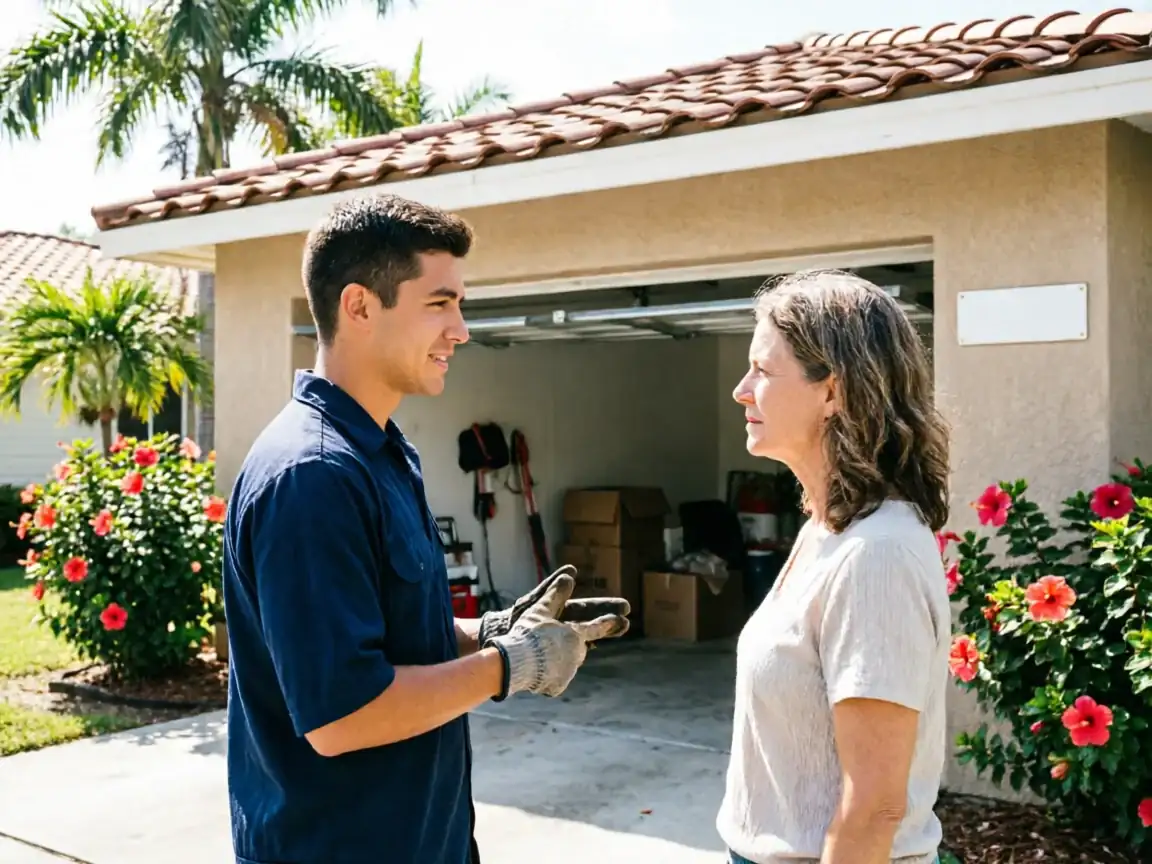
We see this pattern across the service area, not just on one street or in one subdivision. The housing era is the common thread, not the zip code.
What the Repair Takes
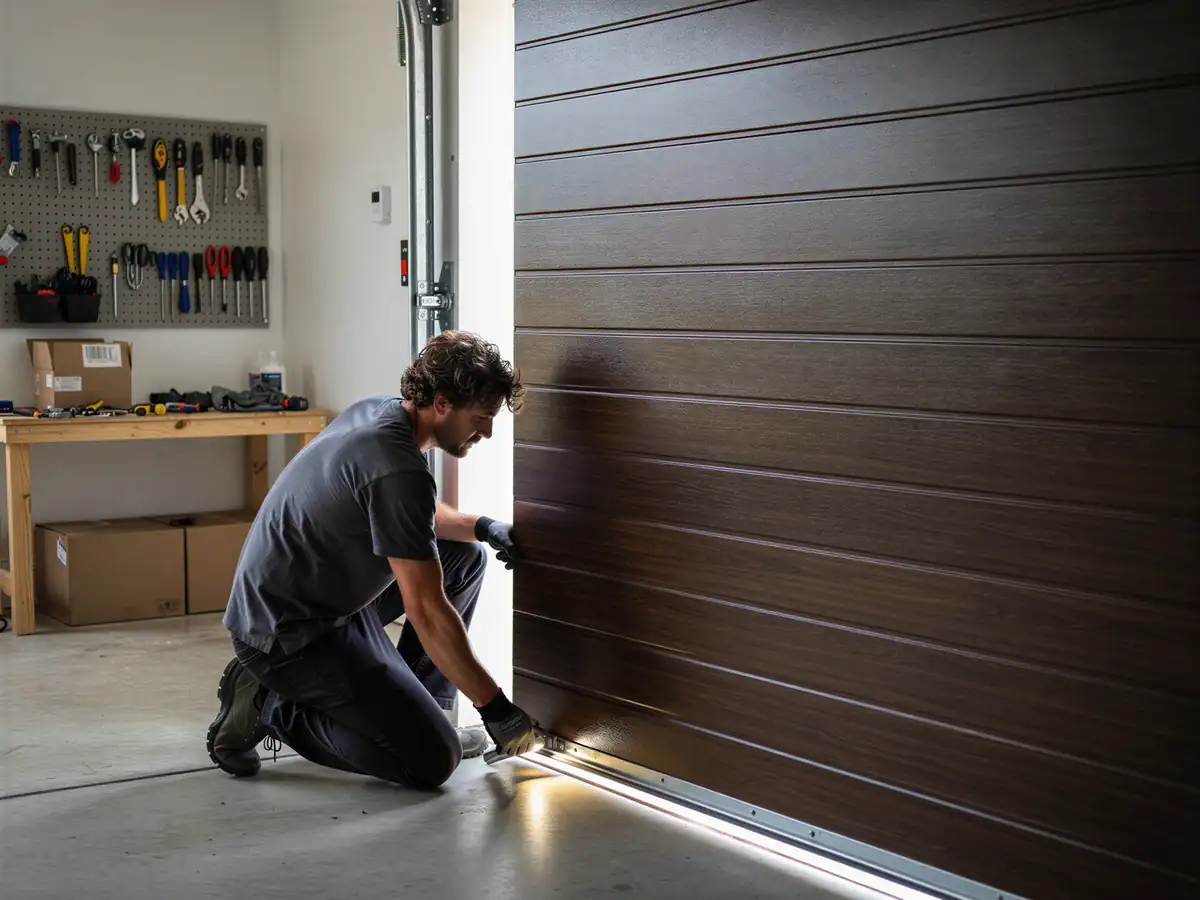
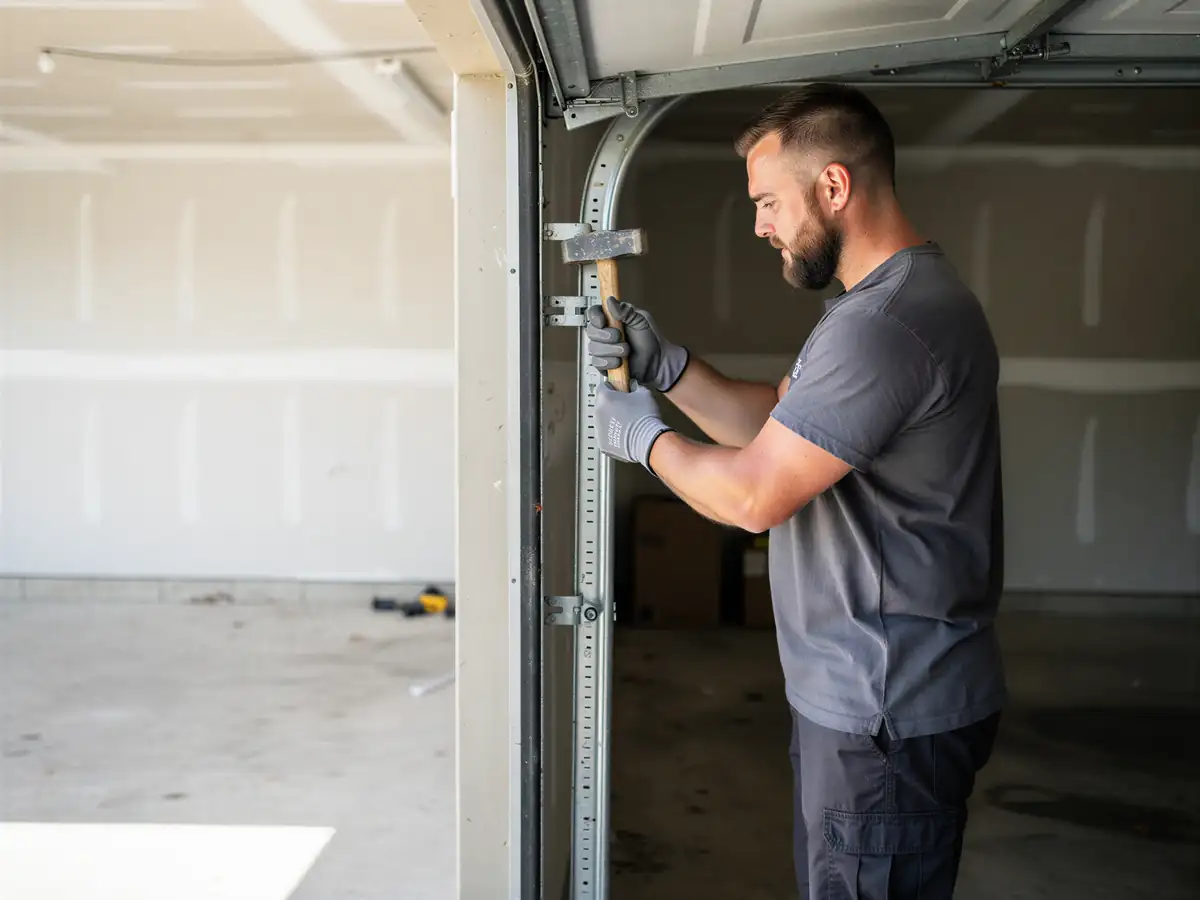
First thing we do is figure out whether the track bent or the brackets just worked loose, because those are two different jobs with two different price tags. A loose bracket is a bolt-and-realign fix - we pull the door back onto the track, square it to the rollers, and torque the brackets back into solid framing, sometimes adding a longer lag bolt if the original hole has worn out. That's a straightforward call.
A bent track is a different animal. Steel track doesn't bend back cleanly once it's kinked - you can hammer it close, but a door riding a track that's been straightened will usually drift off again within a year or two. On most jobs, once we see a kink of more than a quarter inch, we replace that section of track rather than fight it.
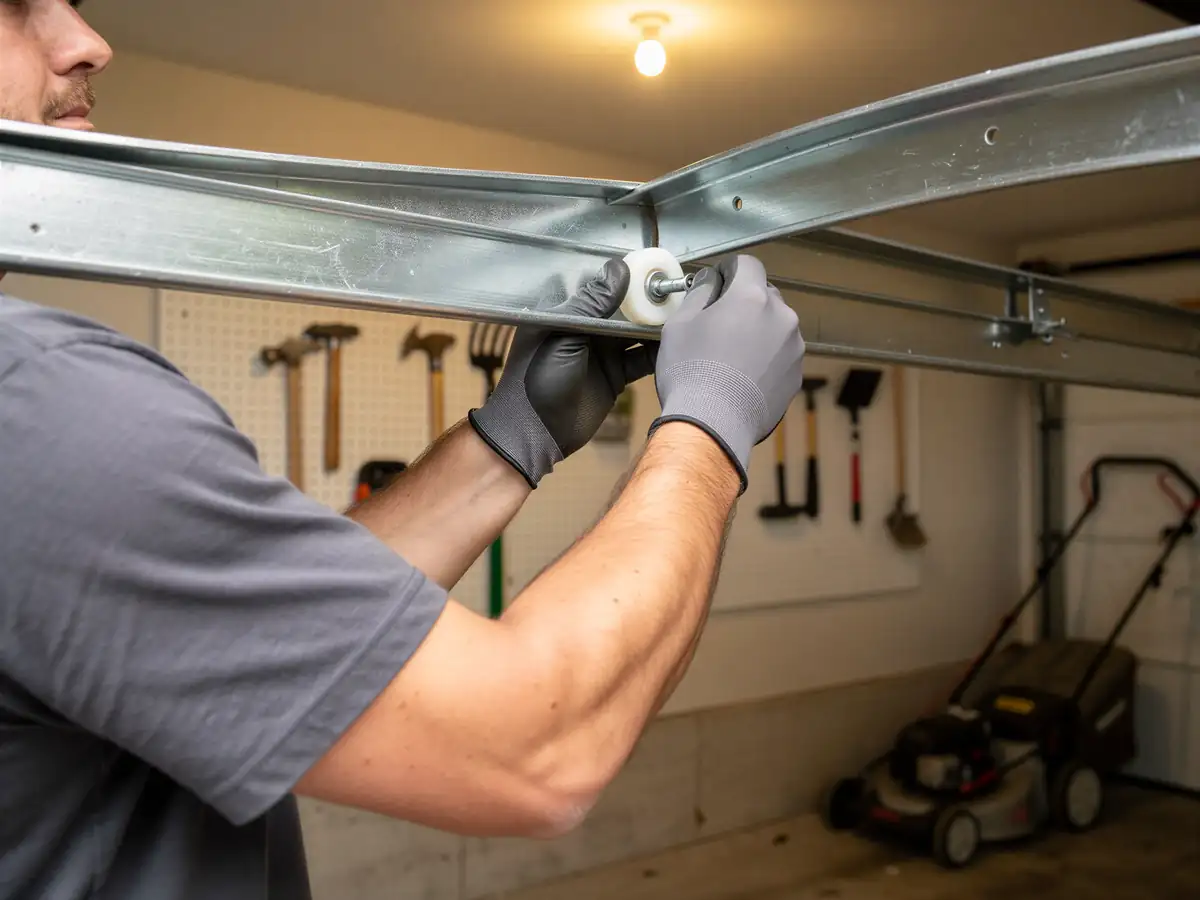
We also check the rollers while we're in there. Nylon rollers crack and chip with age, and a chipped roller is what often causes the door to walk off track in the first place rather than a track problem on its own. Original rollers from a door's first installation in the '70s or '80s are almost always due regardless of what else we find.
What we don't do is re-hang a door on track we know is compromised just to save a trip back out. If the track's shot, we tell you it's shot.
What Can Go Wrong
The honest risk with an off-track door is the cable
When a door jumps the track, the lift cable can come off its drum or bunch up on one side, and a door under spring tension with a loose cable is not something to force back into place by hand. We've been called to doors where the owner tried to muscle the panel back onto the track themselves, and the cable let go under load - that's how fingers get caught and panels get bent.
The other thing that goes wrong is misdiagnosis
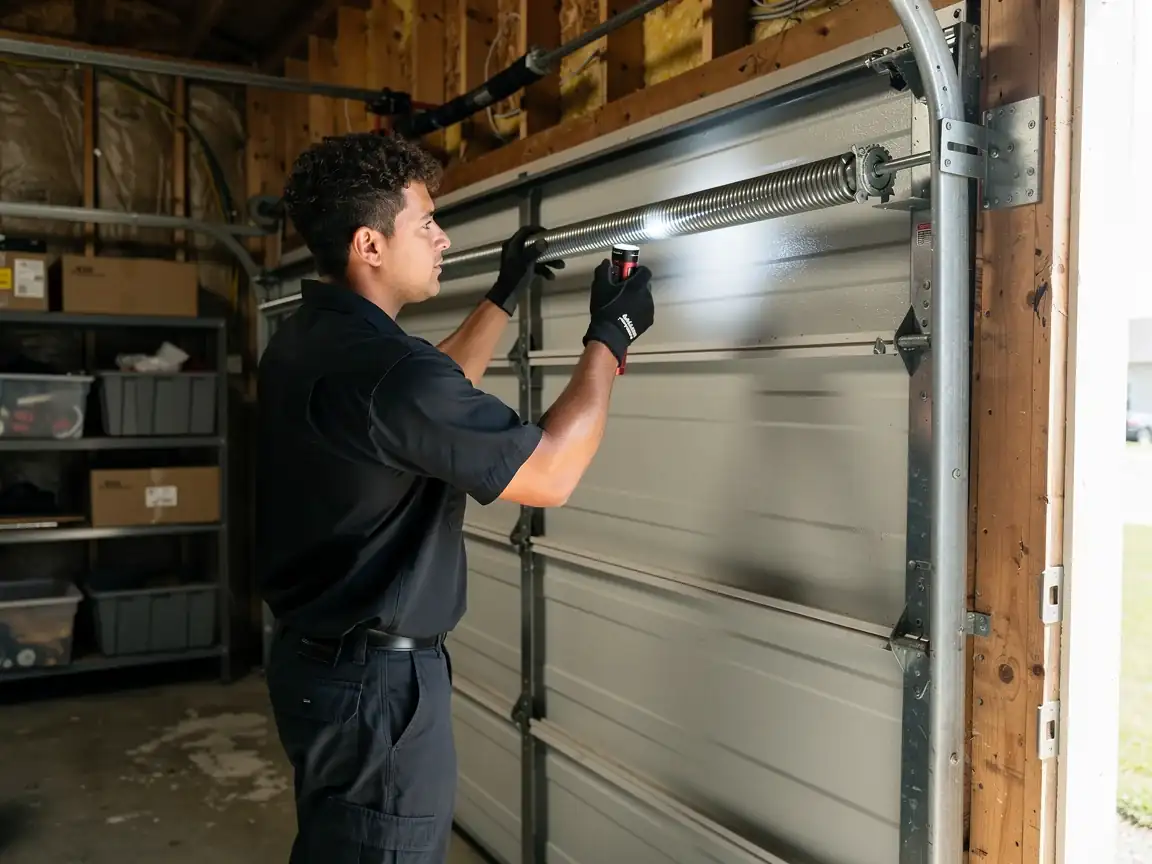
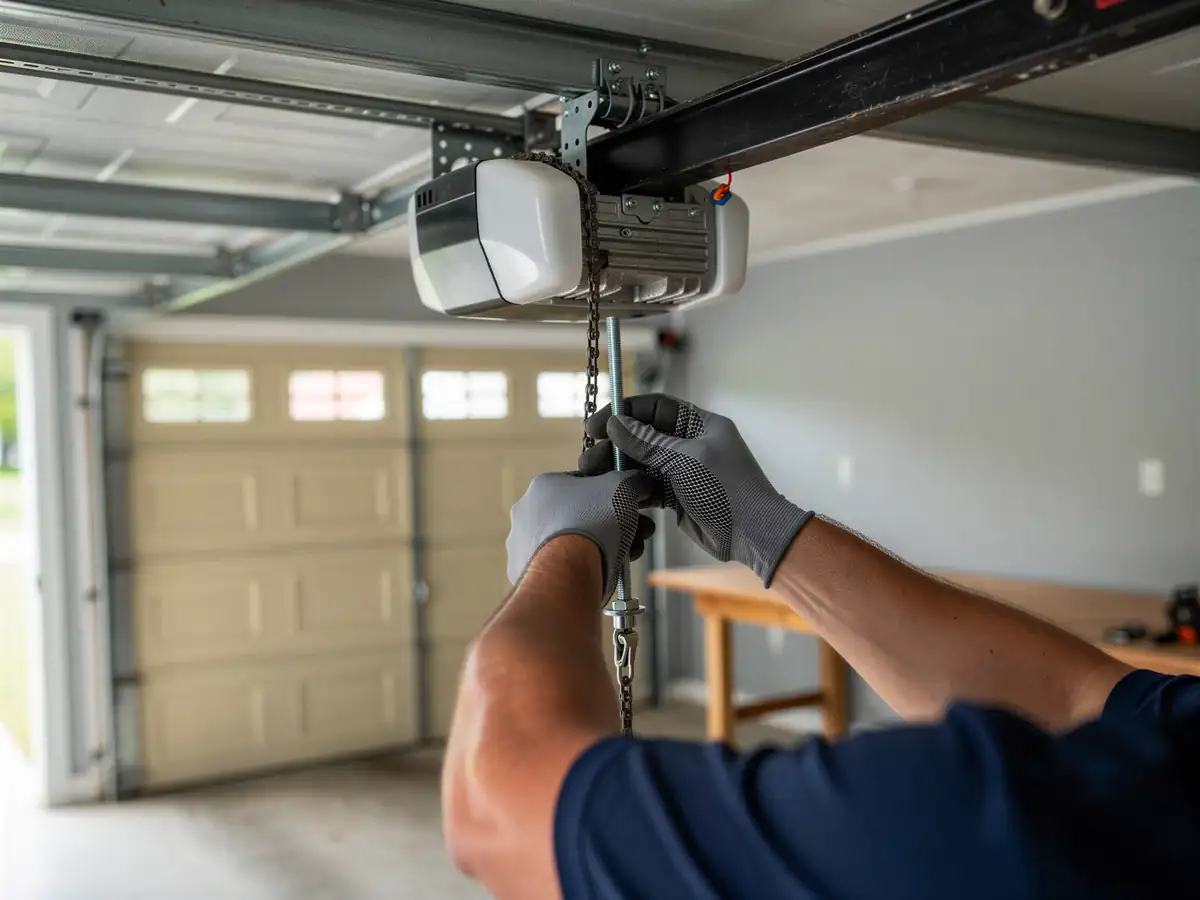
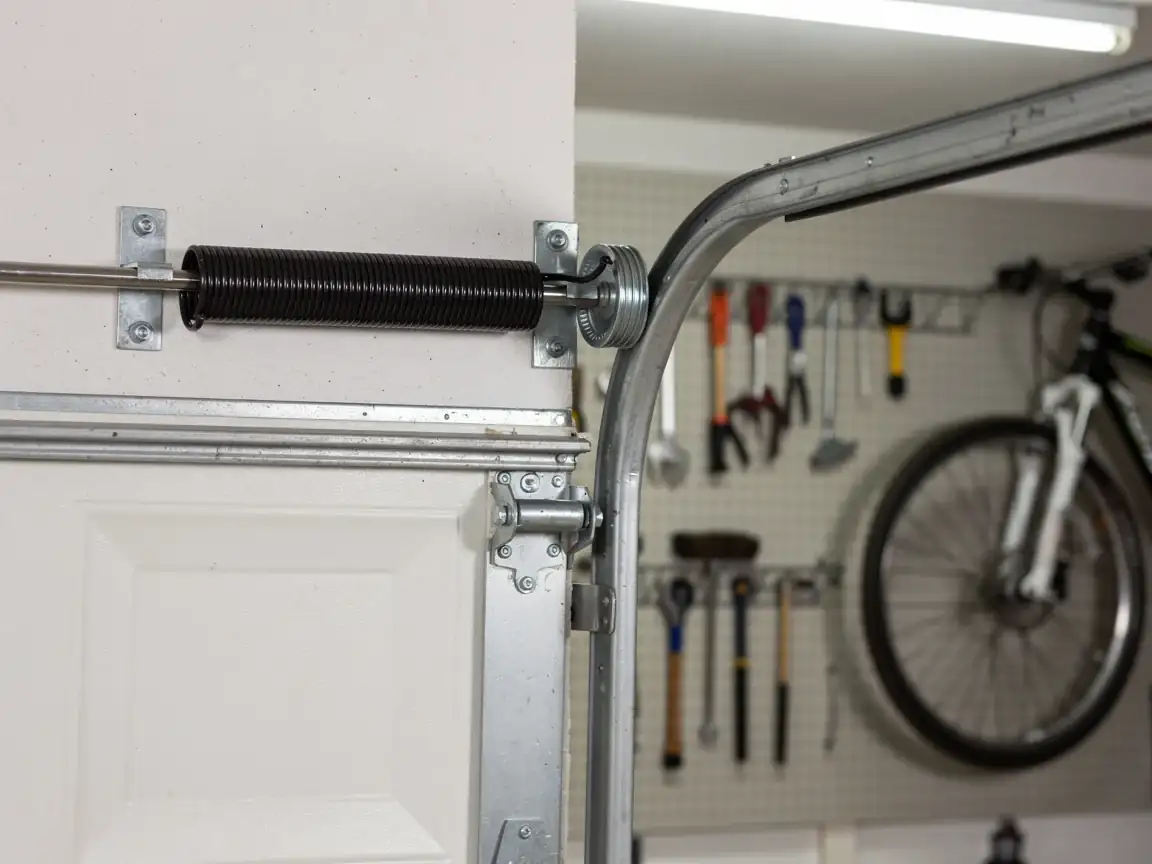
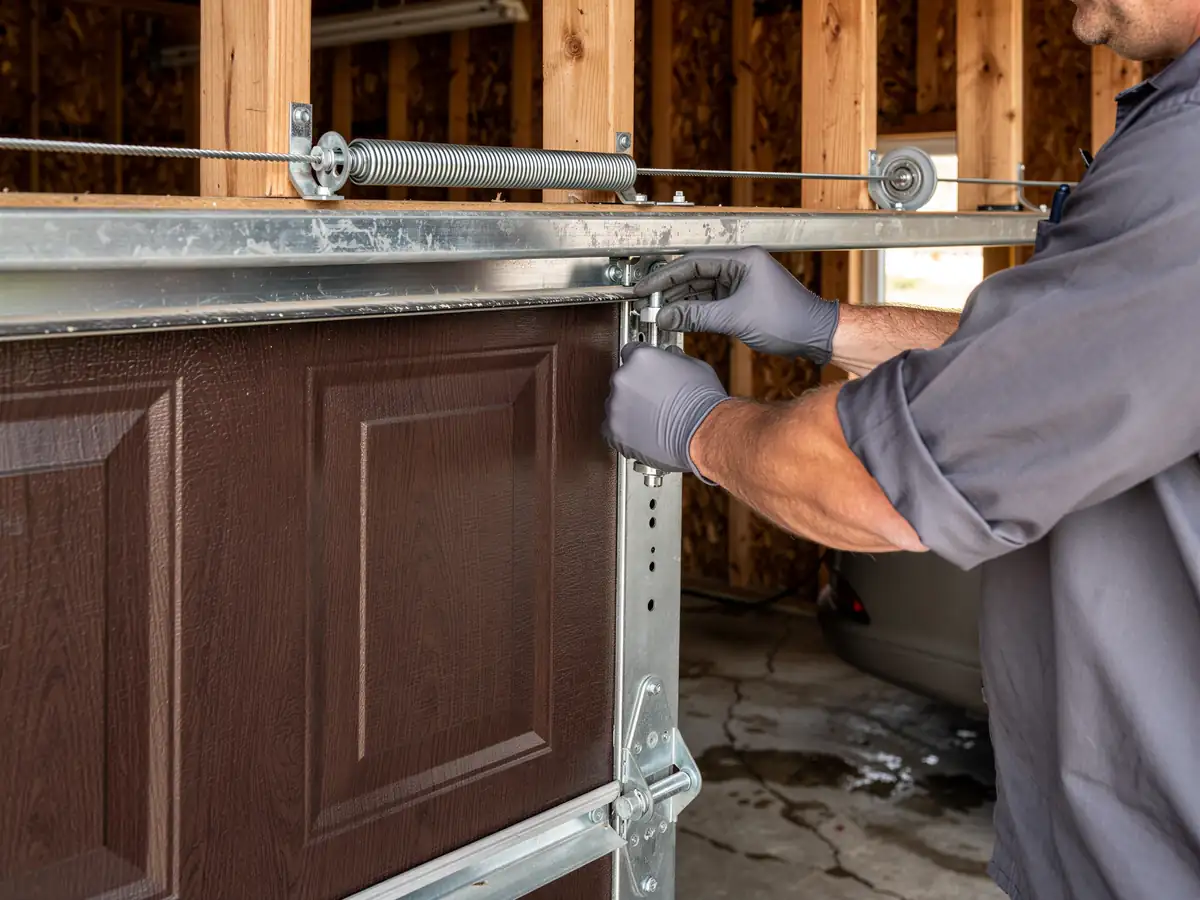
An off-track door looks like a track problem, but sometimes the real cause is a broken spring that let the door drop unevenly and yank it sideways. Fixing the track without checking the spring just means a second service call in a few weeks. We check torsion springs and cable tension every time, not just the track itself.
On older panel doors
The kind still common from that 1958-2005 building window - the track brackets are sometimes fastened to wood framing that's softened with age. Re-hanging the door on the same worn-out bracket holes doesn't hold. We'll flag it if the jamb needs reinforcing before we trust a bracket to it.
The Symptom
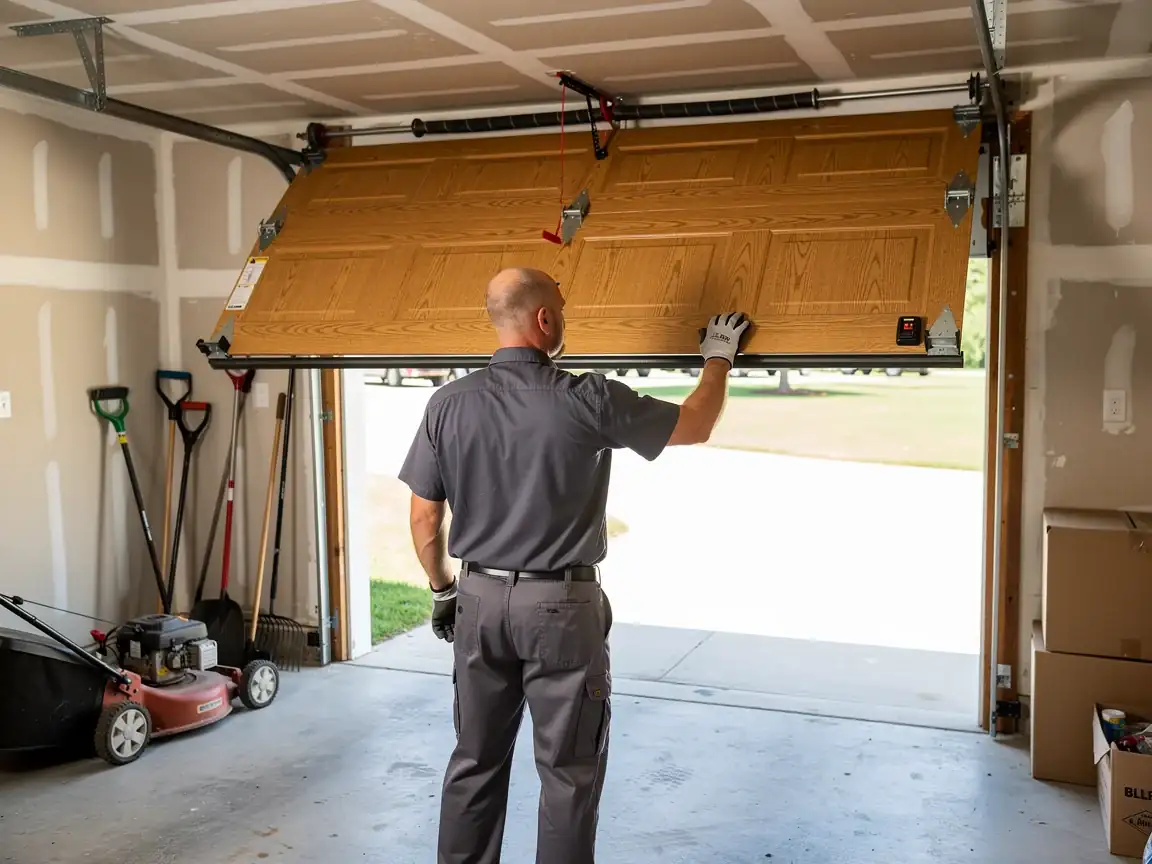
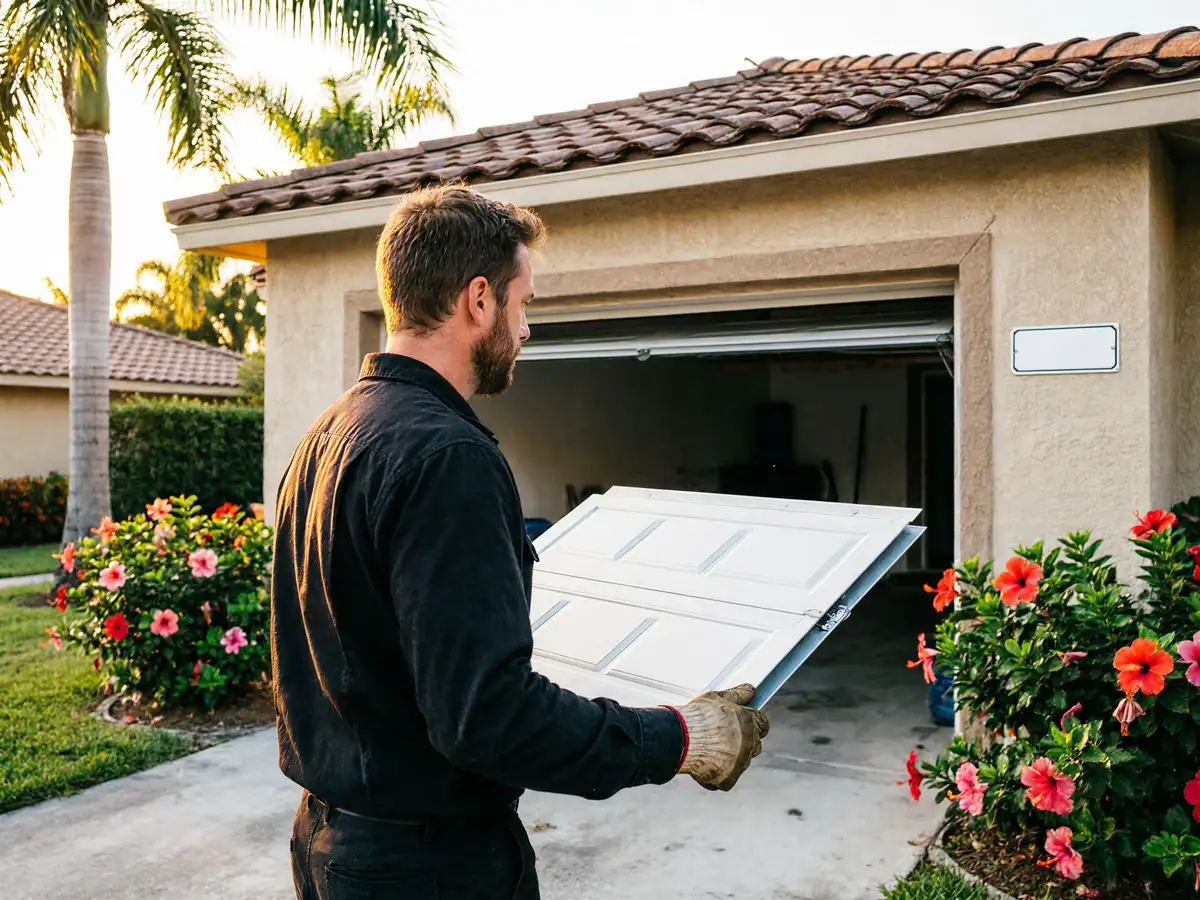
You'll usually notice it before the door fully derails - a scraping sound low on one side, the door running crooked for a second before it catches, or a visible gap where the roller has walked off the track rail. Sometimes it's sudden: the door comes down normal and then one corner just drops, leaving the panel hanging at an angle inside the opening.
If the door is still partway on the track, leave the opener alone and don't try to force it by hand. A door hanging off one side of its track is still under spring tension, and pulling on it can snap a cable or drop the panel the rest of the way. Call it in as-is and we'll walk you through whether it's safe to leave closed until we get there.
We cover this service across the wider area - out toward Safety Harbor, Belleair, Oldsmar, East Lake, Trinity, and the other towns within a comfortable drive, with specifics for each one on their own pages. This page is about the repair itself: what causes a door to jump track in homes built across this 1958-2005 stretch, and what actually needs fixing when it does.