The Cost of This Job
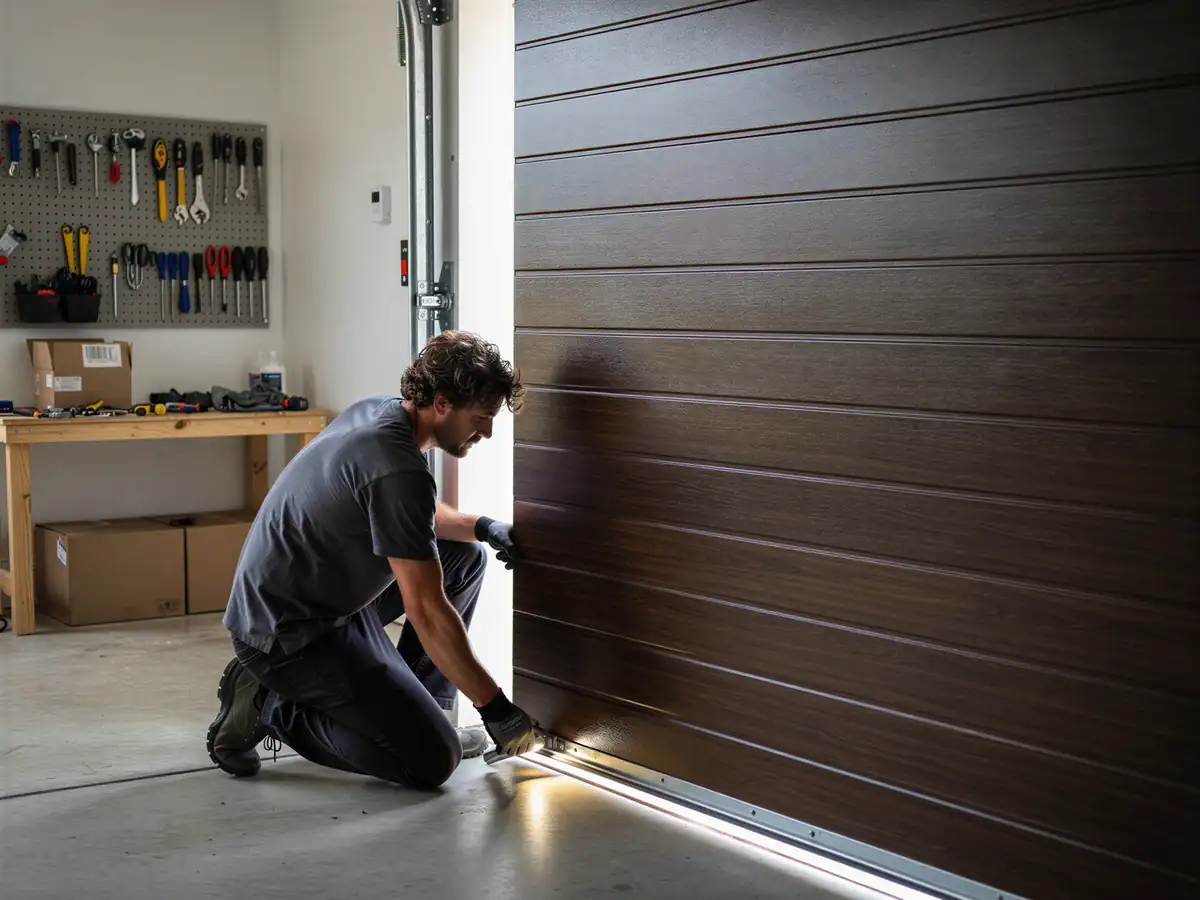
We can't quote a number here without seeing the door, but we can tell you what moves the price up or down. A single door with a standard bottom astragal seal is a quick job. A double door, or one where the track has rusted enough that the seal won't sit flat anymore, takes longer and costs more because you're not just swapping rubber - you're fixing what's holding it in place. Brush seals on the sides and top, which a lot of older doors never had at all, add to the job if you want the draft gone and not just reduced.
With a median household income of $84,220 across this market, most owners we talk to treat a seal replacement as routine upkeep rather than something to put off for years. That's the right call - a perished seal left alone usually means water finding its way to the slab, not just cold air finding its way to your ankles.
One honest limit: if the bottom panel itself has rusted through or warped, a new seal won't fix the draft. At that point you're looking at panel replacement or a new door, and we'll say so rather than sell you a seal that won't hold.
What Is Going On
Housing in this service area was mostly built between 1958 and 2005, with the typical home going up around 1979, and a lot of what we see on calls is 1960s and 70s stock. Doors from that era, if they haven't been replaced, came with a single thin vinyl bulb seal along the bottom and nothing at all on the sides. Forty-plus years is a long time for a strip of vinyl to keep its shape.
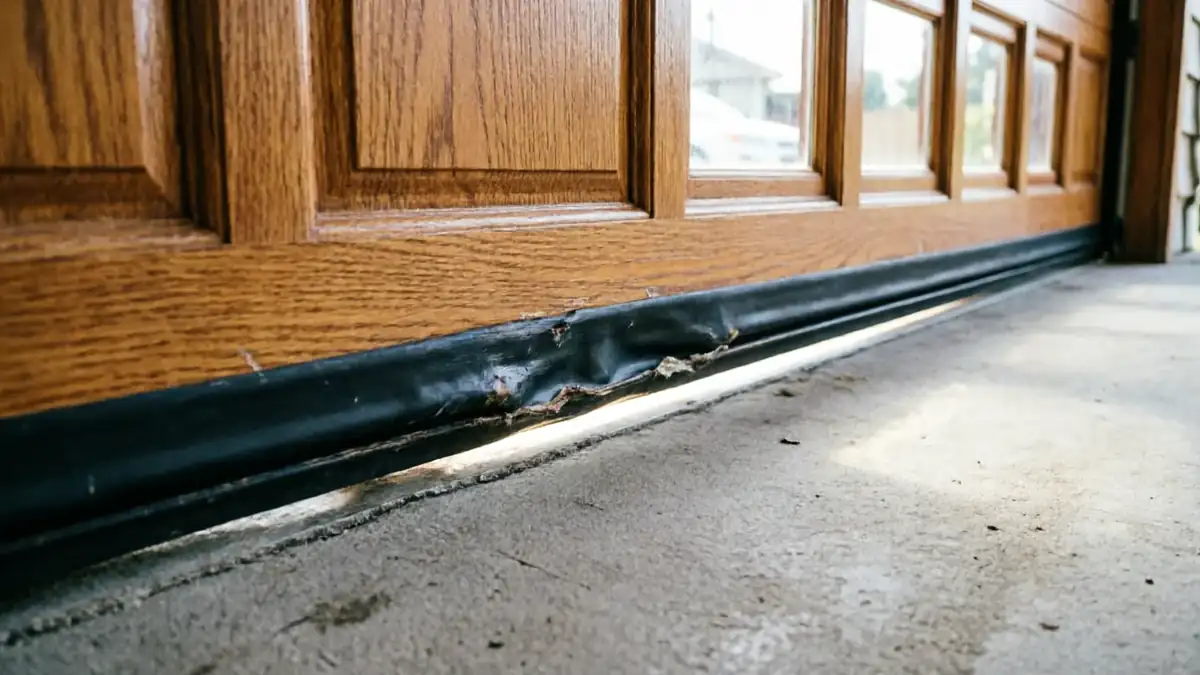
What happens is the seal hardens, cracks, or just shrinks away from the slab it used to sit against. You get a gap you can see daylight through, sometimes a gap big enough that a lizard or a palmetto bug doesn't need an invitation. On the 1960s and 70s builds especially, the track itself has often shifted slightly over the decades, so even a brand-new seal sits uneven until the track gets reset.
This isn't a failure of the door so much as the expected end of life for a rubber part that was never meant to last as long as the house around it. Original hardware from that period was built to a different standard than what goes in now, and the seal is usually the first thing to show its age.
The Seasonal Bit
Dunedin sits in a mild temperate band
So we're not dealing with the hard freeze-thaw cycle that cracks seals in a single cold snap the way it does further north. That's the good news. The less obvious part is that mild and humid, held steady for months at a time, does its own kind of damage - rubber and vinyl seals don't harden from cold here, they soften, swell slightly, then dry out and crack when the humidity drops for a stretch. It's a slower failure, which is partly why people don't notice it until the gap is already big enough to feel.
There isn't a single storm season that wrecks seals overnight in this climate band the way a hard freeze would elsewhere
It's cumulative. A seal that's been fine for ten years can look fine on the outside and still let in a steady draft because the underside, the part pressed against the slab, has worn thin from constant contact with ground moisture.
We don't see a spike in seal calls tied to one time of year here the way colder markets do
It's steady work, year-round, which tracks with a steady climate rather than a seasonal shock.
How Local Conditions Play In
If you're closer to the gulf side, out toward Belleair Beach or Indian Rocks Beach, both around seven to nine miles from here, the salt-laden air off the water speeds up how fast a vinyl seal dries out and cracks compared to homes further inland. We see it on service calls - a seal on a house near the coast often needs replacing a few years sooner than the same door on a house in Safety Harbor or further from the water.
Ground moisture matters as much as air moisture. A slab that sits a little low, or a driveway that slopes toward the door instead of away from it, means the bottom seal is sitting in standing water after every rain rather than just getting wet and drying off. That shortens its life no matter how good the seal is to start.
We can't tell you which of these is happening at your house without looking at it, but if your door backs onto a low spot in the yard or you're within a few miles of the water, don't be surprised if the seal needs attention sooner than the manual says it should.