The Cost of This Job
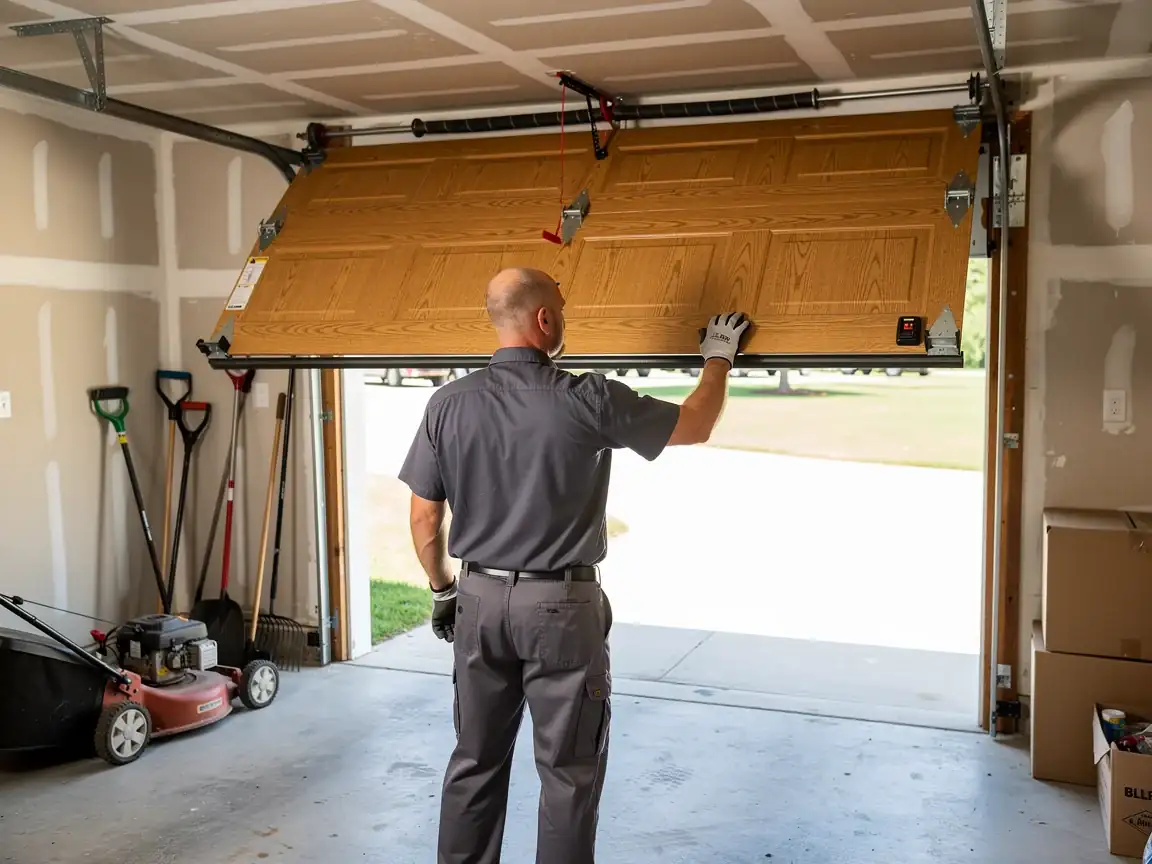
We can't quote a price here without a look at your opener, the drum size, and whether it's a single torsion spring or two. What we can tell you is what drives the cost on a typical job in this area: most of the houses we get called to were built between 1958 and 2005, with a lot of them landing around 1979, and that means the spring on the door is either the original or a second or third replacement on hardware that's decades old. Older torsion setups sometimes use shaft sizes and drum styles that newer kits don't match cleanly, so the job can run longer than a straight swap on a house built in the 2000s. If your opener is also original to a 1960s or 70s build, a tech may flag that the motor and the spring are both near the end of their service life at the same time, which changes what we recommend. We're not going to pad a job with parts you don't need. If the spring is the only thing gone and the rest of the hardware checks out, that's all we touch.
What Is Going On
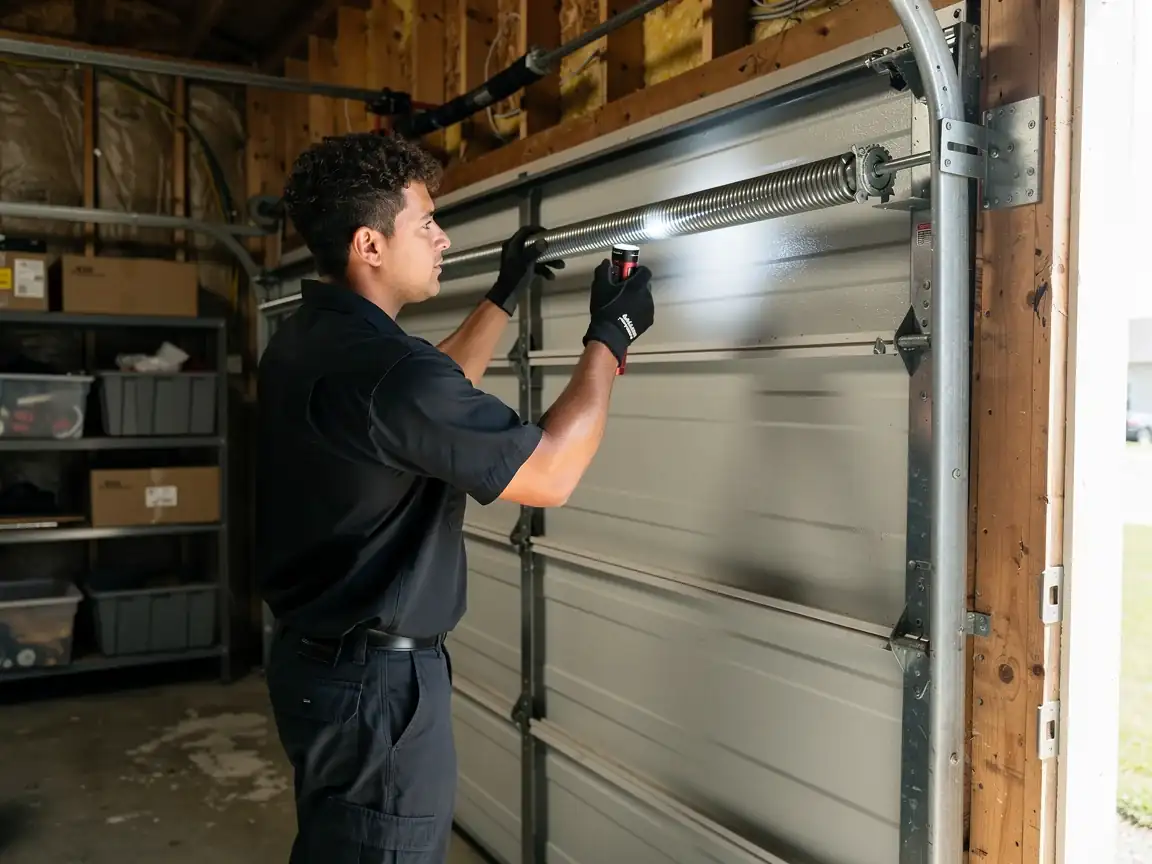
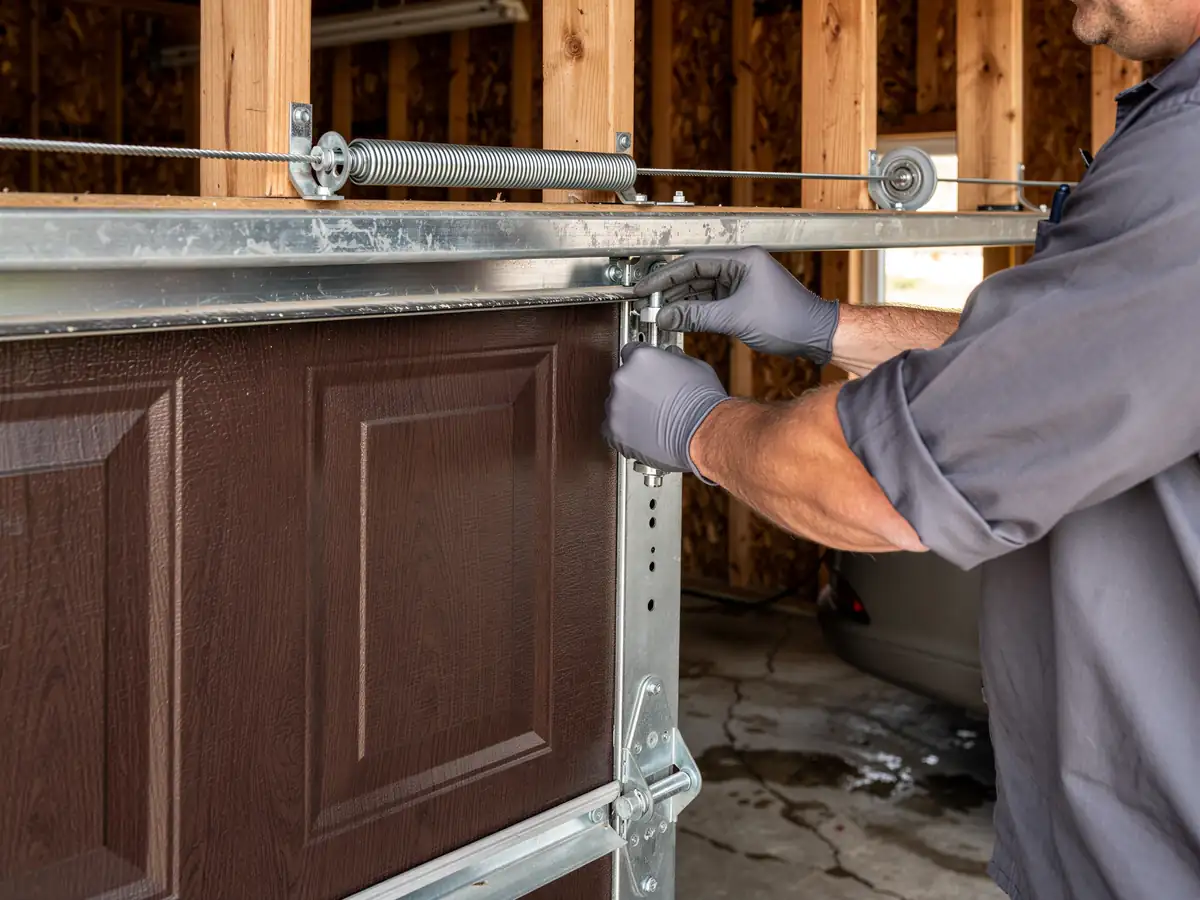
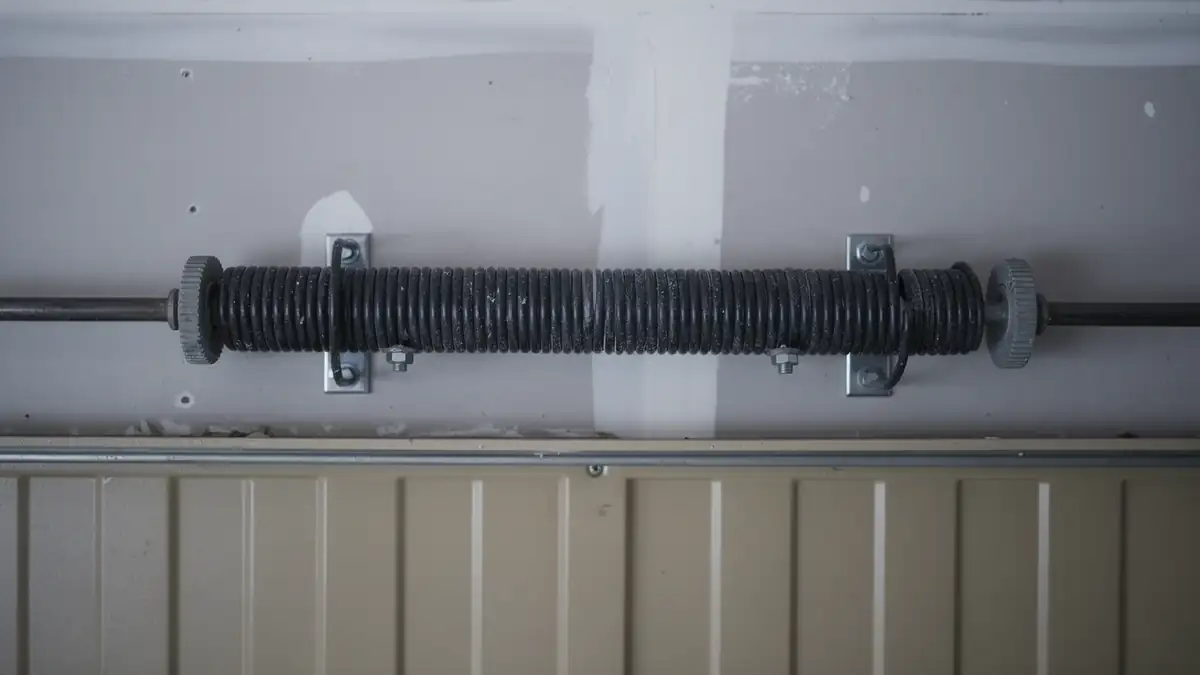
A torsion spring stores tension by being wound tight around a steel shaft. Every time the door opens and closes, that spring flexes. Over years of cycling, the steel fatigues, the way a paperclip gets weaker every time you bend it back and forth. In Dunedin, where a big share of the housing stock dates to the 1960s and 70s, a lot of springs out there have logged tens of thousands of cycles on original coil wire. Fatigue doesn't announce itself. The spring looks fine right up until it doesn't, and then it lets go all at once, usually with a loud bang and a door that won't budge or won't stay up. Age and cycle count are the real cause. Weather is what finishes the job on a spring that was already close to its limit.
How Local Conditions Play In
Two things matter here together: the age of the housing stock and the mildness of the climate. Because Dunedin's building stock mostly dates to the 1960s and 70s, with the broader area running 1958 through 2005, there's a lot of original or long-serving hardware still on these doors. Because the climate band is mild, that hardware doesn't get stress-tested by repeated hard freezes the way it would further north, so springs often last longer here before anyone notices a problem. The trade-off is that when a cold front does hit, it tends to catch a spring that's already near failure rather than one that's been tempered by regular temperature swings. We cover Dunedin out to Belleair, Belleair Beach, and Safety Harbor, all within about six to seven miles, and further out to Oldsmar and Indian Rocks Beach around nine miles, so we see this pattern repeat across a wide stretch of similarly aged housing, not just one neighborhood.