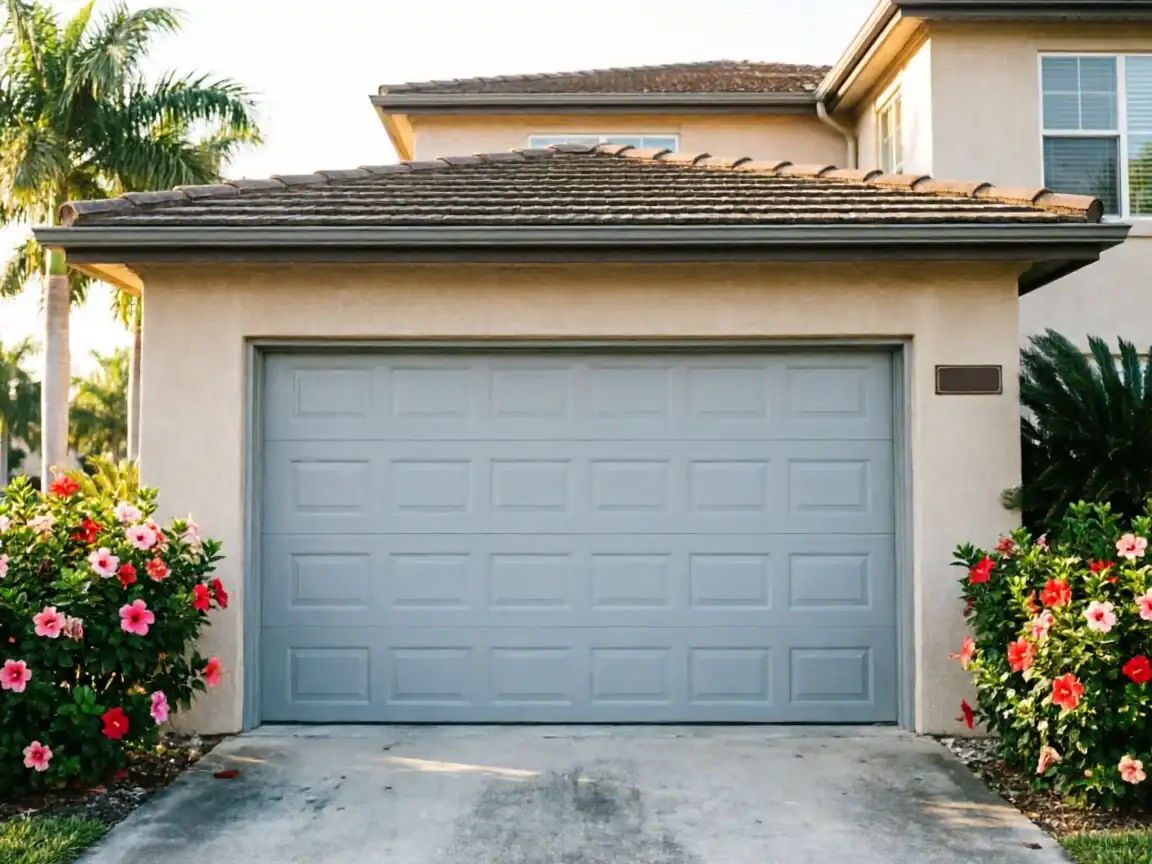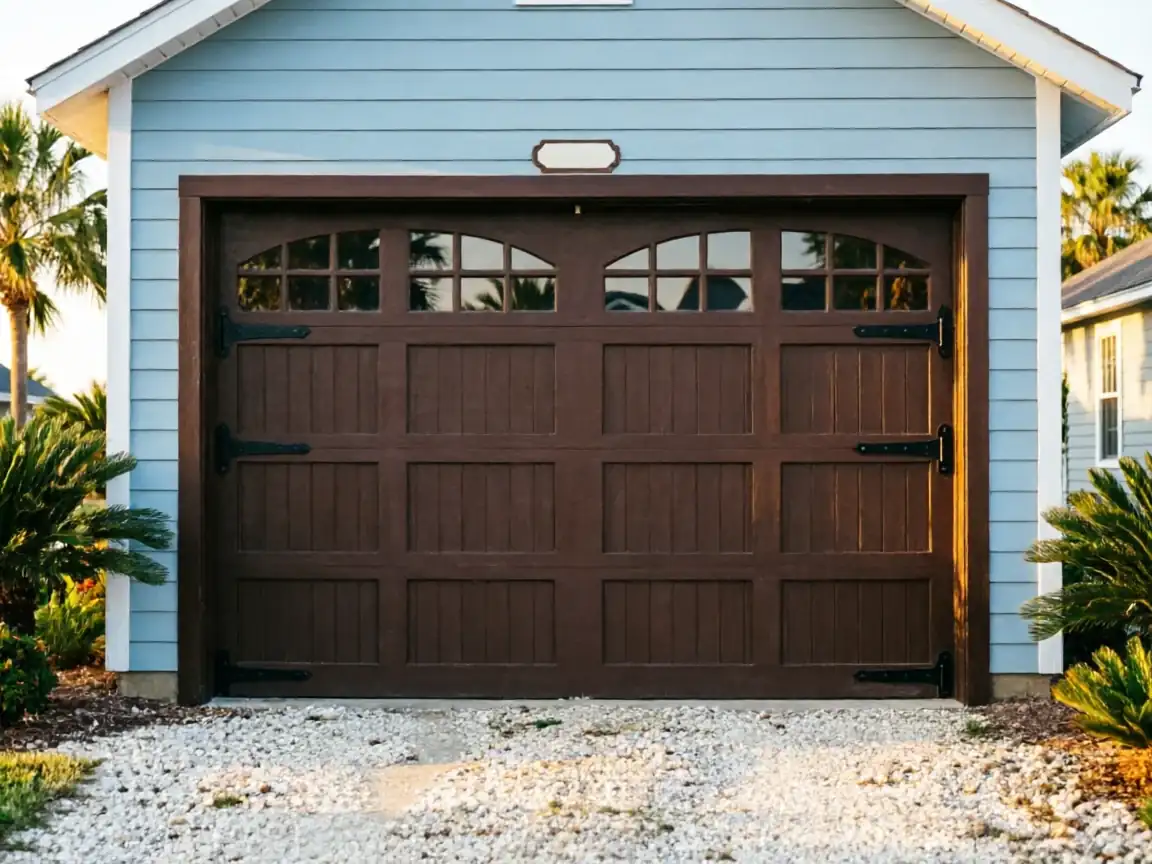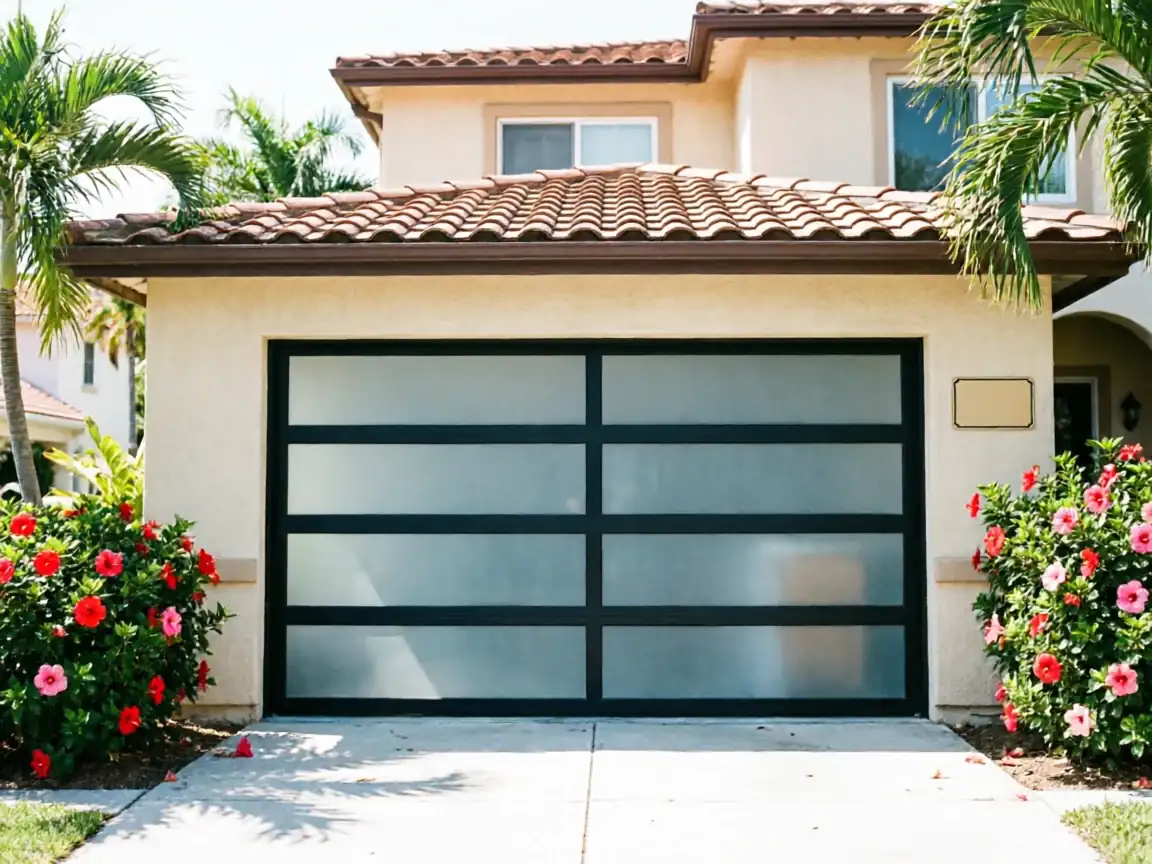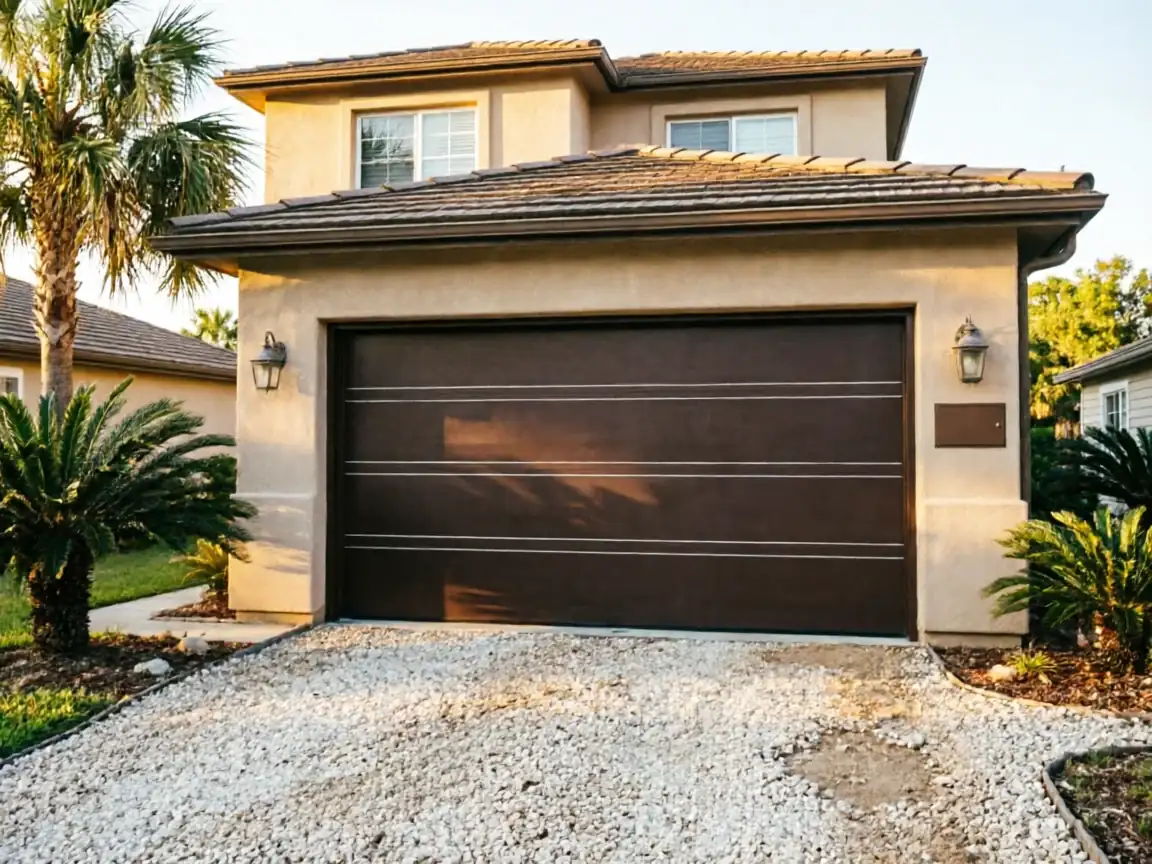
Why It Happens Here
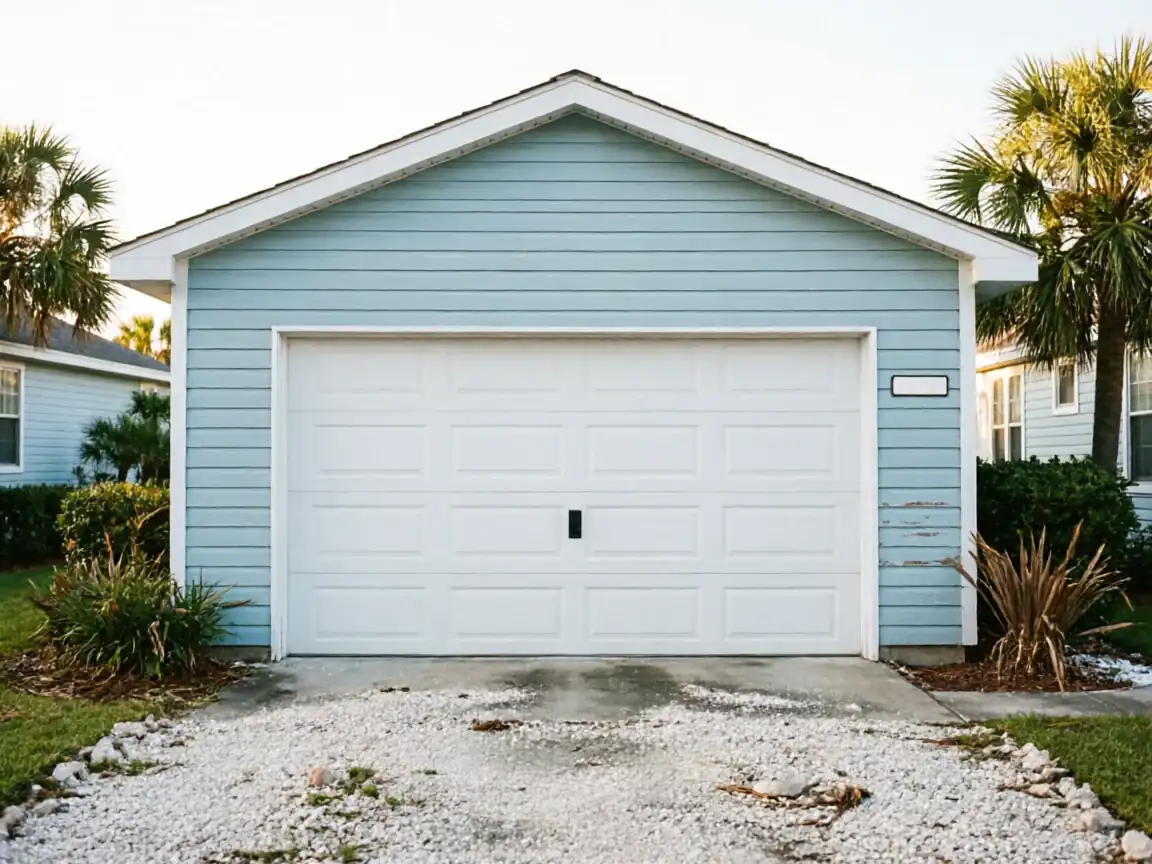
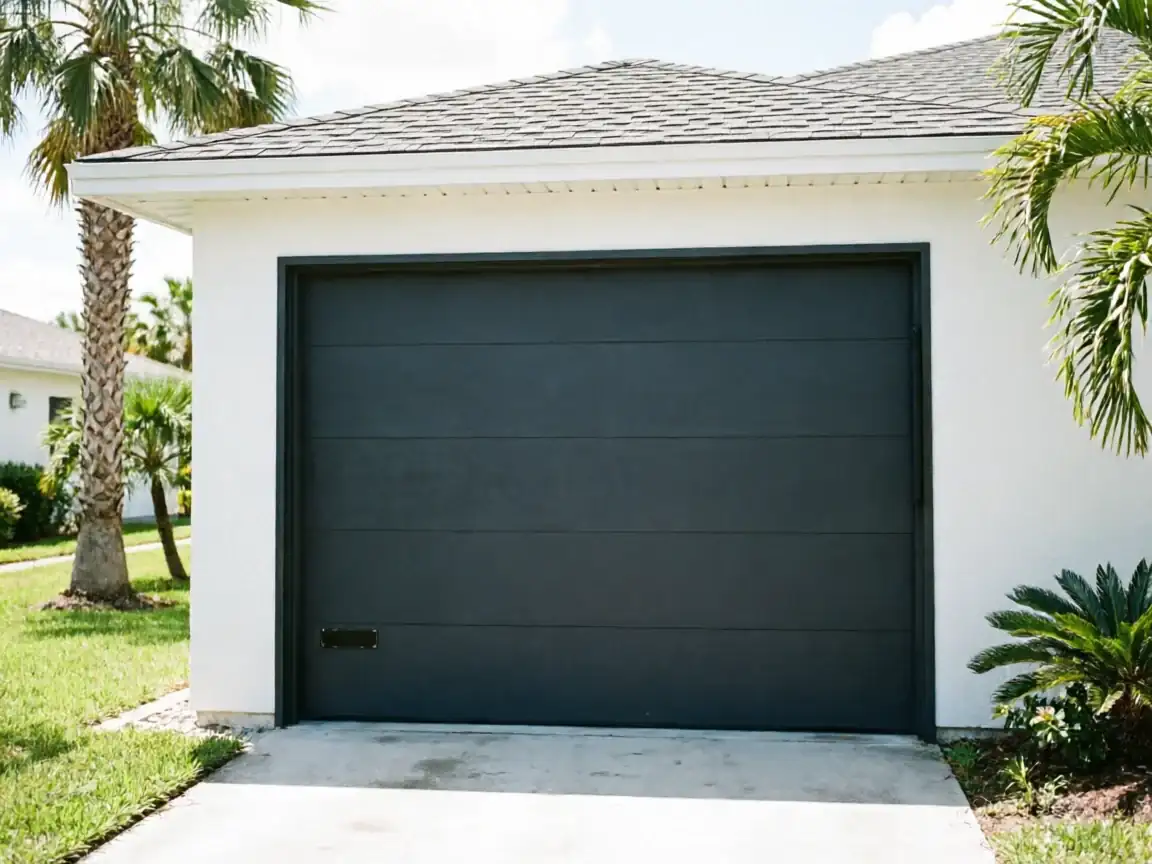
Most houses in this service area went up between 1958 and 2005, with the median landing around 1979, so a lot of garage doors here are original equipment well past their expected life. That's not a guess about Dunedin specifically - it's what the build years tell you. A door installed when a house was framed in the late 1970s has gone through close to five decades of opening and closing, spring cycles, and sun exposure.
The mild temperate climate here doesn't wreck a door with hard freezes or deep snow loads, but it does mean decades of UV and humidity cycling wear on seals and panels until they finally fail. You don't get the dramatic failure a cold-climate door gets from ice in the track. You get slow failure: bottom seals gone brittle, panels delaminating at the seams, hinges worn oval from sheer cycle count.
Dunedin's housing stock, like the bulk of the 27 named communities nearby, leans heavily on 1960s and 70s construction, which means openings sized for doors that haven't been made in decades. When a homeowner finally calls for installation instead of another patch repair, it's usually because the math stopped working - parts cost more than a new door, or the opening itself needs correcting for a modern door to fit right.
What the Repair Takes
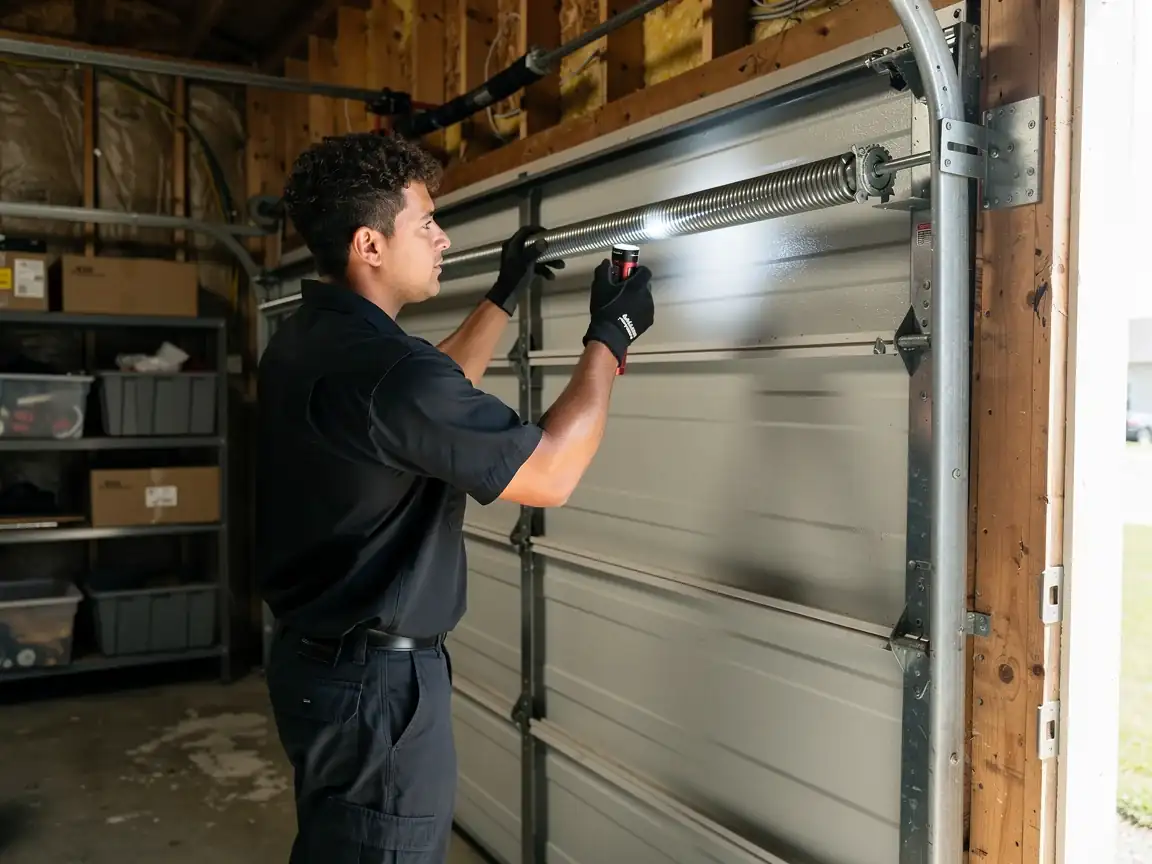
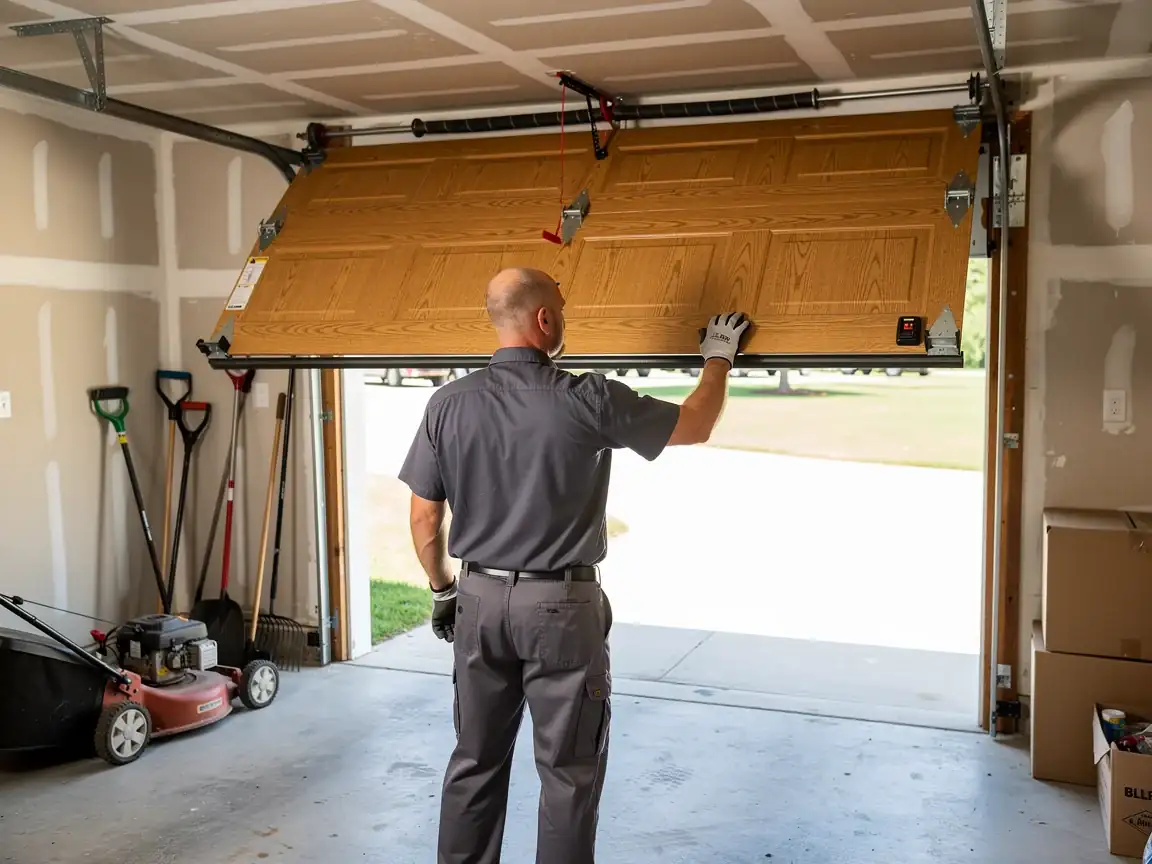
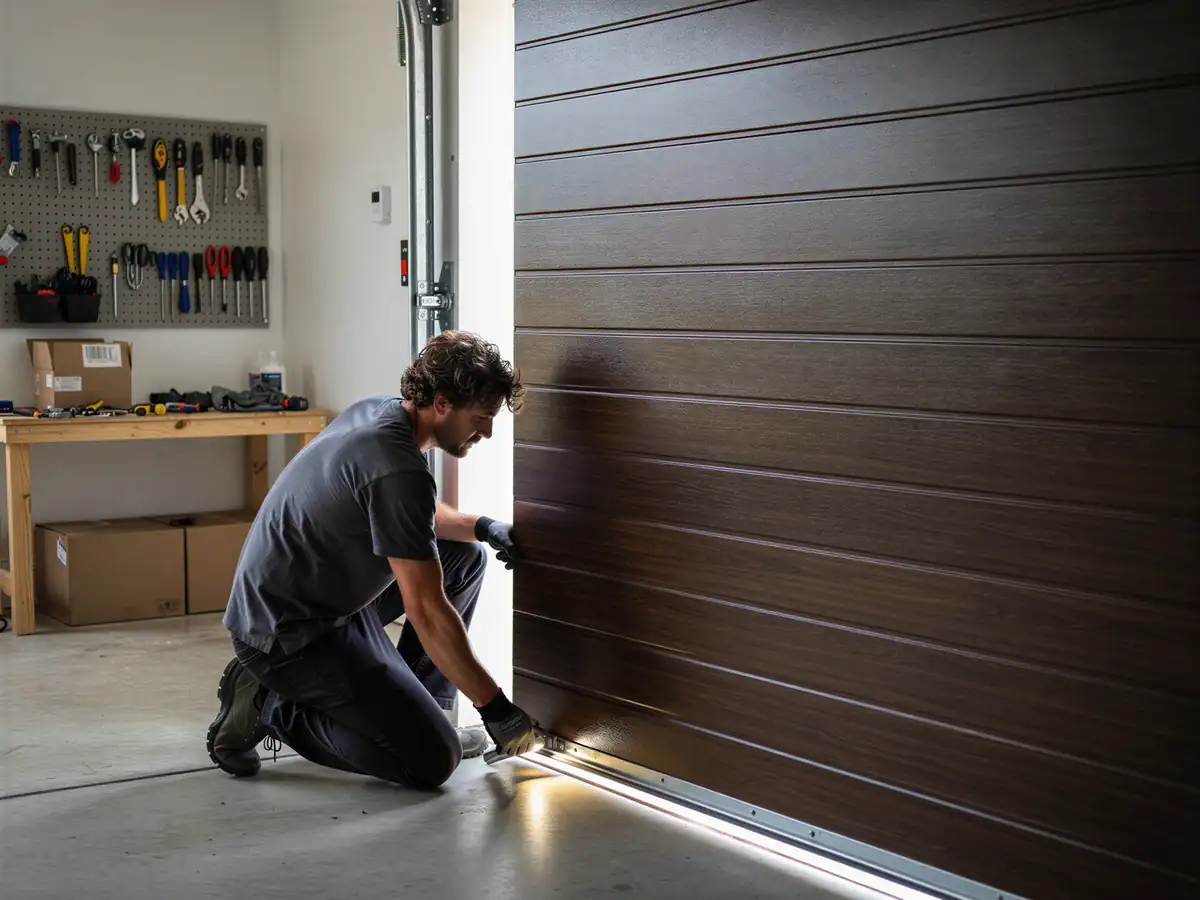
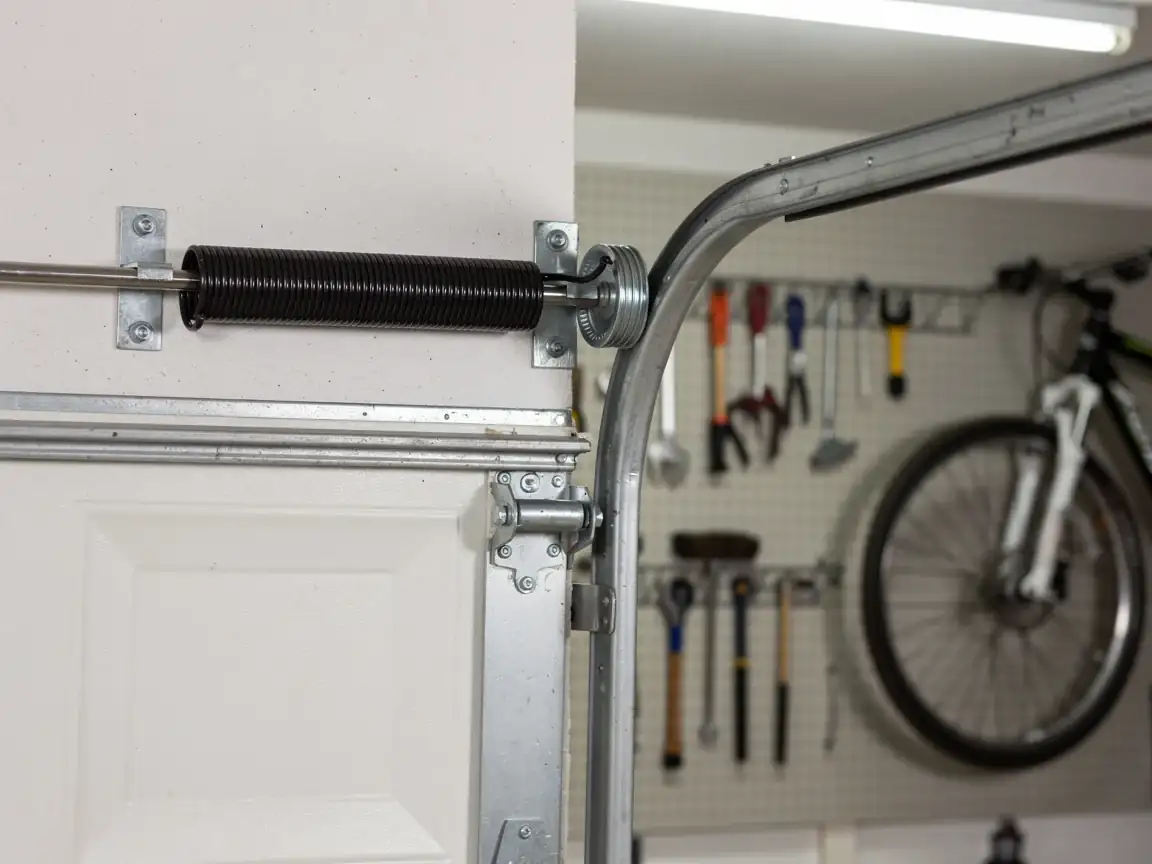
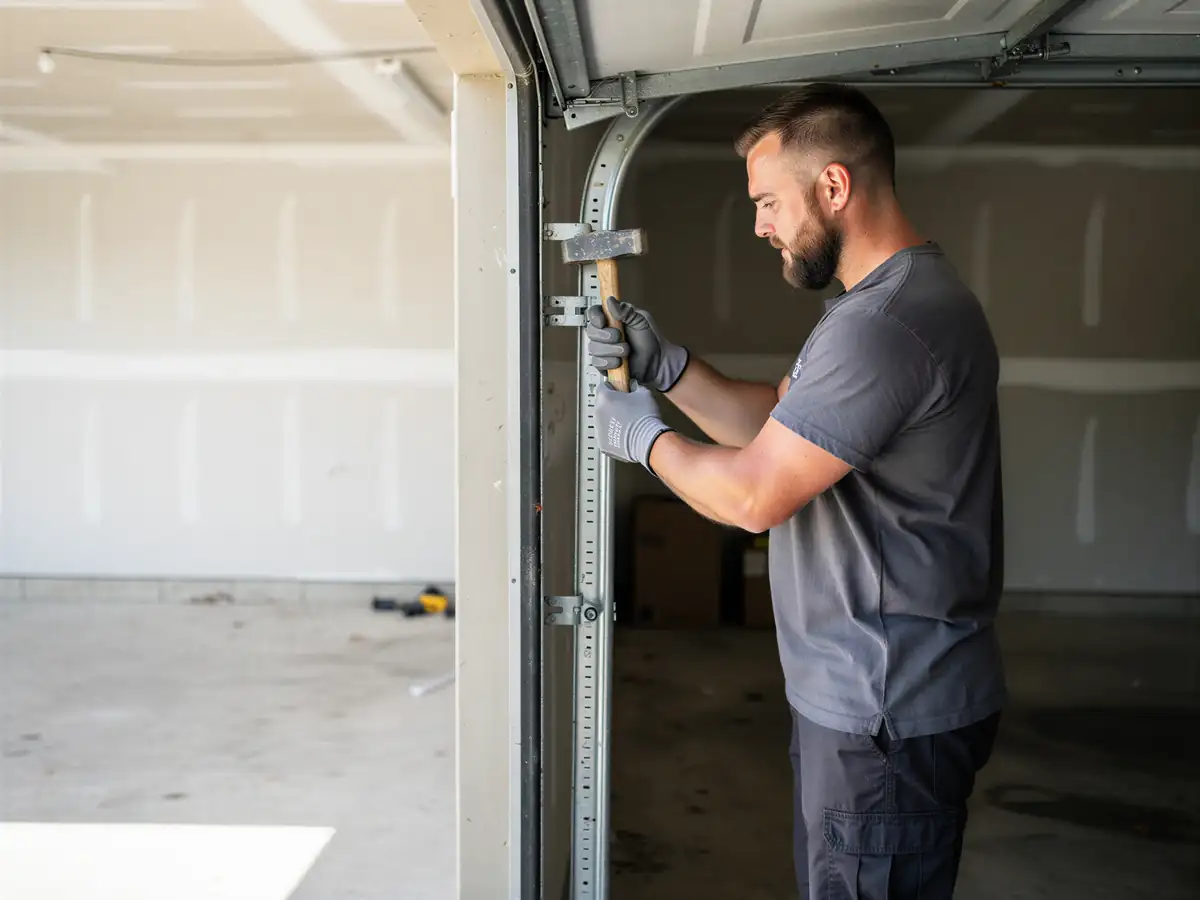
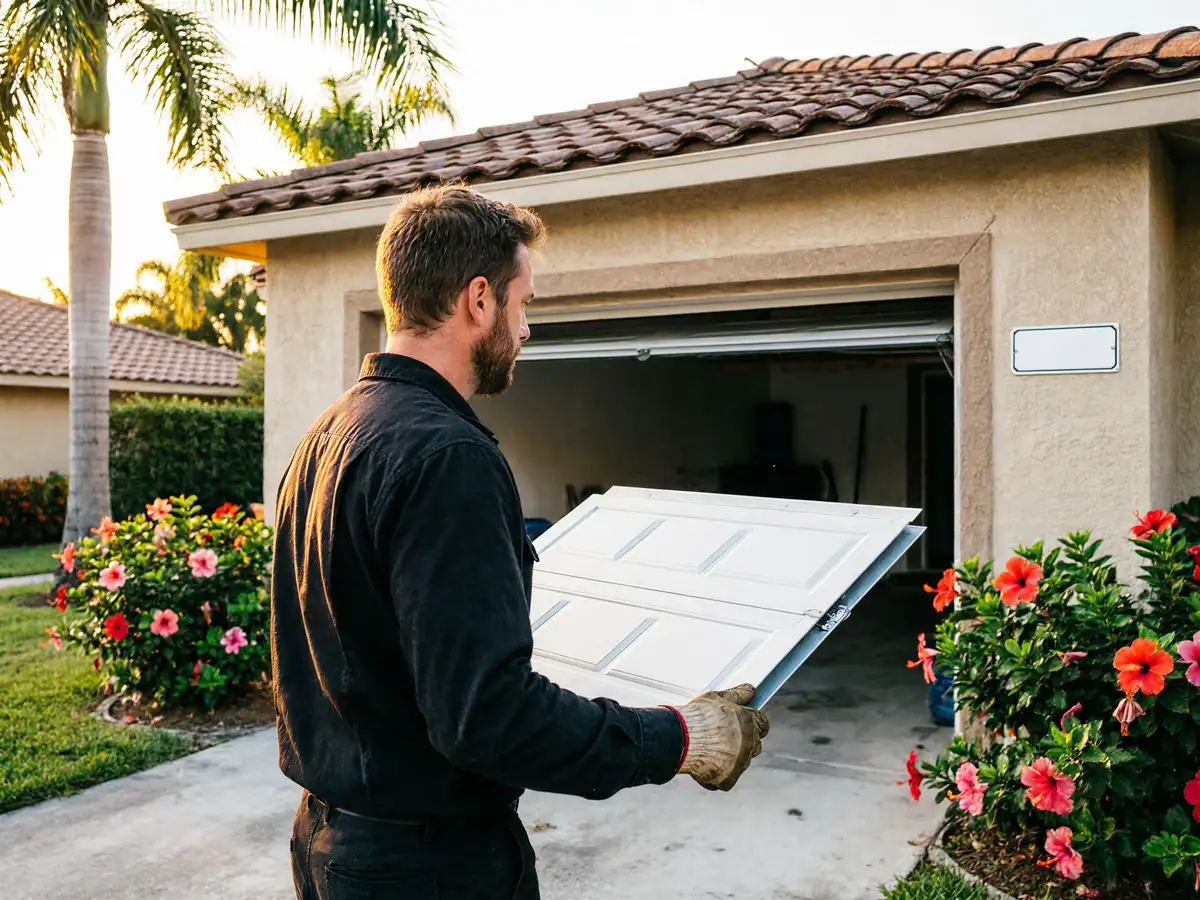
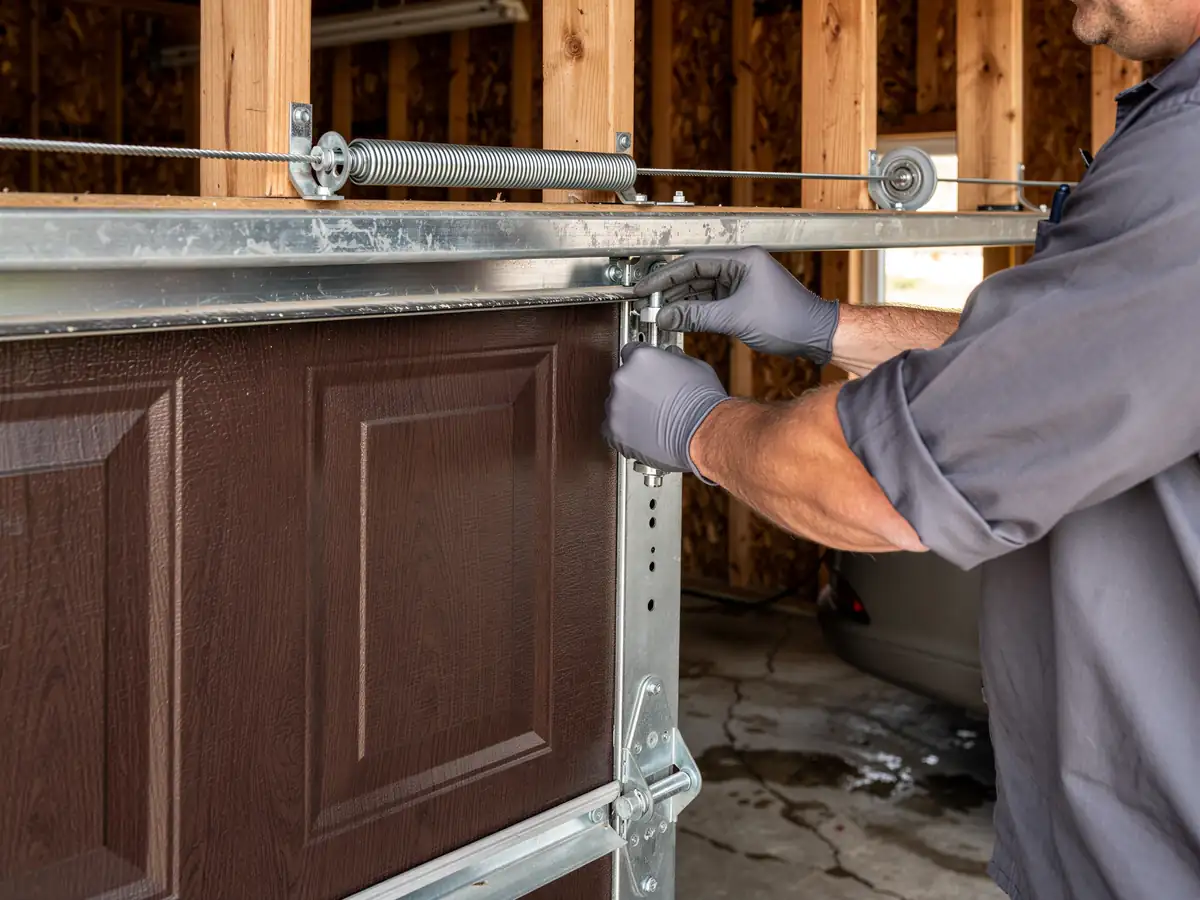
A full installation isn't just swapping a panel. We pull the old door and track system out, check the opening framing (common to find it slightly out of square in houses from this era), and set new jambs if needed before the new door goes in. Springs get sized to the new door's weight, not reused from the old setup - an old torsion spring rated for a heavier wood door will fight a lighter insulated steel door for years if you let it.
With a median household income of $84,220 in the service area, most owners here land in the mid-tier insulated steel doors rather than the premium wood-composite lines. That's not a judgment, just what the numbers show about typical spend, and it shapes what we stock on the truck for same-day jobs.
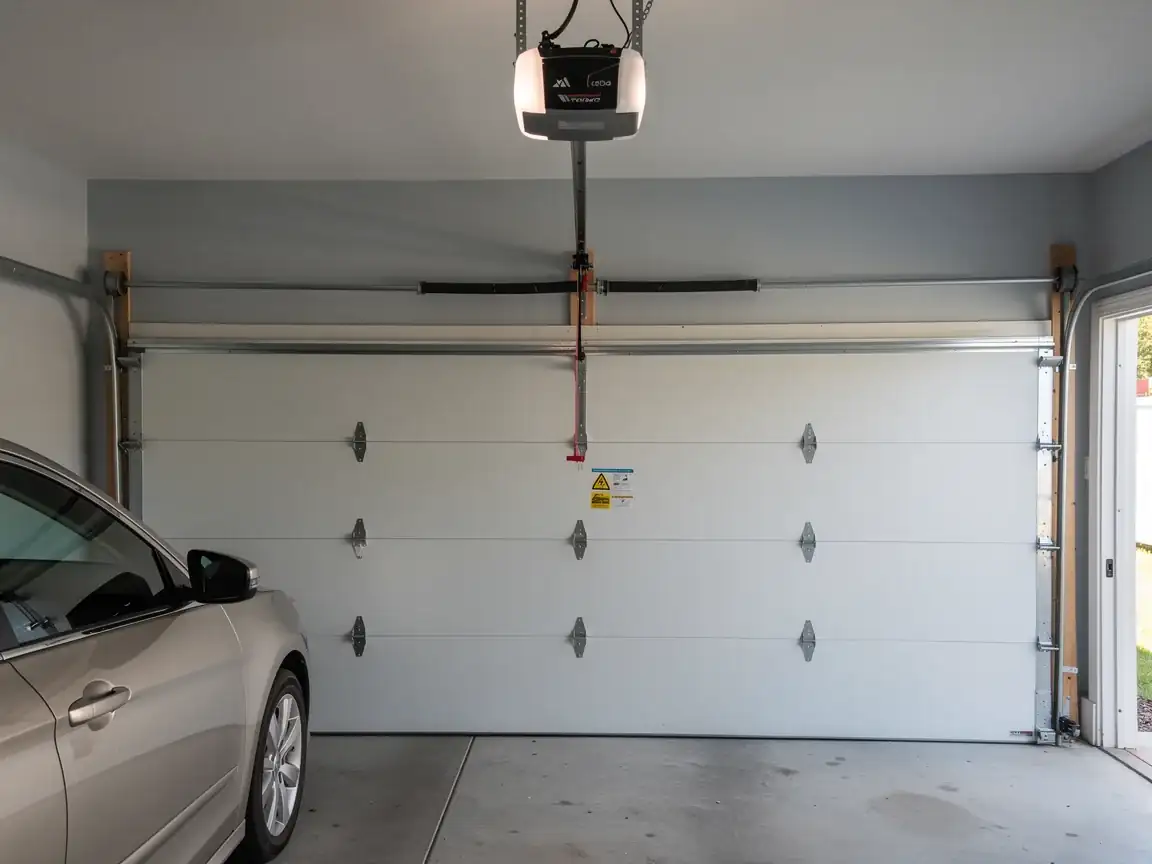
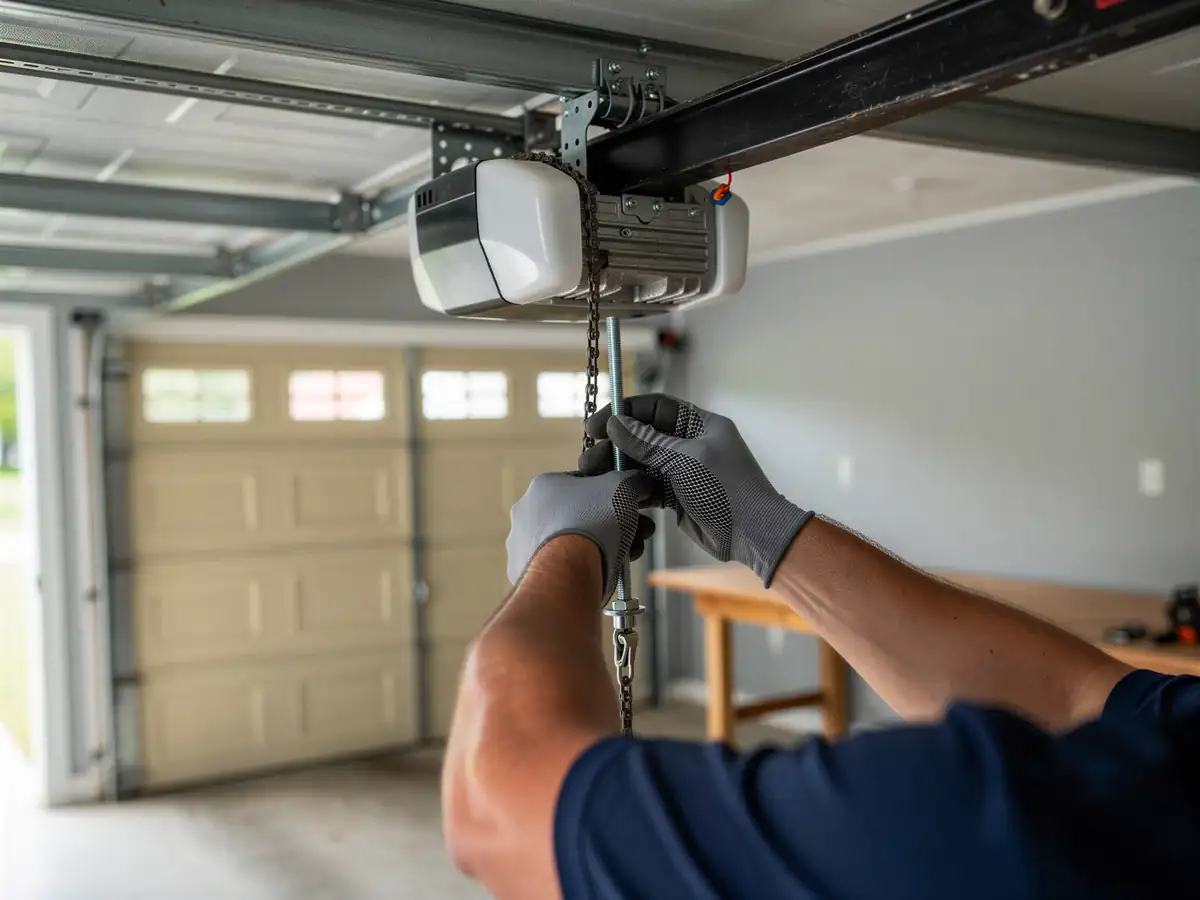
Opener compatibility gets checked too. A door that's heavier or lighter than the old one changes how hard the opener has to work, and on older houses the opener itself is often original to the house and due for replacement anyway. We'll tell you straight if the opener needs to go with it or if it has life left.
What Can Go Wrong
Across the 142,490 households and 67,618 owner-occupied houses in this service area
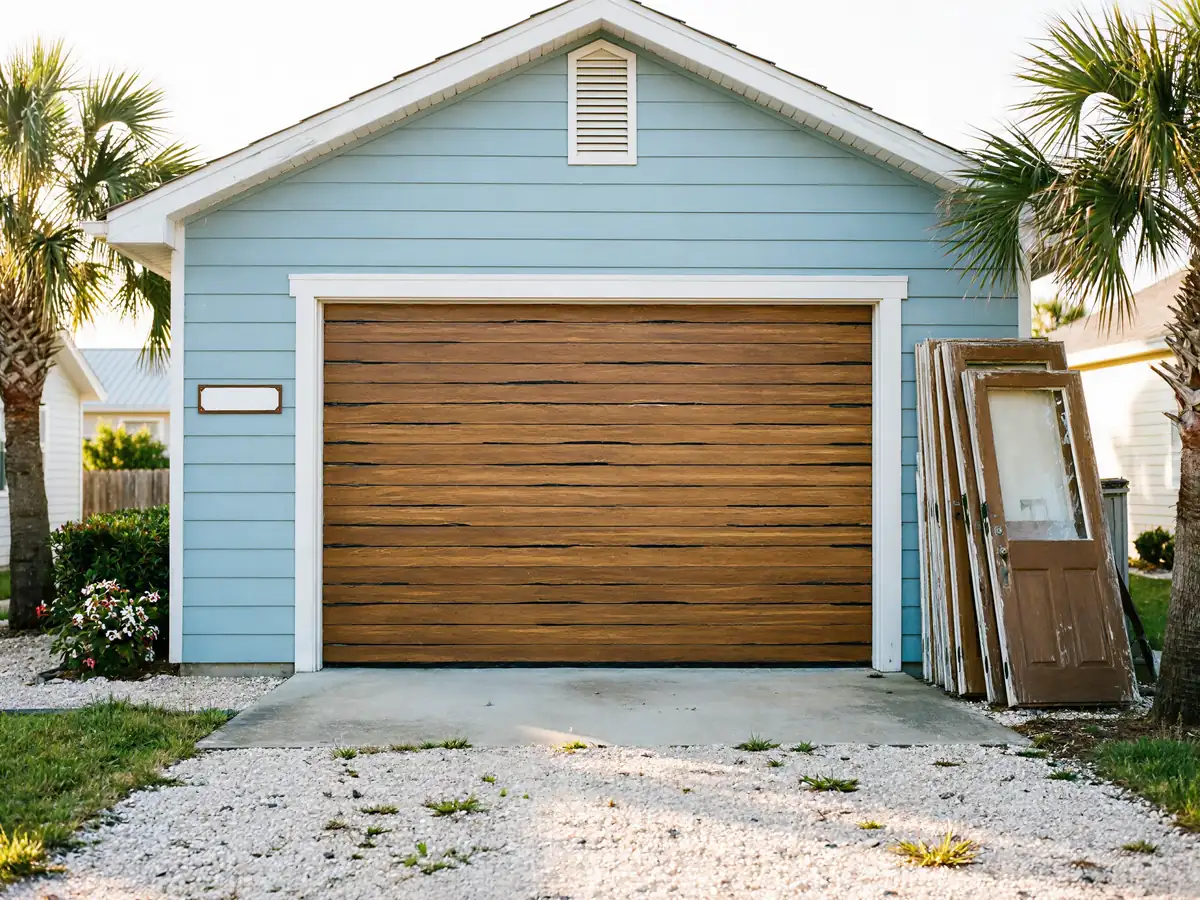
A big share still have the original builder-grade door that came with the house, and that creates a specific installation problem: the rough opening was framed for a door style that's no longer manufactured in that exact size. We either special-order close to spec or adjust the framing, and both options change the timeline and cost.
- 142,490 households
- 67,618 owner-occupied
Another issue that comes up on houses from the 1958-2005 build range
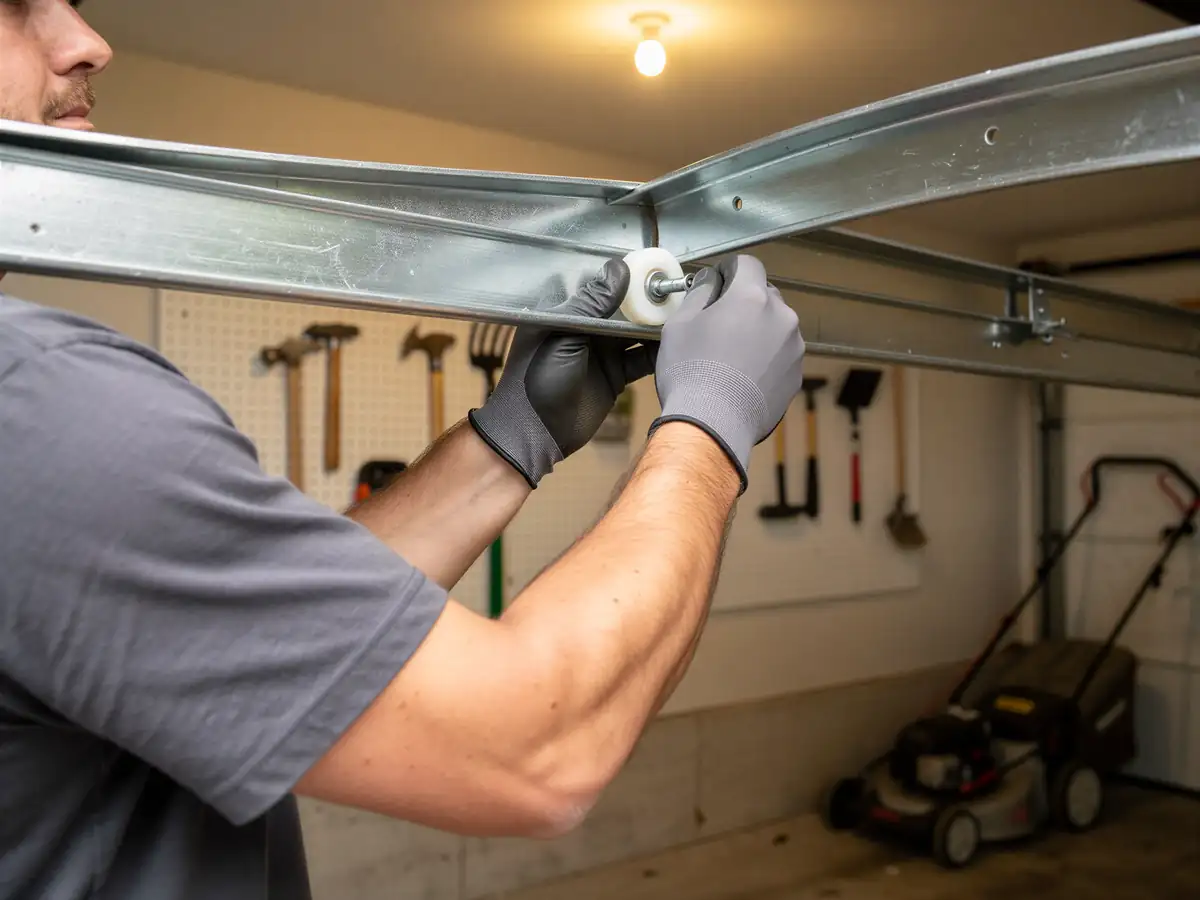
Track mounted on hardware that's rusted into the framing, or lag bolts stripped from decades of vibration. You don't find that until the old door is out, which is why an installation quote can shift once the job is open.
Here's the honest limit: we don't keep every door model in stock for same-day install
Specialty sizes or colors can mean a lead time measured in days, not hours. If your opening is standard and you're not picky about panel style, we can usually move fast. If you want a specific look, plan for the wait.
The Symptom
The giveaway that you're past repair and into installation territory is usually one of a few things: the door is noticeably heavier or lighter on one side when it moves, panels show visible warping or rust-through at the bottom few inches, or you're calling for the third spring or cable repair in a couple of years. None of those are emergencies on their own, but together they mean the door has reached the end of its useful run rather than hit a one-off failure.
On houses from the 1958-2005 era that make up most of this area, it's common for the door itself to outlast the original opener but not by much - if both are original to the house, you're usually looking at replacing both around the same time rather than staggering it.
If your door still opens and closes clean, with no daylight gaps at the corners and no grinding on the track, repair is still the right call. Installation is for doors that have genuinely aged out, not every door that makes a noise.