The Cost of This Job
We can't give you a number over the phone and mean it, and we won't pretend otherwise. What a service call runs depends on what's actually wrong and what's behind your wall, and in this area that varies more than you'd think. Houses here were built anywhere from 1958 to 2005, with the median landing around 1979, so a tech might open up a garage with original side-mounted torsion hardware from the Carter administration, or a 1990s builder-grade opener that just needs a new logic board. Those are two different jobs with two different parts lists.
The honest limitation: if your door is original to a house built before the 1980s, we may need to source a part that isn't on a standard truck stock list anymore, which can mean a short wait rather than a same-visit fix. We'll tell you that on-site before we commit you to anything. What we won't do is quote a flat rate before we've had a tech look at the spring size, track type, and opener model, because on a street with mixed-era construction, guessing costs you more than waiting for an honest look.
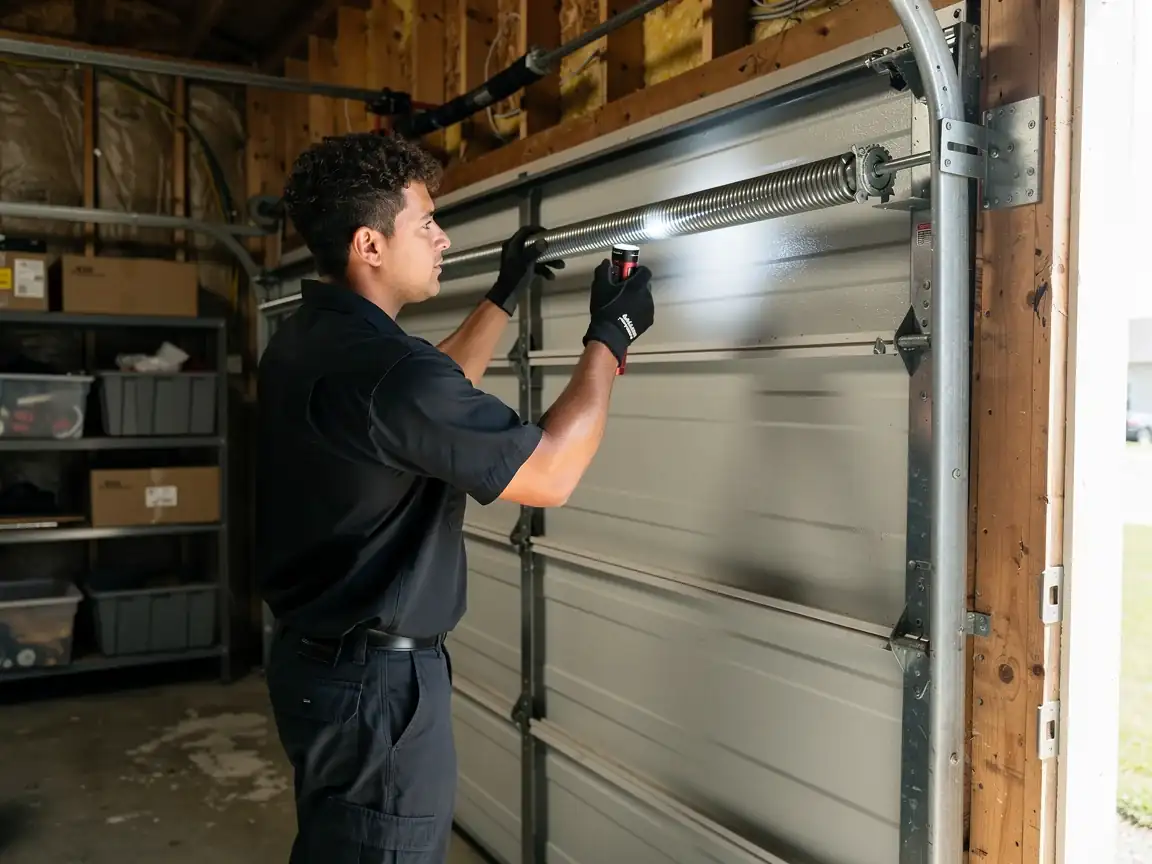
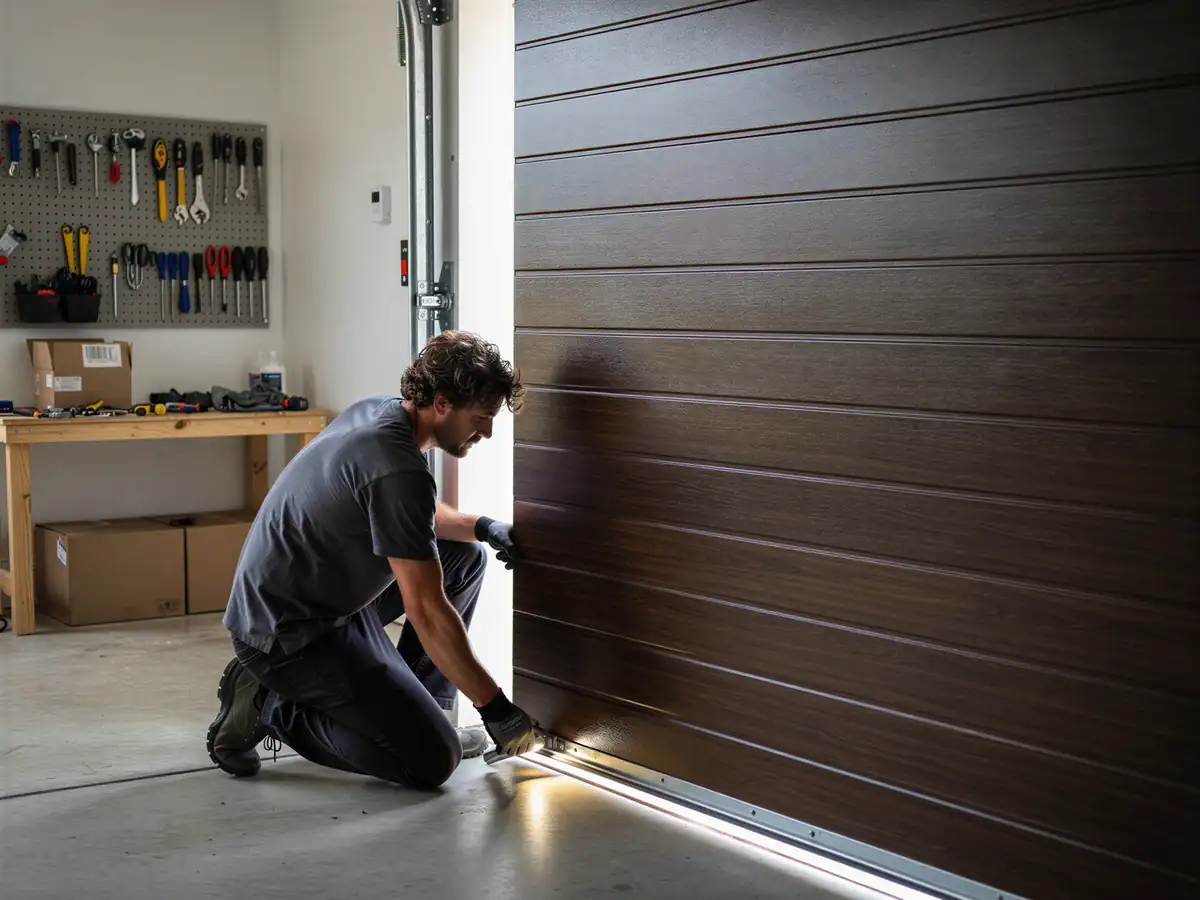
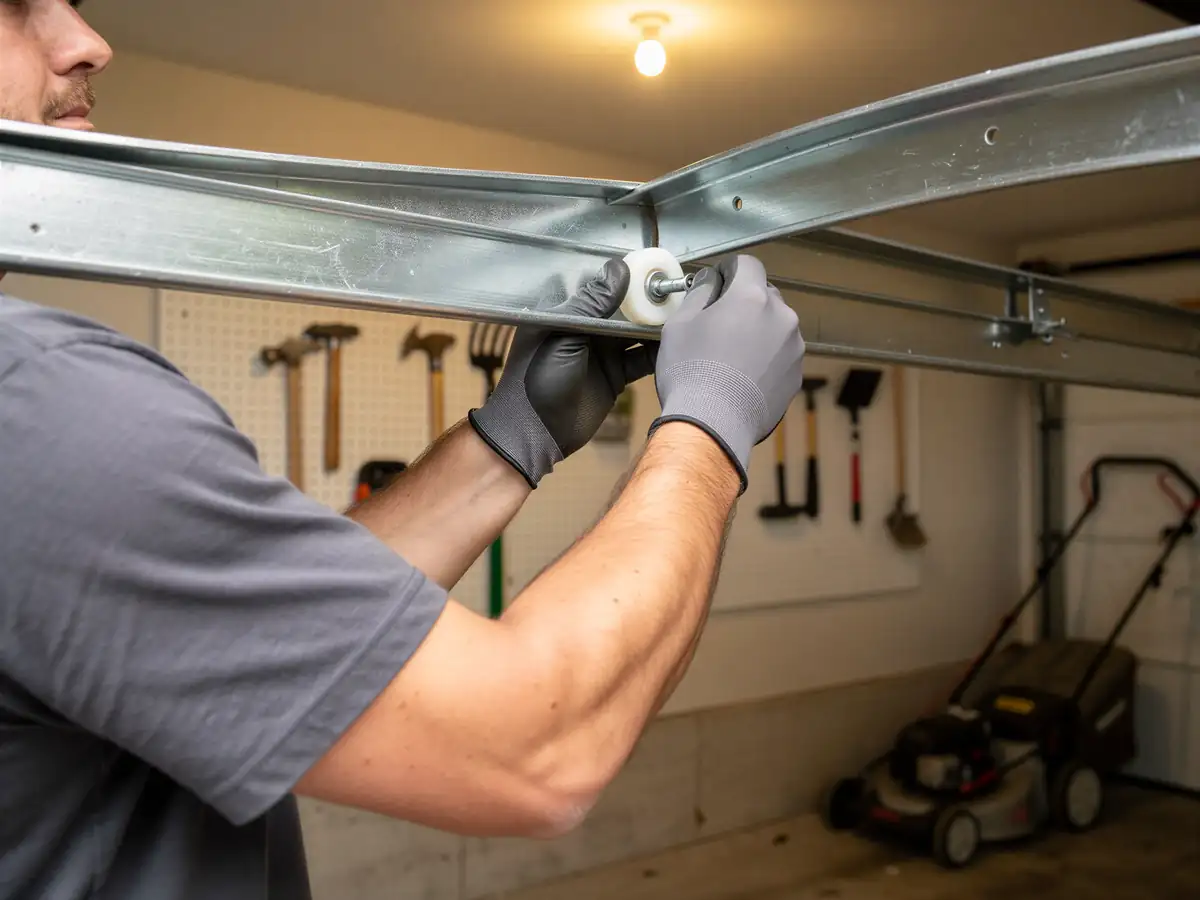
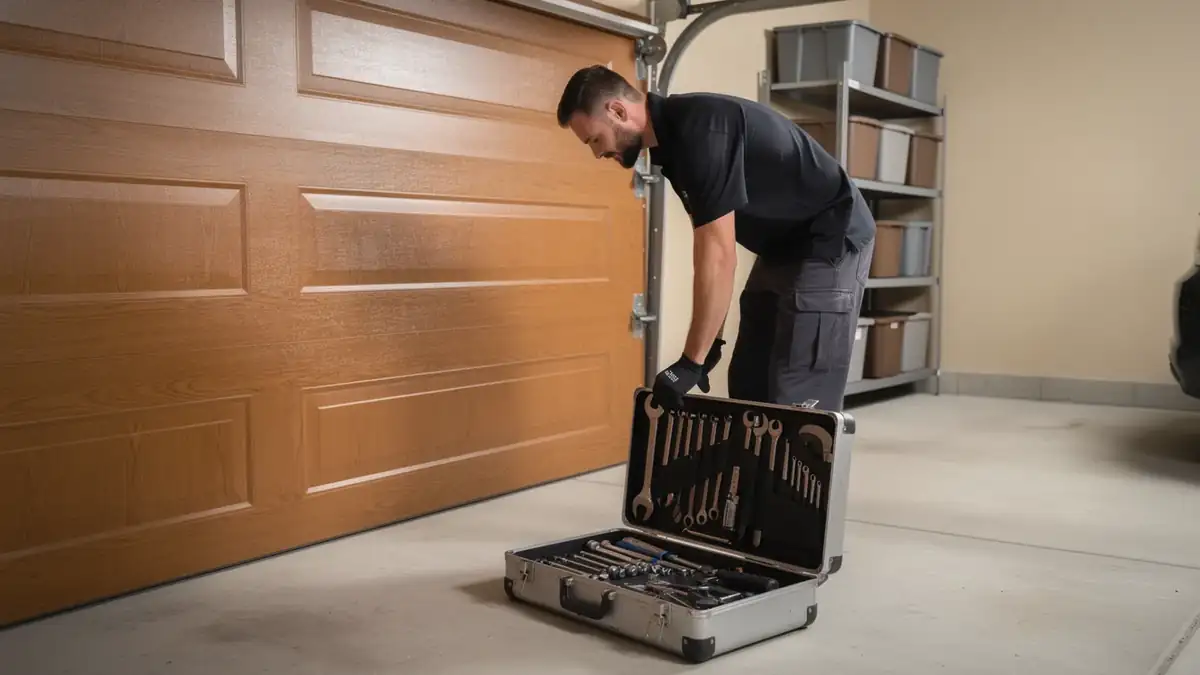
What we can tell you is what we check every time, regardless of era: spring tension and wear, cable condition, track alignment, roller wear, opener force settings, and the sensor eyes. That inspection is the same whether your house is from 1961 or 2001. What we find inside it is not.
What Is Going On
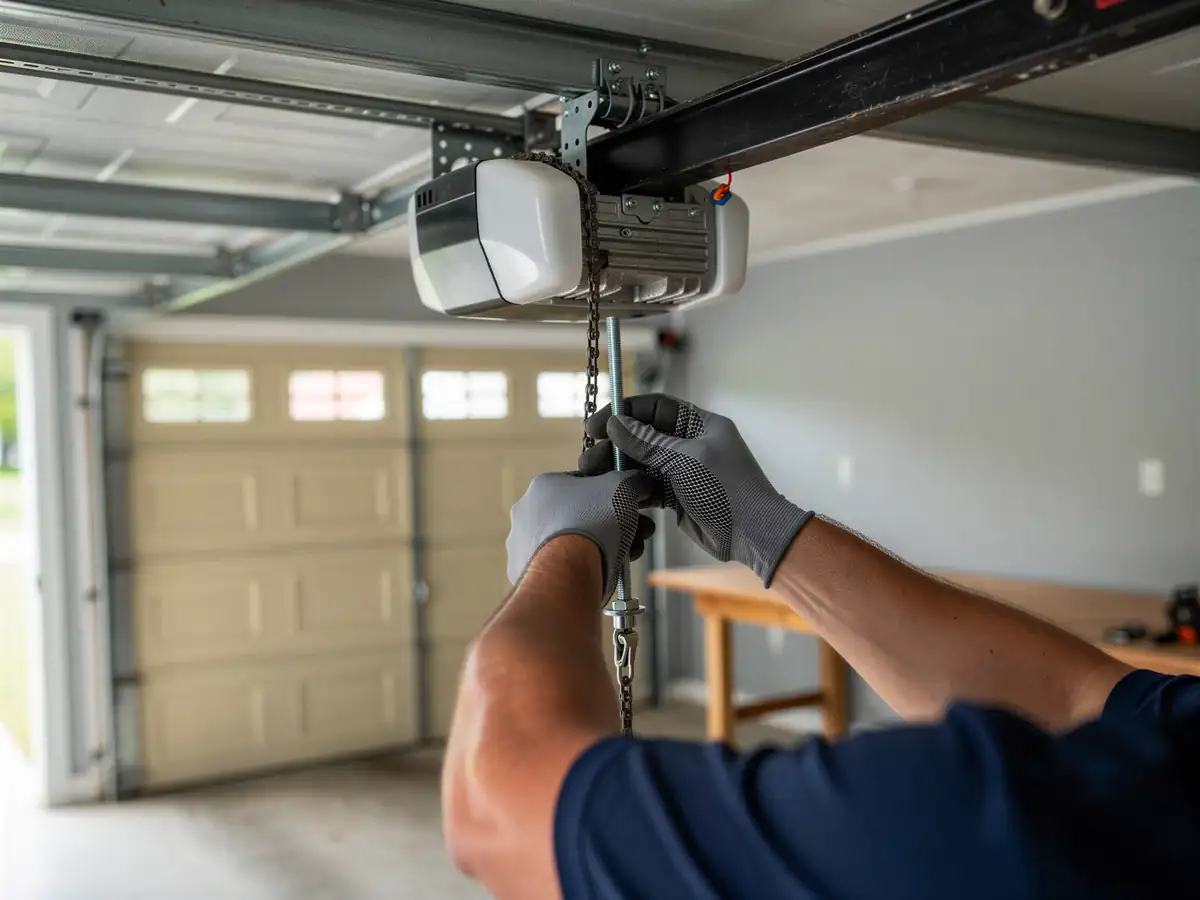
Most calls start the same way: a door that's slow, loud, or stuck, and a homeowner who assumes it's the opener. Often it isn't. In a service area where the housing stock runs mostly 1960s and '70s construction across the named communities we work in, the opener is frequently the newest part in the garage - it got swapped once, maybe twice, while the actual door, track, and spring assembly stayed original.
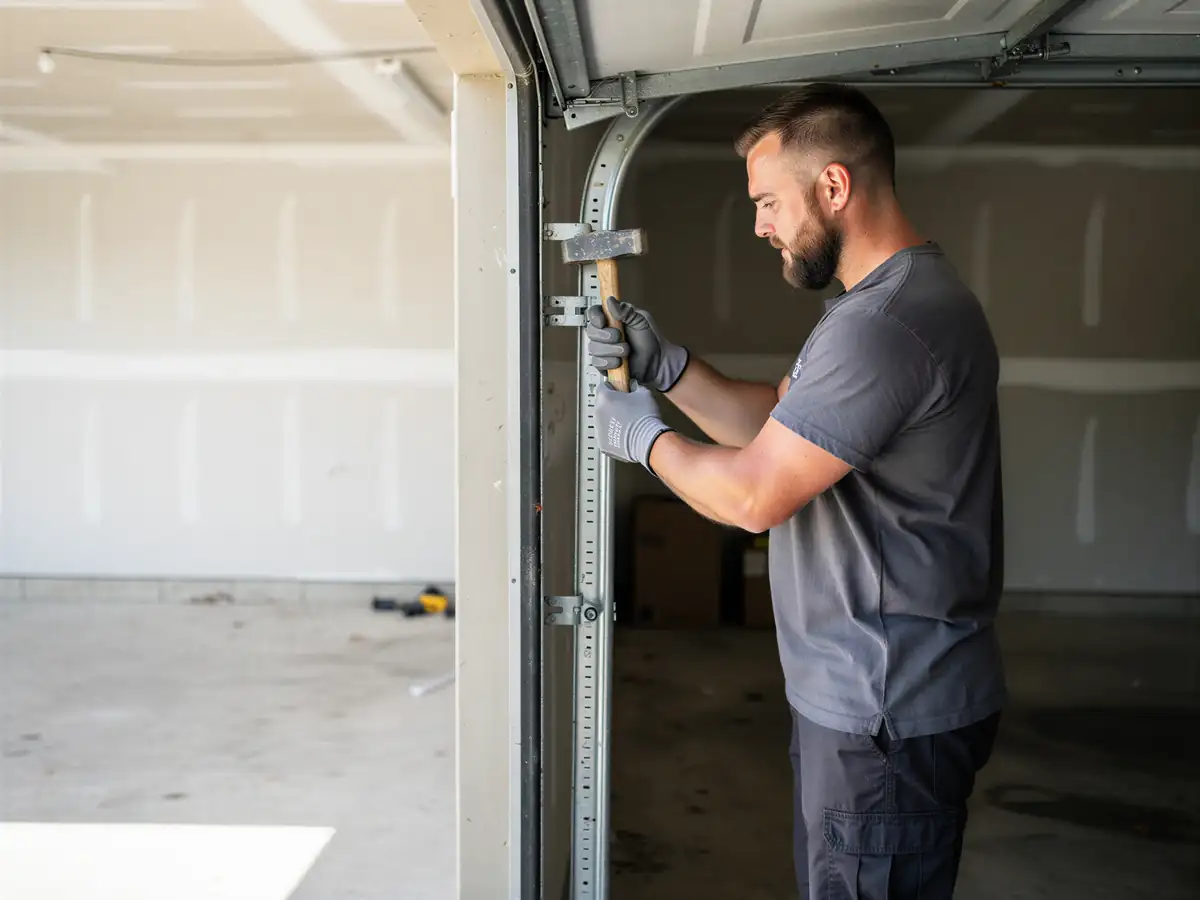
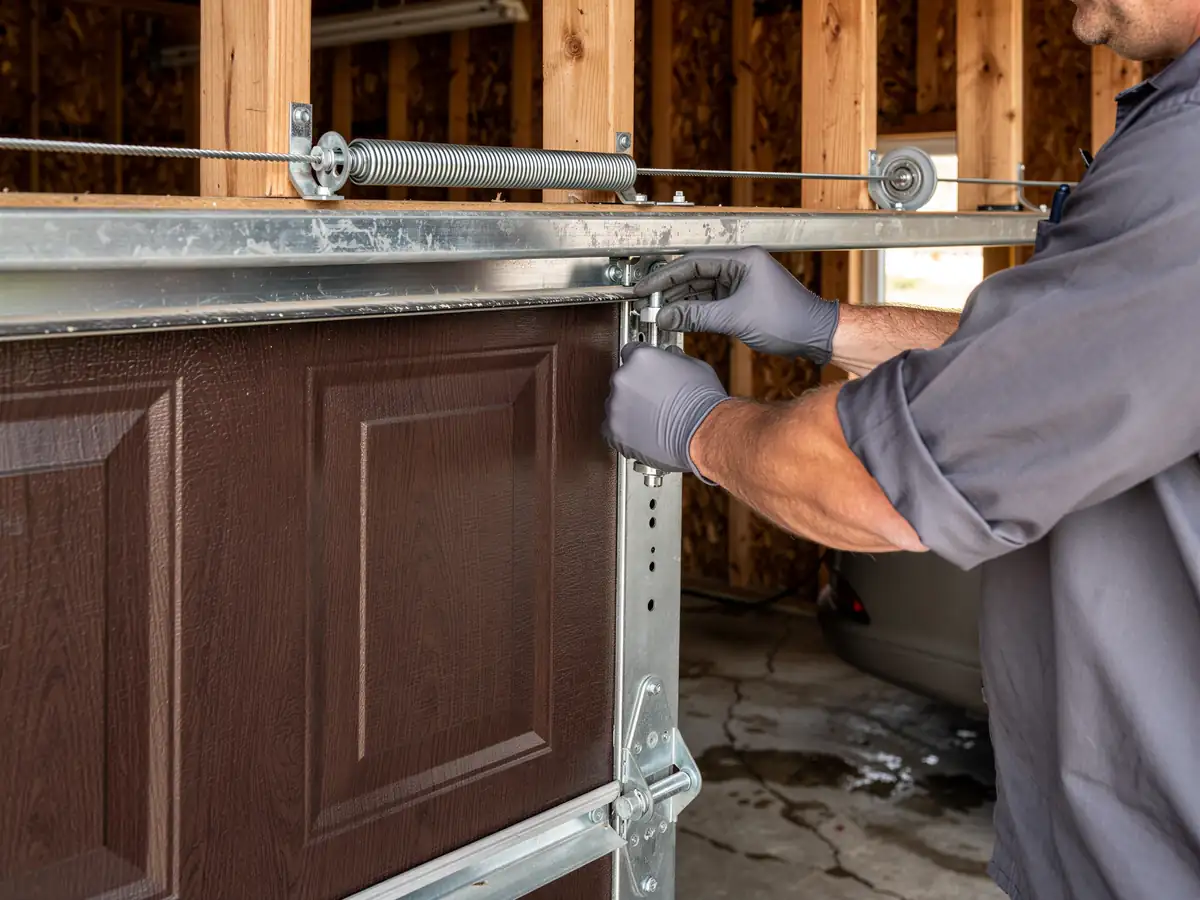
That matters because springs have a duty cycle. A torsion spring rated for roughly 10,000 cycles doesn't care what decade it is - it just wears out. On a house with a 1979-era door, that spring has had forty-plus years to get there, even if it was replaced once in between. So when we show up and the opener seems fine but the door is still heavy to lift by hand, we're not looking at the motor. We're looking at the spring, the cable, or a track that's gone slightly out of true from decades of use.
We also check whether the hardware is original to the house or a later retrofit, because that tells us what we're working with before we quote parts. A door that's been upgraded piecemeal over the years is a different job than one that hasn't been touched since it was installed.
The Seasonal Bit
This area sits in a mild temperate band
Which means we don't get the hard freeze-thaw cycling that snaps springs and seizes openers in colder parts of the country. That's genuinely good news - it's one less failure mode we have to diagnose around, and it's part of why some original 1960s and '70s hardware is still running at all.
What the mild climate doesn't do is stop wear
Springs still fatigue on a cycle count, not a temperature, so a door here fails for the same mechanical reasons it would anywhere, just without the added stress of ice in the track or a motor straining against a frozen seal. What we do see more of locally is humidity-related wear on steel components that aren't galvanized or finished well, especially on older doors where the original hardware wasn't built with today's coatings.
The honest version: don't expect a winter-driven spike in calls the way you would up north
Expect a slower, steadier failure pattern tied to age and use, which is exactly what the 1958-2005 housing range here predicts. If your door is acting up, it's more likely decades of cycles catching up with it than anything the weather did last week.
How Local Conditions Play In
We work across a service area that covers 142,490 households, with 67,618 of those owner-occupied houses, spread across 27 named communities from Belleair and Safety Harbor out to Oldsmar, Seminole, and Trinity. That spread matters for one reason: the housing age is fairly consistent across it, which means the failure patterns we see repeat house to house instead of being a grab-bag of random problems.
Median household income across the service area runs $84,220, which we mention only because it shapes a real decision homeowners face: repair versus replace. On a door that's original to a 1960s or '70s house, parts availability and labor to retrofit old hardware can approach the cost of a new door with a modern opener, torsion system, and better insulation. That's not true on every job, but it's true often enough on the older end of our stock that we bring it up before a repair quote, not after.
We don't claim to have been doing this in every one of those 27 areas for years - we won't tell you a story we can't back up. What we can tell you is that the age range and mix of housing here is consistent enough that a tech's first guess, based on your house's decade, is usually close to right before the toolbox even comes out.