The Cost of This Job
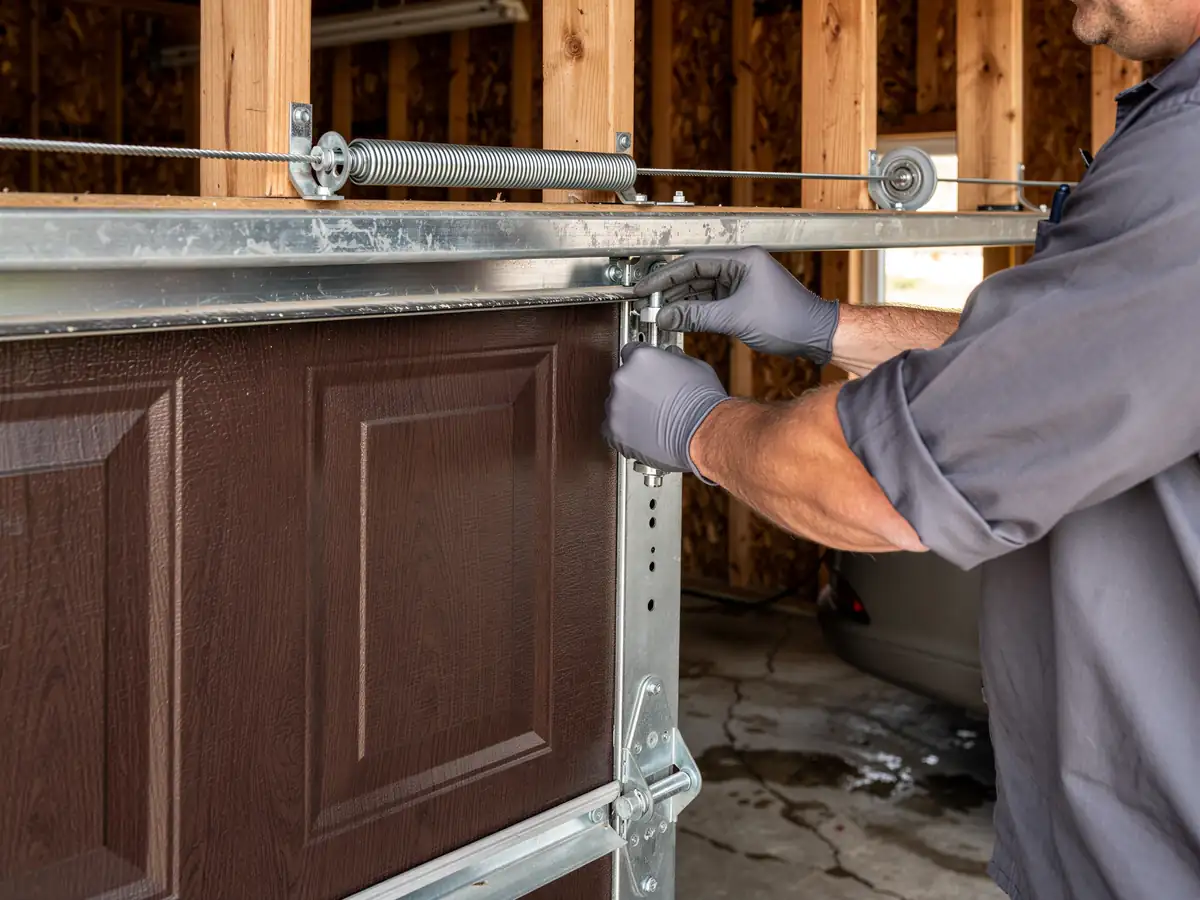
We can't quote you a number here without seeing the door, but we can tell you what drives the cost in a town built the way Dunedin was built. Most houses in and around Dunedin went up between 1958 and 2005, with the median landing around 1979 - so a lot of what we're called out for is original torsion hardware, not the newer extension-spring setups you'd find on a house built last decade. Original hardware means non-standard drum sizes and shaft lengths that take longer to source and fit than a stock part off the truck. A worn roller or a loose hinge is a small job. A torsion spring that's seized on 1970s-era brackets is a bigger one, because the bracket often has to come off with it. With median household income in the service area around $84,220, most owners here are used to paying for a proper fix rather than a patch, and that's usually the right call on a door this old - patching a 45-year-old spring assembly just moves the failure down the road a few months. The honest limit: if your opener and springs are both original to a 1970s build, we're not going to recommend repairing one and leaving the other. It's false economy on a door this age.
What Is Going On
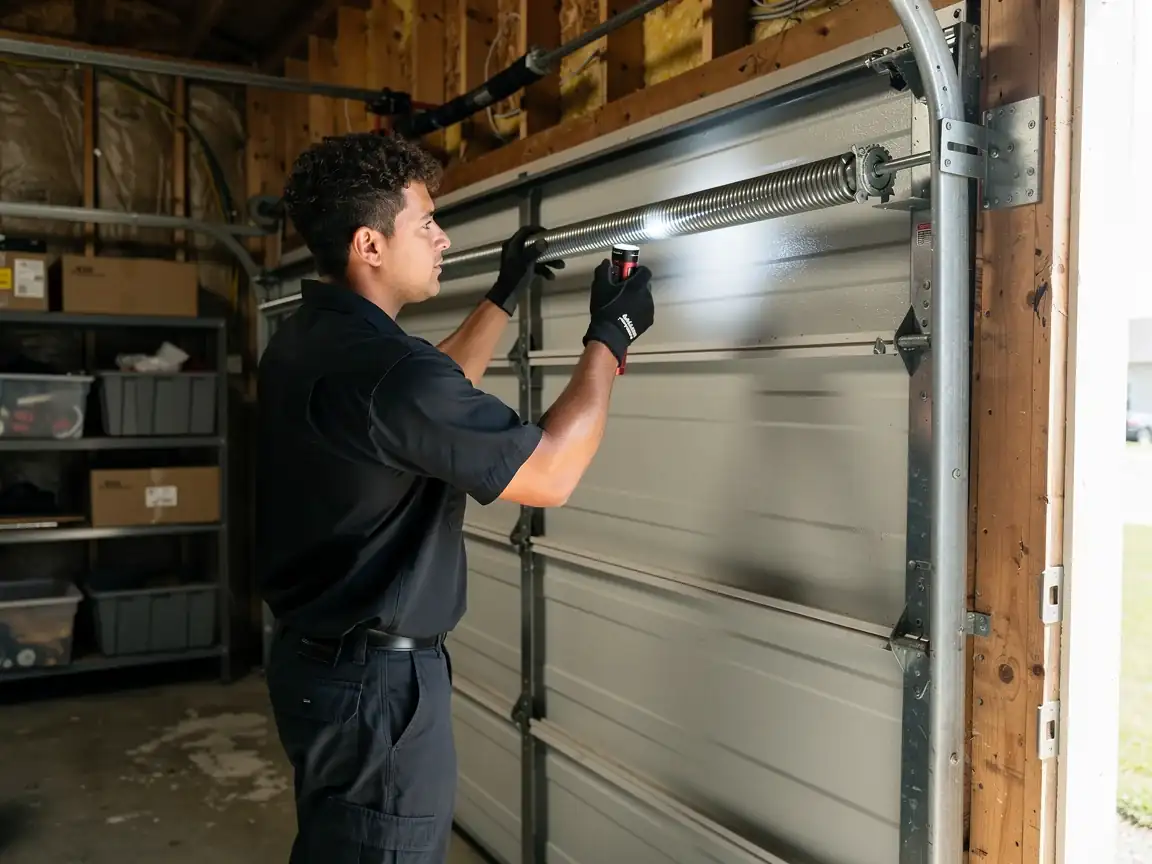
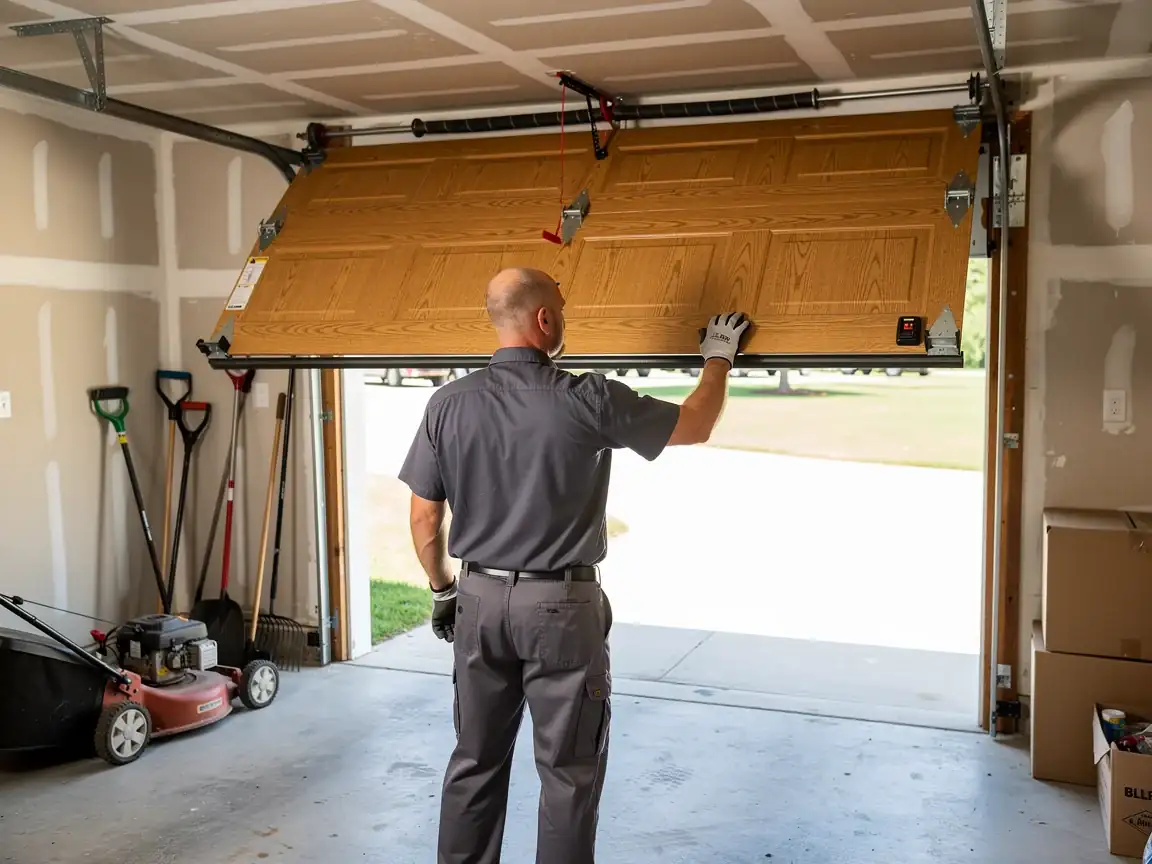
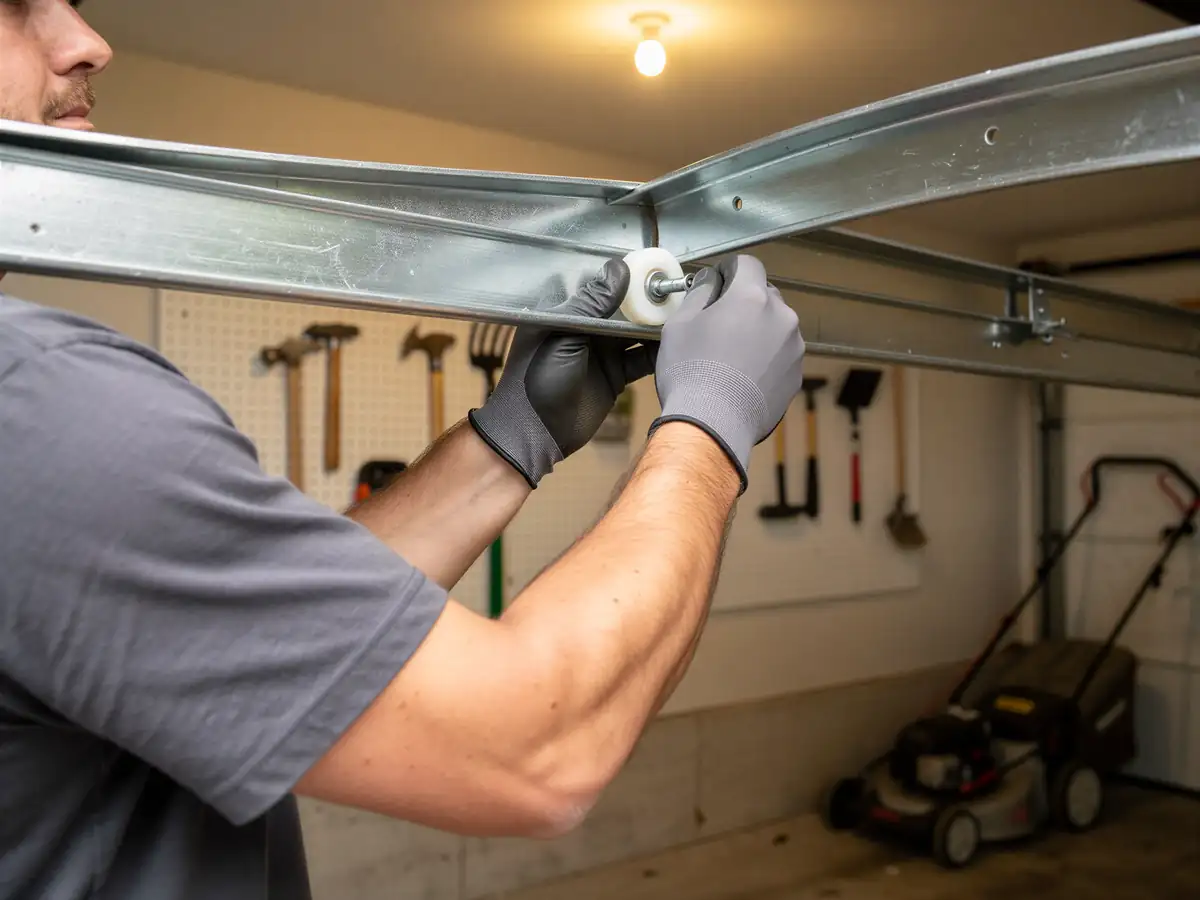
A grinding sound when the door starts moving usually means a roller that's worn flat on one side - common on the steel rollers original to houses from the 1960s and 70s stock that makes up most of this area. A sharp bang partway through the cycle is almost always a cable jumping its drum, which happens more on older torsion setups where the drum has worn a groove over decades of use. A rhythmic thump, once per rotation, points to a bent track section or a panel that's started to sag - on a door built before 2000, the panel skin is often thinner steel than what's made today, so it dents and sags sooner. A high-pitched squeal on opening is usually just a dry hinge pin, the cheapest fix on this list. The noise that worries us most is a loud pop followed by the door refusing to move at all - that's a spring letting go, and on a door this old the spring is carrying more fatigue cycles than a newer one would have. None of these noises mean the same thing twice. A door built in 1979 and a door built in 2005 can make the same bang for different reasons, which is why we look at the hardware before we guess at the part.
How Local Conditions Play In
Across the roughly 27 named communities we cover out from Dunedin - places like Belleair six miles out, Safety Harbor seven, and Oldsmar nine - the housing stock tells a pretty consistent story: mostly 1960s and 70s builds, same era as Dunedin itself. That matters because it means the parts we carry on the truck for a Dunedin call are usually the right parts for a call in Safety Harbor too, without much guessing. It also means the failure patterns repeat: original torsion hardware reaching the end of its cycle life, steel panels from an era before lighter composite skins, and lubricant wear driven by the same mild, humid climate the whole area shares. Across 142,490 households and 67,618 owner-occupied houses in the service area, that's a lot of doors built to roughly the same specification, aging at roughly the same rate. It's why a noise you hear in Dunedin usually has a known cause rather than a mystery one - we've heard it on a door three streets over, built the same year, with the same hardware.