Why It Happens Here
Most of the housing stock in this part of Pinellas County went up between 1958 and 2005, with the median build year landing around 1979 and the heaviest concentration of houses dating to the 1960s and '70s. That matters for rollers specifically. Doors from that era shipped with steel rollers riding directly in steel track, no nylon, no sealed bearing. Steel on steel wears fast, and after four or five decades of daily cycling, most of those original rollers are long past end of life even if nobody's replaced them yet.
The mild temperate climate here doesn't put the same stress on a door that a freeze-thaw climate would - you're not fighting ice jamming a track in January. But mild doesn't mean static. Daily heat cycling still expands and contracts steel track, and rollers that are already worn from forty-plus years of use don't tolerate that movement well. A roller with a flat spot or a cracked stem that might run quietly in a newer build will grind, hop, or bind in a door that's been running on the same hardware since the Carter administration.
Homes from the later end of that build range - into the 1990s and 2000s - more often have nylon rollers from the factory, which run quieter and last longer, but they still age out. The wear pattern is different, but the end result, a roller that's stopped rolling and started dragging, is the same.
What the Repair Takes
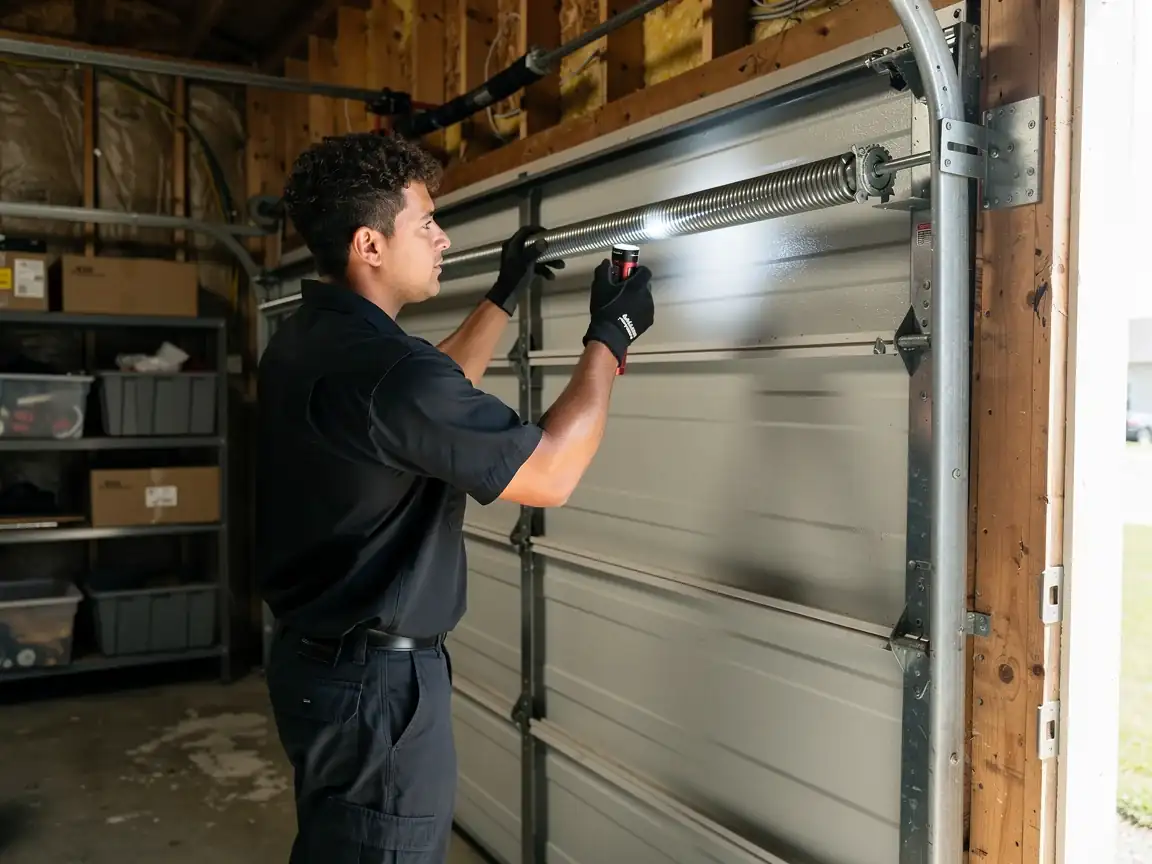
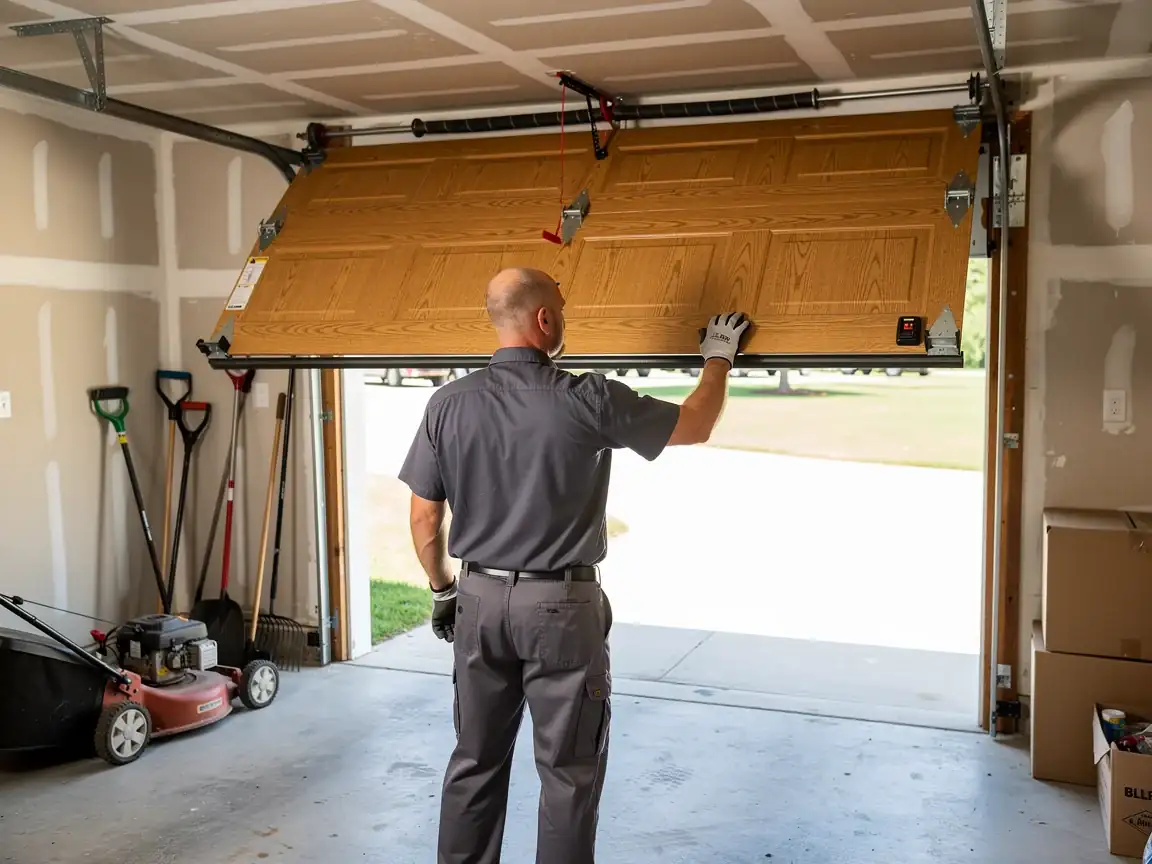
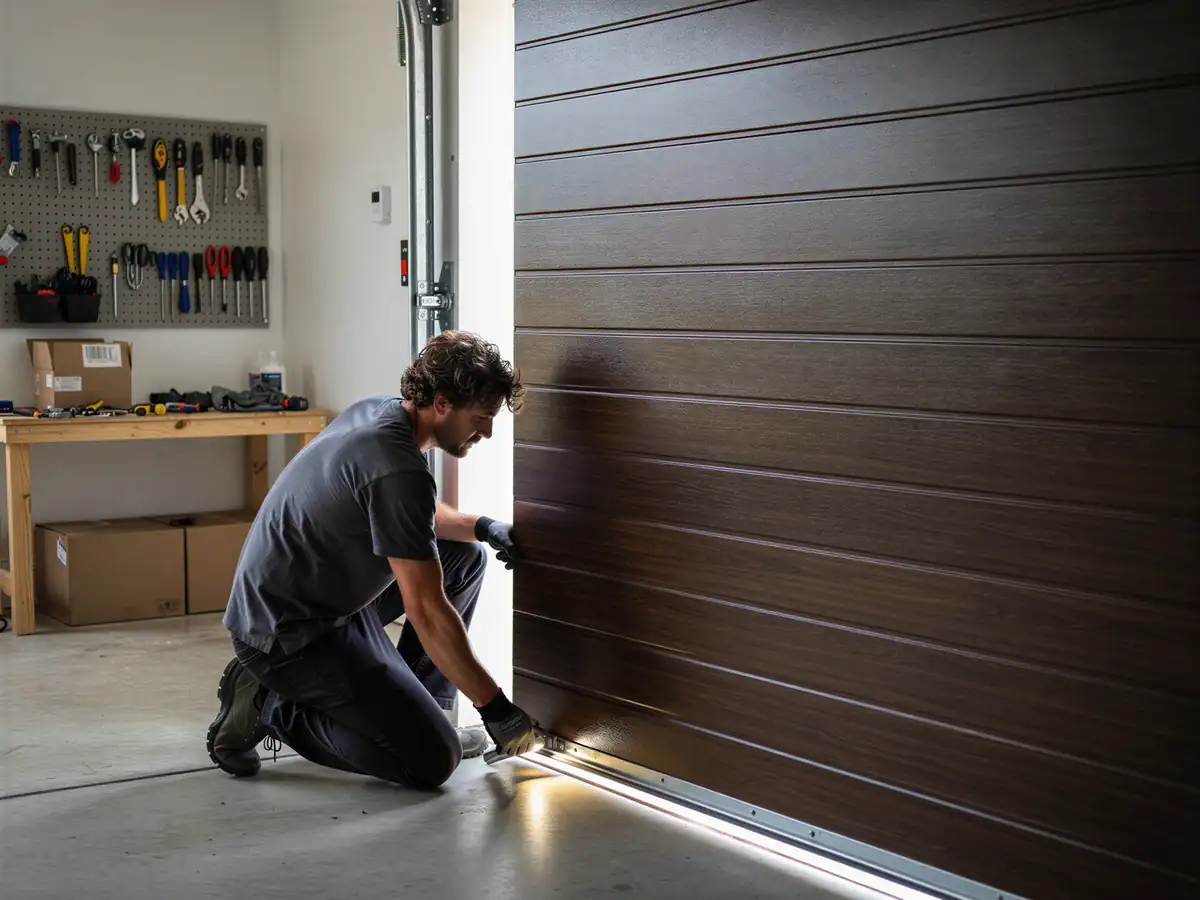
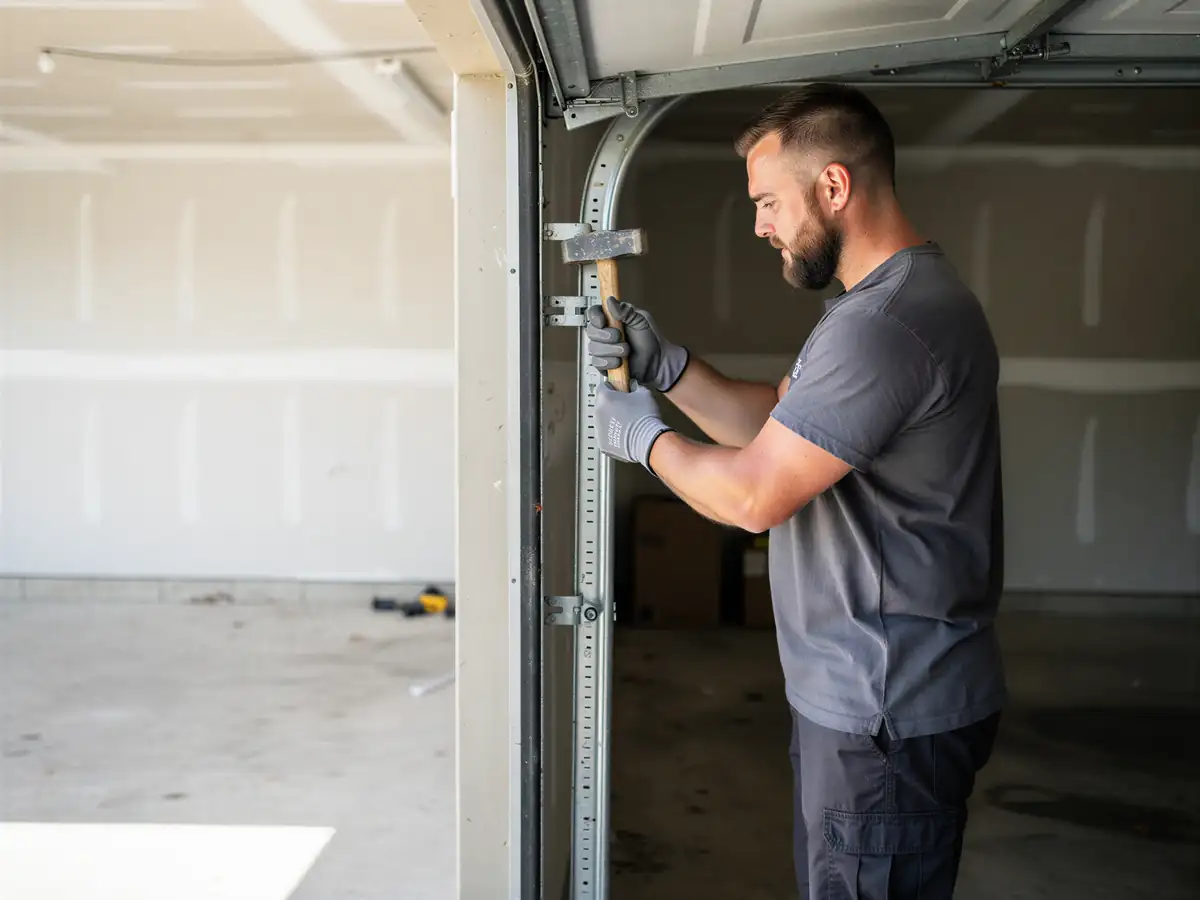
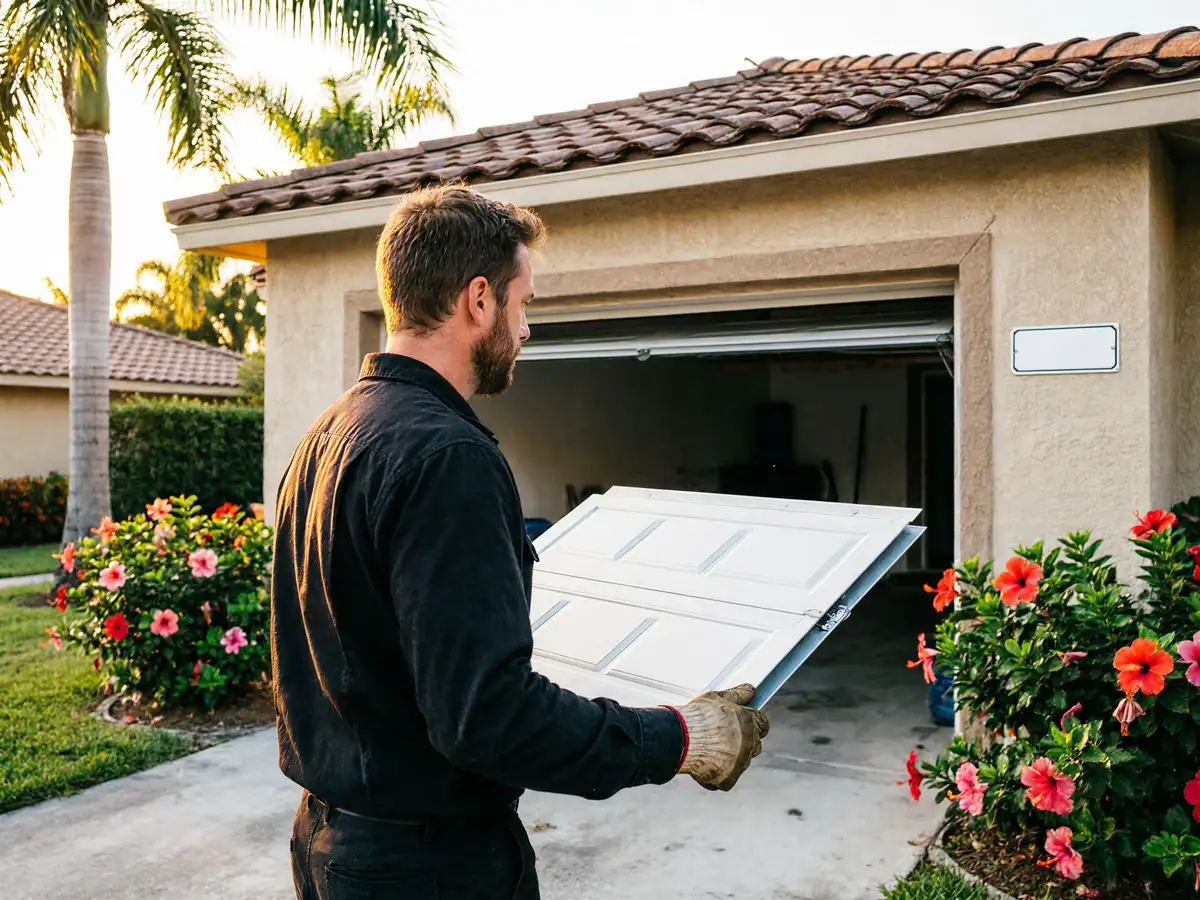
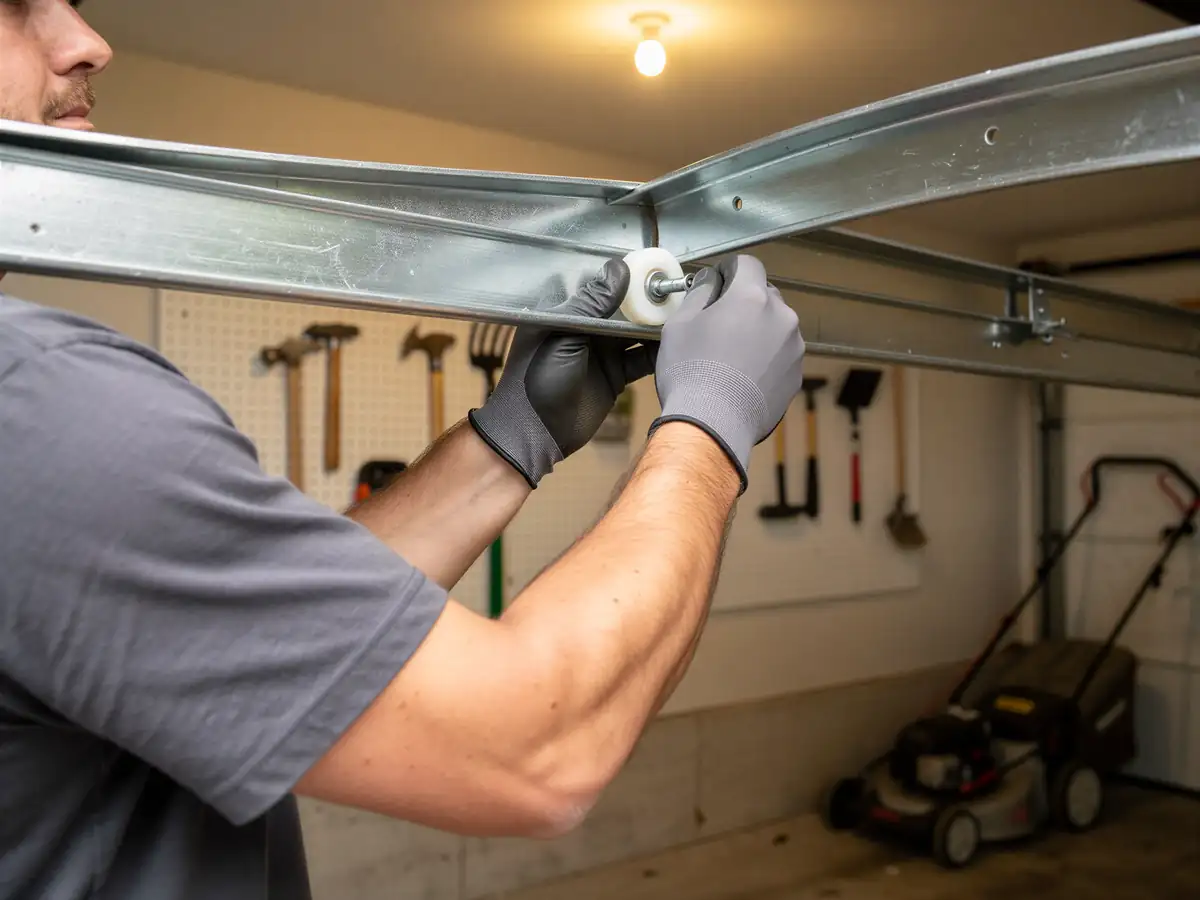
A straight roller swap on a standard double or single door is a short job: lift the door, pull the roller stems out of the hinge brackets one at a time, drop in replacements, reseat, test the travel. On an older door with original steel track, we'll check the track alignment while we're in there, since worn rollers and slightly bent track often show up together - one causes the other over enough years.
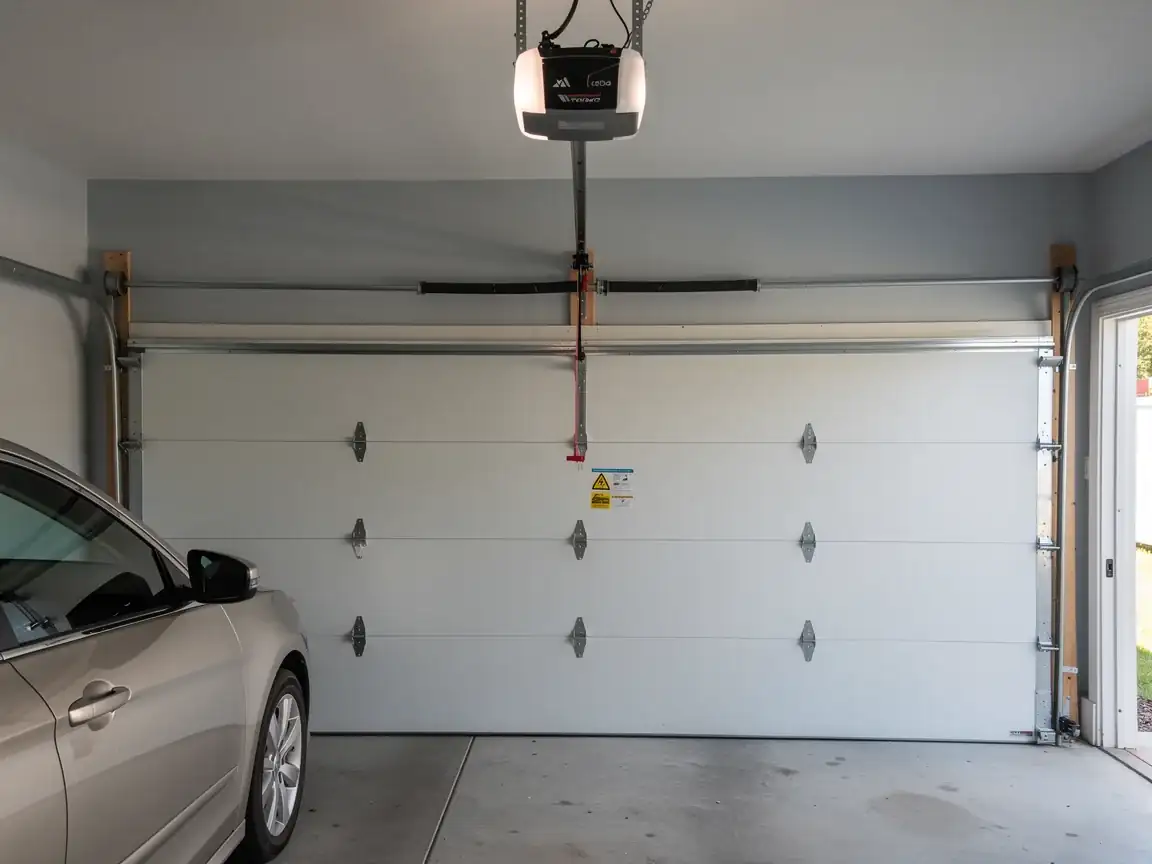
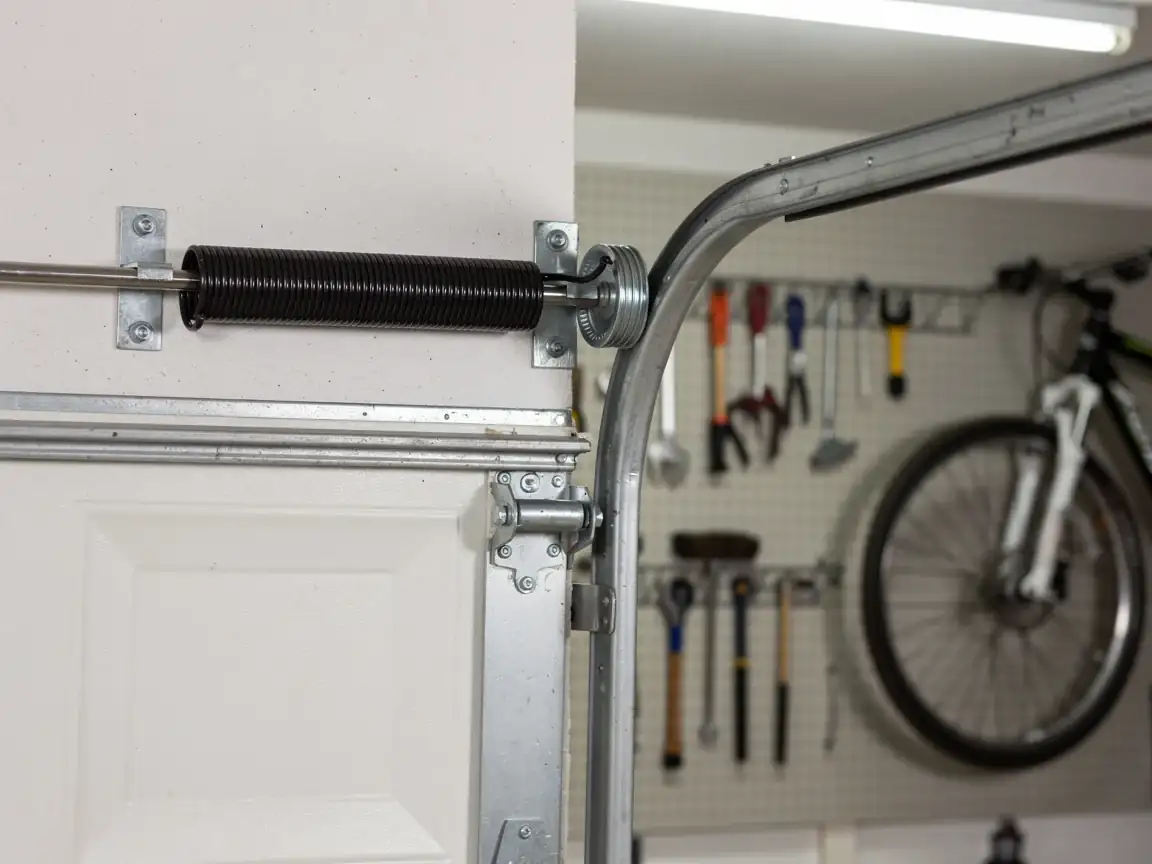
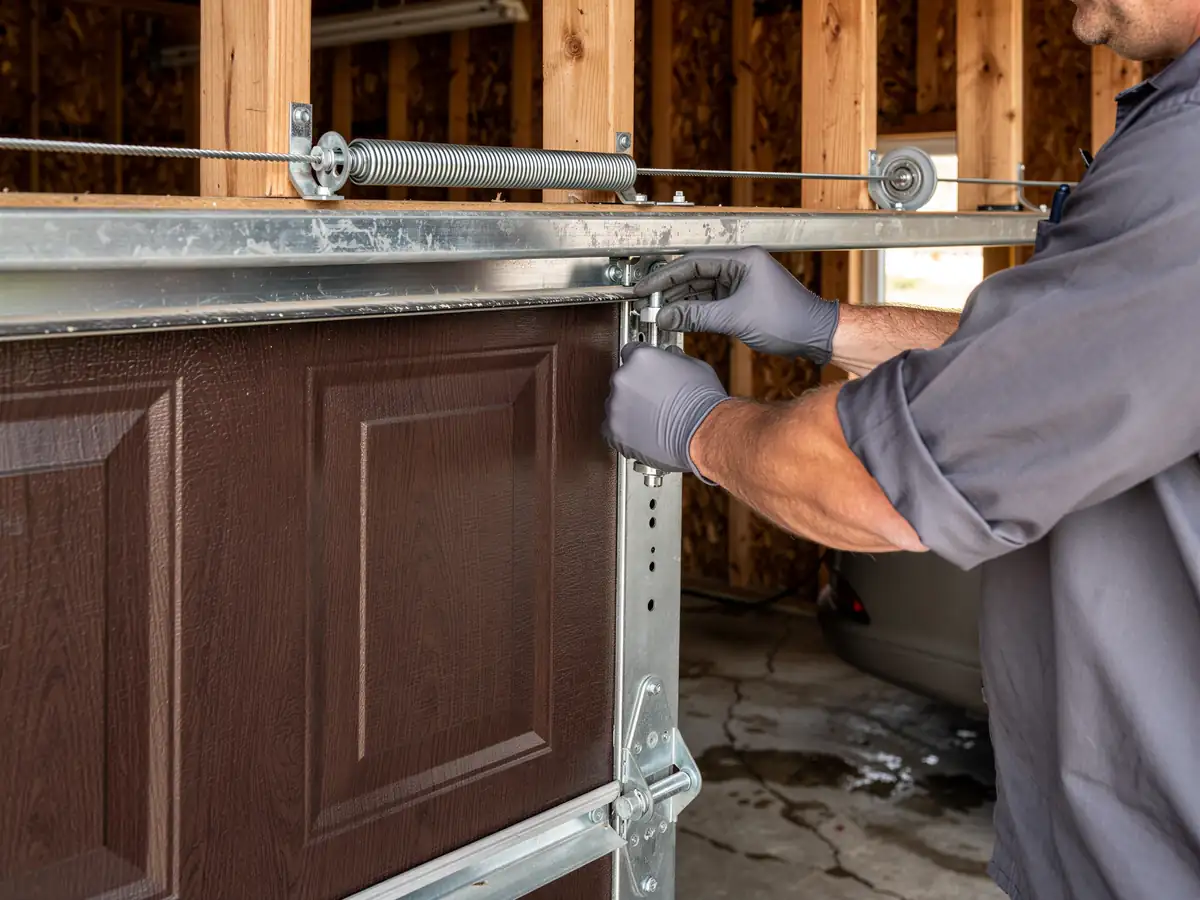
If the door's on torsion springs under load, we don't pull rollers near the bottom bracket without securing the cable first; that bracket is under spring tension and it's not a place to improvise. We'll also check the hinges themselves. A roller stem can wear out a hinge hole long before the hinge looks obviously bad, and putting a new roller into an oversized hinge hole just buys you a few months before it's loose again.
Here's the limitation worth saying plainly: if the track itself is bent or the rail is pitted enough that a new roller still binds, roller replacement alone won't fix the noise or the sticking. At that point you're looking at track replacement, not just rollers, and we'll tell you that rather than sell you rollers that won't solve it.
What Can Go Wrong
The most common complication is finding the rollers weren't the whole problem
A door that's dragged on worn steel rollers for years can wear a groove into the track itself, and a fresh roller dropped into a grooved track will still catch and grind. Replacing rollers in that case is a temporary fix at best.
Second is hinge wear, as mentioned
An elongated hinge hole lets a new roller sit at a slight angle, which puts it right back on a path to premature failure.
Third, and this one catches people off guard
On an older door, pulling the bottom rollers without first confirming the cable and bottom bracket are sound can let a loaded section shift. We don't skip that check to save five minutes.
Last, mismatched rollers
Mixing stem lengths or roller diameters because someone grabbed whatever was in a drawer - cause a door to run unevenly from one side to the other, which looks like a roller problem but is really an installation problem. Matching the stem length and roller diameter to the existing hinge and track spec matters more than most people expect.
The Symptom
The giveaway is usually sound before it's motion: a grinding or clicking as the door travels, loudest right where the roller crosses the curved section of track near the top. Some owners describe it as a shopping-cart-wheel sound. It often starts intermittent and gets worse week to week as the flat spot or crack on the roller gets more pronounced.
You may also notice the door hesitating or jerking slightly at the same spot in its travel every time, rather than running smooth top to bottom. That's a roller catching on a flat spot, not an opener problem, even though people often blame the opener first.
If the noise has moved from a dry squeak to an actual grind, or if you can see a roller wobbling instead of spinning cleanly, that roller's done. Waiting on it usually doesn't save money - it just means the roller runs long enough to start wearing the track or the hinge, which turns a small parts swap into a bigger job.