The Cost of This Job
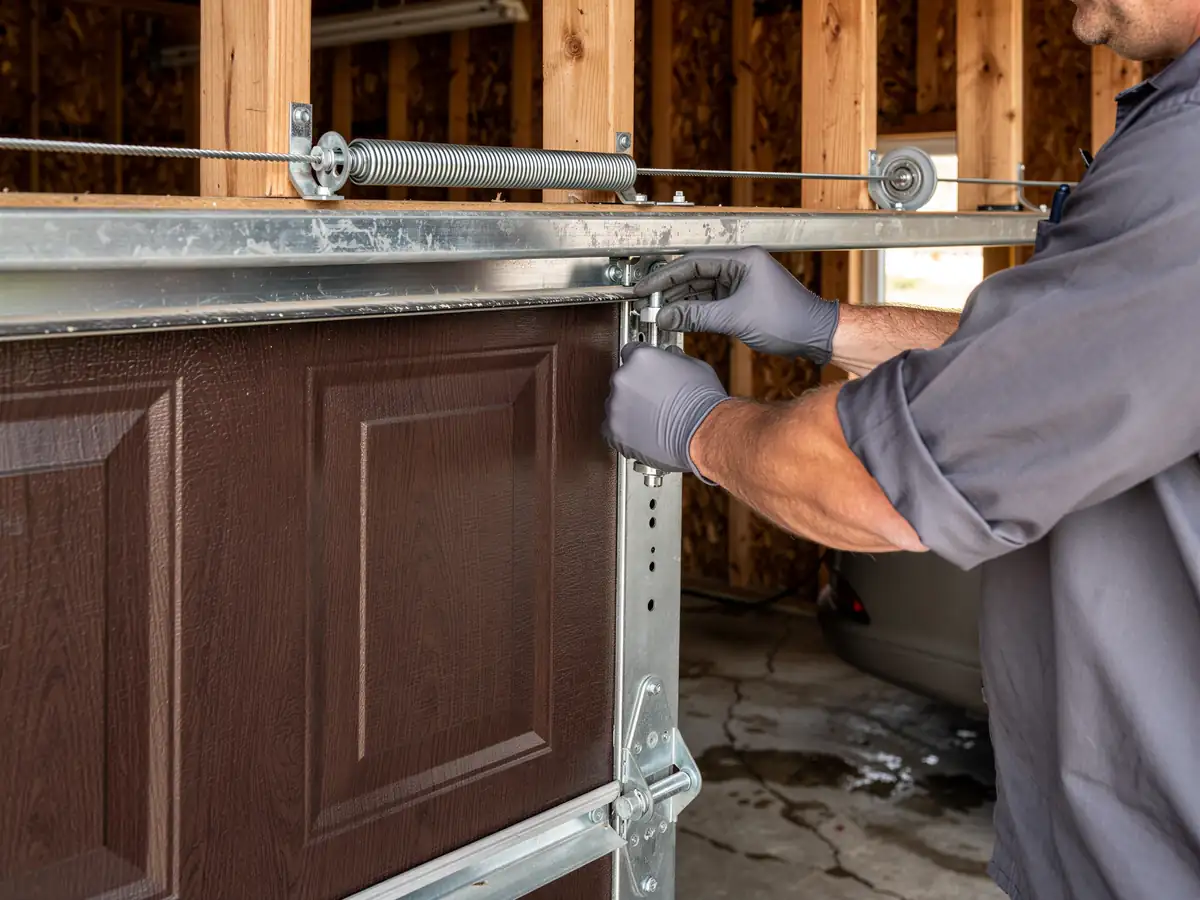
We can't quote a number here without seeing the door, and we're not going to pretend otherwise. What drives the price on a track repair is almost always the age and type of hardware underneath the trim, not the labor itself. A lot of the houses we get called to in Dunedin went up between 1958 and 2005, with the typical build landing around 1979, and that stretch of construction used several generations of track and bracket styles. A newer roll-formed track bends back into place in under an hour. An older stamped-steel track from a 1960s or '70s build is often bent beyond saving, and the brackets holding it to the jamb may be rusted into the wood, which turns a track swap into a jamb repair too. The honest answer is that we look at the bracket condition, the roller type, and whether the opener has been fighting the misalignment for months before we say a number out loud. If a technician tells you a flat rate over the phone before seeing the door, be skeptical of that quote.
What Is Going On
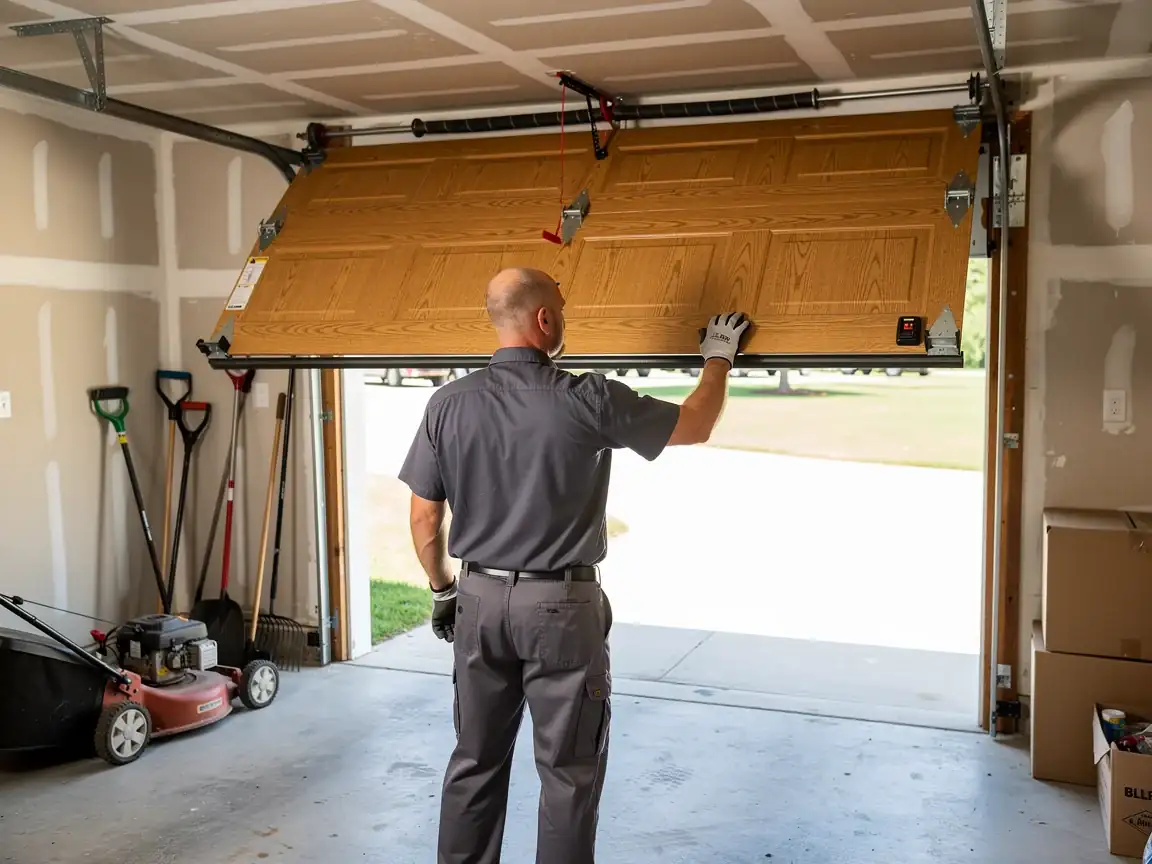
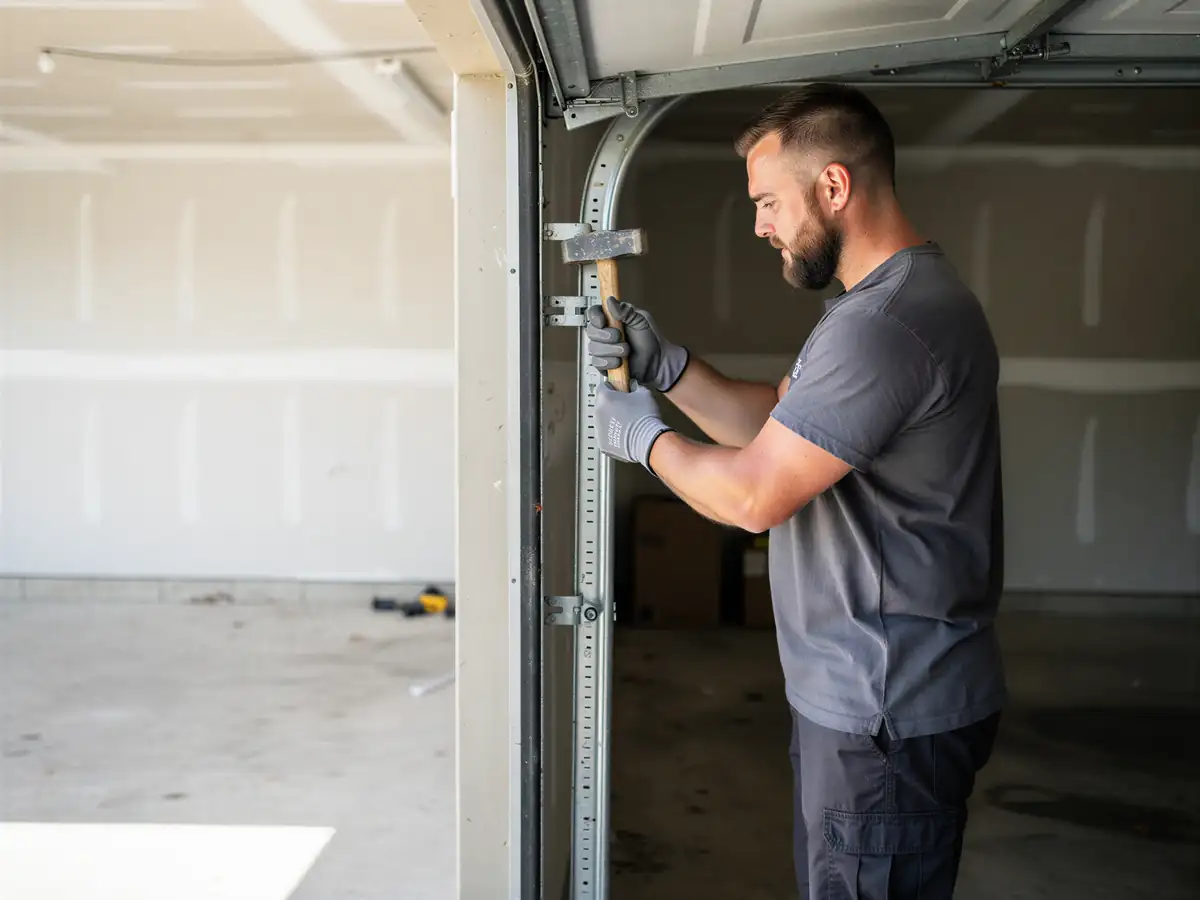
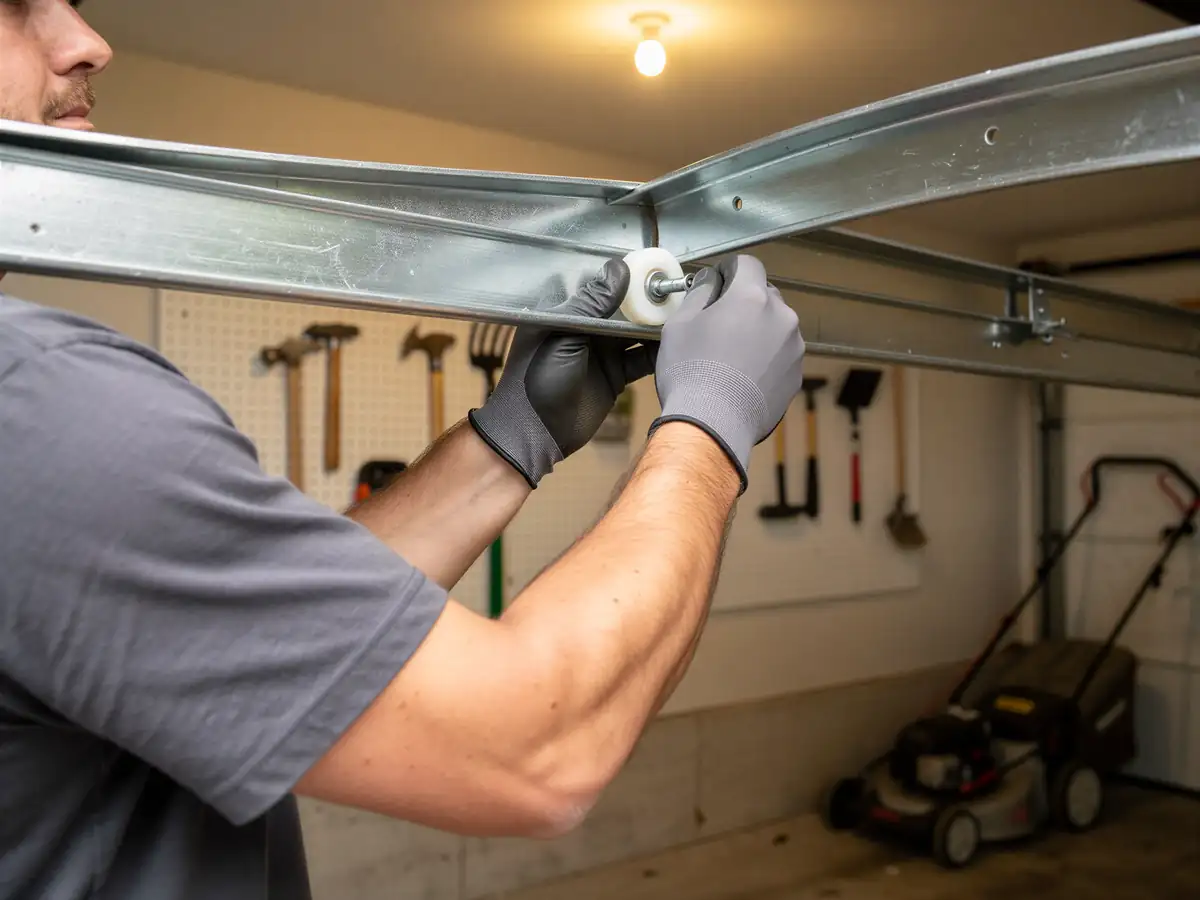
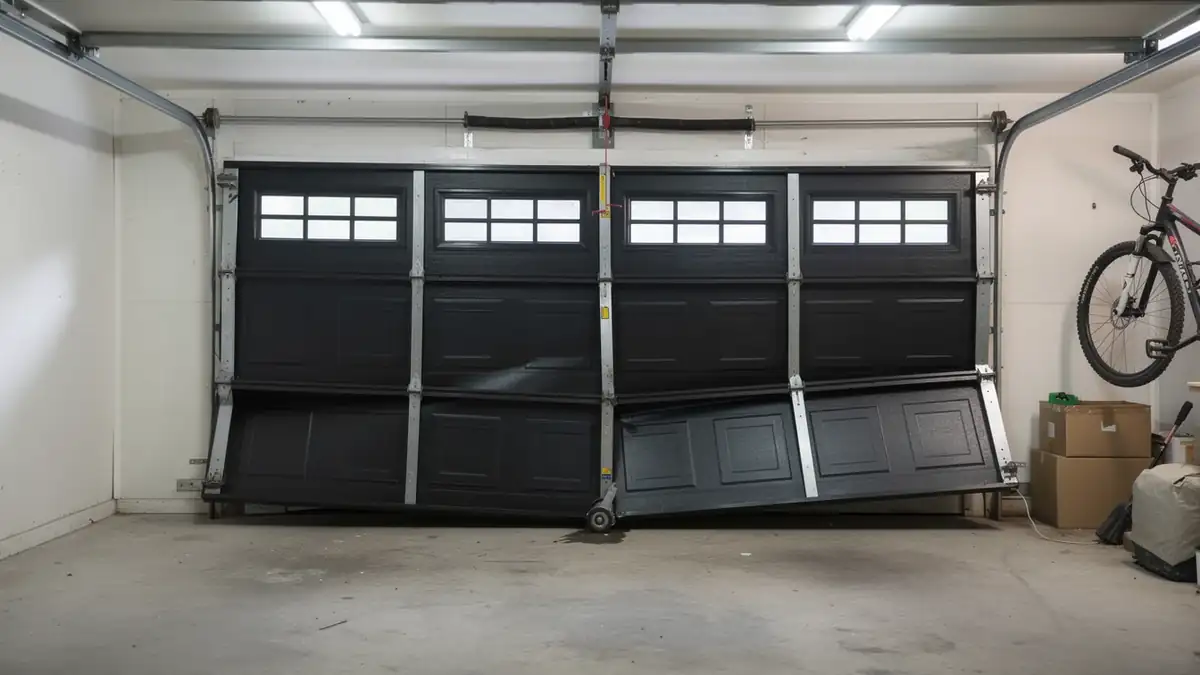
A door goes off track when the rollers stop riding square inside the vertical or horizontal rail, usually because something pulled the rail out of alignment rather than the roller itself failing. The most common cause we see is a bent track from an impact - a car bumper, a bike, a box truck mirror - but the second most common cause is slow bracket failure. The brackets that hold the track to the framing were fastened into whatever stud or jamb material was standard when the house was built. On a lot of Dunedin's 1960s and '70s stock, that's original lumber that's shifted slightly over fifty-plus years, and a bracket that was dead plumb in 1970 can be a quarter inch off today. That quarter inch is enough to make a roller climb the lip of the rail under spring tension. Once it climbs once, it does it again every cycle, and the track edge wears faster each time. By the time a homeowner notices the door scraping or binding, the track has usually been fighting itself for weeks.
How Local Conditions Play In
Across the 27 named areas we cover, the housing is mostly 1960s and '70s stock, and that uniformity matters for track problems because it means a lot of the original bracket hardware is the same vintage and failing on a similar timeline. We also see a range of household situations - the service area runs about 142,490 households with roughly 67,618 owner-occupied houses, and a median income of $84,220 means plenty of owners decide to replace worn track and roller systems outright rather than patch them again. That's often the better call once a track's been re-bent twice. We run calls out as far as Safety Harbor and Belleair, both about seven miles off, and places like Oldsmar and Indian Rocks Beach further out, but the bulk of our track work stays close to Dunedin's own older neighborhoods, where the hardware age and the coastal air combine in the same predictable way house after house.