Why It Happens Here
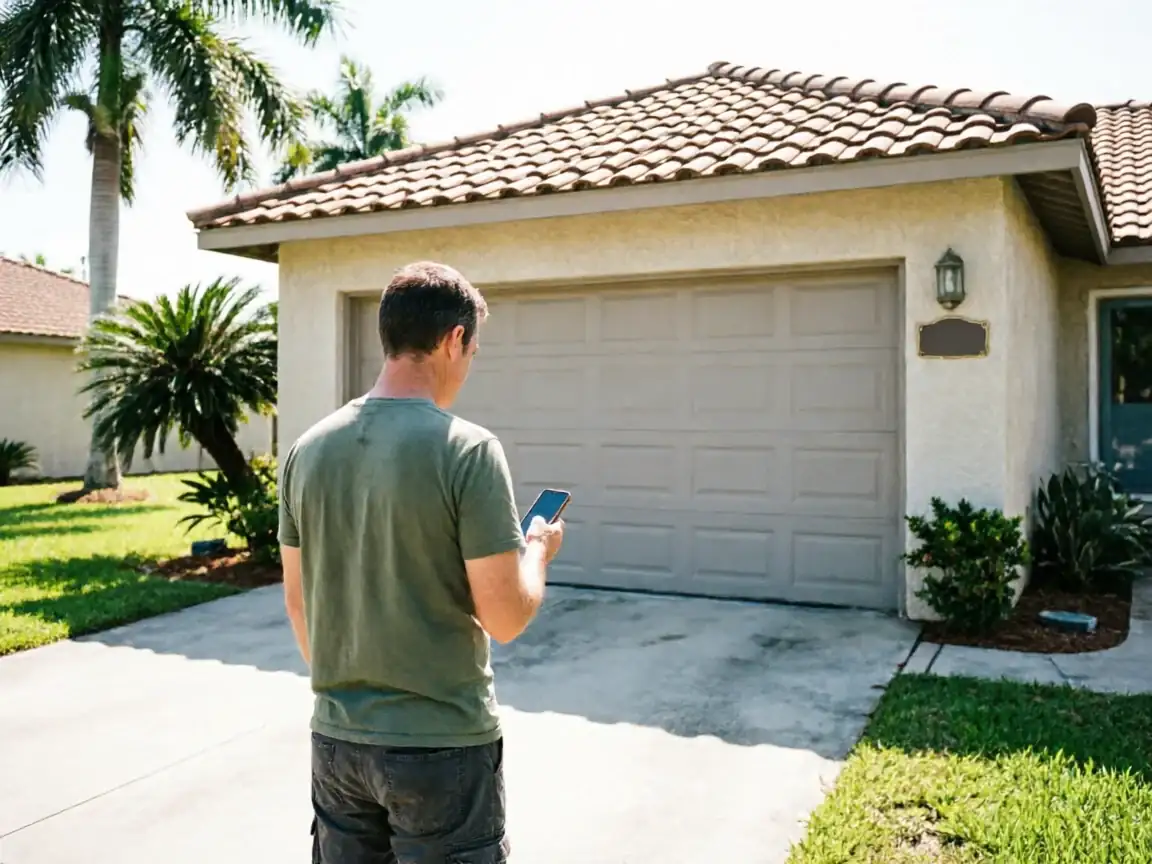
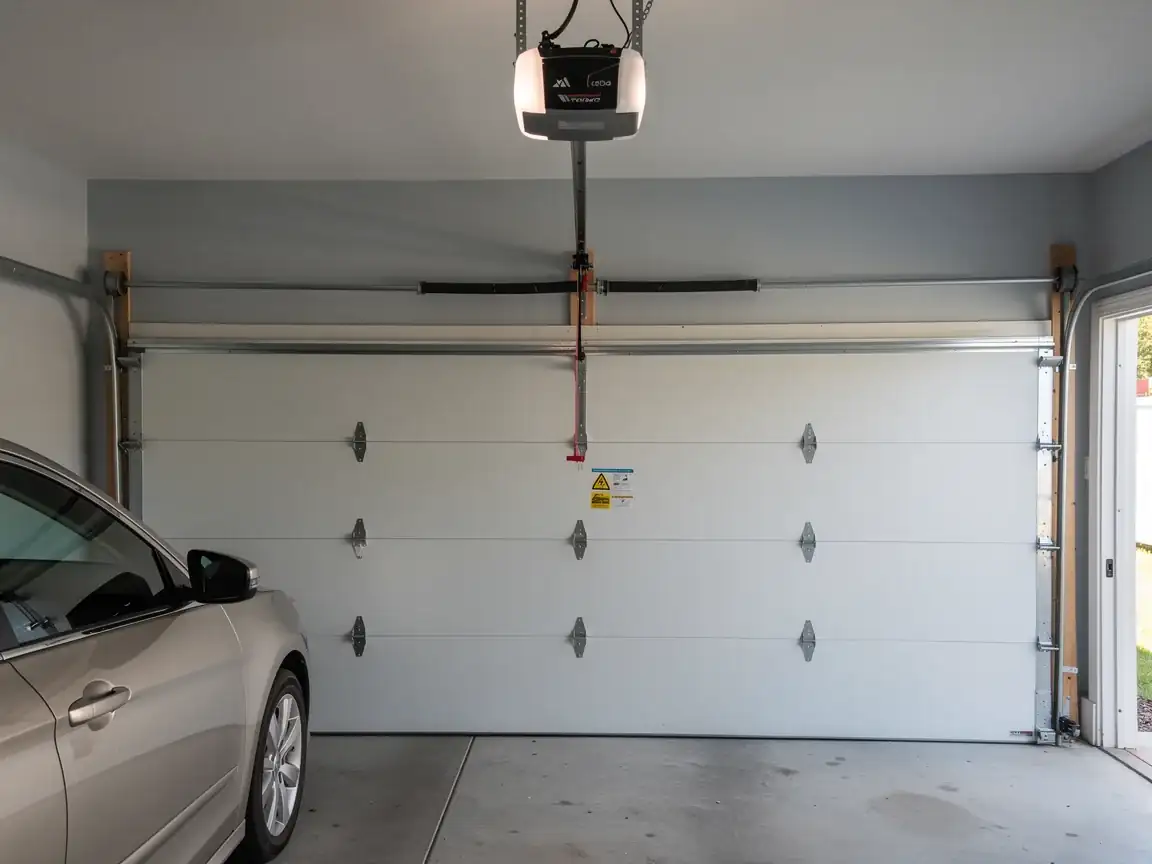
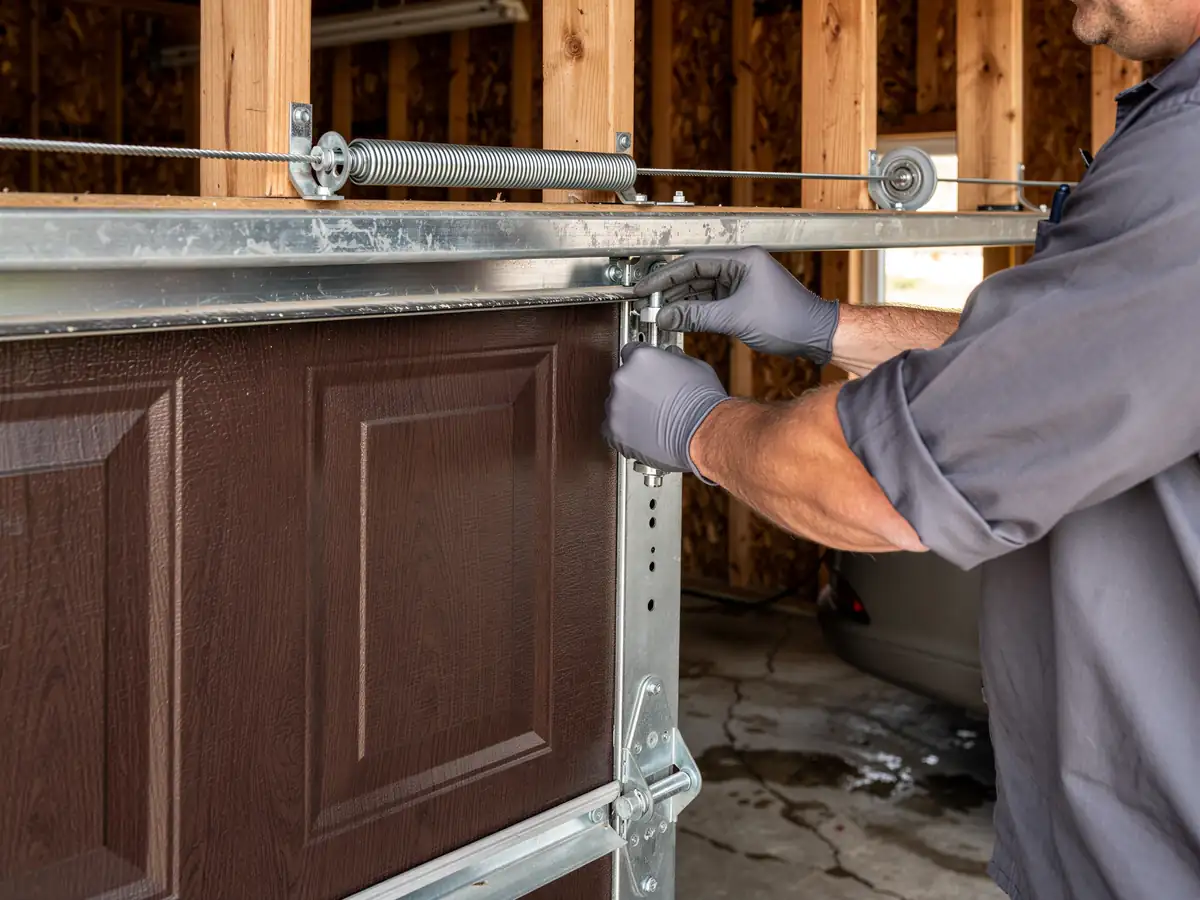
Trinity's housing stock is young for this part of the county. The median build year here lands around 2005, a couple of decades newer than much of the surrounding service area, which runs anywhere from 1958 up through that same year. That matters more than people think. A door installed in 2005 or later almost always came with a factory steel torsion spring sized to a lighter insulated panel, a screw or belt-drive opener instead of chain, and safety sensors built to a later code cycle than what you'd find on a 1970s house. The failures we see out here are rarely the "door won't budge" kind you get on older torsion setups. More often it's a worn opener gear, a sensor knocked out of alignment, or a spring that's reached the end of its factory-rated cycle count right on schedule. The hardware is newer, but newer doesn't mean maintenance-free - it just means the failure points are different from what a tech would expect walking into an older Dunedin house.
Getting It Booked In
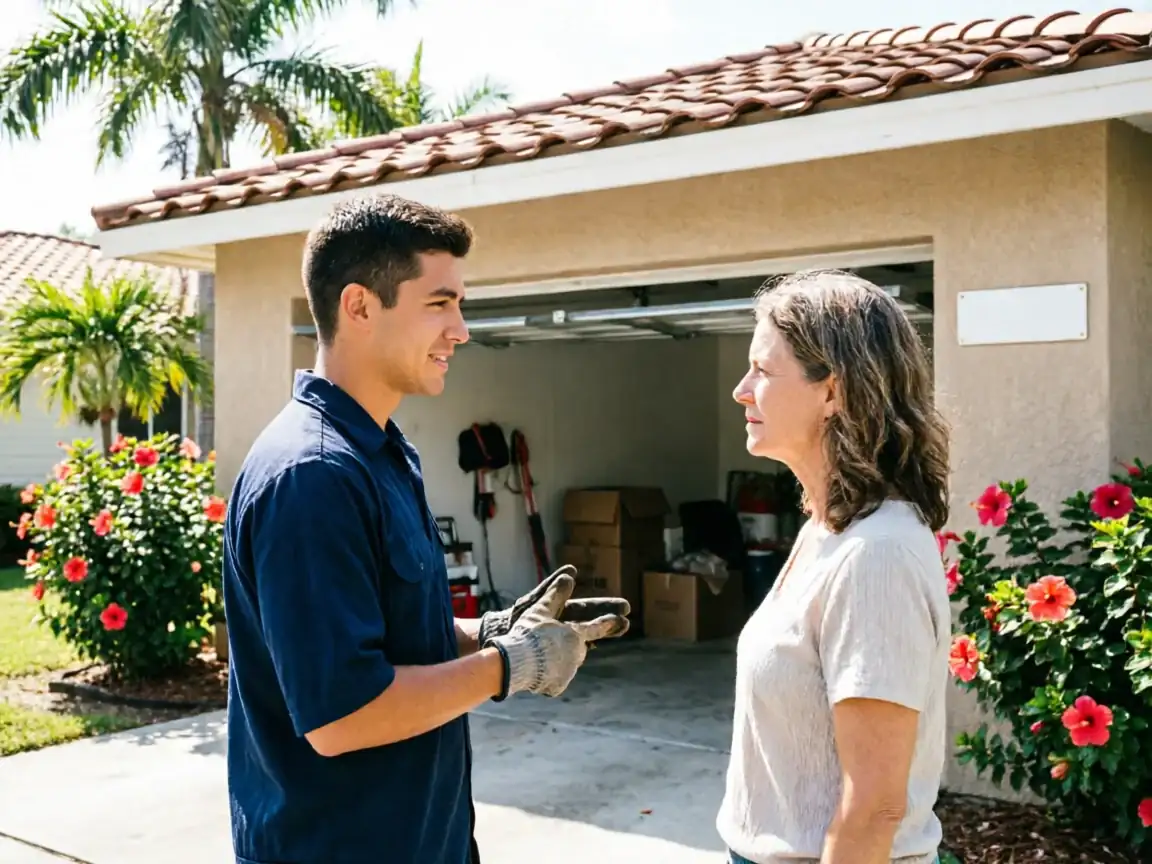
We run out of Dunedin, about 15 miles from Trinity, so a visit here is a scheduled trip rather than a drop-in call. We don't keep a branch or crew stationed in Trinity, and we're not going to pretend otherwise - book ahead rather than expecting a same-hour swing-by. Once we're on site, the work itself doesn't take any longer than it would closer to home; it's just the travel that needs planning around. If you're dealing with a door that's fully stuck and blocking a car in or out, say so when you call so we can prioritize the trip.
What Can Go Wrong
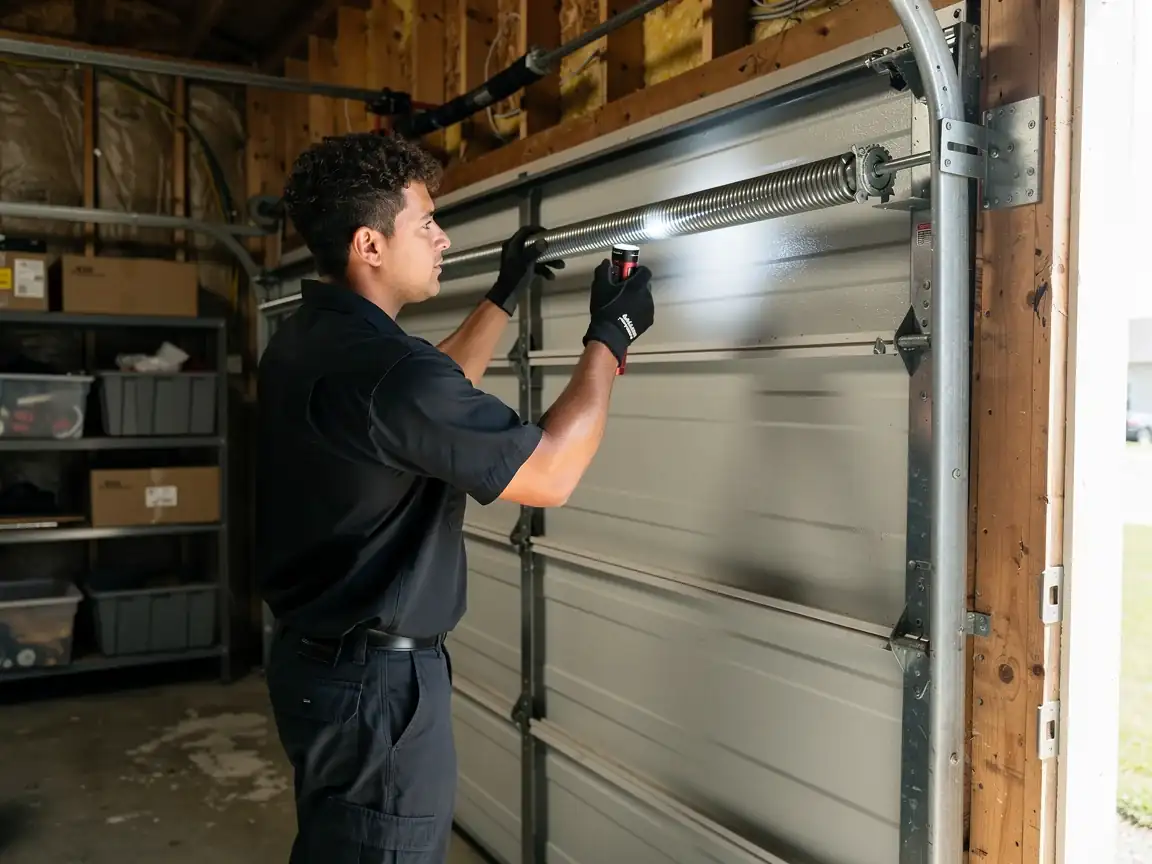
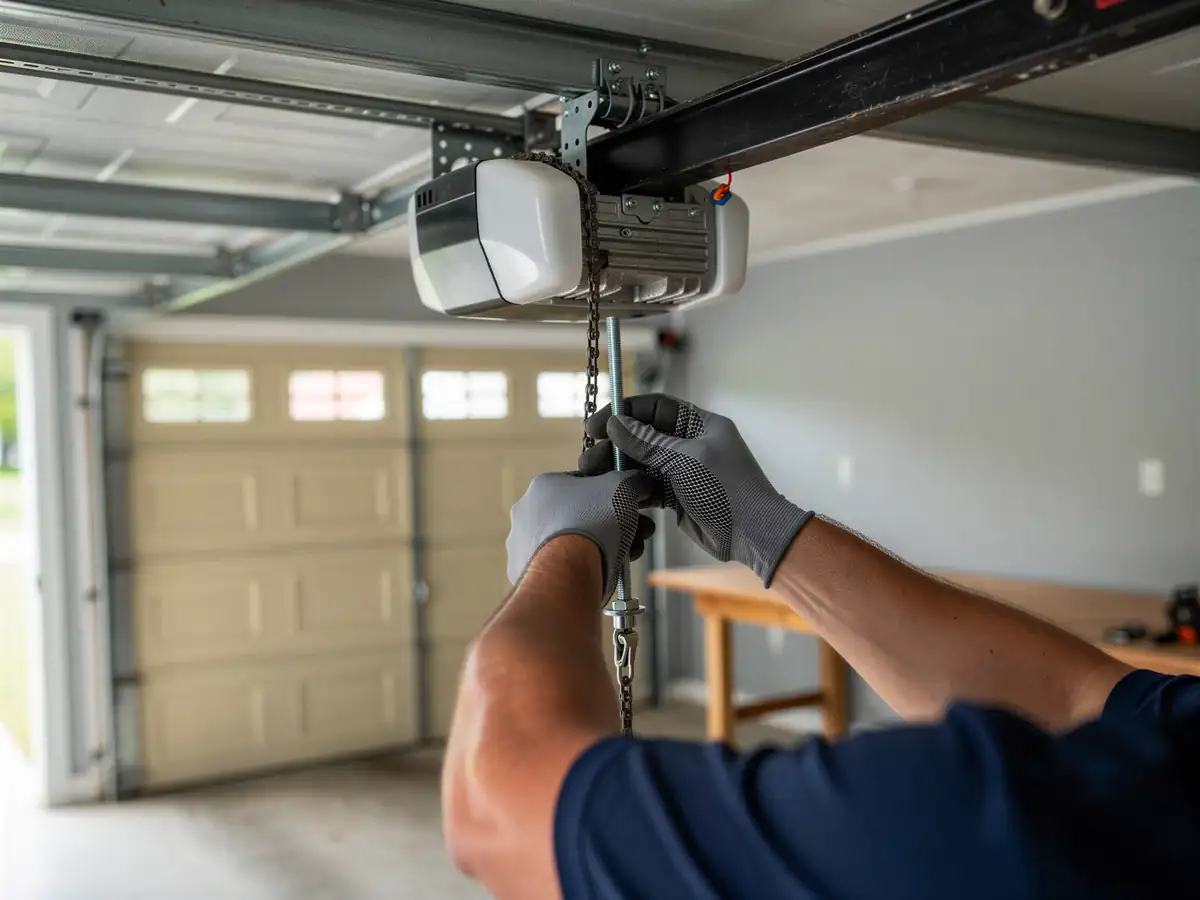
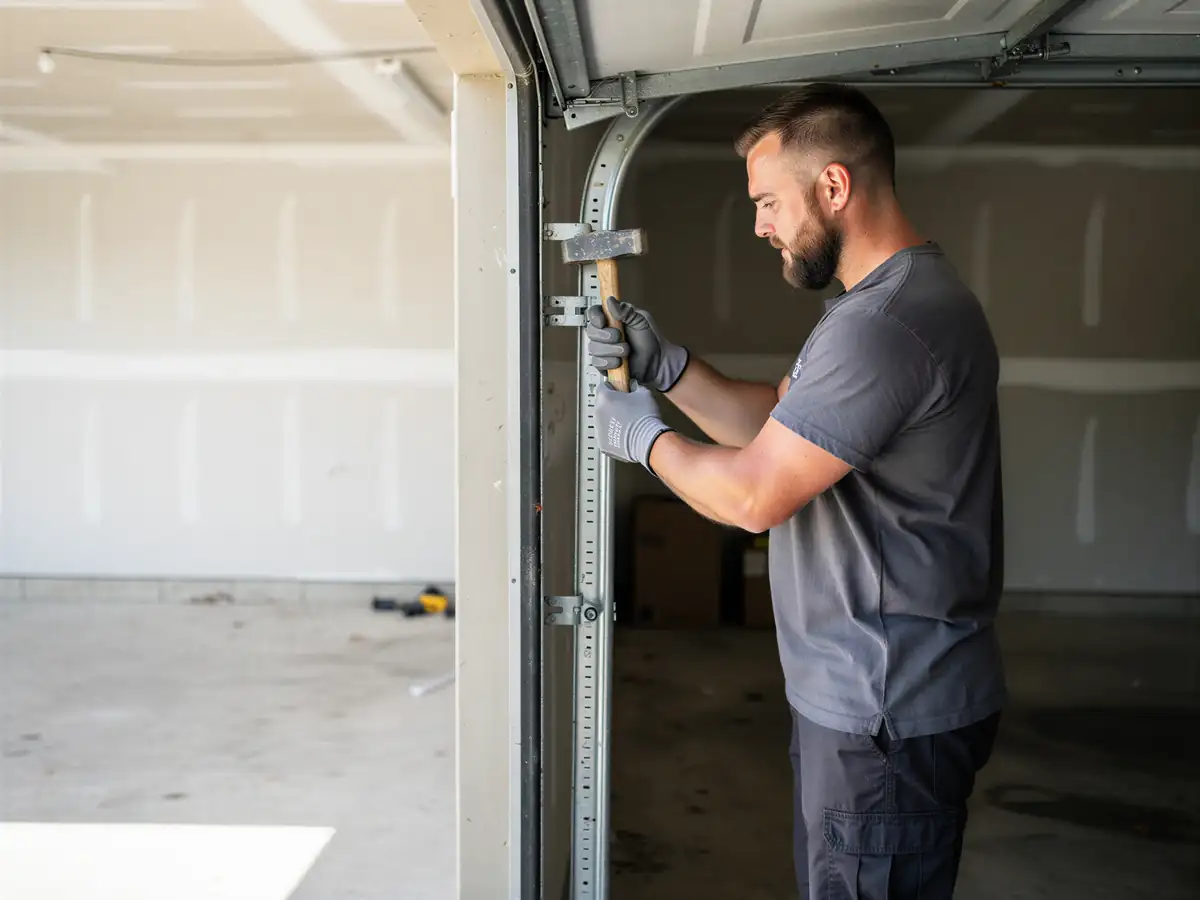
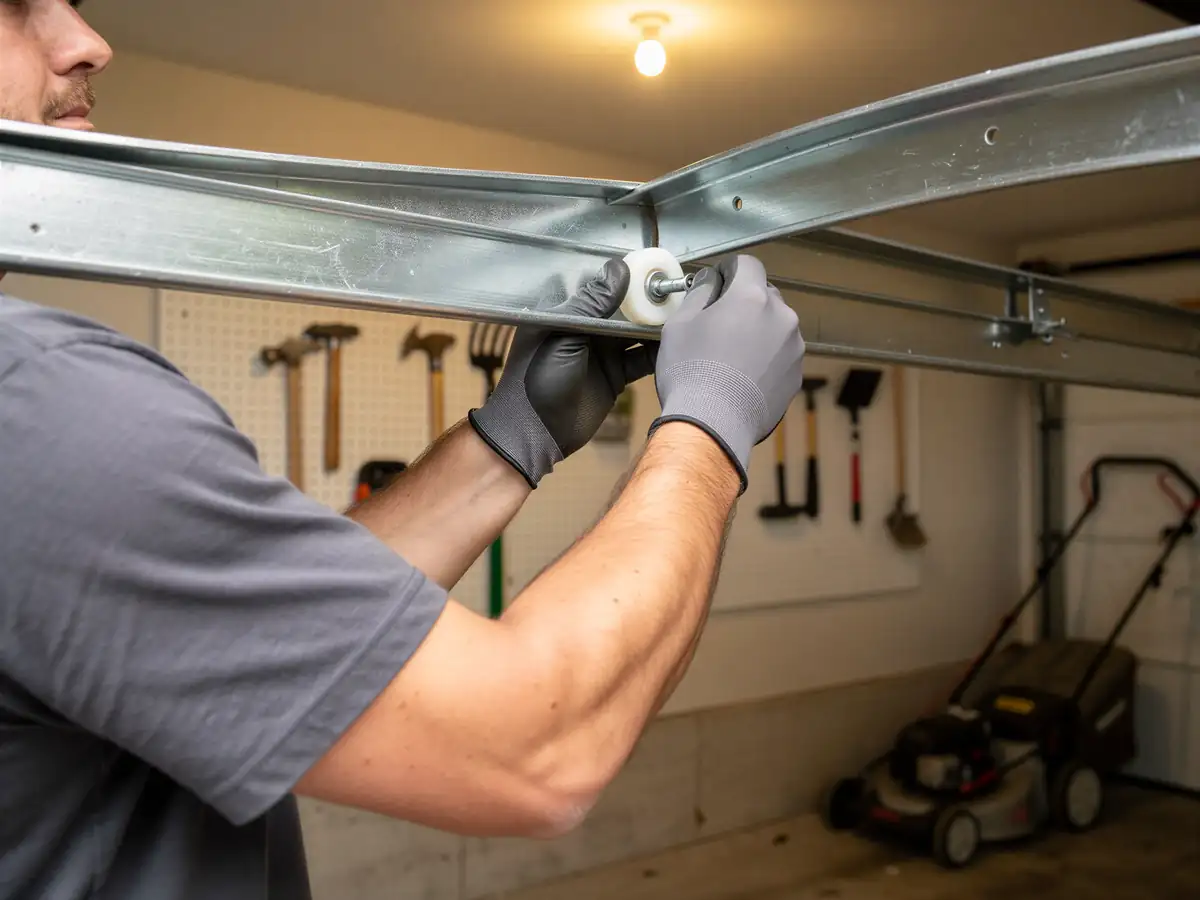
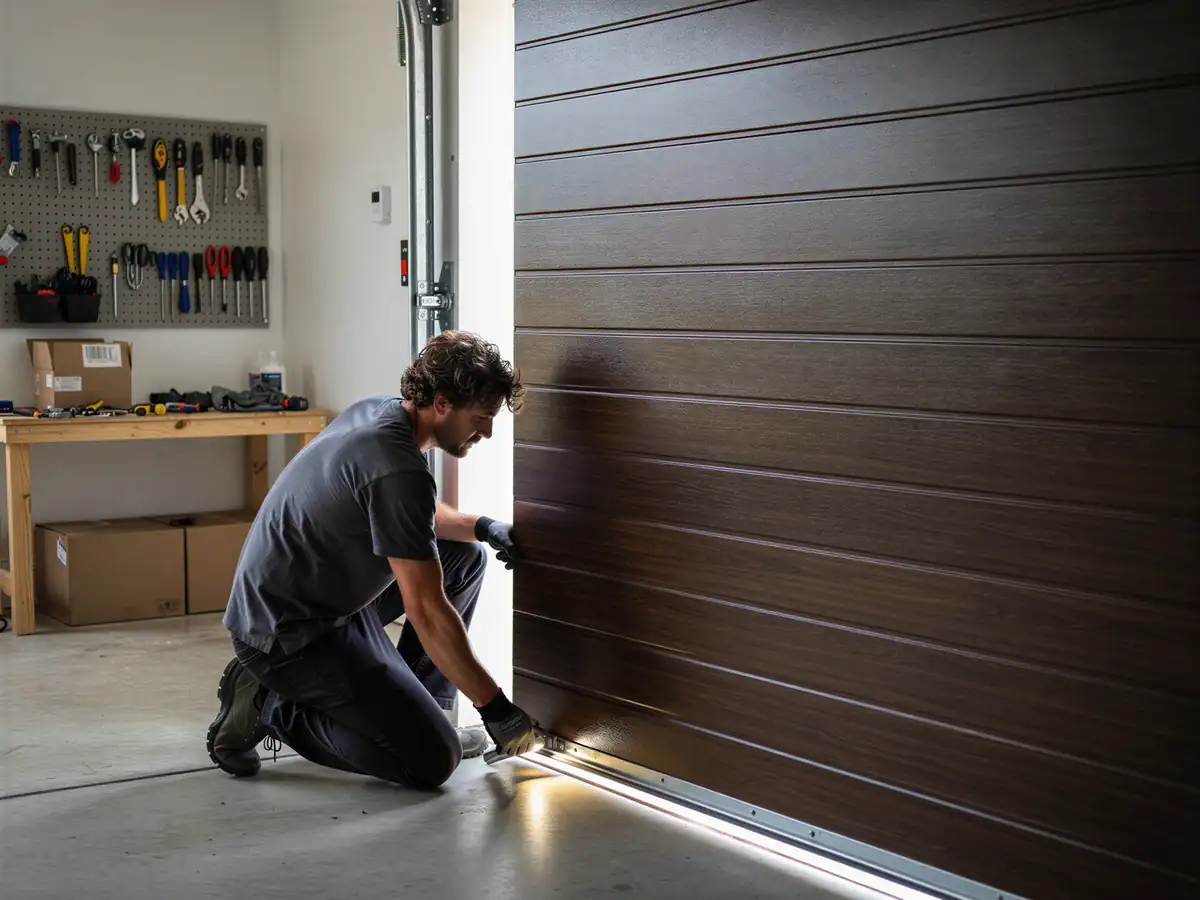
On a door this age, the honest list starts with electronics, not steel. Opener logic boards fail, photo-eye sensors drift out of alignment after a bump from a bike or a bin, and belt-drive openers can strip a gear years before the motor itself gives out. Springs still break - they're consumable parts regardless of the house's age - but on a 2005-era door they're more likely sized for a lighter panel, so swapping in the wrong spring weight from an older-stock supply truck is a real mistake, not a theoretical one. We also see misaligned tracks on doors that were installed fast during a building boom; a track that was never quite plumb will eventually throw a roller.
The Symptom
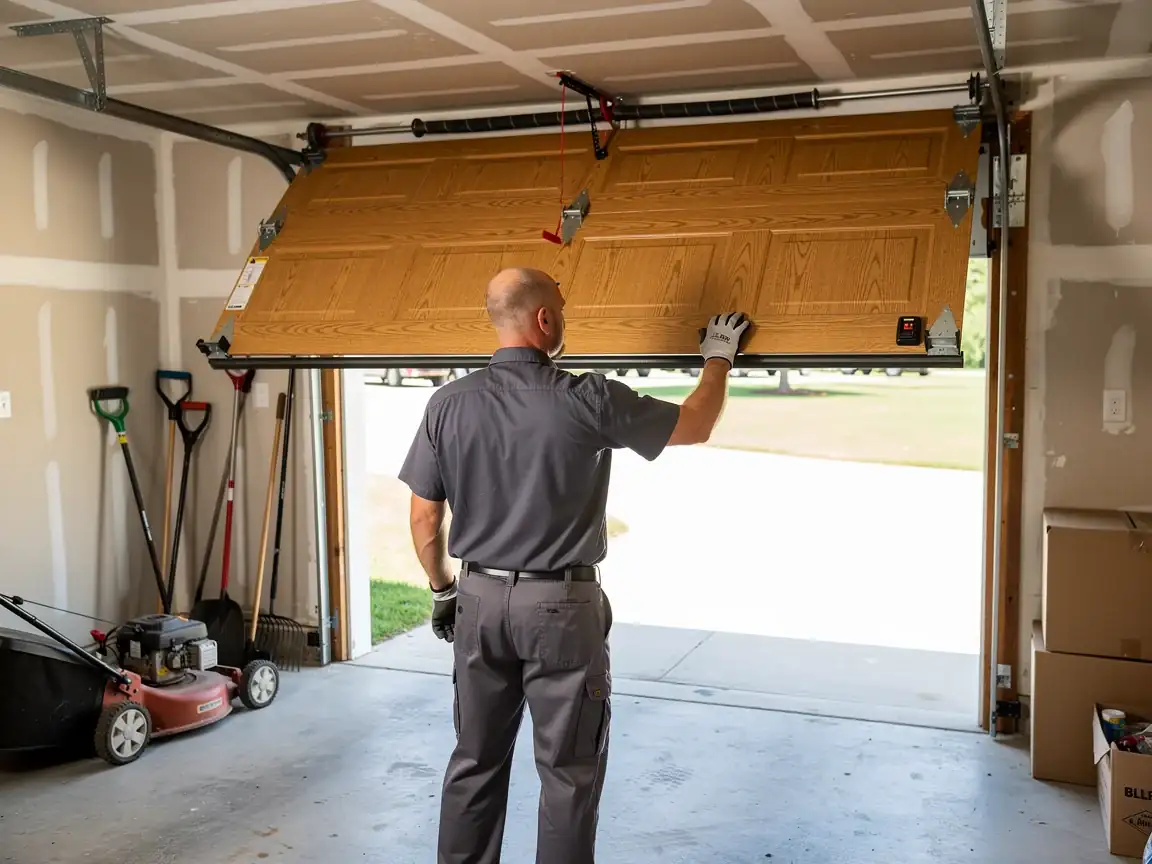
The most common call out of this area isn't a door stuck shut - it's a door that opens partway, reverses on its own, or runs louder than it used to. That pattern points at the opener's travel limits or a sensor issue more often than a spring. A door that won't move at all, by contrast, usually means the spring has gone, and on a newer build that's often the first spring failure the house has ever had, since the original factory spring is only now reaching the end of its rated life around the two-decade mark.