Serving Dunedin, FL & nearby
(727) 663-2056
Dunedin, FL

Garage Door Repair for Dunedin's 1960s-70s Housing Stock

Dunedin homes built mostly in the 1960s-70s are hitting the age where torsion springs and tracks give out. We fix the door that's stuck, off its track, or won't open.

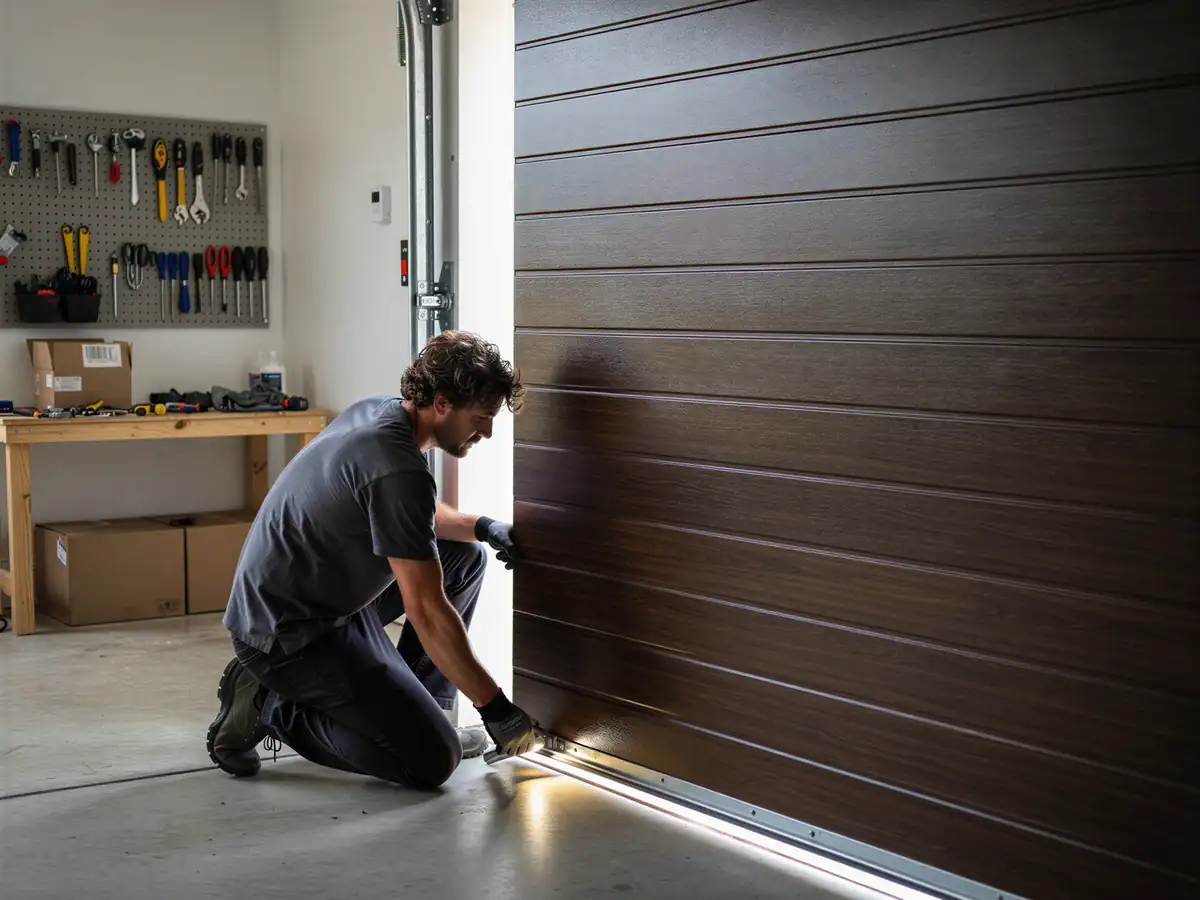
A technician kneels, inspecting the bottom of a brown garage door.
Dunedin, FL
8 services
7 service areas
Diagnosis first, then the fix

Why It Happens Here

Most houses in this part of Pinellas County went up between 1958 and 2005, with the median build year sitting around 1979. That matters for garage doors because torsion springs have a service life measured in cycles, not years, and a spring installed when the house was framed in the late 1970s has been through four-plus decades of daily use by now. It's wearing out on schedule, not failing early.\n\nThe mild temperate climate here doesn't freeze hardware or crack panels the way a northern winter would, but it does mean steady humidity and salt-tinged air moving in off the Gulf side of the peninsula. That combination corrodes exposed springs, cable ends, and track bolts faster than dry inland air does, even without any dramatic weather event. We see rust on hardware in garages that otherwise look well kept.\n\nPut those two things together - an original-era spring and decades of humid air working on it - and you get the most common call we run in this area: a door that won't lift, or one that's suddenly heavier on one side than the other.

What the Repair Takes

A torsion spring swap on a standard double door is a controlled job: unload the spring with winding bars, pull the old one off the shaft, set the replacement to the right wind count for the door's weight, and test the balance by hand before the opener ever touches it. On original hardware from the 1960s-70s era, we're often matching a spring size that isn't stocked on the newer trucks because the drum and shaft dimensions on older track hardware don't always match current parts. That can mean a short parts delay on some jobs, which is worth knowing before you schedule.\n\nCable and roller replacement is faster, usually under an hour once we're on site, but it has to be done with the door fully unloaded or it's dangerous. We don't recommend DIY spring work on these older torsion systems - the stored tension in a 1970s-era shaft setup is not forgiving, and the hardware wasn't built with today's safety cables.\n\nWe'll tell you up front if a repair isn't worth doing - if the track is bent badly enough, or the opener and springs are both failing at once, replacement often costs less over the next few years than repeated repair calls.

What Can Go Wrong

On a house with original or early-replacement hardware, the spring isn't usually the only thing aging. Center bearings seize from dried grease and corrosion, and when that happens the shaft can't turn evenly, so one side of the door drops faster than the other even after a new spring goes in. Track brackets lag-bolted into framing from the 1960s-70s building era sometimes pull loose when the wood around them has dried and shrunk over the decades, which throws the whole door out of alignment.\n\nCables fray at the drum end first, and on older low-cycle-count drums the fray can hide inside the wrap where you won't see it from the floor. If a cable lets go while the spring is still wound tight, the door can drop hard and fast. That's the failure we take most seriously on a service call, because it's the one that hurts someone standing underneath.\n\nWe also find openers original to the house still bolted to the same bracket as the spring - when both are at end of life together, fixing one without checking the other just means a second call within months.

The Symptom

The call usually starts the same way: the door won't go up, or it goes up a few inches and stops. Sometimes it's a loud bang from the garage followed by the door refusing to move at all - that's almost always a spring letting go. Other times it's quieter: the door creeps up slower every week until one morning the opener just hums and the door doesn't move, which points to a spring that's lost most of its tension gradually rather than snapping.\n\nA door that lifts unevenly, with one corner higher than the other, points to a cable or a bearing rather than the spring itself. If you hear a grinding or scraping sound from one side of the track as the door travels, that's usually a roller or a bent section of track, and running the opener against it repeatedly can bend the track further and turn a $150 fix into a full track replacement.\n\nWhichever version you're hearing, the fix is the same first step: don't keep hitting the opener button. Repeated attempts against a jammed or spring-failed door put more strain on the opener motor and the remaining hardware, and that's how one problem becomes two.
How it works

From “it’s stuck” to “it’s fixed”

A quick, honest process - no guesswork and no surprises, start to finish.

  1. 1
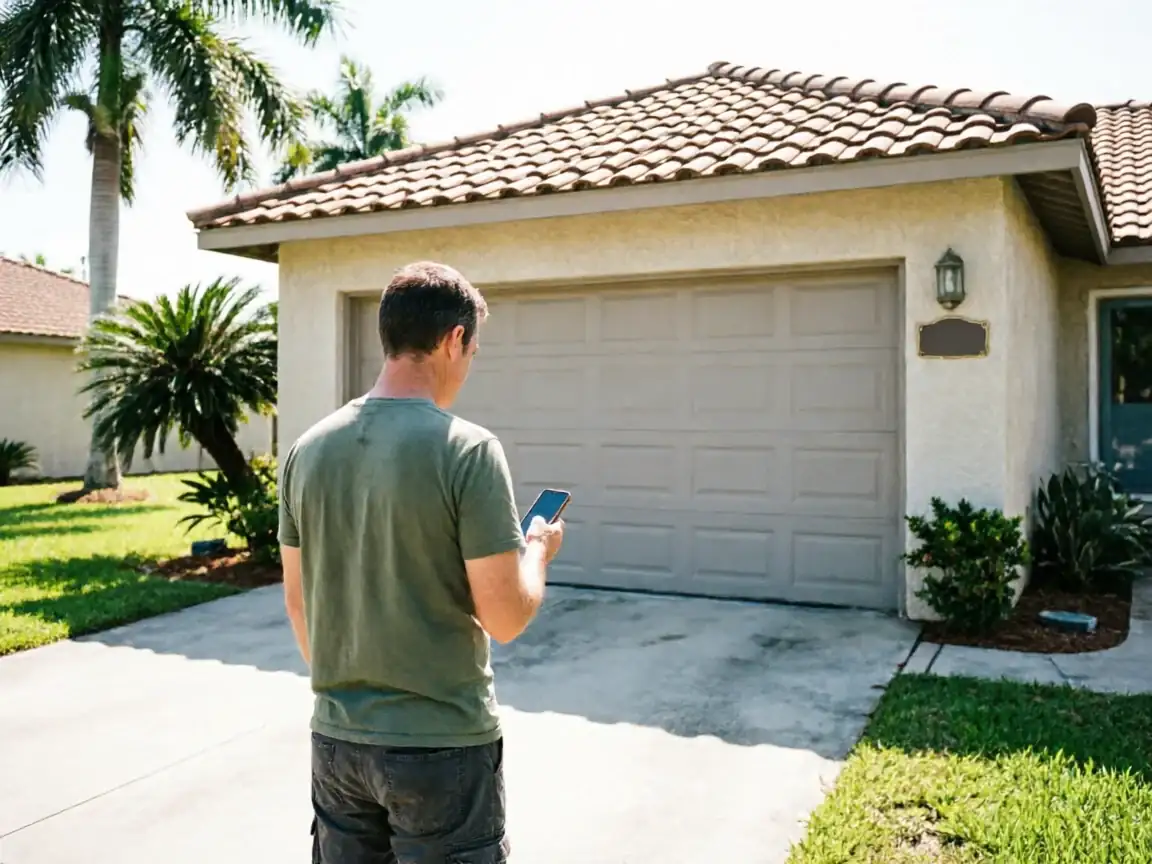
    A man stands in a driveway looking at his phone in front of a closed garage door.

    Tell us what’s wrong

    Describe the symptom - won’t open, loud bang, opener runs but the door won’t move.

  2. 2
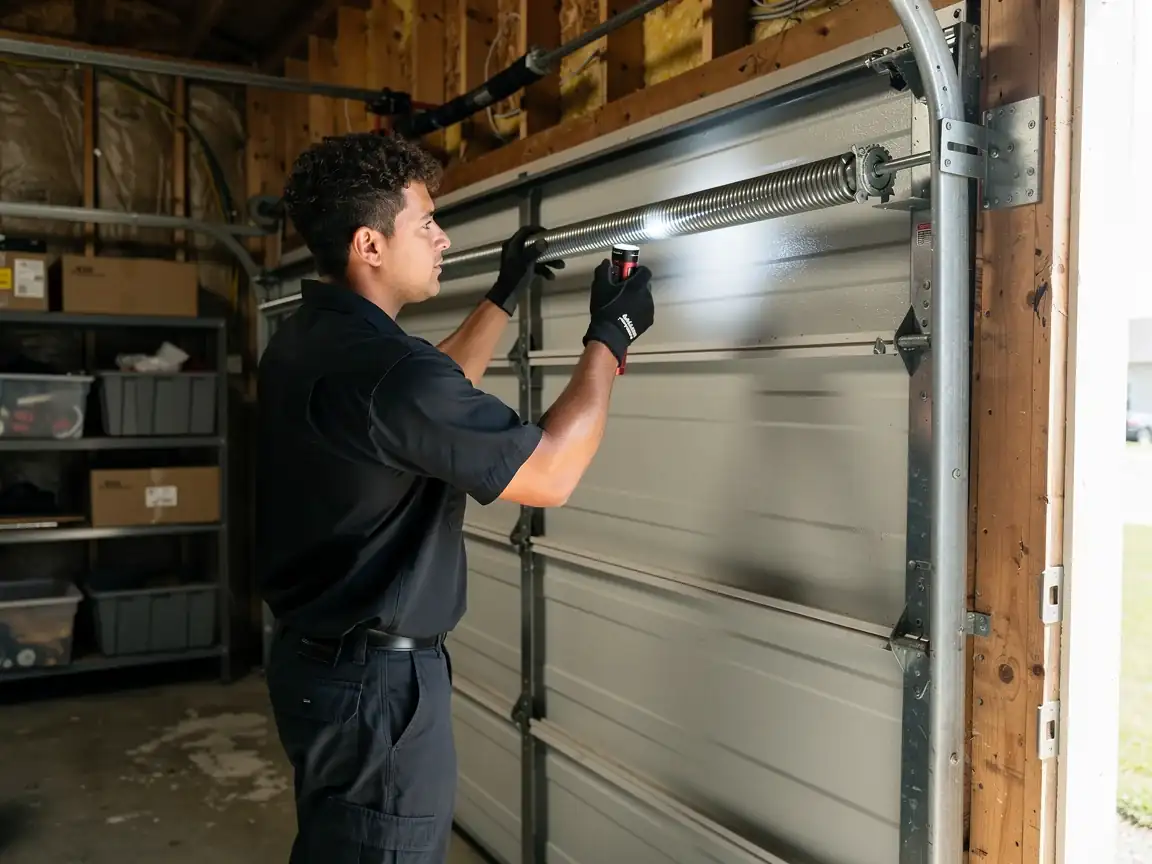
    A technician inspects a garage door torsion spring with a flashlight.

    On-site diagnosis

    A technician tests the door under power and by hand and finds what actually failed.

  3. 3
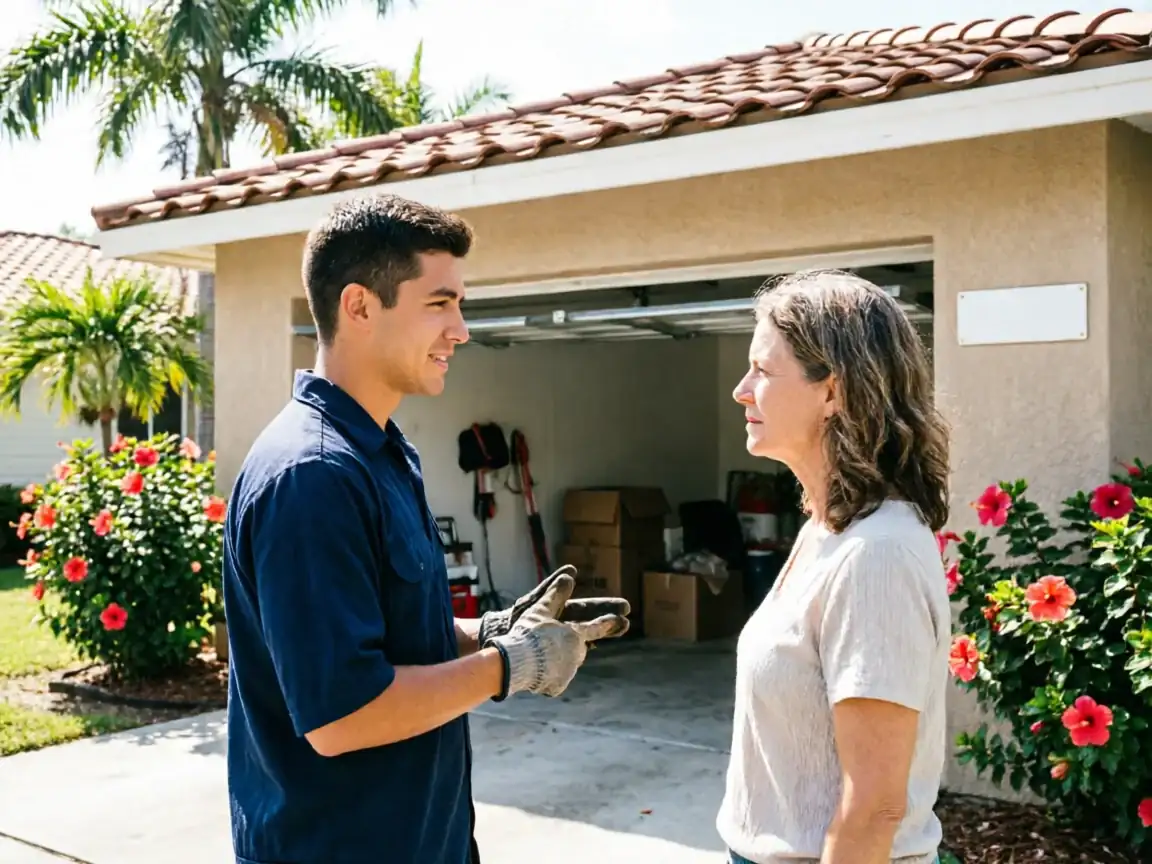
    A technician in work gloves talks to a woman in front of a garage.

    Clear, up-front plan

    You get the fix that’s needed and what drives the cost - before any work starts.

  4. 4
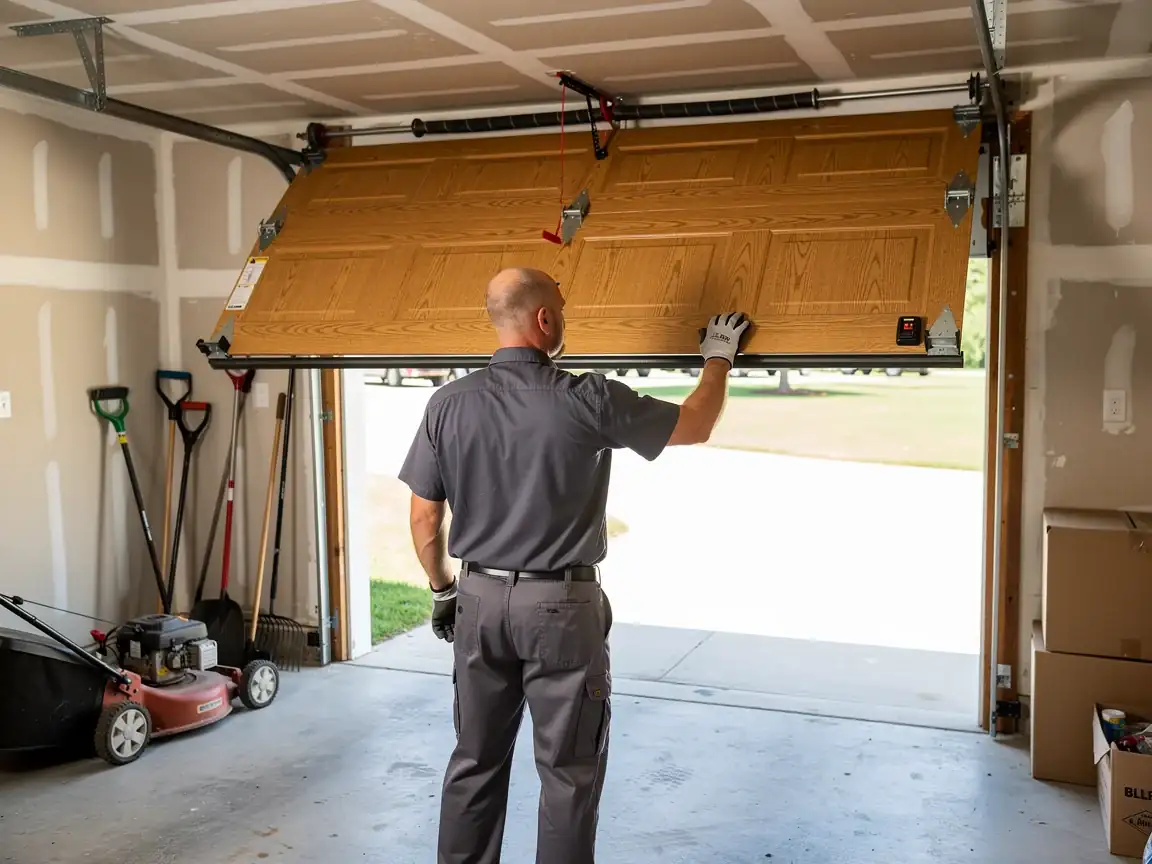
    A technician in a gray uniform is adjusting a brown garage door.

    Repaired & tested

    The repair is done, the door is set true and tested, and the work area left clean.

Not sure which repair your door needs in Dunedin, FL? Describe what it’s doing - every job starts with a diagnosis.

How we work

What to expect

Diagnosis firstEvery visit starts by finding what actually failed - not a pre-written parts list.
The right part for the doorSprings and openers matched to the door’s weight and age, so the fix holds up.
Straight answersWhen a repair makes more sense than a replacement - or the reverse - you hear it plainly.
Clean, careful workTension released safely, hardware set true, the door tested under power before we leave.
36,164Residents in Dunedin
8Garage door services
7Neighborhoods & suburbs
FLServing Dunedin, FL
What we do

Garage Door Services

Repair and installation work for Dunedin homes and businesses.

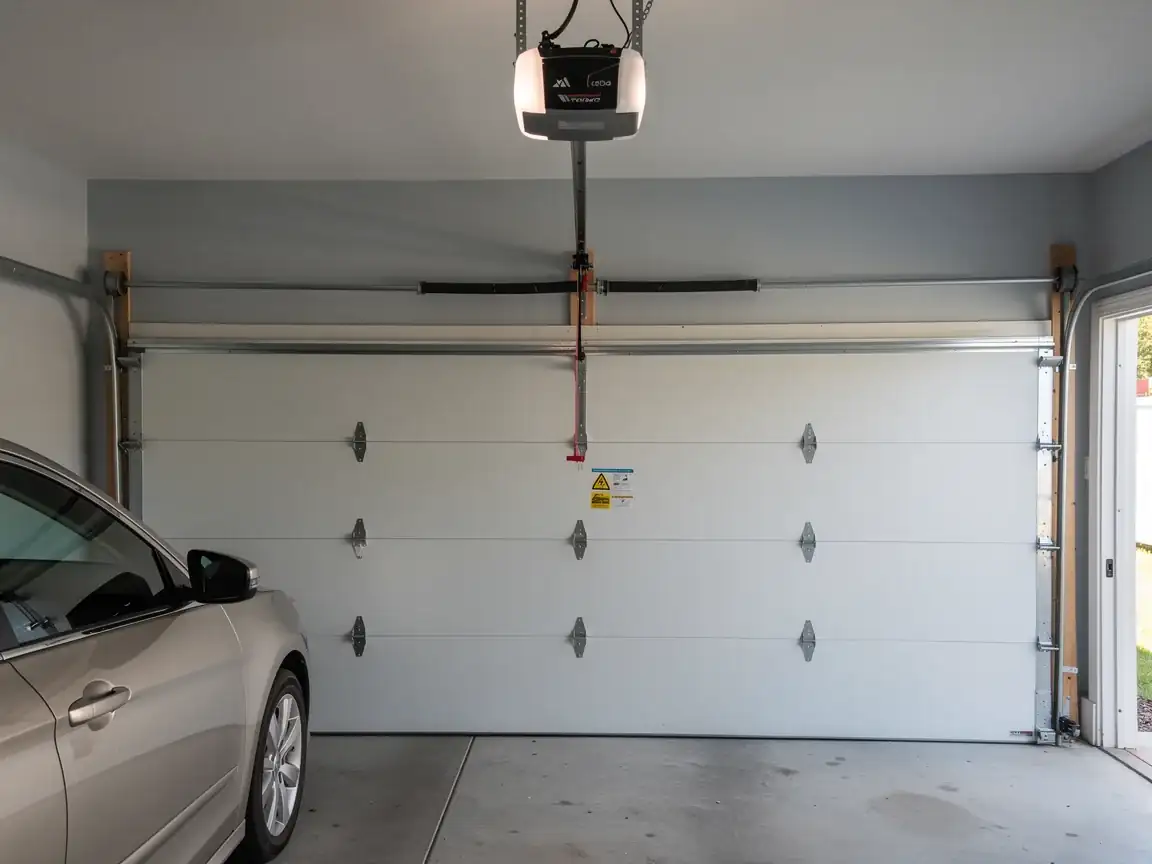
A white garage door is closed with an opener and a torsion spring visible.

Garage Door Repair

Dunedin homes built mostly in the 1960s-70s are hitting the age where torsion springs and tracks give out. We fix the door that's stuck, off its track, or won't open.

Learn more
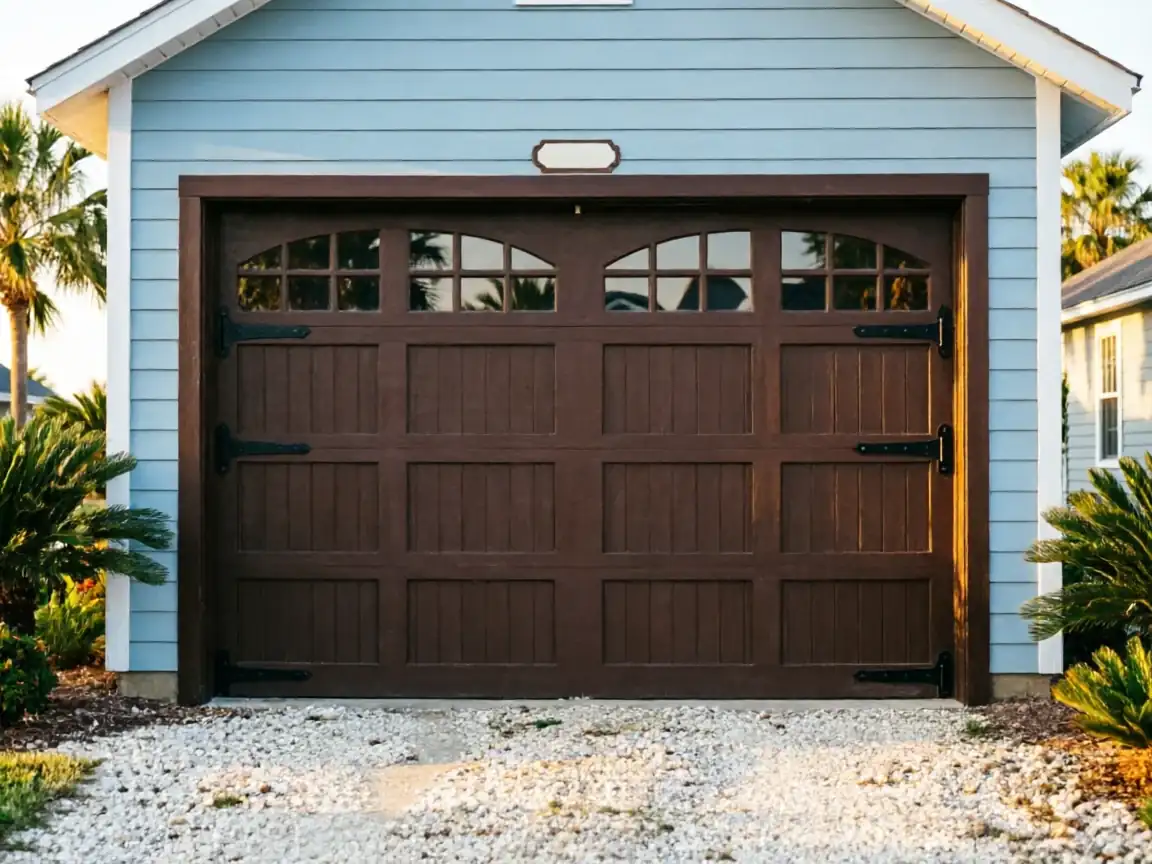
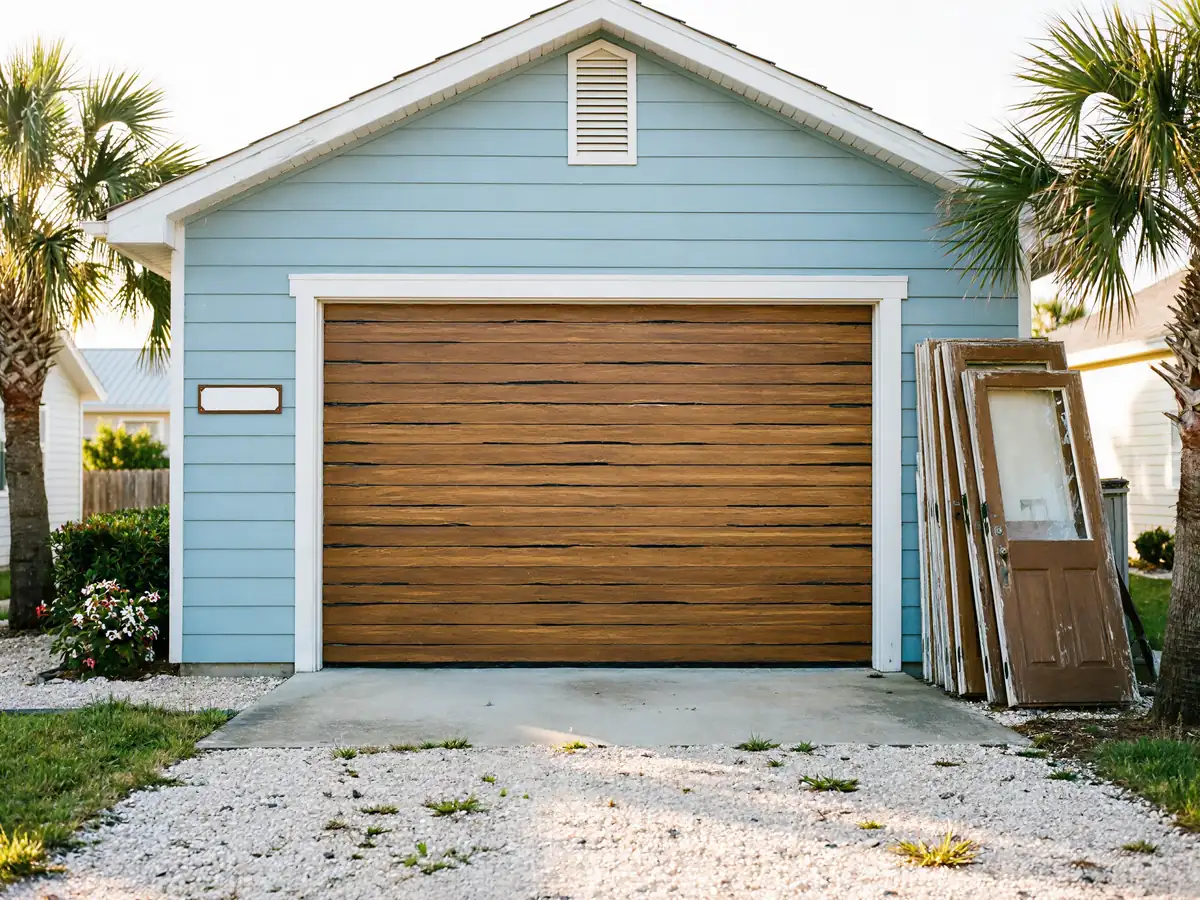
A light blue house has a brown wooden garage door and old doors stacked outside.

Garage Door Installation

Dunedin homes mostly date to 1958-2005, median 1979, so original garage doors are aging out. See why installation beats repair here and what the job involves.

Learn more
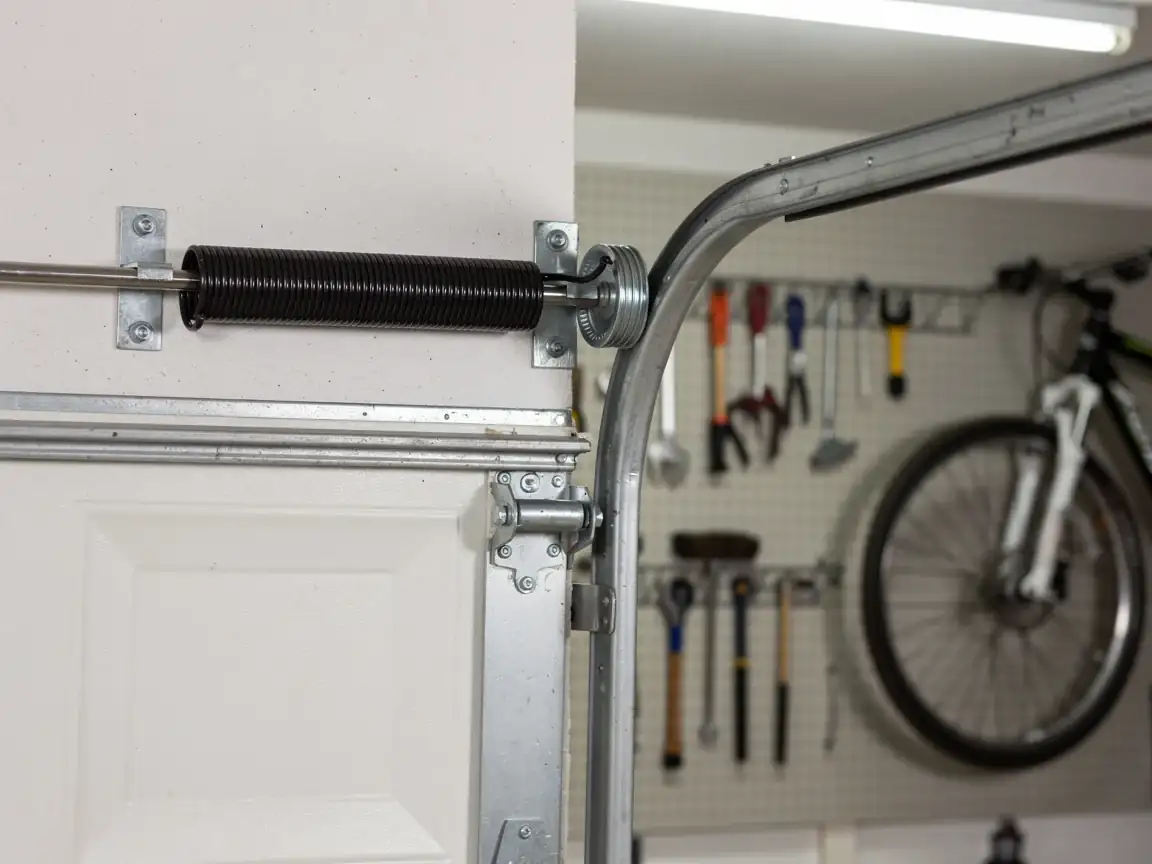
A black torsion spring is mounted above a white garage door.

Garage Door Service

Dunedin homes mostly date 1958-2005, and the mild Gulf climate wears springs down through corrosion and cycle fatigue, not cold snaps. Here's what that means for your repair.

Learn more
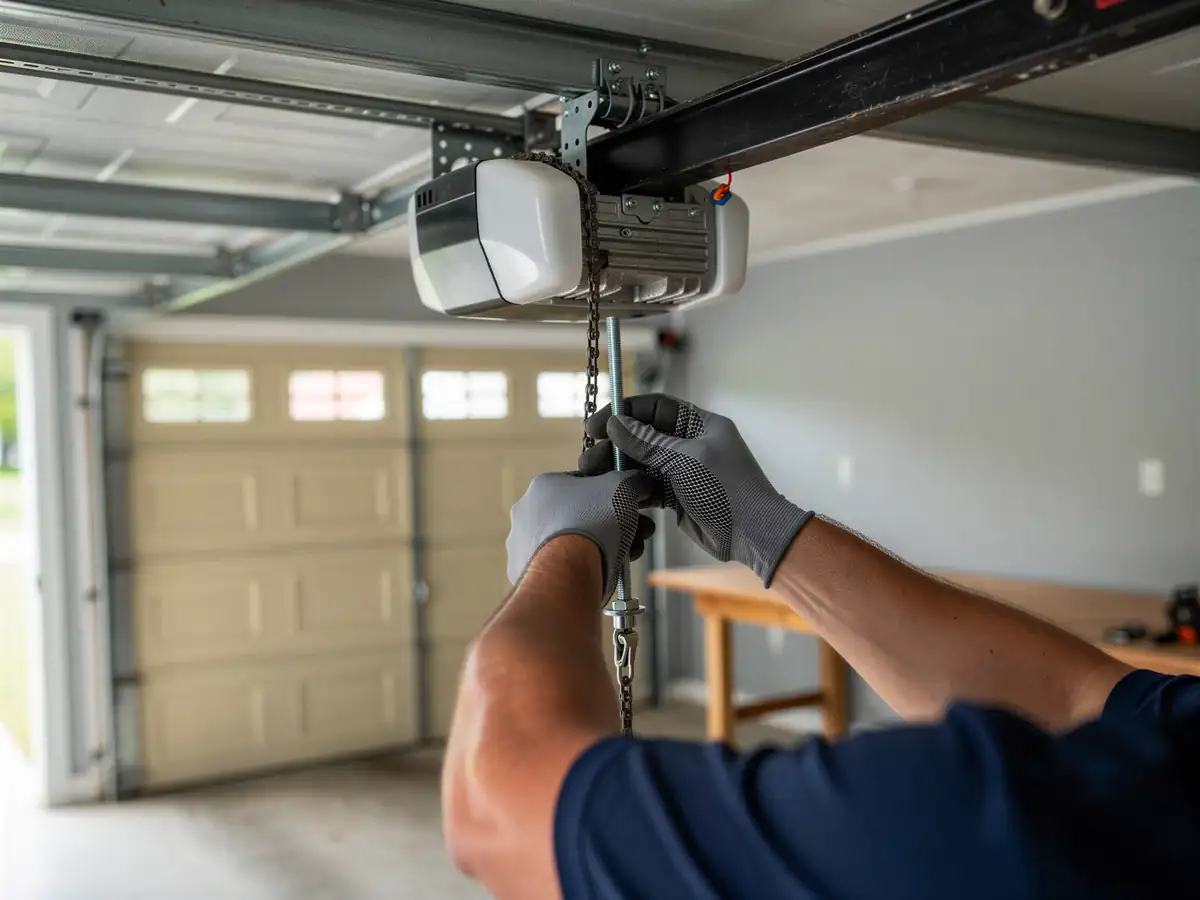
A technician in gray gloves adjusts a garage door opener chain.

Opener Repair

Opener repair for Dunedin homes built 1958-2005, where original hardware and gulf-coast humidity wear out gears, boards, and sensors the same predictable way.

Learn more
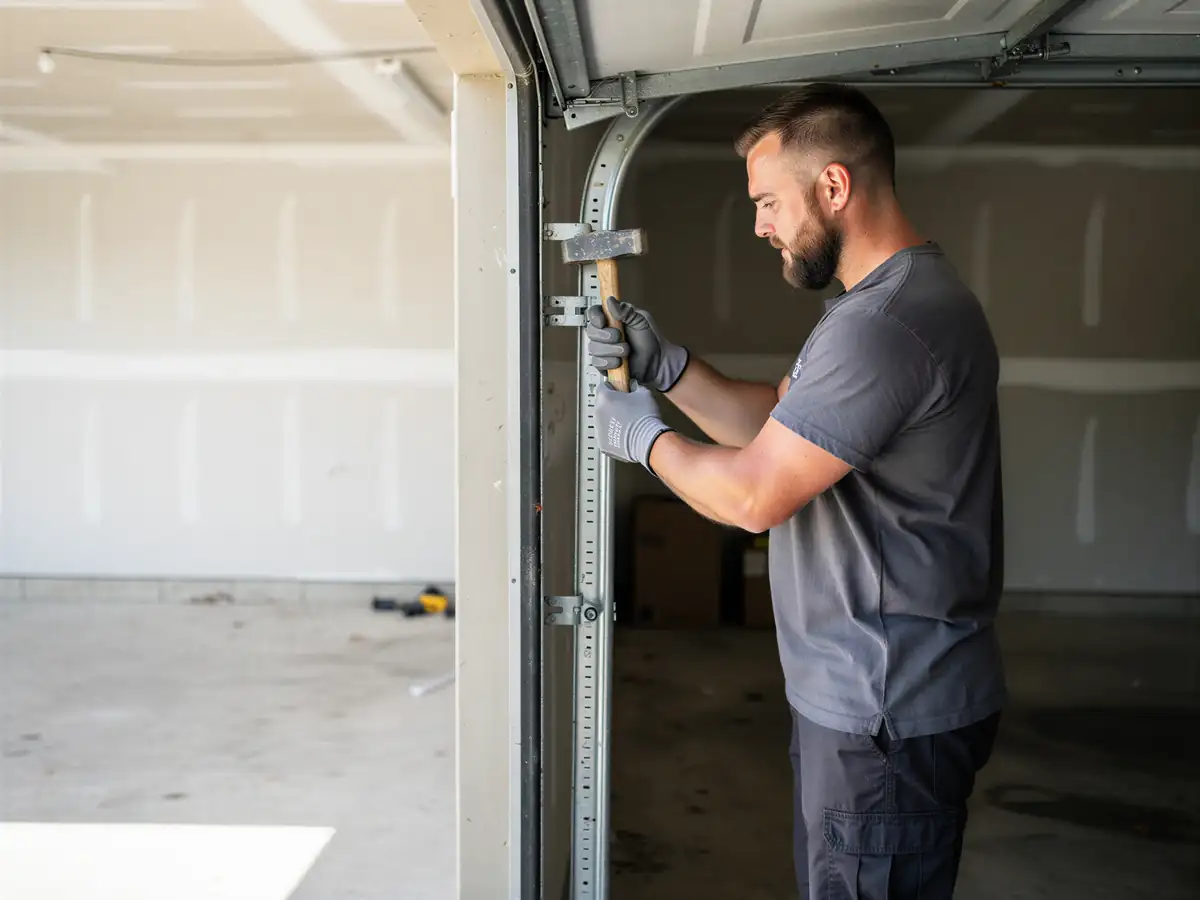
A technician in gloves uses a hammer on a garage door track.

Off-Track Repair

Garage door jumped its track? We work on the 1958-2005 housing stock across this service area and explain what's actually bent, broken, or misaligned.

Learn more
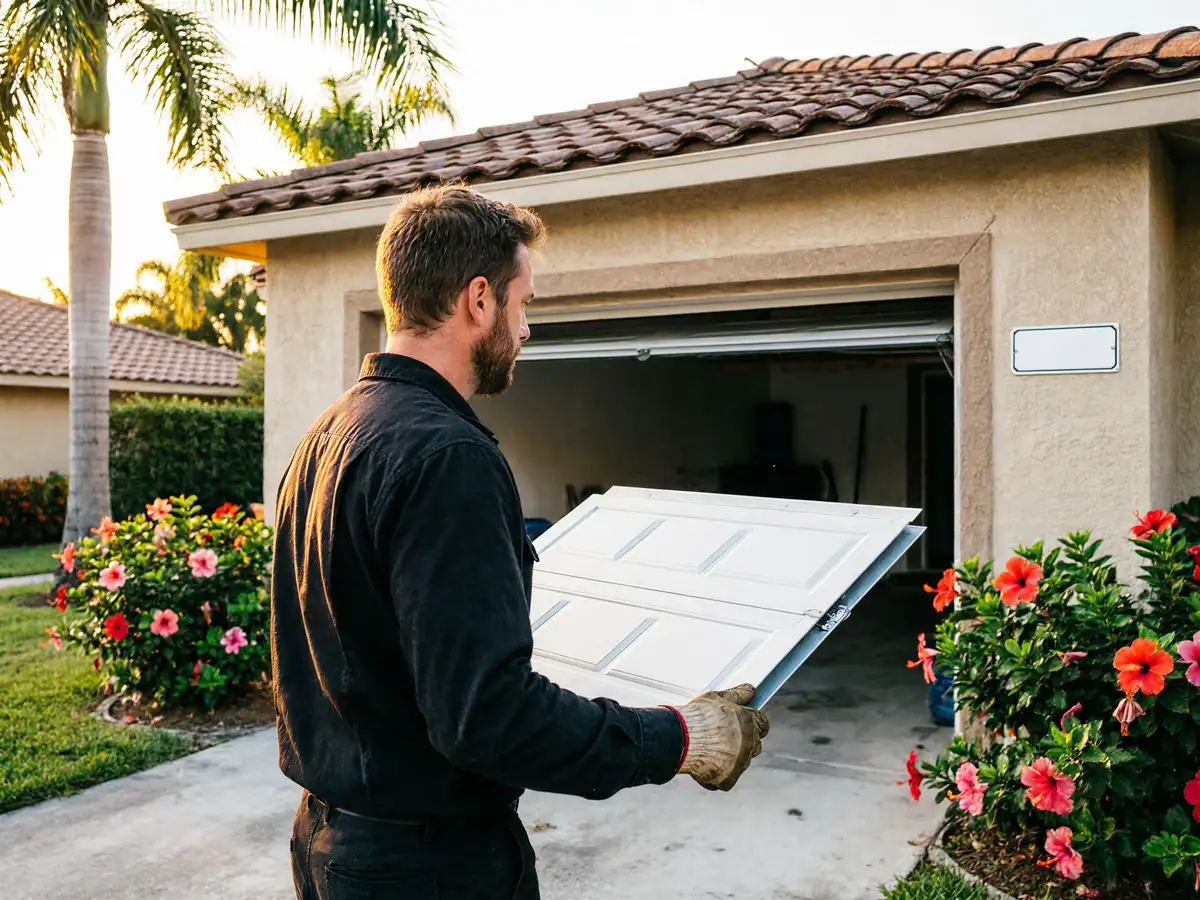
A technician carries a white garage door panel toward an open garage.

Panel Replacement

Dunedin's 1960s-70s steel doors crack and rust at the seams after decades in mild, humid air. We replace single panels or match sections on original hardware.

Learn more
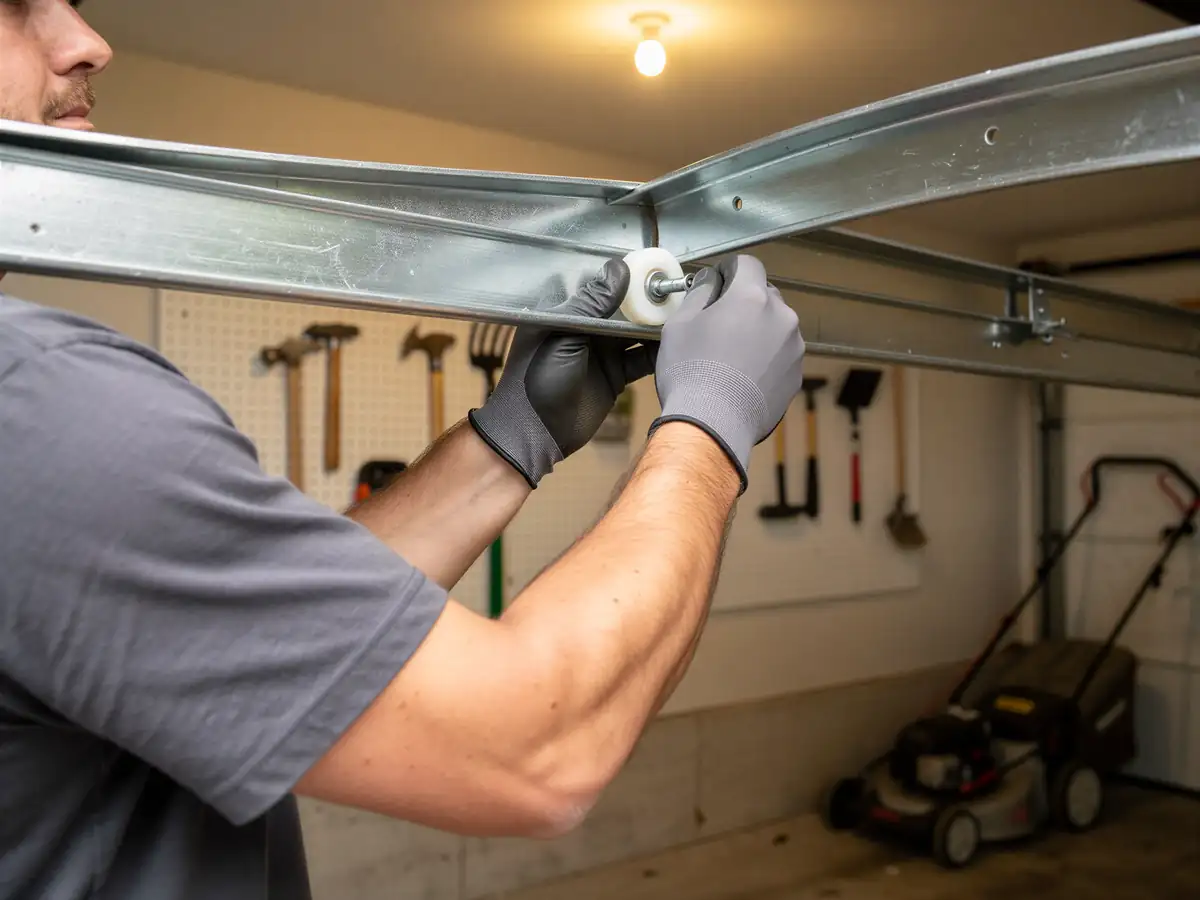
A technician installs a new roller on a garage door track.

Roller Replacement

Dunedin Garage Door Pros replaces worn and cracked rollers on doors built during the area's 1960s-70s construction boom, when steel rollers and bare hinges were standard.

Learn more
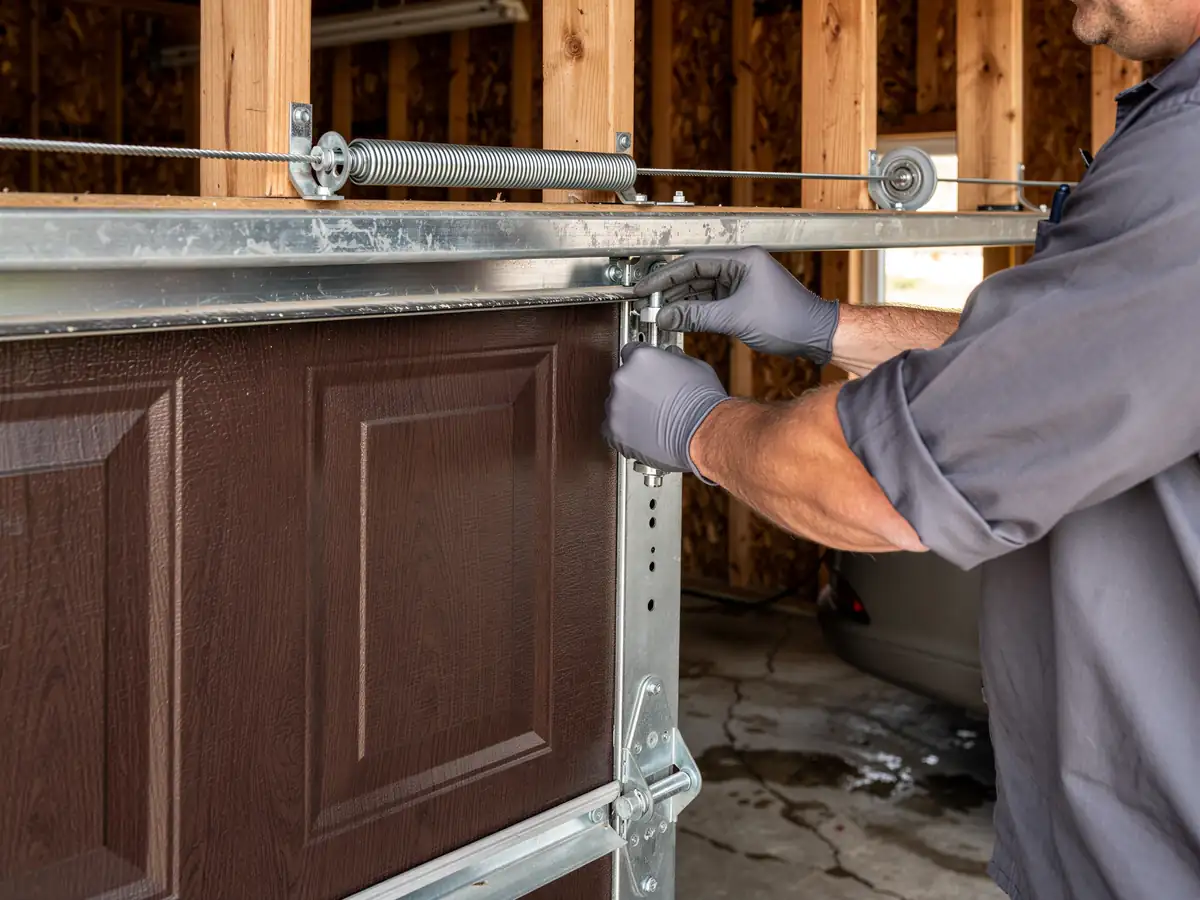
A technician wearing gloves adjusts a brown garage door with a spring and cable system.

Maintenance

Garage door maintenance for Dunedin homes built mostly between 1958 and 2005, where original hardware and mild coastal air wear springs and rollers faster than owners expect.

Learn more
Where we work

Serving Dunedin & nearby

Local garage door service across 7 Dunedin-area neighborhoods and communities - is your street on the list?

7

Dunedin-area neighborhoods & nearby communities we cover

Questions

Frequently asked

Straight answers about garage door repair in Dunedin. Still unsure? Ask us directly.

Why did my garage door spring break with no warning?

Torsion springs fail by cycle count, not by age alone, so a spring installed when your house was built in the 1960s-70s can hold for decades and then let go suddenly once it hits its limit. Humidity and salt air in this area also corrode the coils over time, which weakens them faster than a dry climate would and can bring that failure point forward.

Can I replace the spring myself?

We don't recommend it. A wound torsion spring stores enough force to cause serious injury, and older hardware from the 1960s-70s building era often lacks the safety cables that newer systems have. It's a controlled job with the right bars and the right wind count - one we do with the door fully unloaded before testing it.

Is it better to repair or replace an old door?

If the spring is the only failure and the track and panels are sound, repair is usually the cheaper route. If the opener, springs, and track are all showing age at once - common once a house passes 45 years old - replacement often works out cheaper over the next few years than repeated service calls on the same original hardware.

Ready to get your garage door sorted?

Tell us what it’s doing and where you are in Dunedin - we’ll take it from there.

Request a QuoteCall