The Symptom
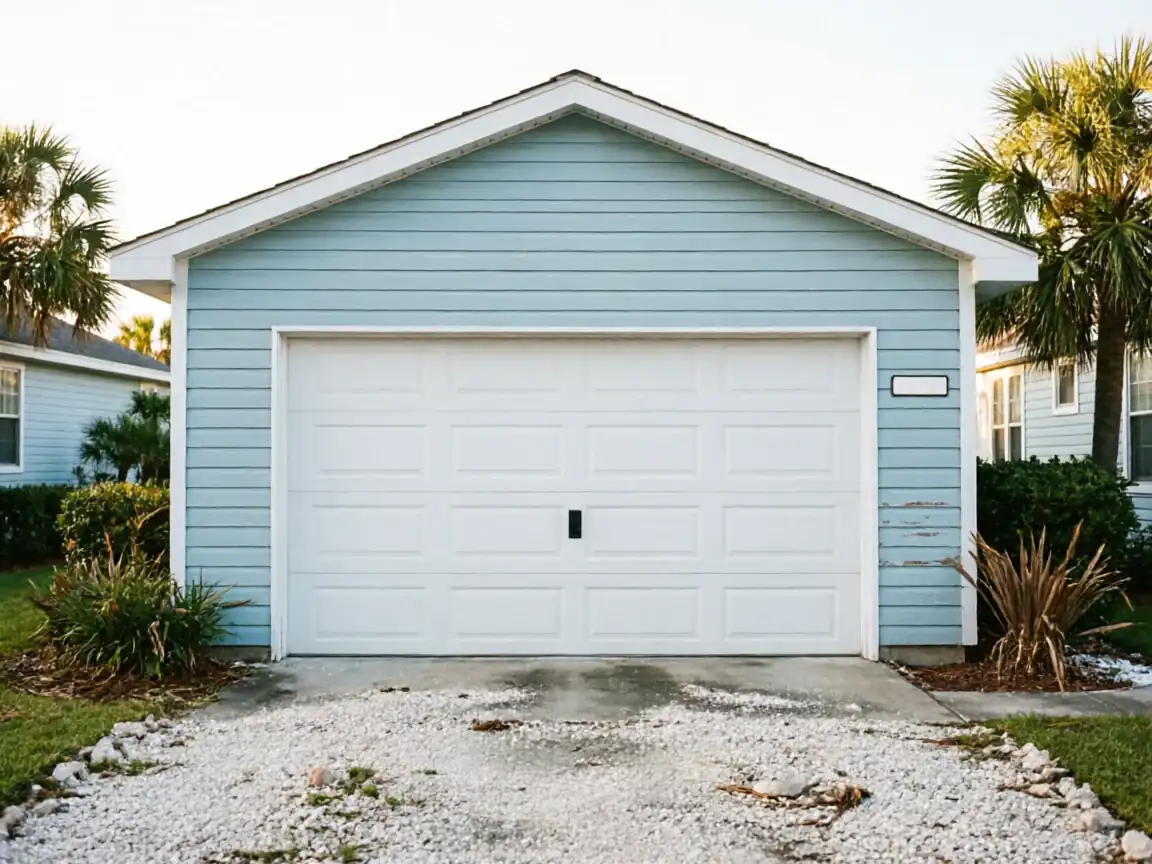
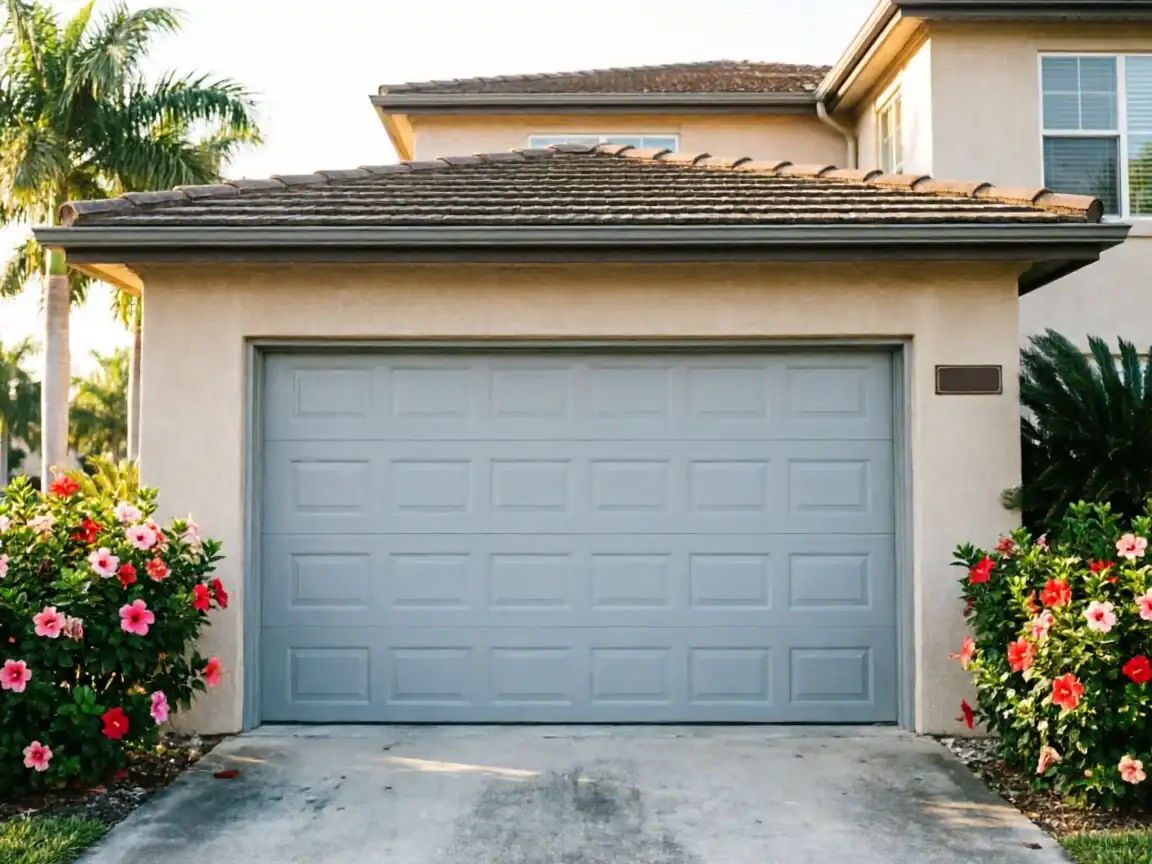
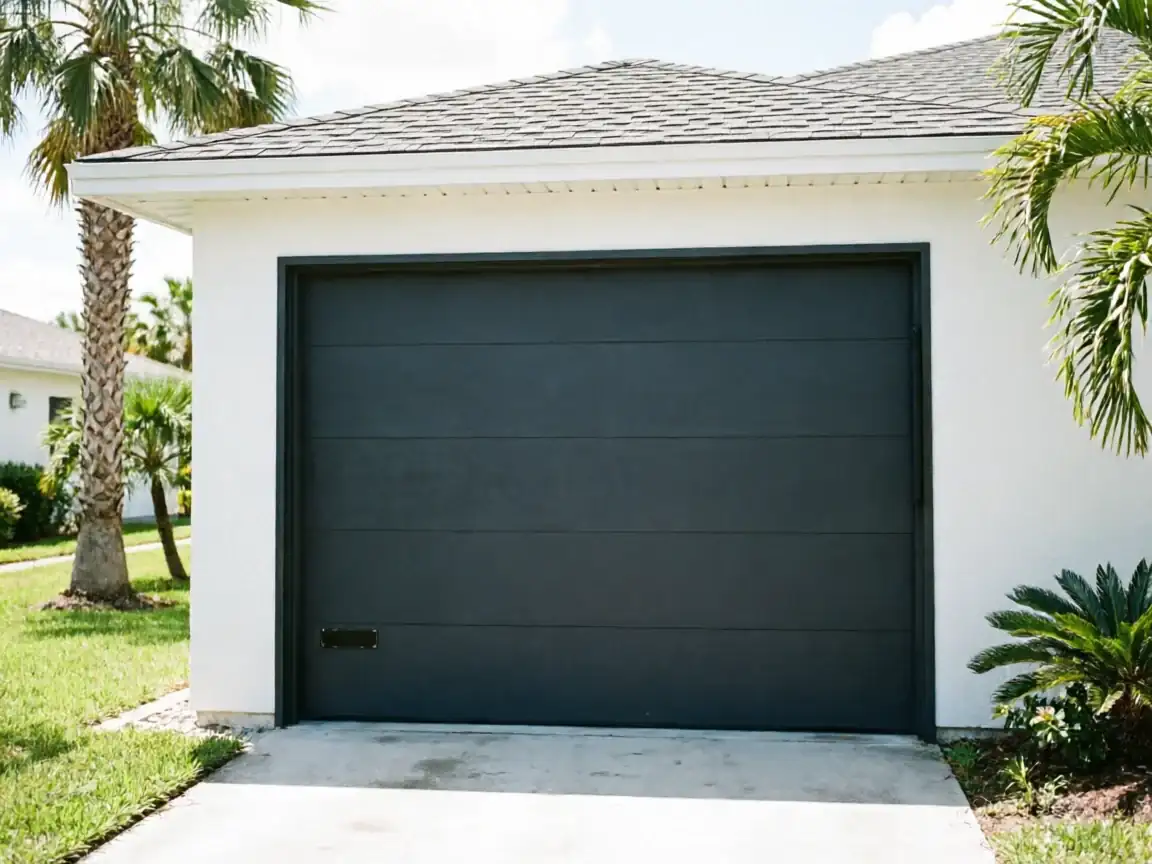
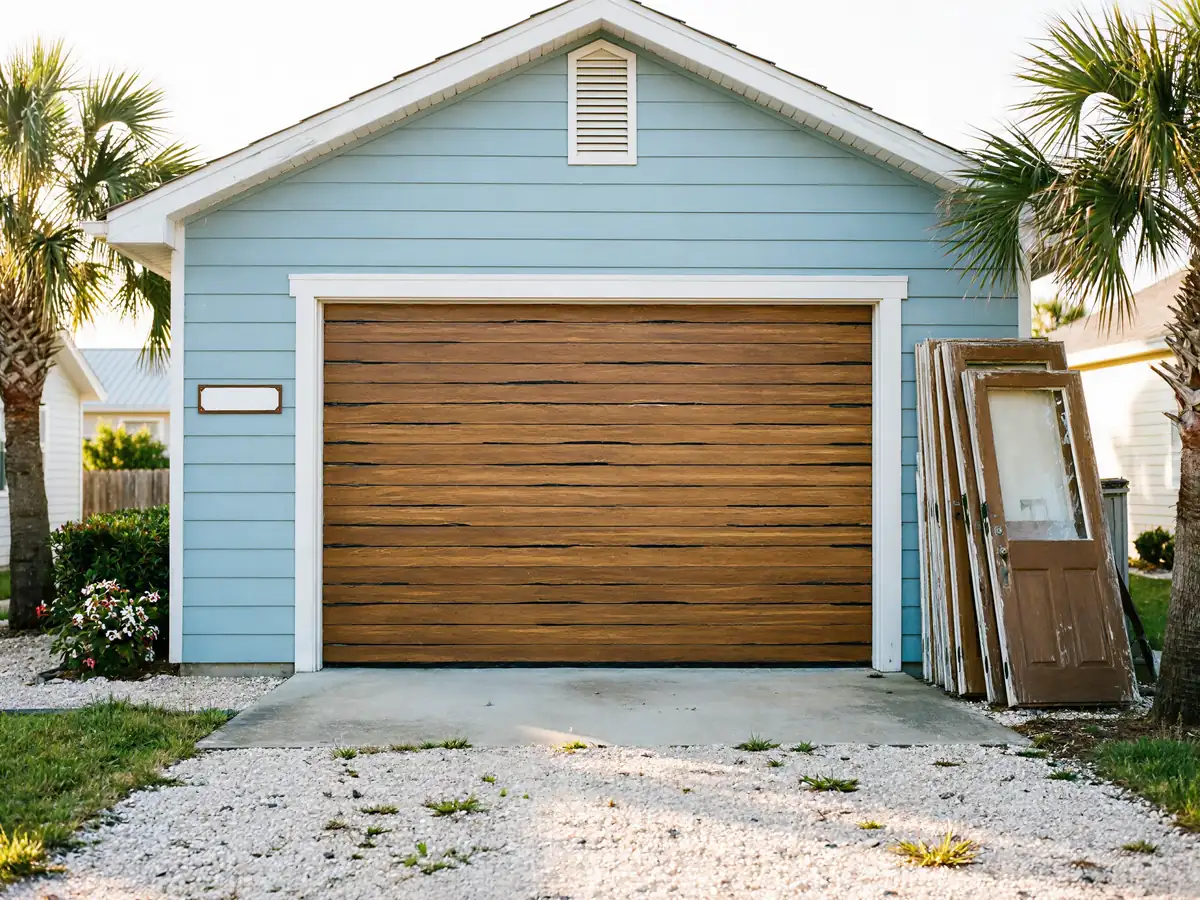
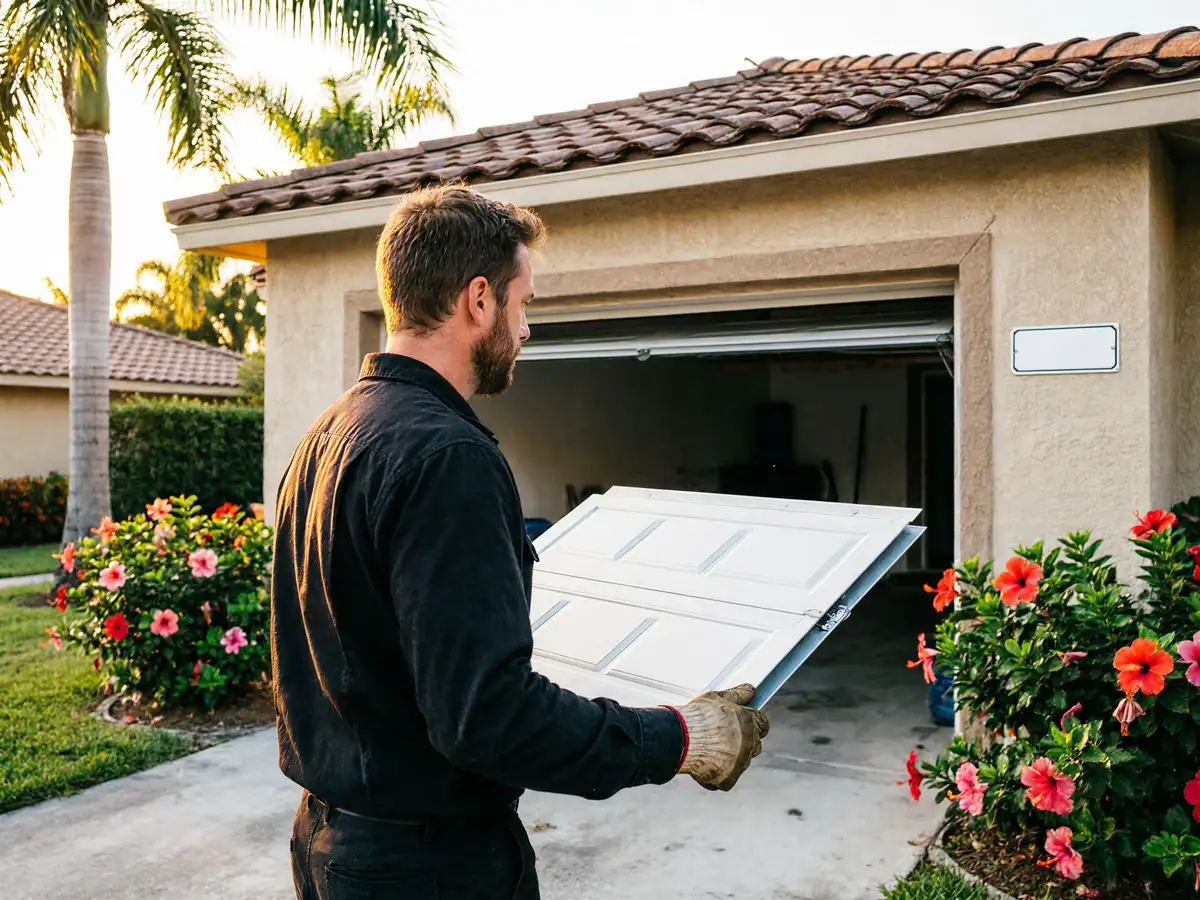
Most houses in Keystone went up around 1998, which puts this neighborhood near the newer end of the 1958-2005 range we see across the rest of the service area. That matters for what's on the garage. A door from this era is almost always a steel sectional with a raised-panel profile and a factory baked-on finish, not the flat aluminum or wood slab doors still common in the older 1960s and 70s tracts closer to Dunedin. So when a panel on one of these doors gets cracked, caved in, or delaminated, the question isn't whether it's steel - it almost always is - it's whether the exact profile and color are still being produced. A dent from a backed-up car or a cracked bottom panel from a stray edger is usually a clean fix on paper, because the door is young enough that hardware and sizing are standard. The complication shows up at the paint-match stage, not the structural stage. If your door still has its original builder finish, a replacement panel ordered today may come close but not identical, especially after twenty-plus years of sun on the old one.
What Can Go Wrong
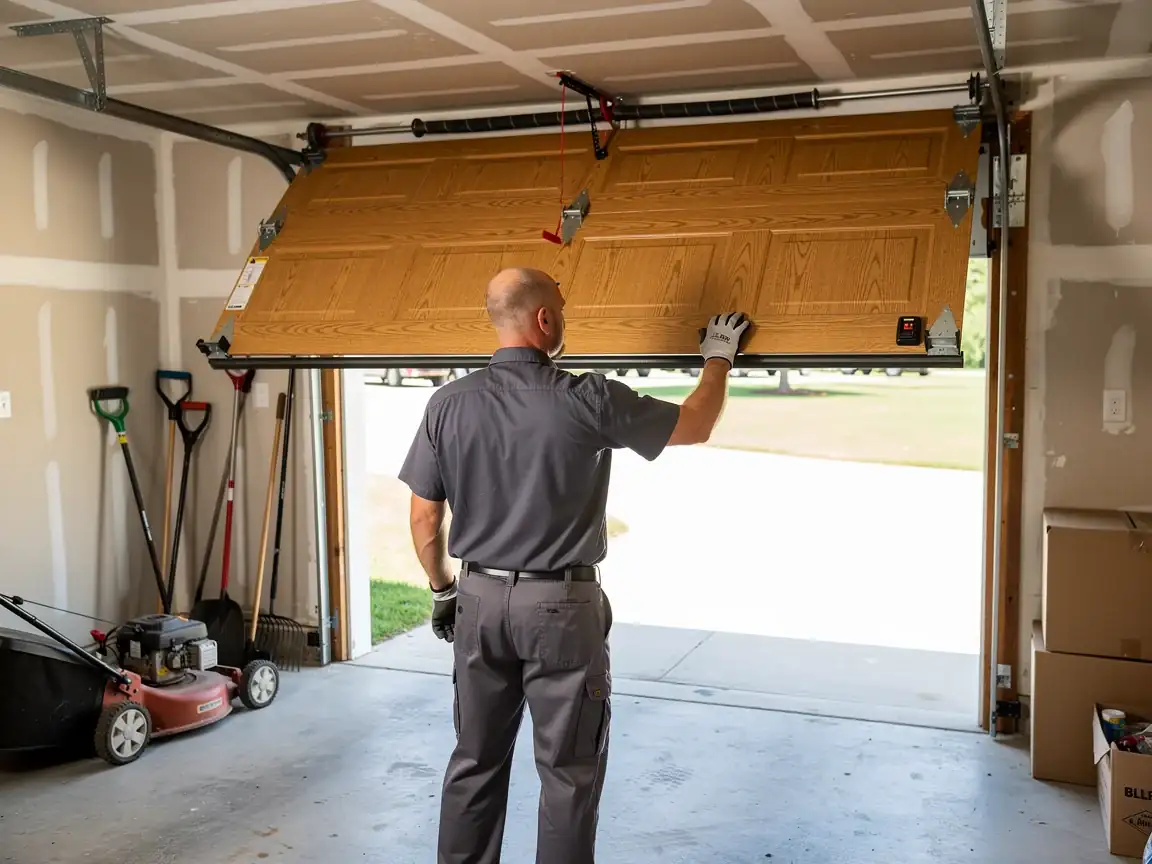
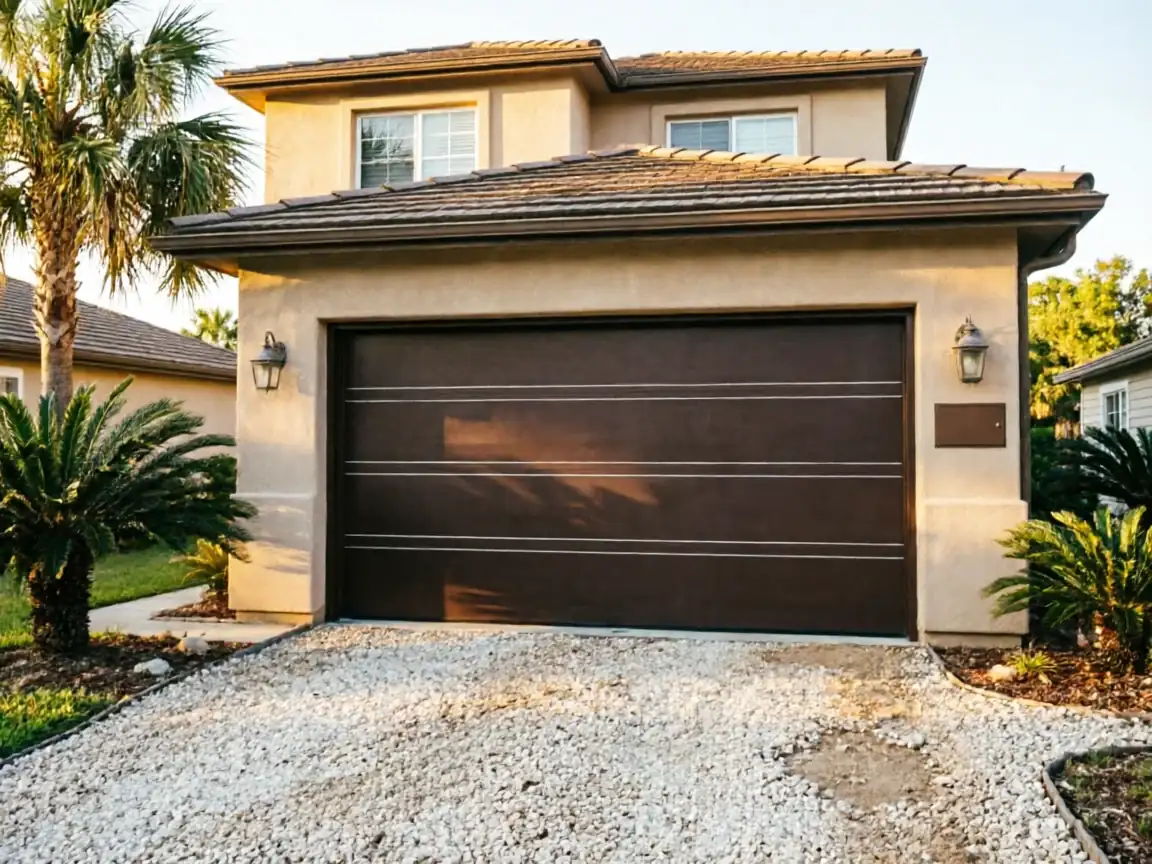
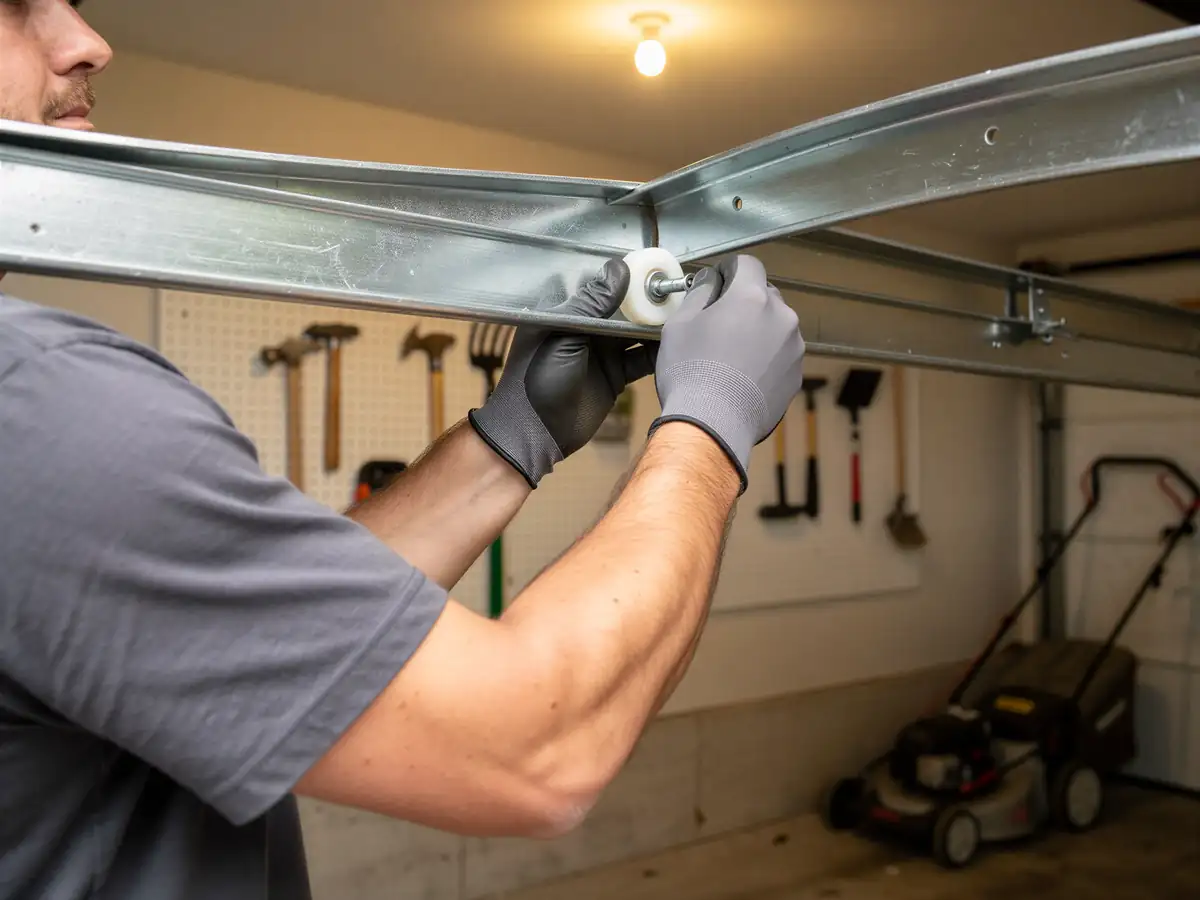
The panel itself is rarely the whole problem. On a door built around 1998, the insulation sandwiched inside steel panels starts to separate from the skin after two decades, so a single cracked panel can mean the two panels next to it are also starting to bow or flex when the door cycles. We check the full section, not just the damaged piece, before quoting a one-panel swap. Keystone's households carry a median income well above the $84,220 median for the wider service area - closer to $155,365 - and a lot of these garages were specified with upgraded raised-panel steel rather than the builder-grade flat panel you'd find on an older starter-home door. That upgraded panel can cost more to source and sometimes has to come from a different supplier than the basic line. Hardware wear is the other thing: rollers and hinges from 1998 construction are usually original, and a panel swap is the moment to check whether they're worth replacing at the same time rather than pulling the door apart again in another year.
The DIY Question
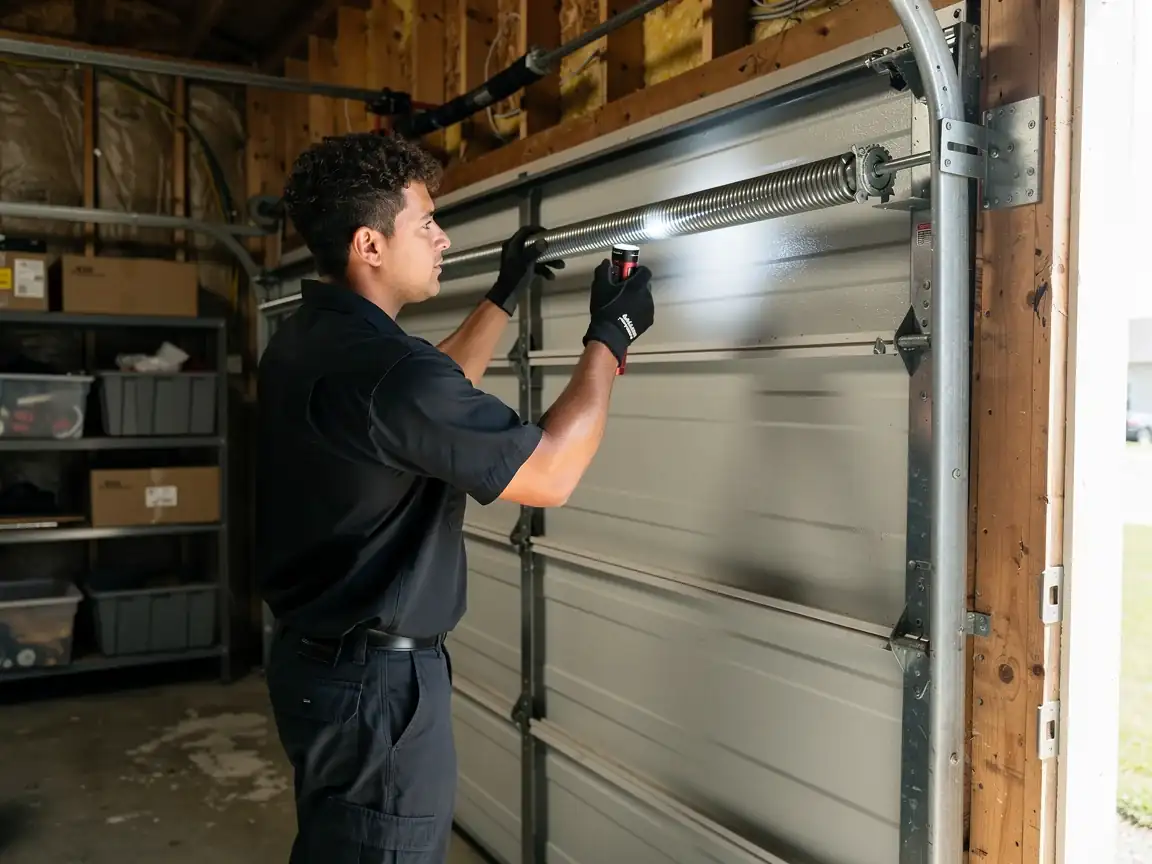
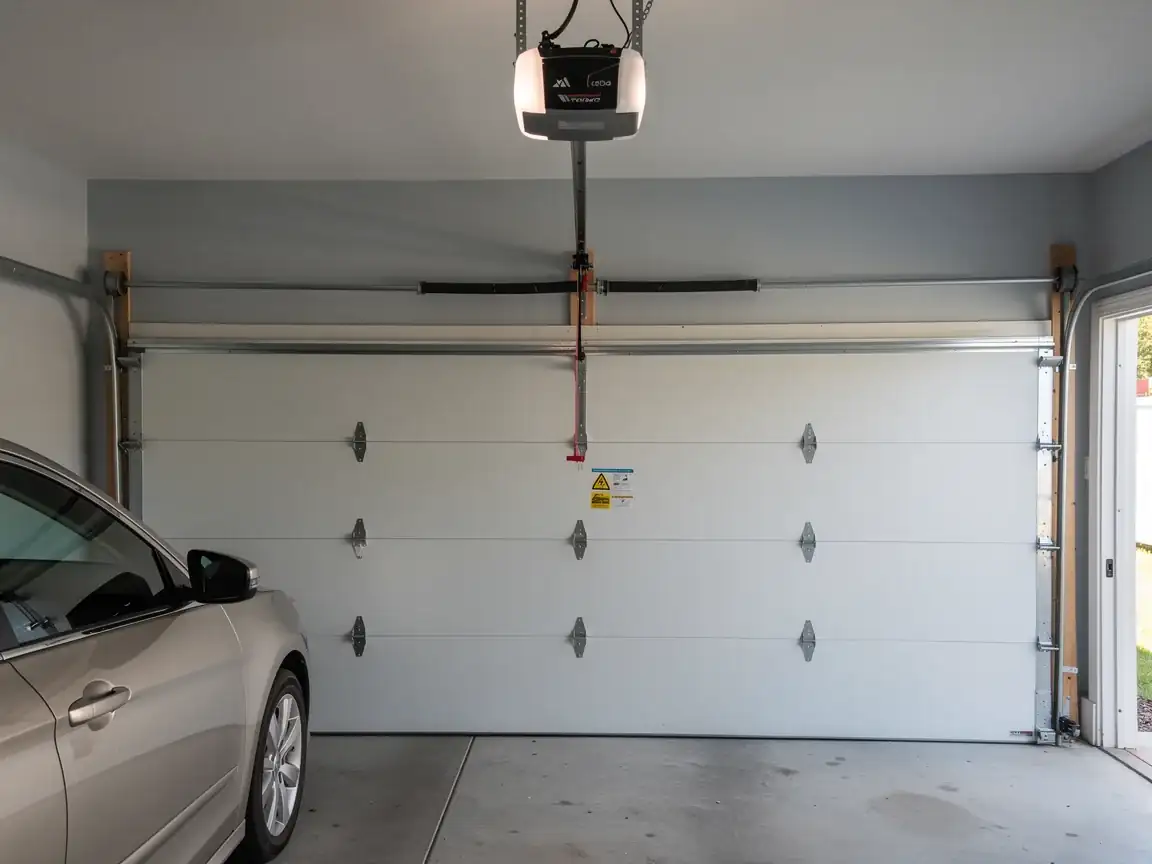
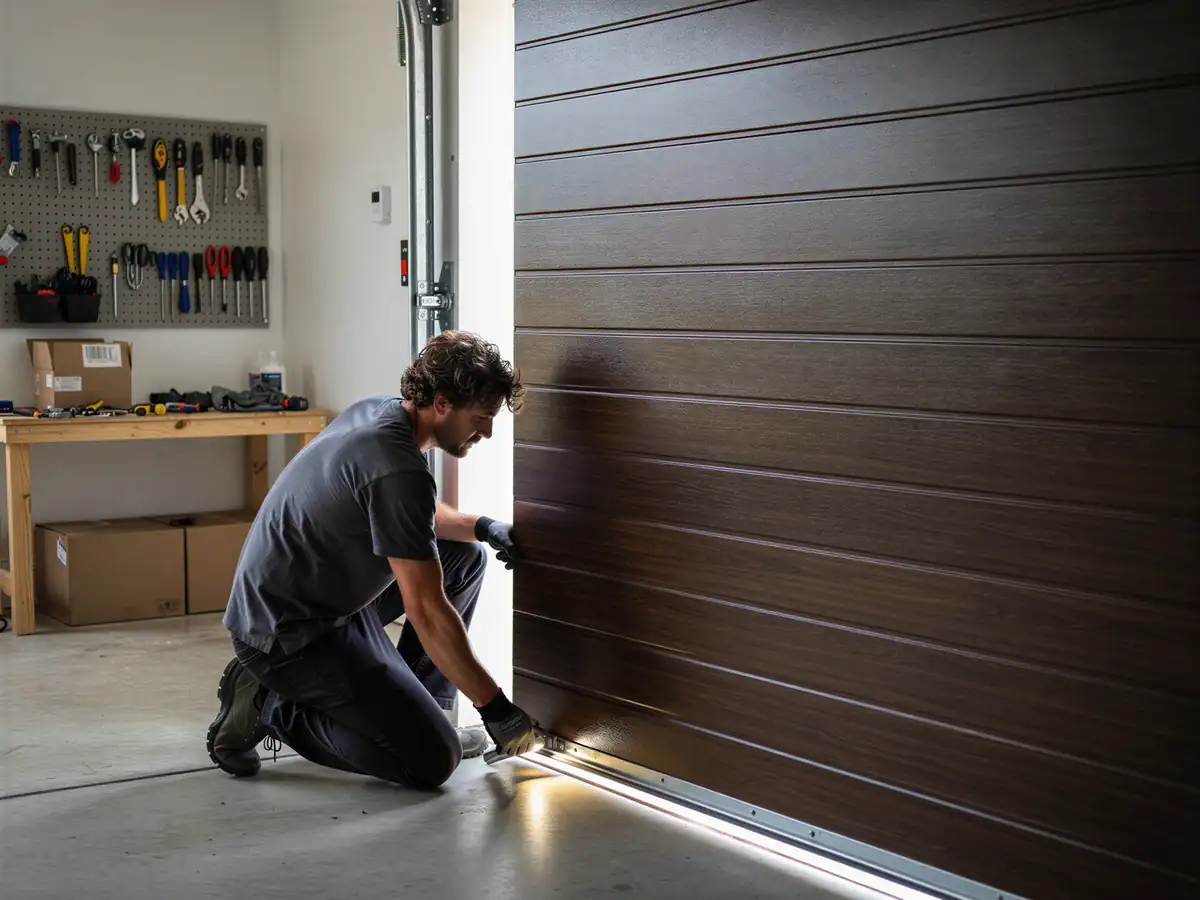
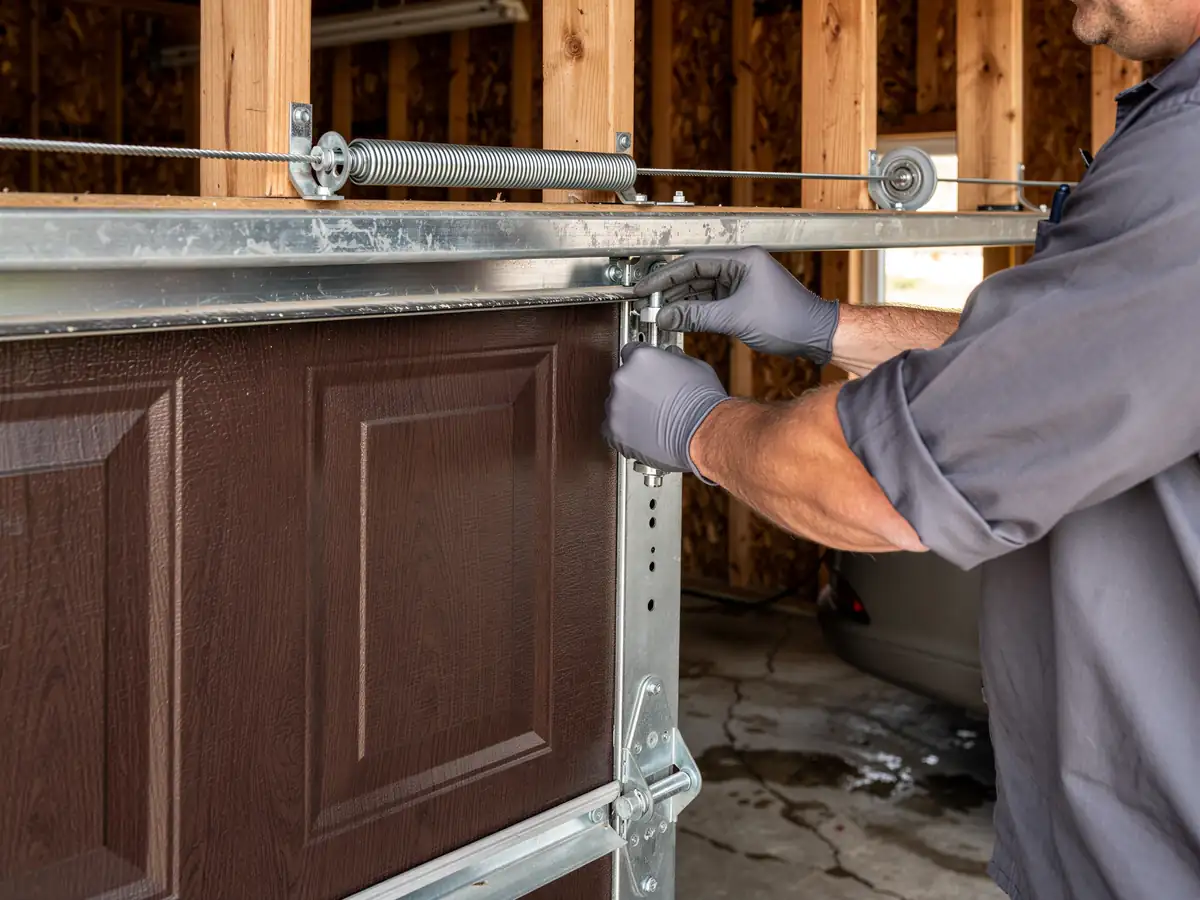
A single panel swap looks simple from a video, and on a basic hinge and roller it mostly is - if you can find the exact match. The part we won't talk you into doing yourself is anything involving the torsion spring or the cables that run under tension across the top of the door; that's where most garage injuries happen, panel job or not. Here's the honest limitation: we can't guarantee an exact color match on a 1998 door that's had twenty-five years of Florida sun on it, even with a correct part number. Sometimes the better call, cost-wise, is replacing the full door rather than living with one visibly newer panel for years - we'll tell you which makes sense once we see the door, not before.