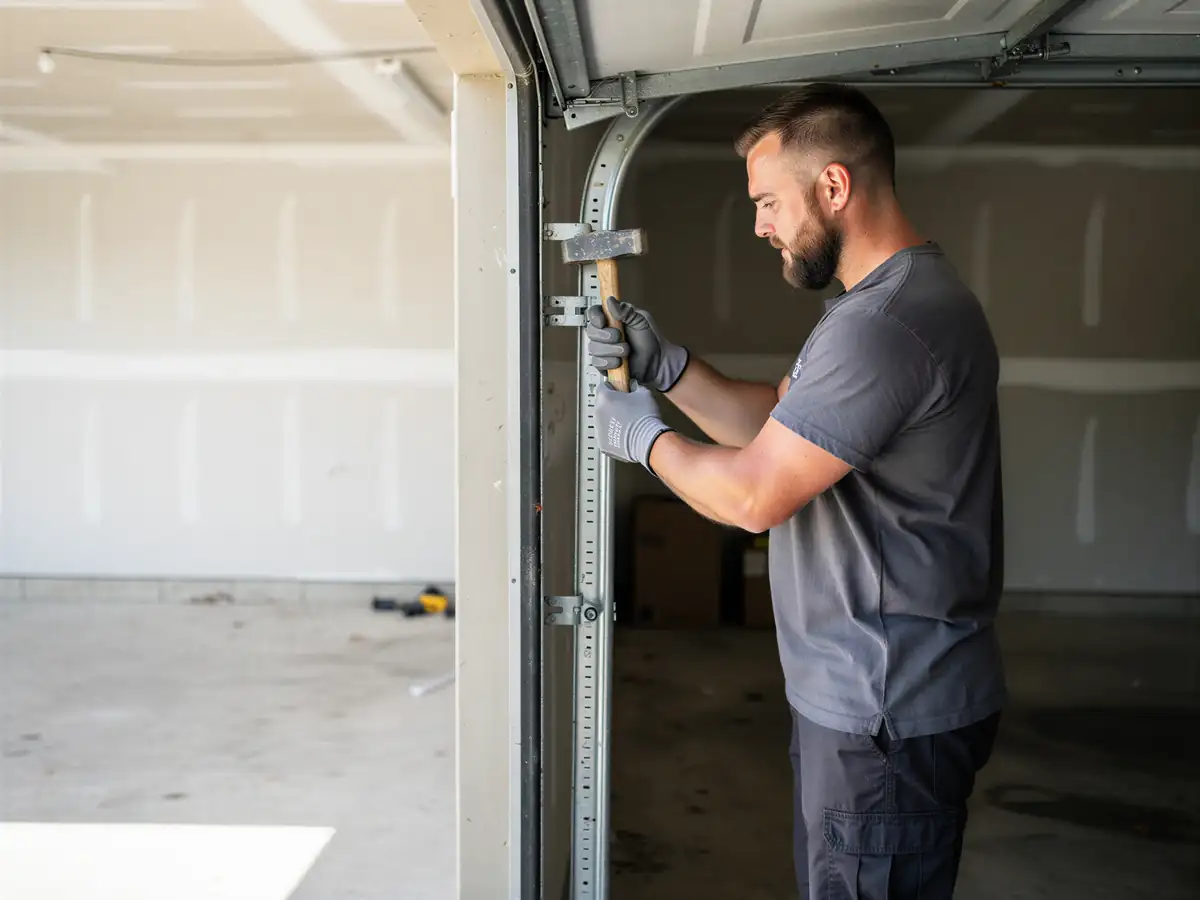
What Is on the Truck
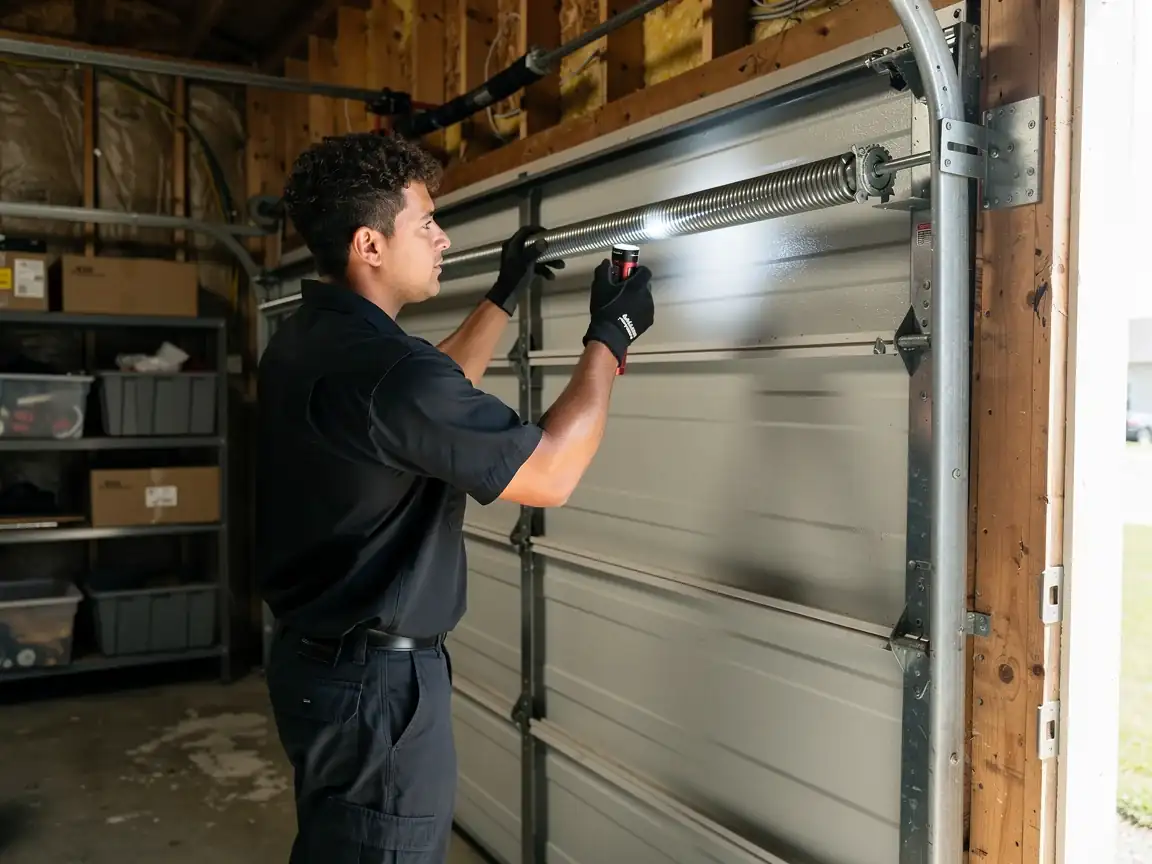
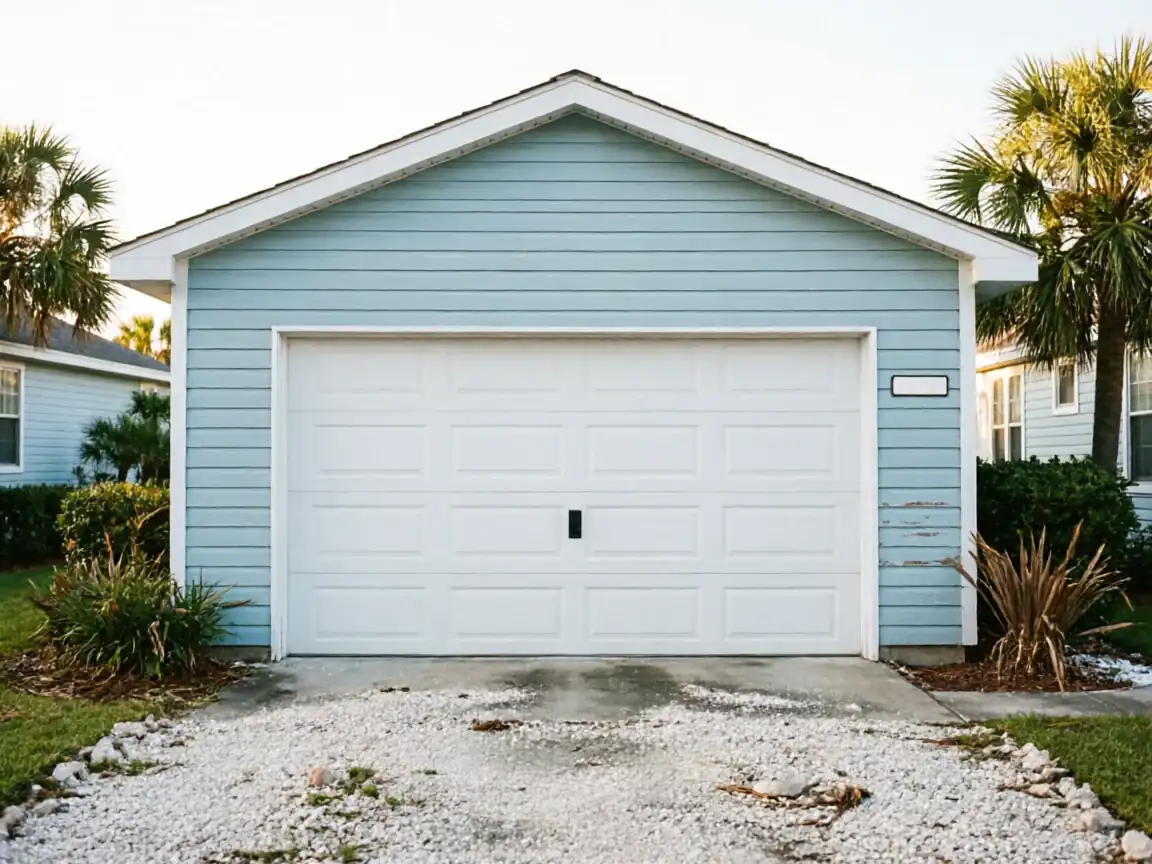
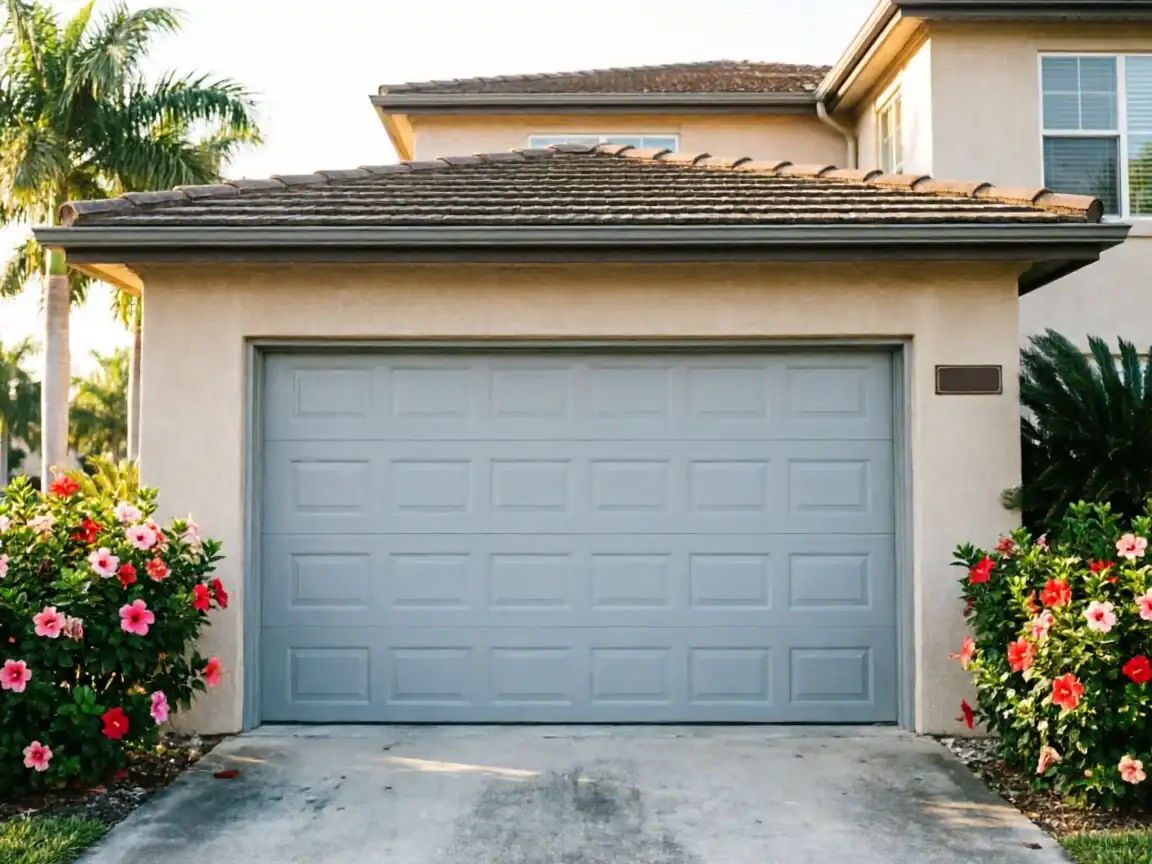
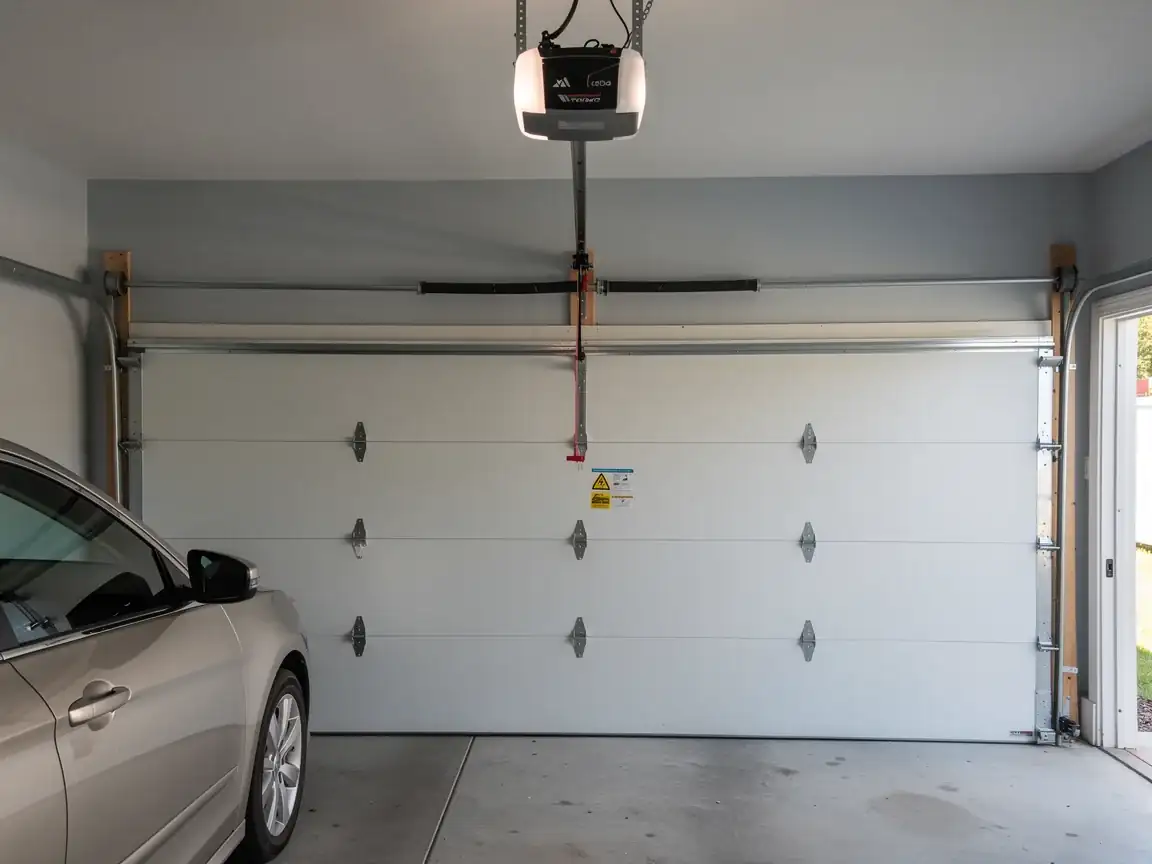
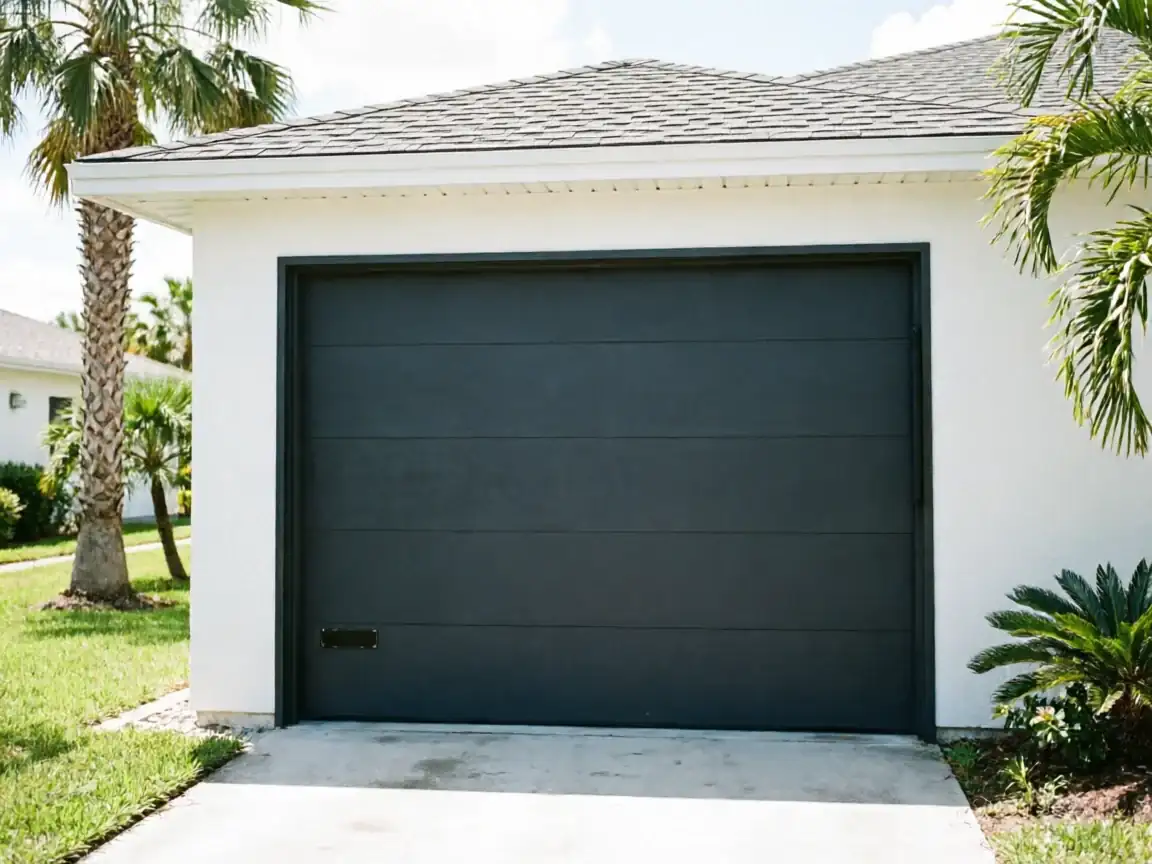
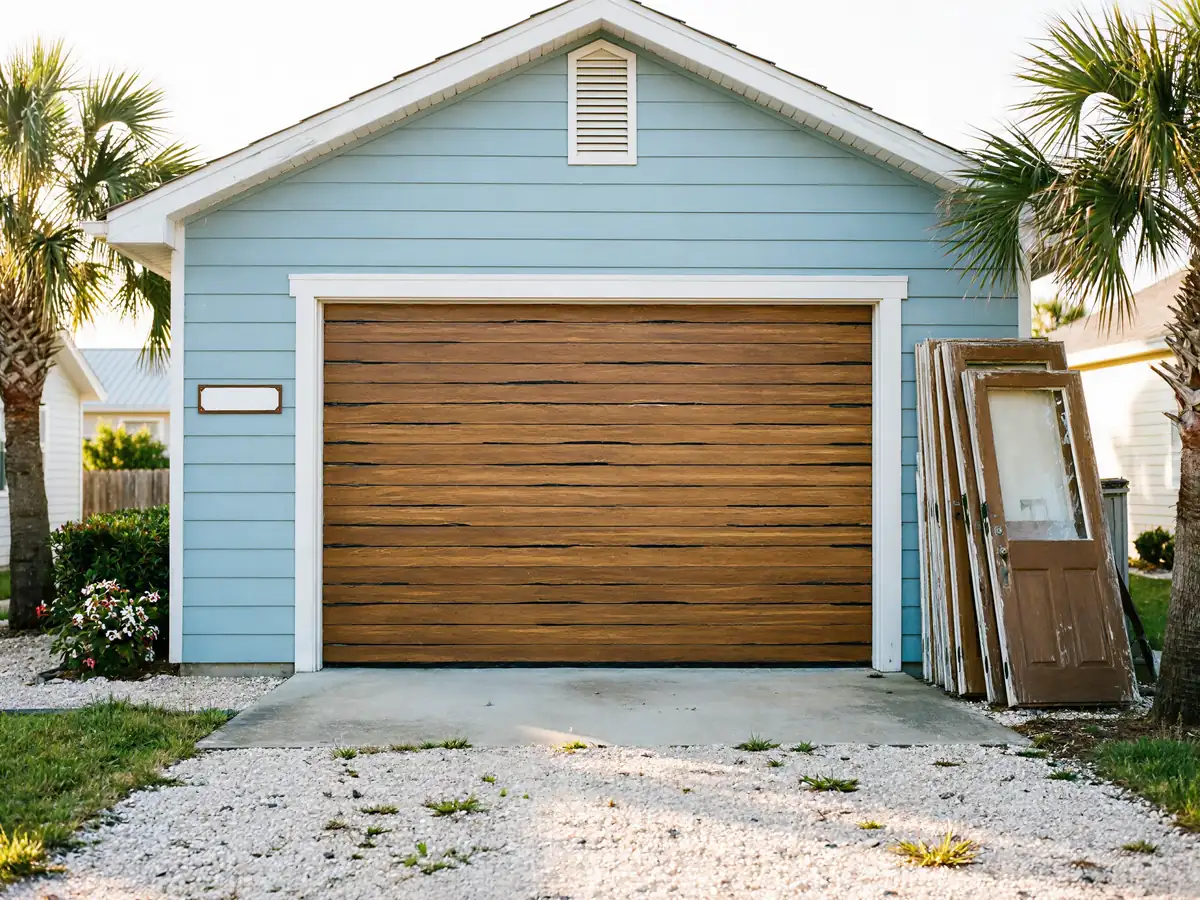
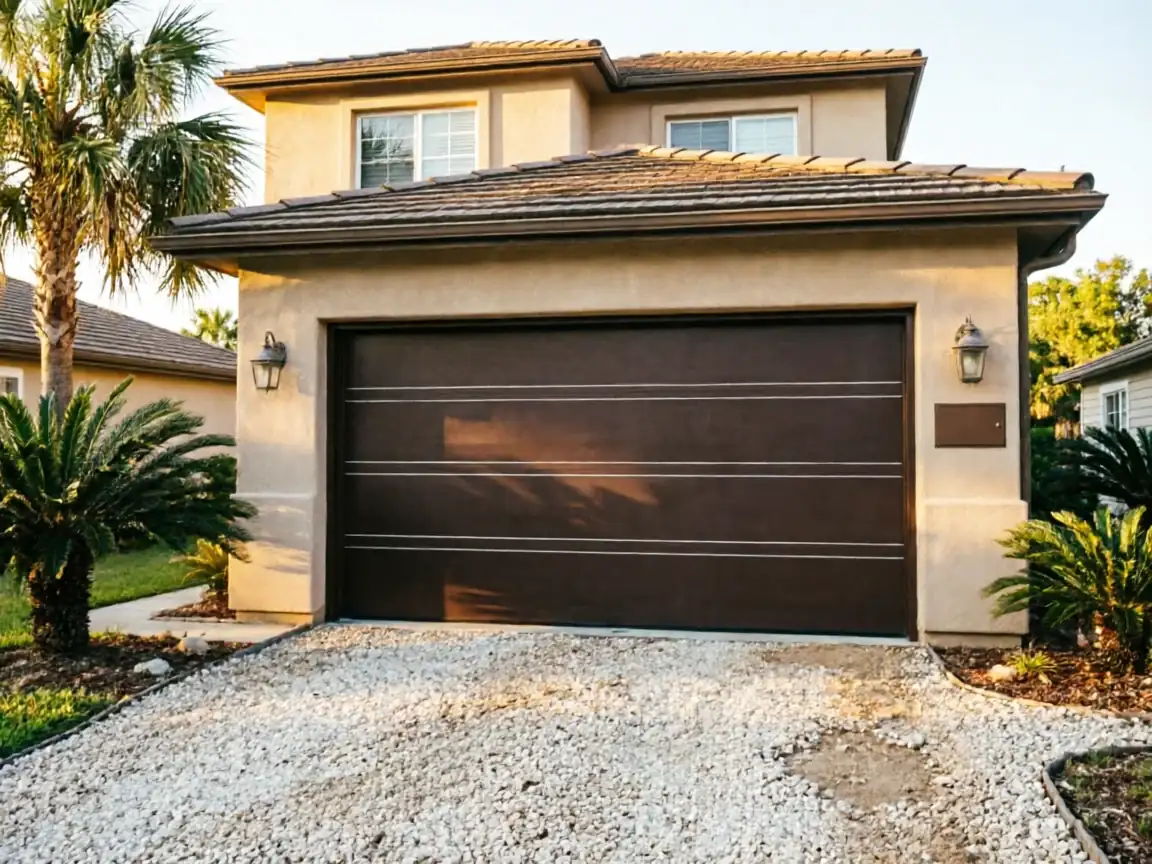
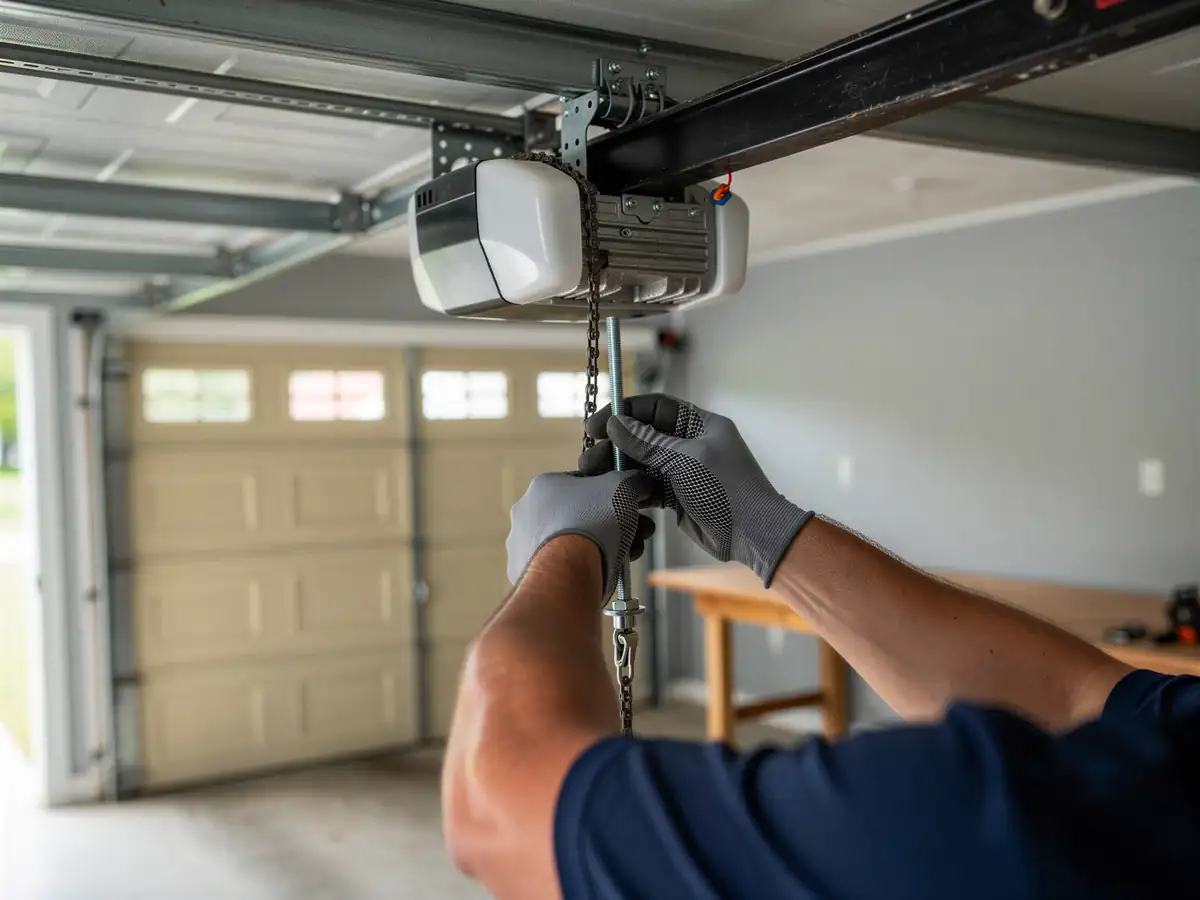
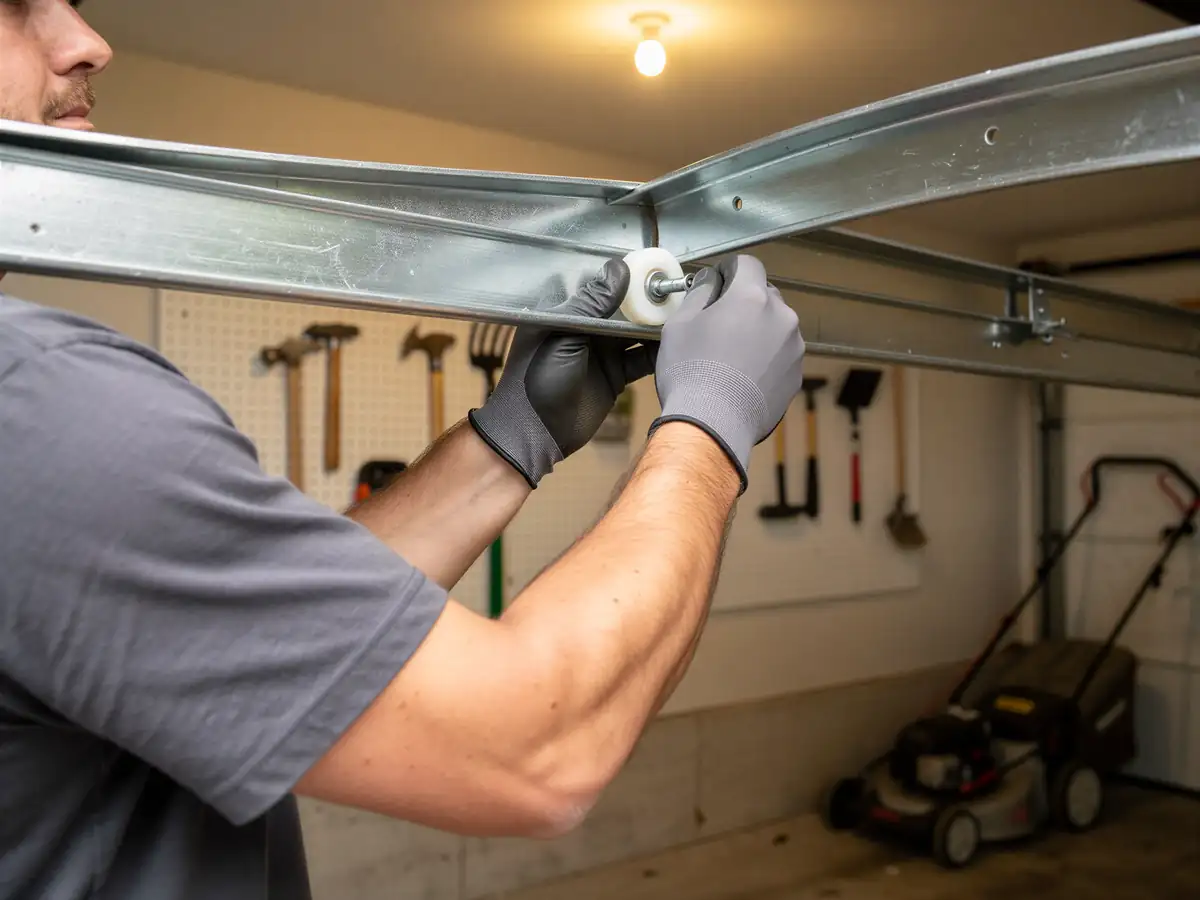
East Lake sits about 10 miles from our Dunedin shop, which means a tech loading up for an off-track call here brings a wider spread of parts than a job five minutes down the road. Houses in this part of the service area were built mostly from the late 1980s through the 2000s, median year 1990, well after the 1960s-70s wave that covers most of the broader area. That later build date usually means steel rolled-steel sectional doors on extension or torsion spring setups rather than the older flat-panel doors on exposed track common in the area's oldest pockets. The truck carries both nylon and steel rollers, replacement track sections in the standard widths, and the brackets that hold track to the jamb, because a door that's jumped track almost always took a bent bracket or a bowed section with it. Given the drive, the tech checks the full roller run and both vertical tracks in one visit rather than coming back for a second piece he could have caught the first time. We don't stock every proprietary bracket variant on the truck - if your opener or track hardware is an unusual aftermarket brand, that part may need to be ordered, and we'll say so on site rather than guess.
What the Repair Takes
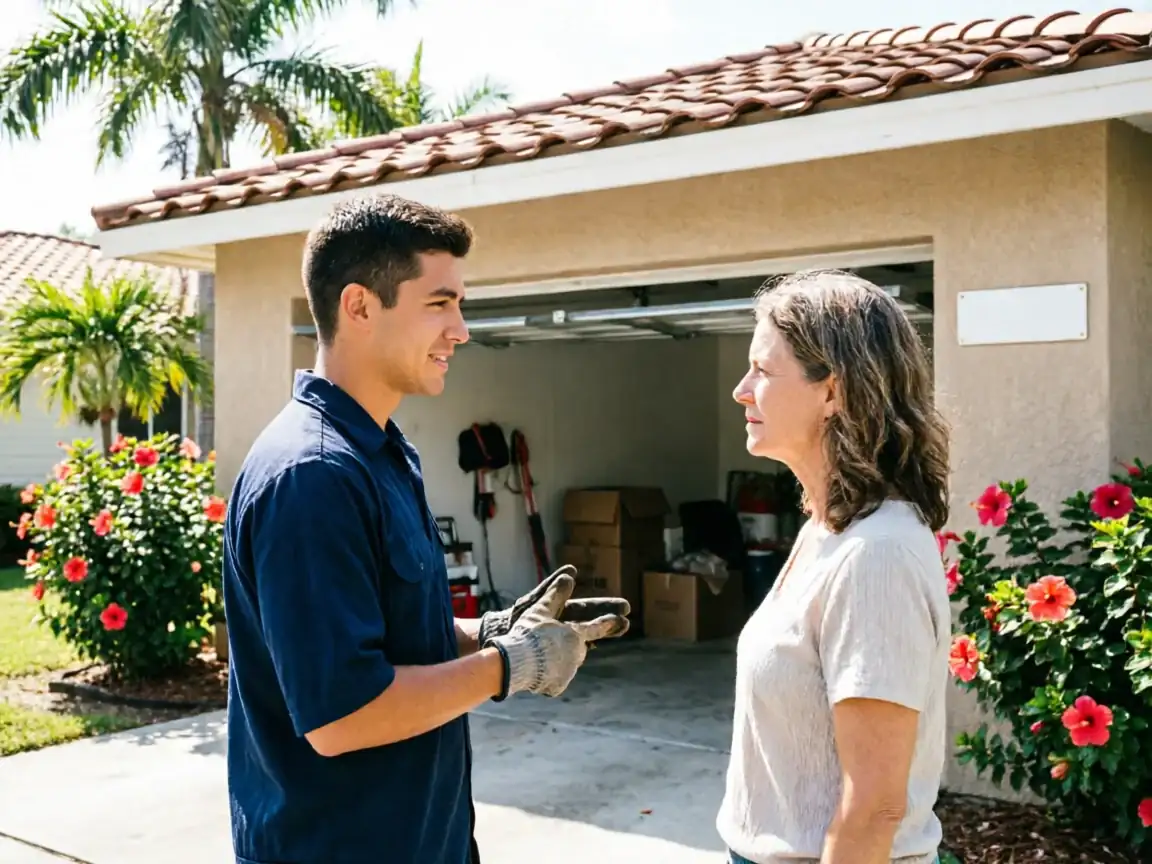
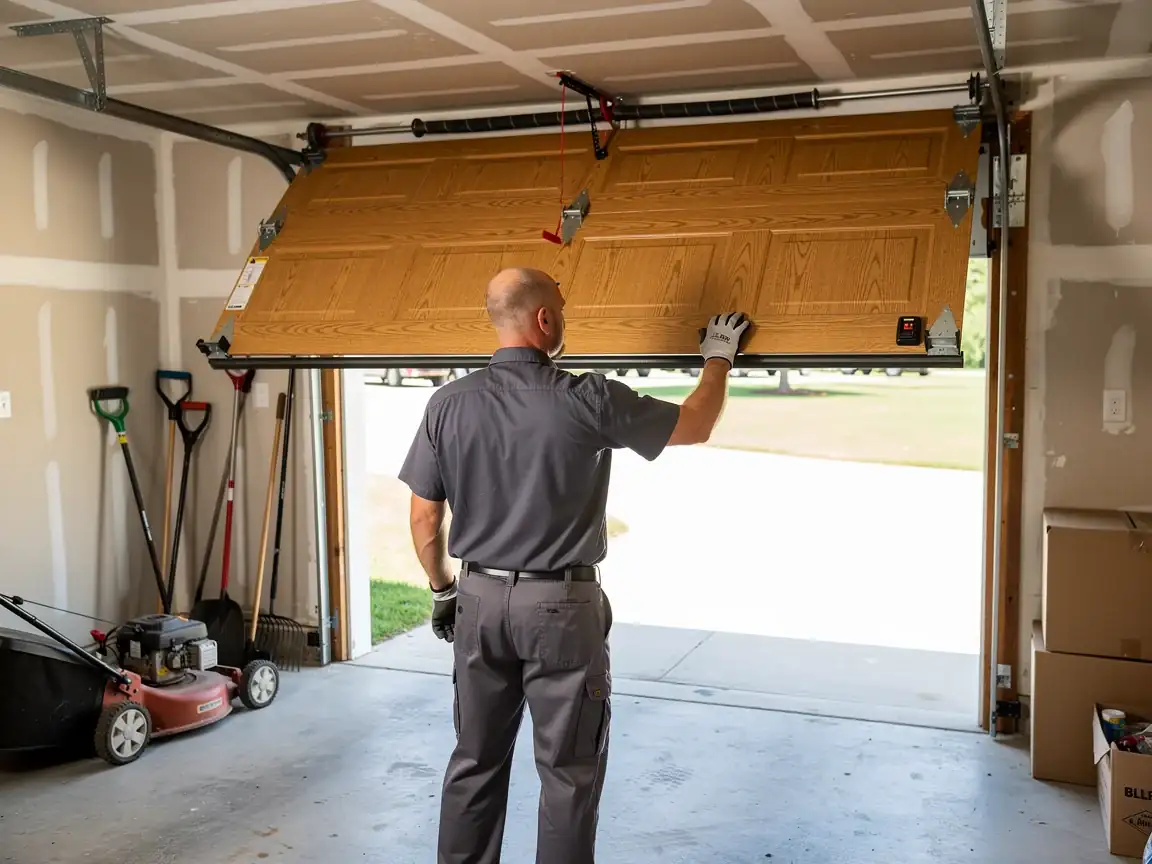
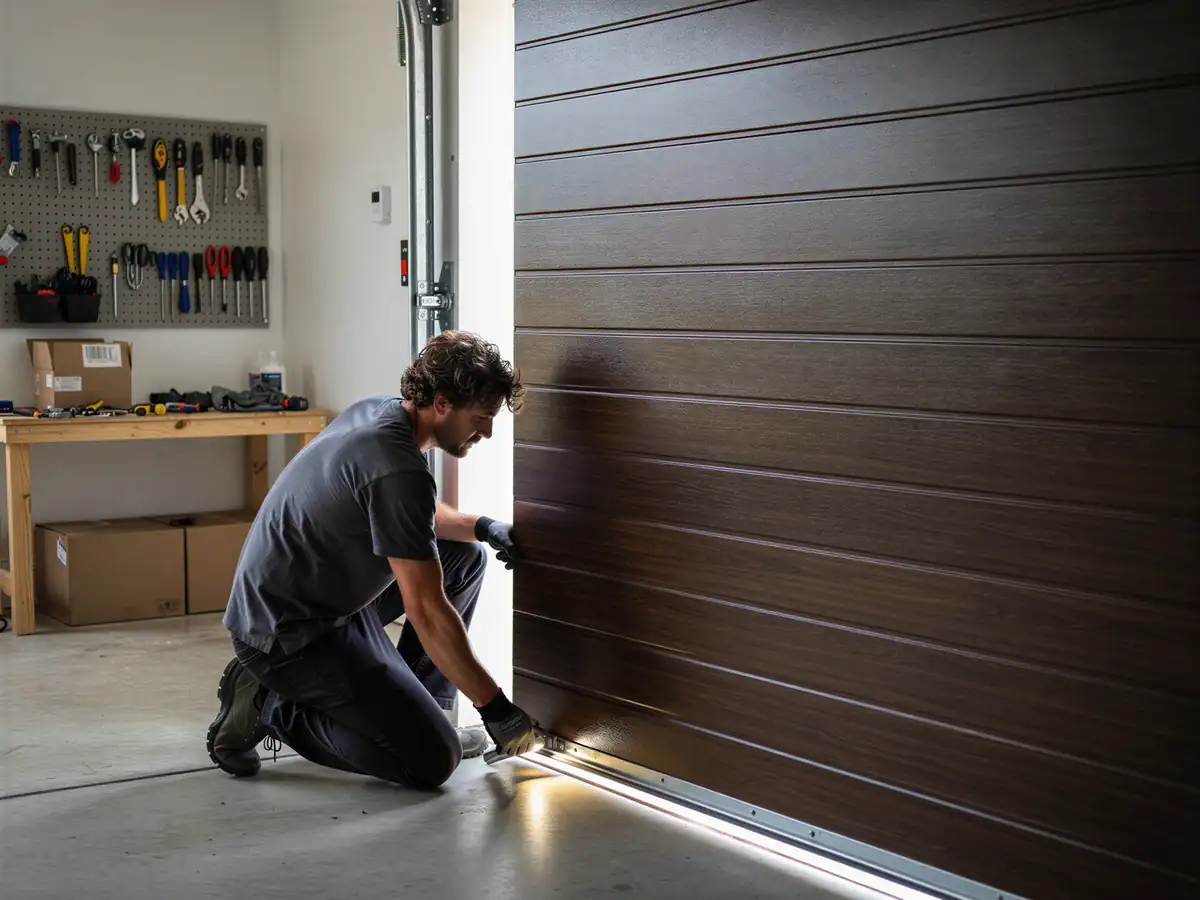
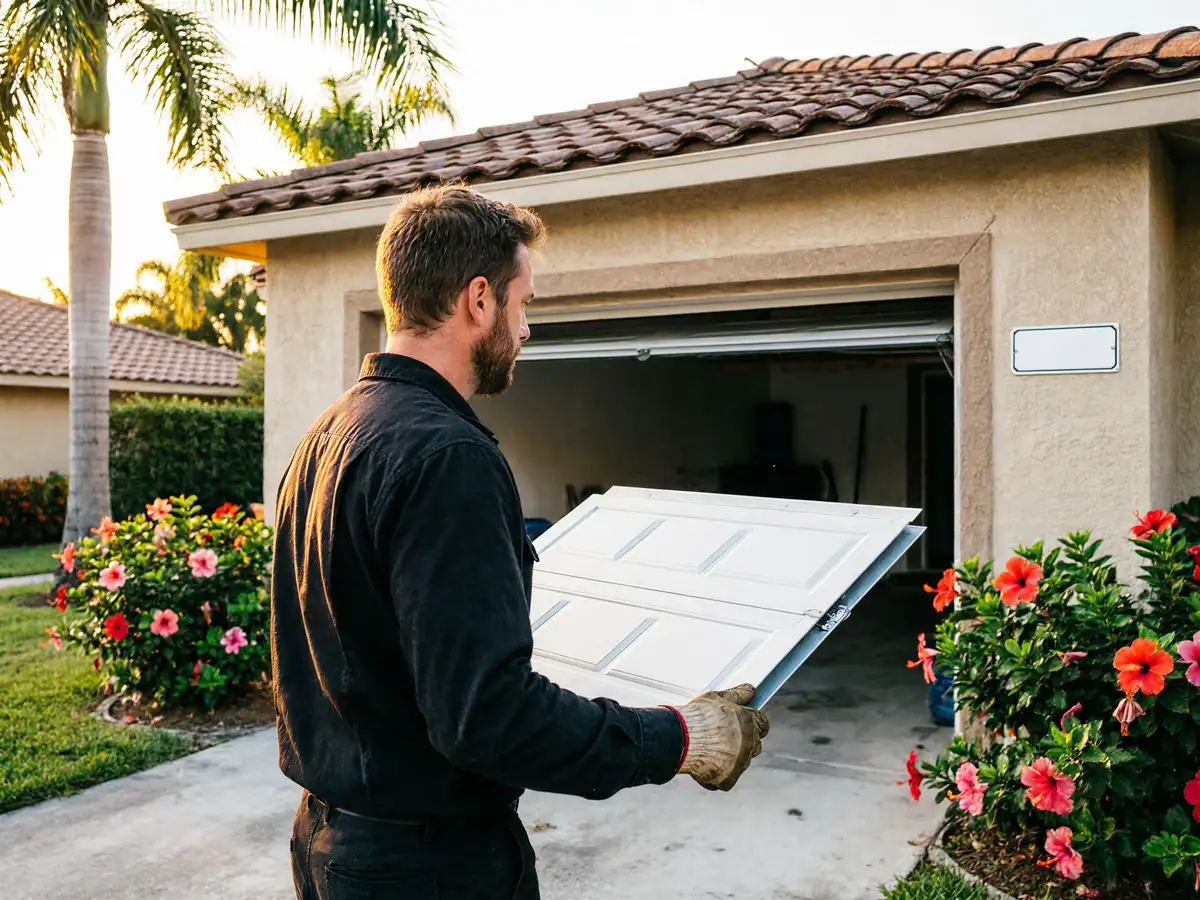
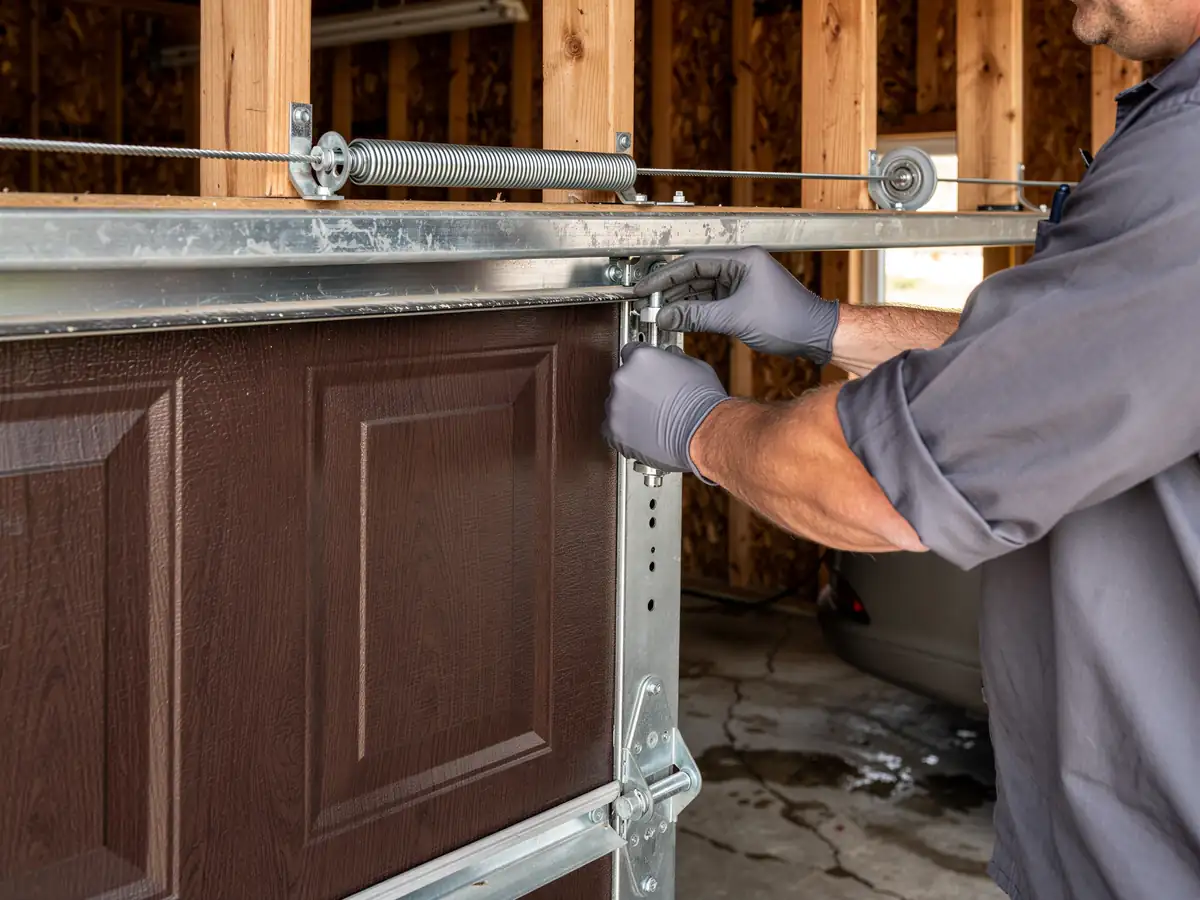
Getting a door back on track starts with finding out why it left in the first place, not just lifting the panel back into the channel. On newer sectional doors like the kind common in East Lake, the usual culprits are a roller that's worn through its stem, a track bracket that's loosened from the frame, or a cable that's come off its drum on one side and let the door rack sideways. The fix for a simple derail is often 30 to 45 minutes once the tech is on site: release the opener, realign the section, check both tracks for square, and re-tension. If a bracket has pulled loose from the framing or a track section is bent, that's a parts swap, and it takes longer because the door has to come down safely first. Given the 10-mile run from Dunedin, we try to diagnose the actual cause over the phone when we can, so the tech arrives with the right roller size and bracket type rather than finding out on site he needs a second trip. Not every off-track door is a quick fix - if the opener has been fighting a jammed track for a while, the motor or gears may be damaged too, and that's a separate conversation about the opener itself, not the track.
What Can Go Wrong
The most common failure we see on this style of door is a single roller giving out on one side while the other three or four keep running, which pulls the door into the track unevenly until it binds or pops loose entirely. A close second is a bracket that's worked loose from the door jamb; once that happens, the whole track on that side can flex out of alignment under the door's own weight. Cables are the third piece - a frayed cable that slips off its drum will let one bottom corner of the door drop while the other stays up, and forcing the opener to keep cycling after that can bend the track badly enough that it needs full replacement instead of a repair. If you hear a door grinding or see it running crooked, the better call is to stop using the opener and get it looked at before a $150 roller problem turns into a track and bracket job.