What Is on the Truck
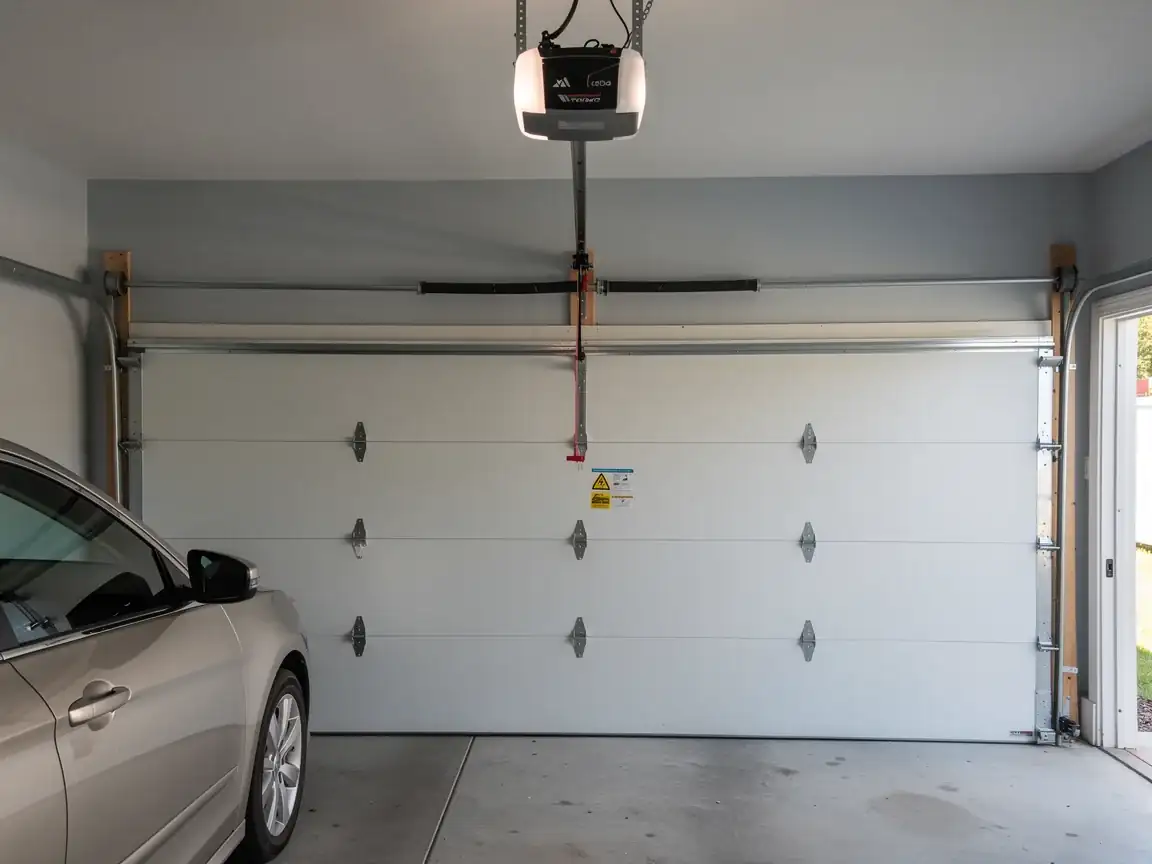
Most of the garage door problems we see on a call out to East Lake aren't the same ones we see on an older street in Dunedin proper. East Lake's housing mostly went up around 1990, which puts it well past the 1960s-70s stock that makes up most of this service area. That means steel sectional doors with factory-set torsion springs rated for insulated panels, not the older solid-panel doors on exposed hardware you'll find on streets built decades earlier.
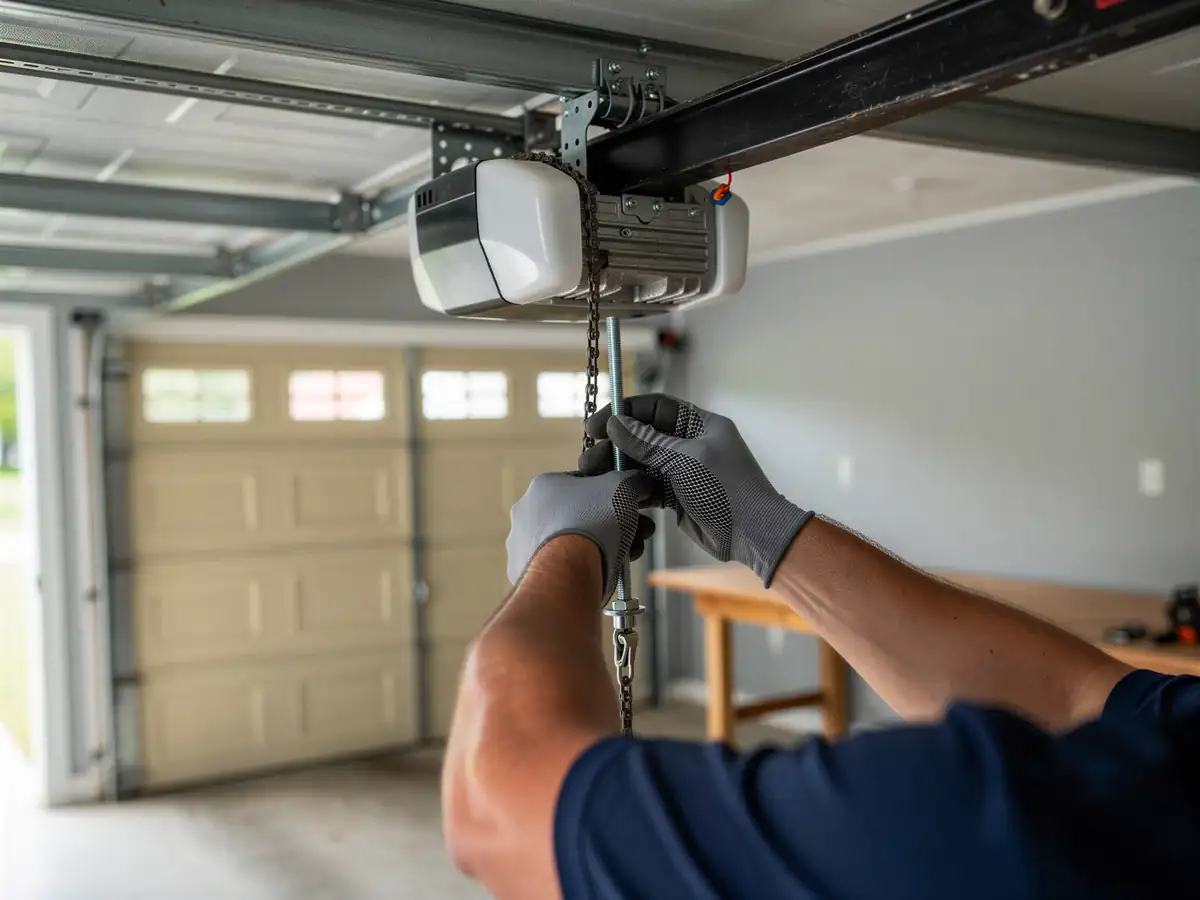
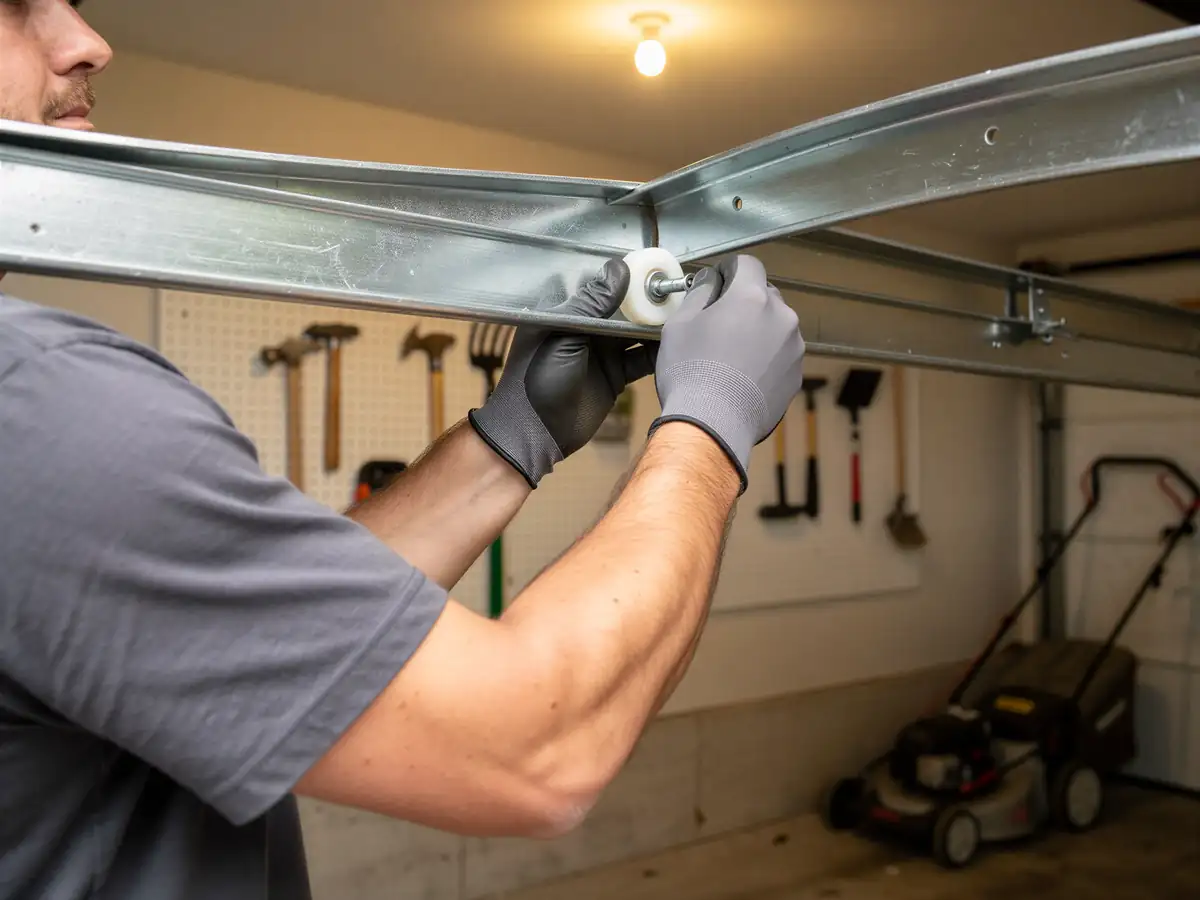
So the truck carries torsion springs sized for mid-weight insulated sections, standard-width rollers, and opener circuit boards that fit the belt and chain-drive units common from the early 1990s through the 2000s. We also carry photo-eye sensor pairs and the low-voltage wire that goes with them, since openers from this era are the first generation built around that safety sensor as standard, not an add-on.
What we don't carry is every proprietary logic board on the market. If your opener is a less common brand, we may need to order the board rather than swap it on the spot. That's the one real limitation worth saying up front - it doesn't happen often on East Lake's newer stock, but it happens.
What the Repair Takes
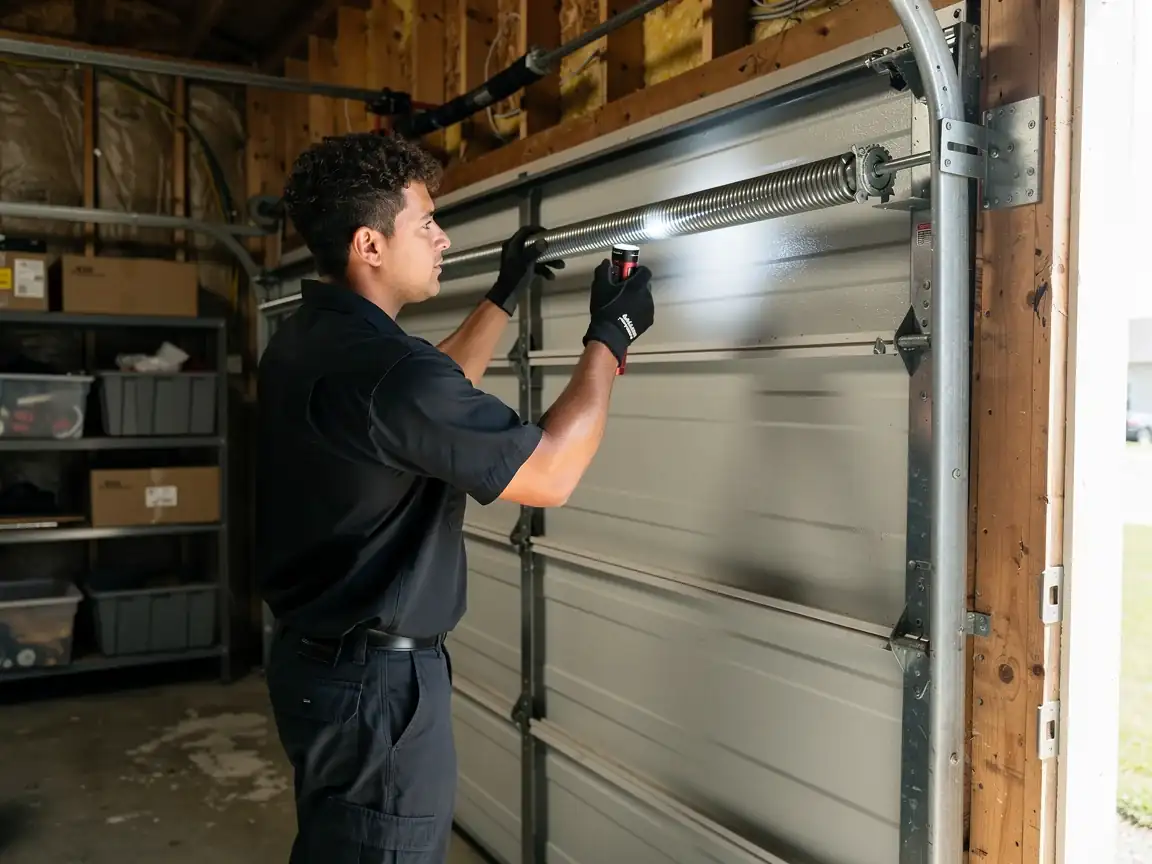
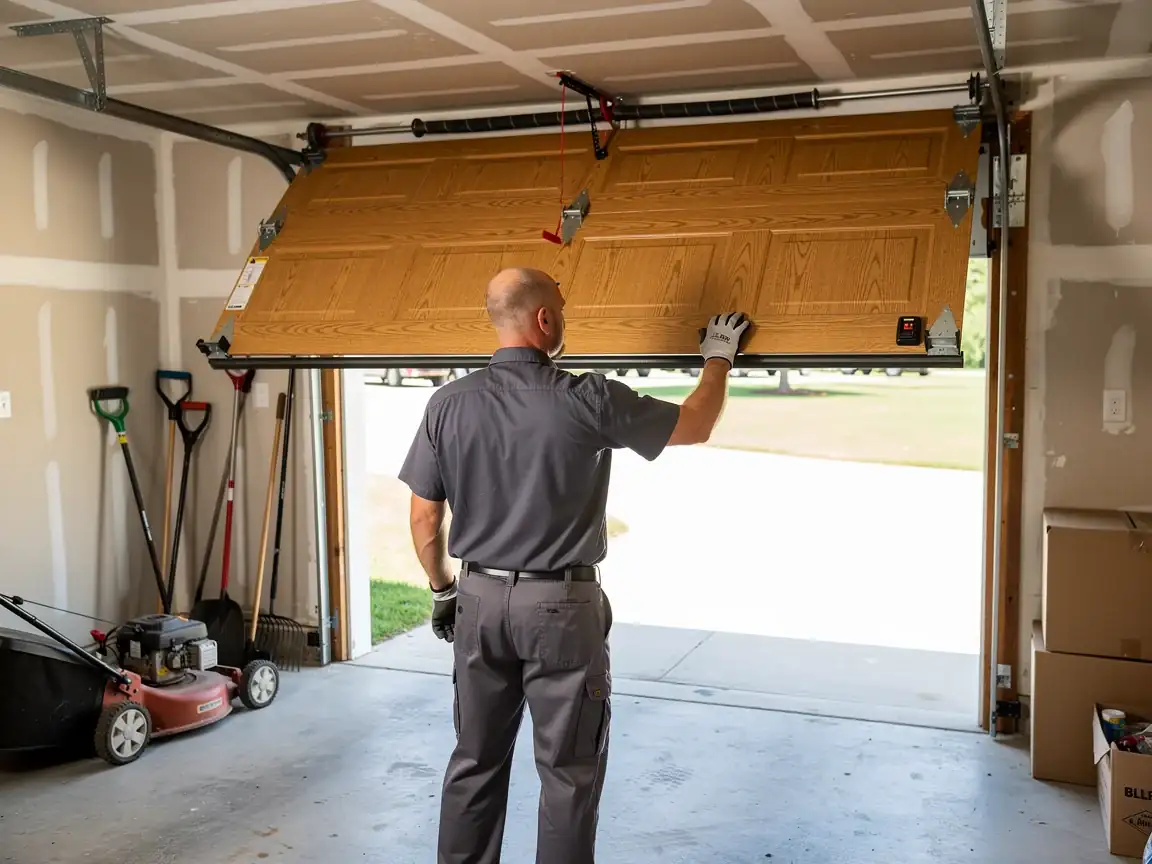
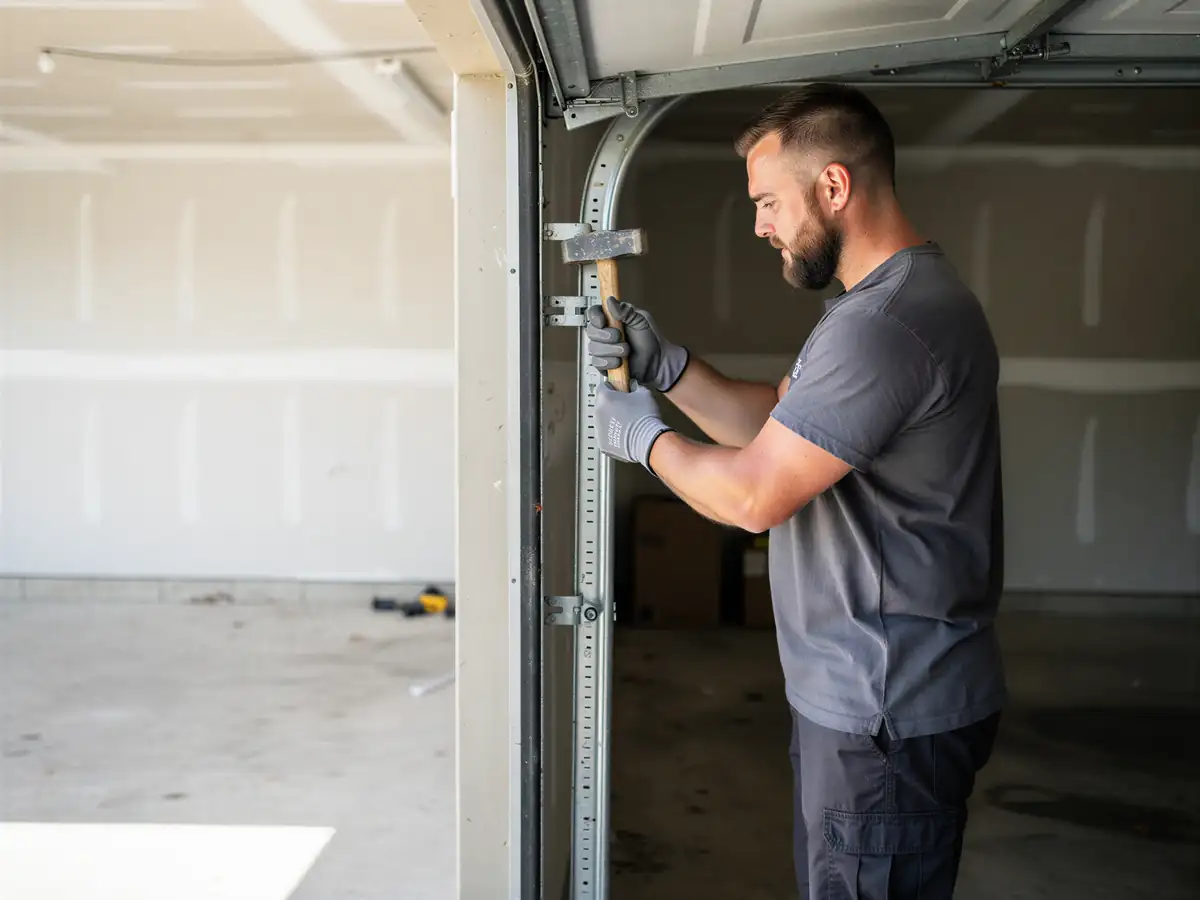
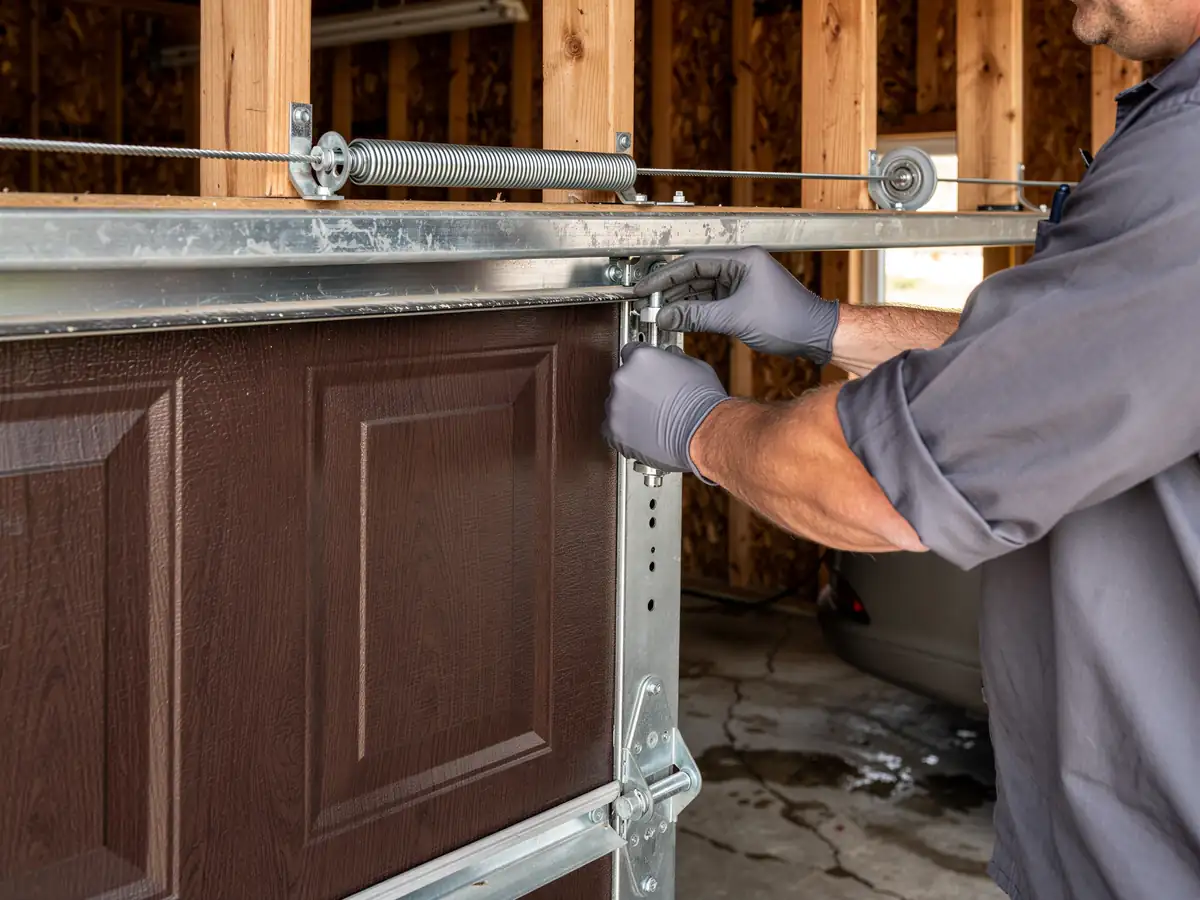
On a torsion spring job, the work is the same wherever the door sits: wind down the old spring under tension, pull it, measure wire gauge and inside diameter against the drum size, and wind in the replacement to the right number of turns. What changes on East Lake's newer doors is that the hardware is usually still factory-matched - the drums, cables, and end bearings haven't been swapped out piecemeal over forty years the way they have on some of the older streets in this area. That usually means less time spent fighting mismatched parts.
Opener repairs run differently. A dead circuit board on a 1990s-2000s unit is a diagnose-and-replace job, not a rebuild - we test the board, the capacitor, and the motor separately before deciding which one failed. If the board itself is obsolete for that exact model, we'll say so and talk through whether a full opener swap makes more sense than chasing a part that may take a week or more to source.
Either way, we're coming in from Dunedin, about 10 miles out, so the repair itself starts once we're on-site - there's no local branch adding a shortcut to that drive.
Why It Happens Here
East Lake's housing stock is young compared to most of the neighborhoods this area covers
Built mostly around 1990, versus the 1960s-70s stock that dominates 27 of the other named areas nearby. That means the springs, openers, and rollers going bad right now are mostly original or first-replacement parts hitting the end of a normal service life, not decades of patched-together repairs.
The climate here is mild temperate, without the deep freeze-thaw cycles that crack coatings and seize bearings elsewhere in the country
That's good for hardware life, but it isn't zero wear - humidity still works on exposed spring coils and steel cable over the years, and a door that's gone 25-30 years without a spring change is past the point where
- 30 years