Why It Happens Here
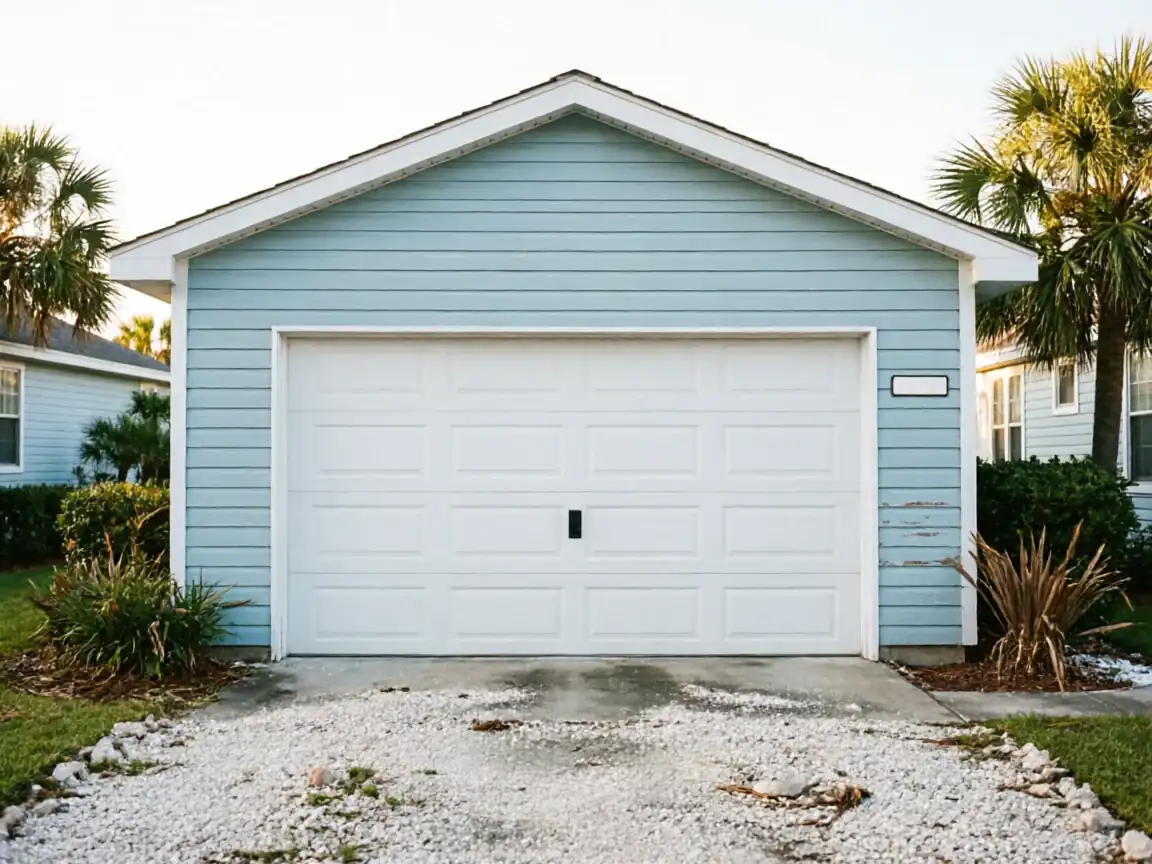
Oldsmar's housing stock skews newer than a lot of what we see closer to Dunedin. Census data puts the median build year for this part of the service area at 1979, but Oldsmar itself runs later, closer to 1988. That decade matters for rollers. Builders putting up garage doors in the late '80s were mostly installing steel doors with stamped galvanized rollers on nylon stems - a step up from the plain steel wheels of the '60s and '70s, but still a part with a service life measured in years, not decades.
Those nylon stems take a beating from heat cycling. Florida's mild temperate climate doesn't mean no stress - it means daily swings between a hot garage interior and cooler night air, which dries out the stem bushings faster than people expect. By year 15 to 20, you start seeing the stem crack right where it meets the wheel. The door still rolls, technically, until the day it doesn't.
We don't have a record of Oldsmar's roofing age or storm history to layer on here, so we're not going to guess at it. What we know for certain is the build-year gap between here and the rest of the territory, and it's enough to change what we expect to find when we pull a door apart.
The Symptom
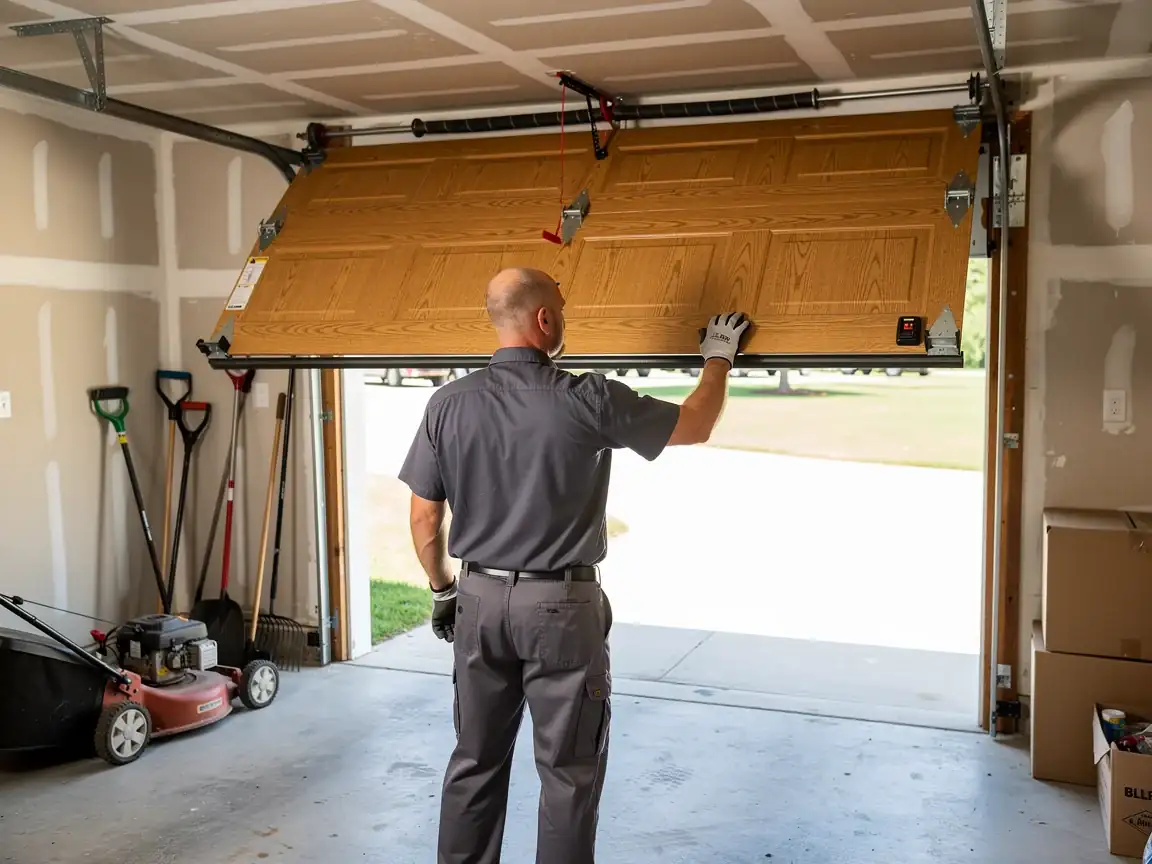
The telltale sign on an '80s-built door is noise that starts quiet and gets worse over months, not overnight. A rubbing or grinding sound as the door travels, usually worse near the top of the track where the roller takes the curve into horizontal. Stiff nylon stems don't roll smooth anymore - they catch, which means the door lurches instead of gliding.
You'll also see wear marks inside the track itself: a shiny groove where a cracked roller wheel has been dragging rather than turning. Left alone, a dragging roller puts side load on the track bracket, and that bracket will eventually bend. At that point you're not replacing rollers anymore, you're replacing track too.
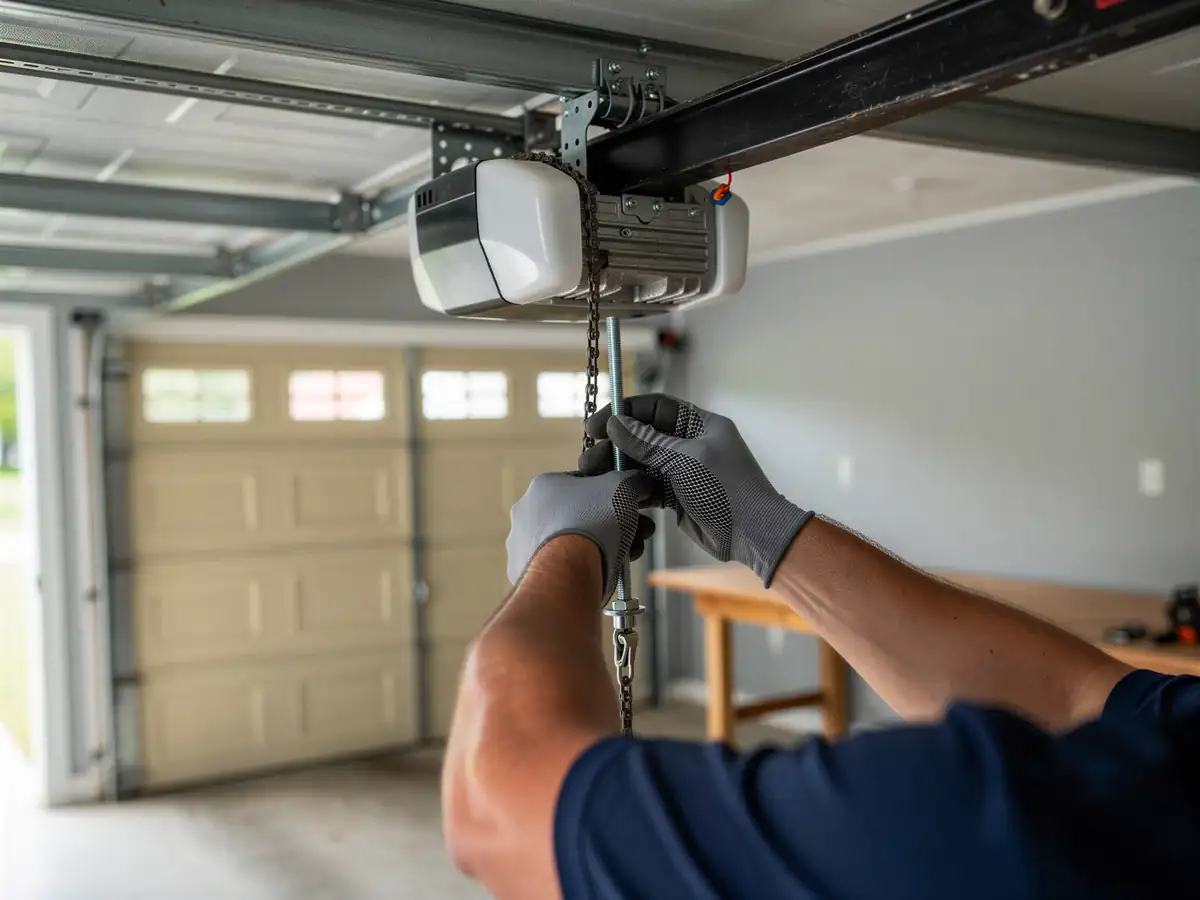
Some owners mistake this for an opener problem because the motor seems to strain. It's usually not the opener - it's ten or twelve rollers asking the motor to do more work than it should. Lubricating the track can quiet it down for a week or two. It won't fix a cracked stem.
Getting It Booked In
We run this job out of Dunedin, about 9 miles from Oldsmar
So there's no local branch to call - just a truck scheduled to come to you. Because the drive is short, it doesn't change how we price or schedule the job compared to the rest of the territory; it's one stop on a route, not a special trip.
- 9 miles
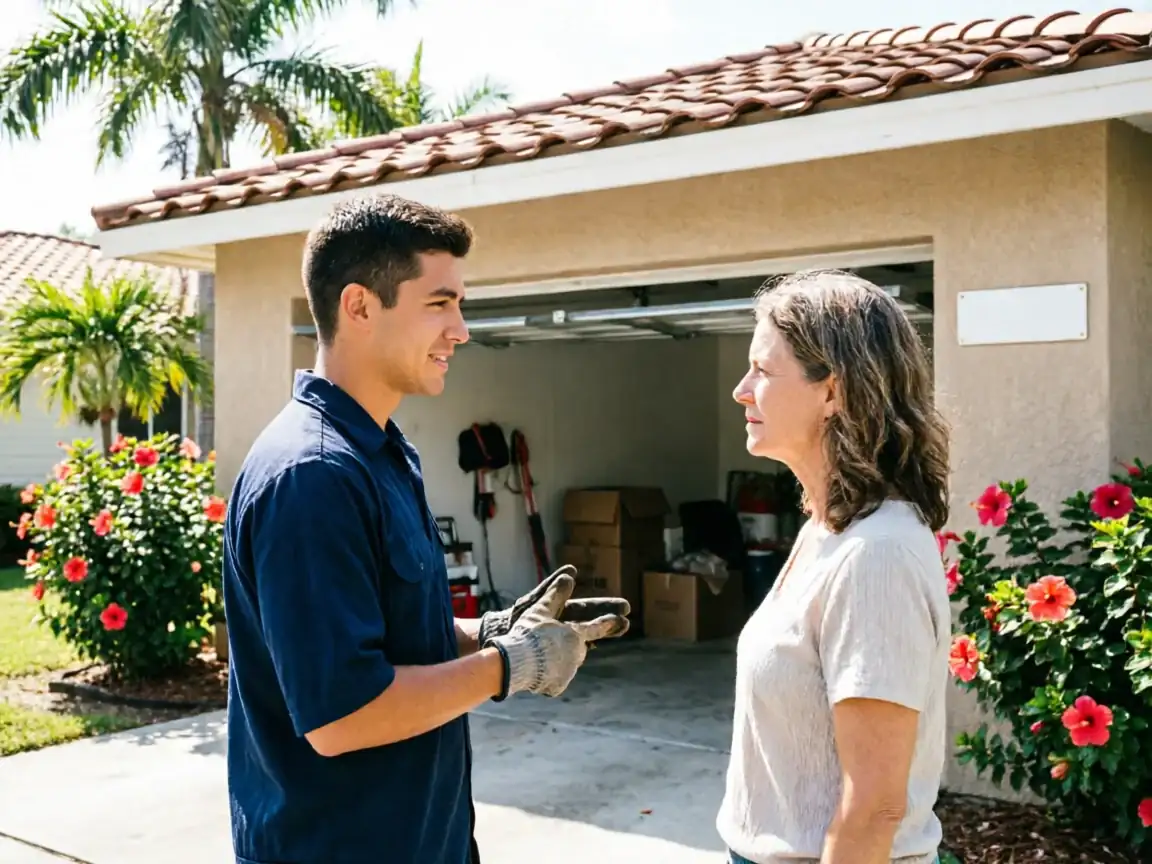
When you call, tell us the door's age if you know it
Or just the house's build year if you don't. For a lot of Oldsmar homes that's going to land in the late '80s to '90s range, and that tells us what roller spec to bring before we ever see the door. We'd rather show up with the right stem length and wheel diameter than make you wait on a second trip.
What Is on the Truck
For doors from this era we carry both nylon-stem rollers in the common stem lengths and sealed steel-ball bearing versions as an upgrade option. Nylon is quieter and what most of these doors shipped with originally. Steel ball-bearing rollers cost more but last longer and handle a heavier door - something to think about if the door has been upgraded to a heavier insulated panel since it was built.
We stock full roller sets, not single replacements, because if one stem has cracked from age the rest on that door are the same age and headed the same direction. Replacing one and leaving eleven more from 1988 on the truck ride home doesn't save you a second call - it guarantees one.
One limit worth being upfront about: if the track itself is bent or the brackets have pulled loose from a dragging roller, that's a same-visit repair in most cases, but a badly rusted or deformed track sometimes needs to be ordered, and that's a return trip. We'd rather tell you that up front than pretend every job wraps in one visit.
What the Repair Takes
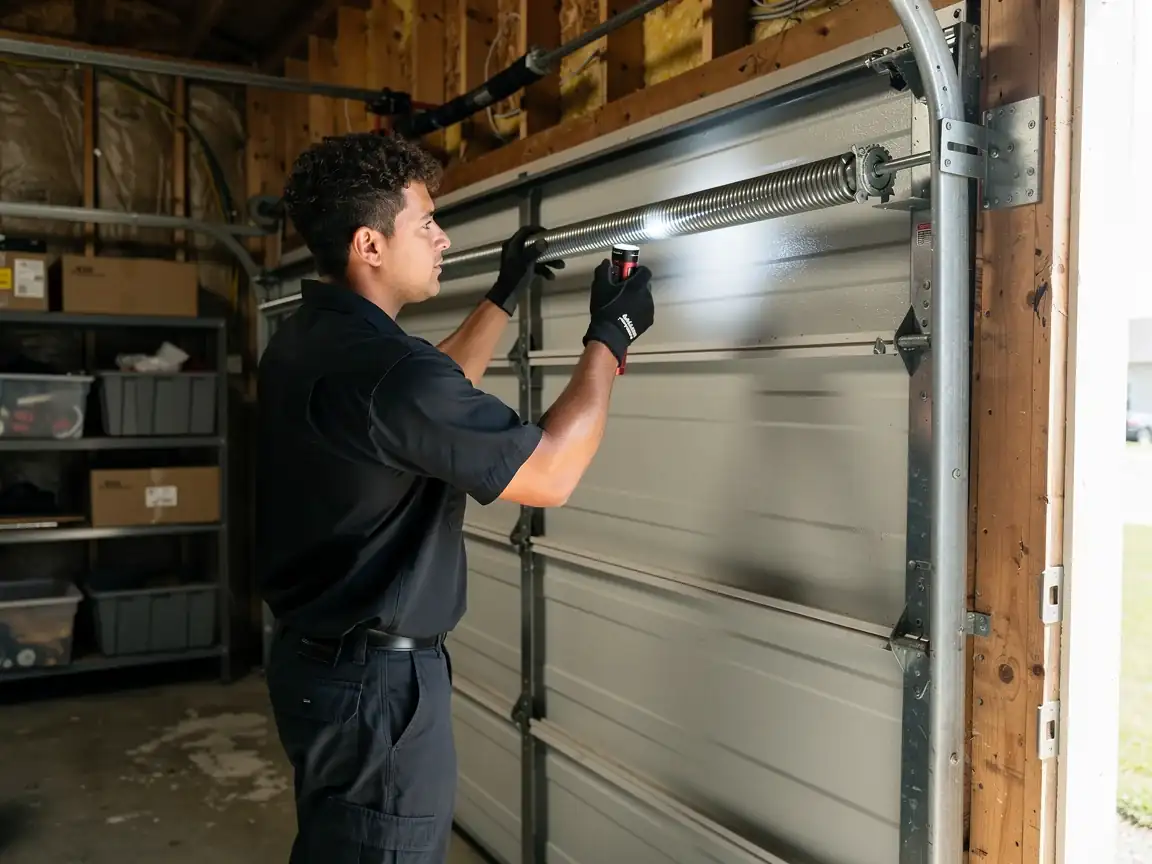
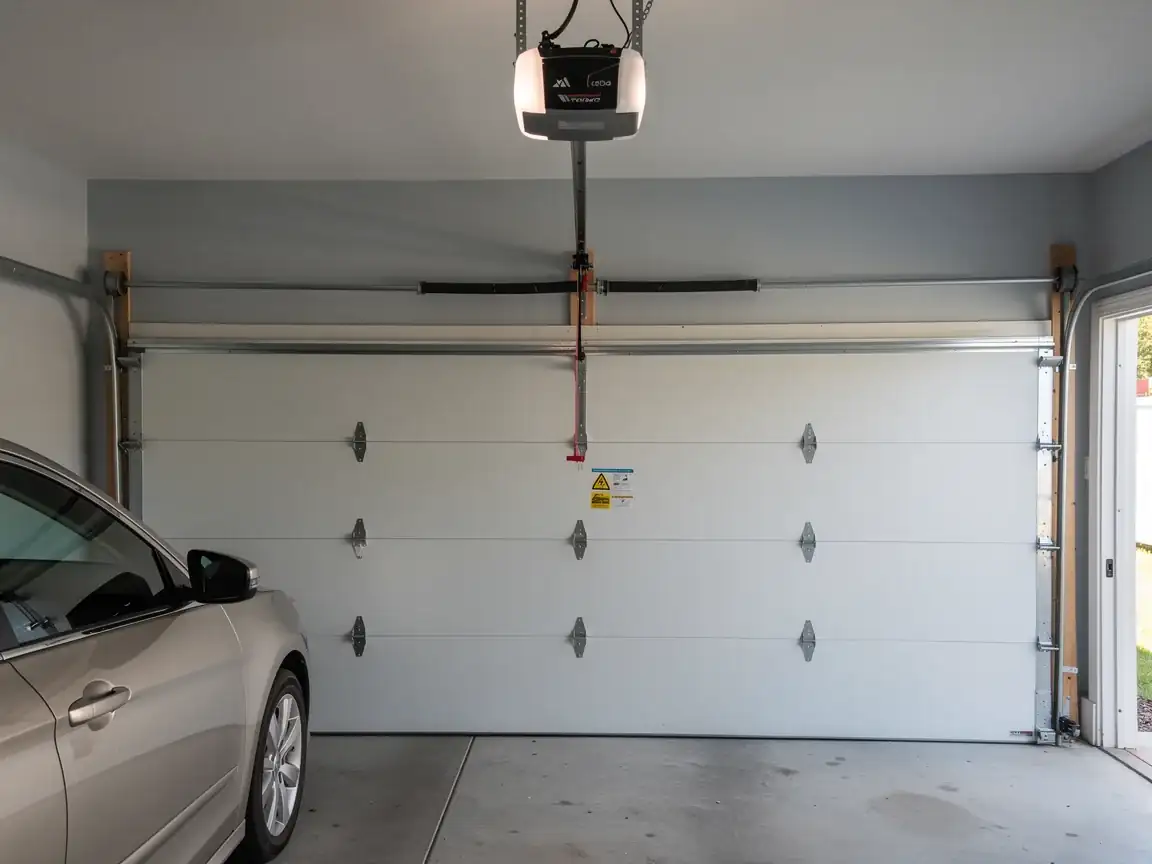
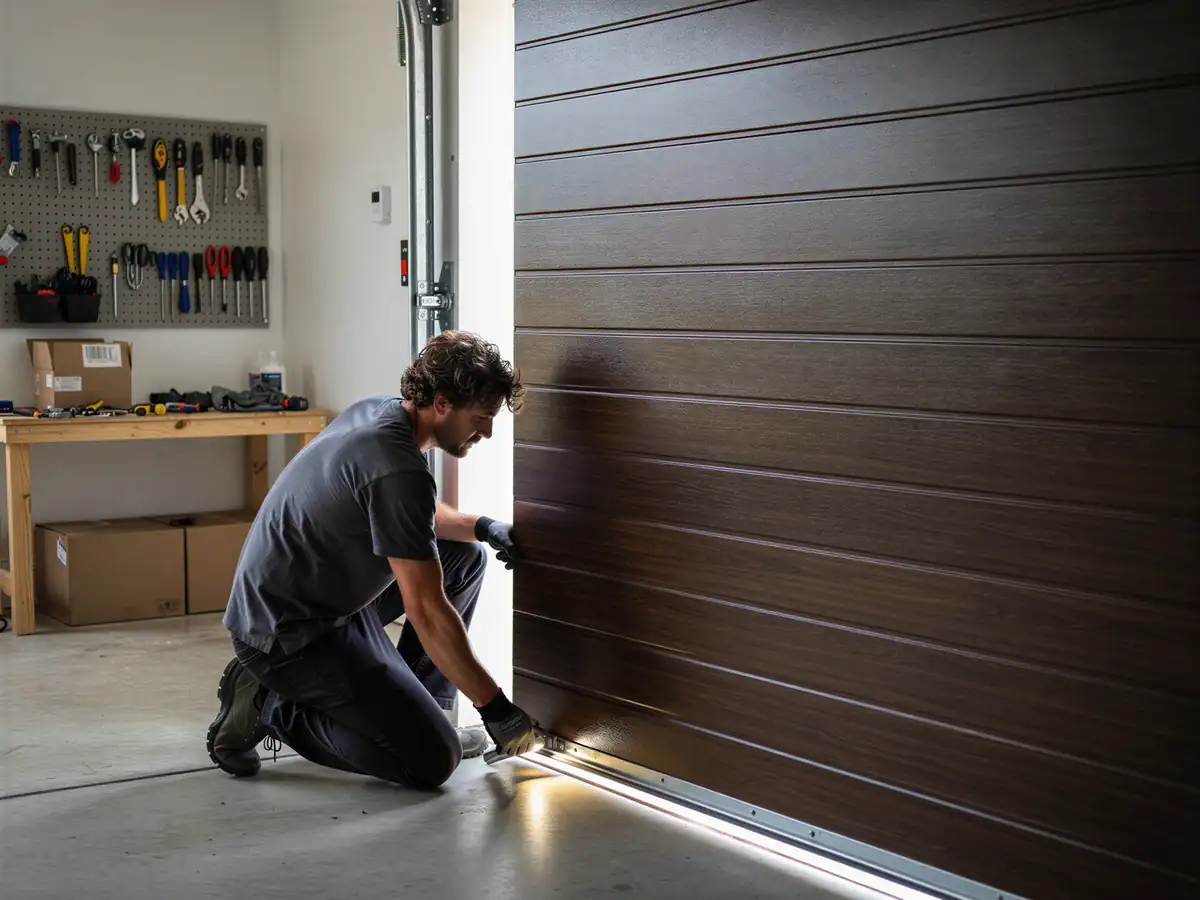
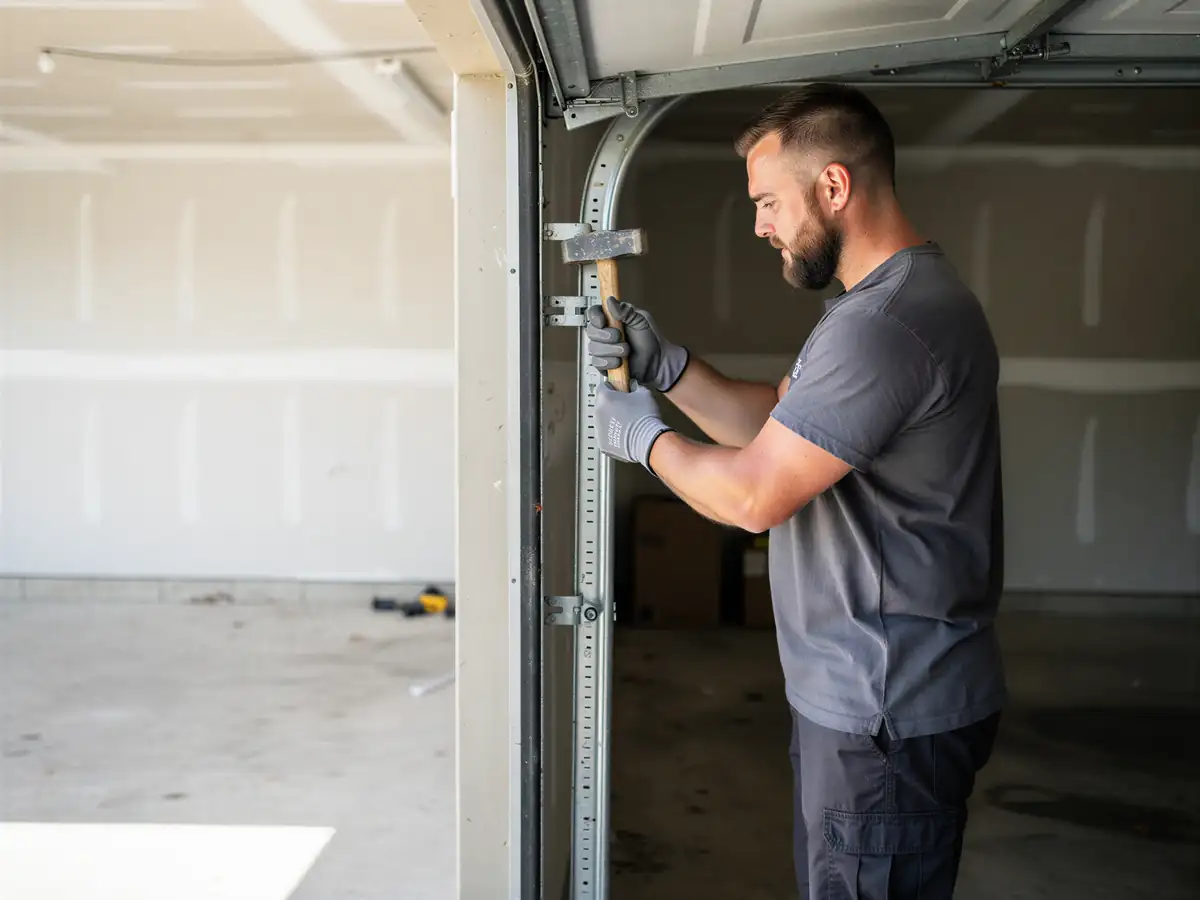
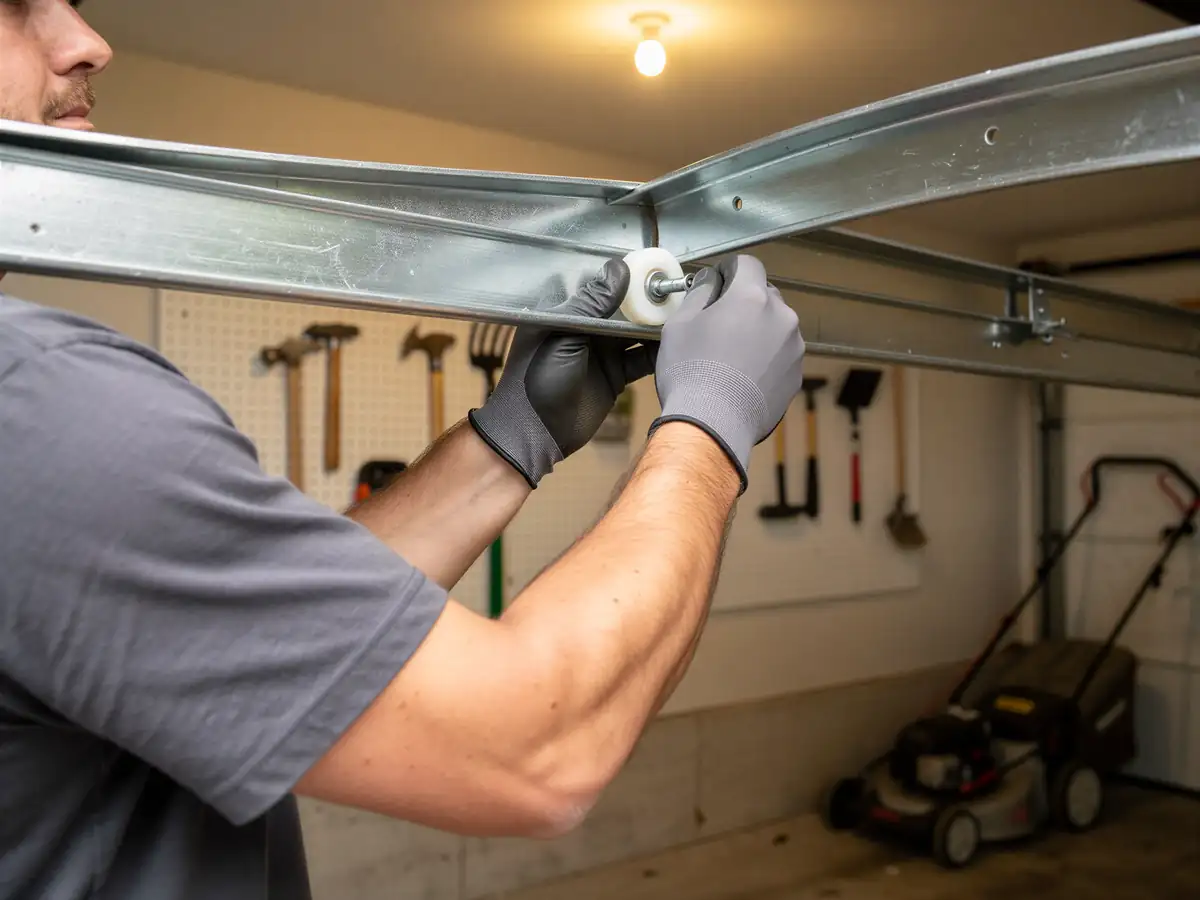
A straightforward ten or twelve-roller swap on a double door, done with the door in good working order otherwise, is a same-visit job. We pull the old rollers, check the tracks for the wear grooves mentioned above, true up any light bends, and set new rollers with the stem length matched to your door's panel thickness.
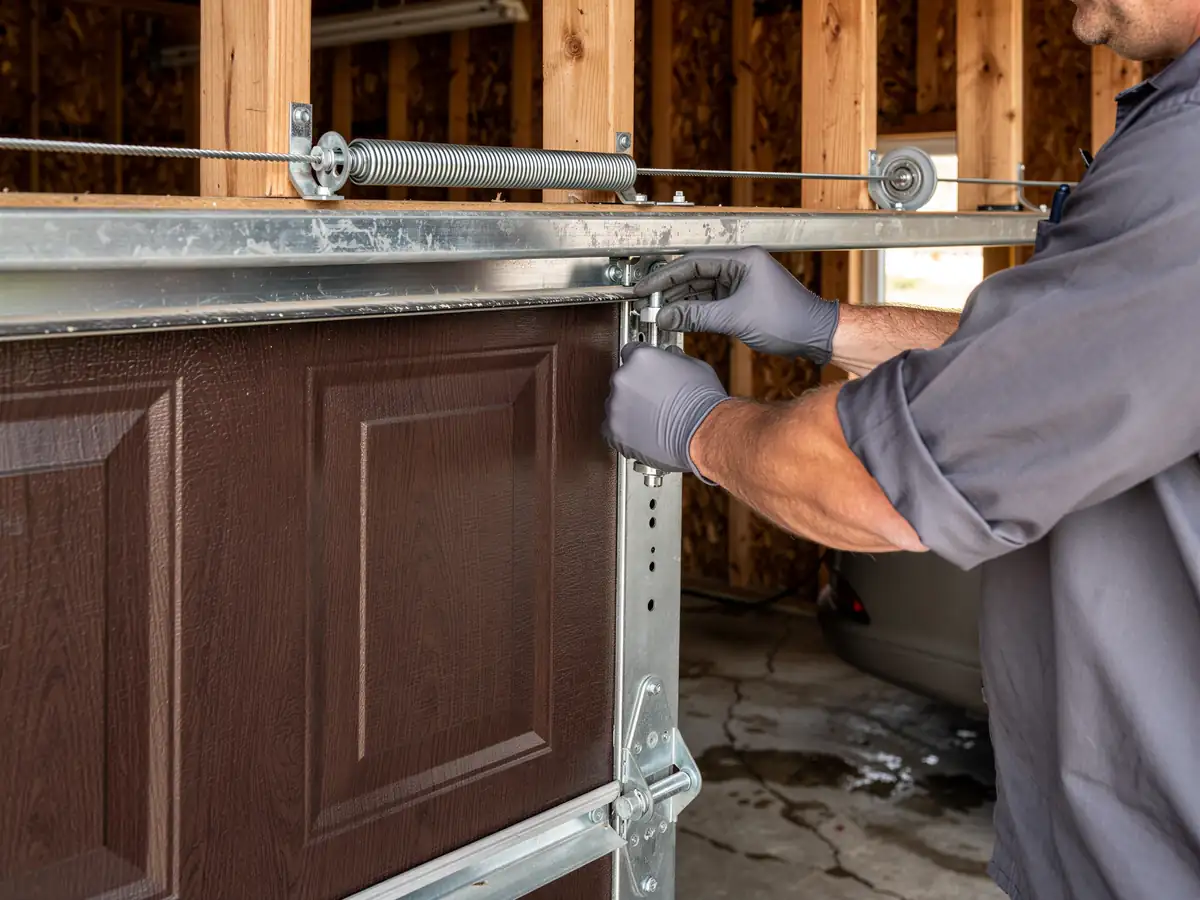
What we check before we touch anything is the spring. Rollers wear out roughly on the same multi-year clock as torsion springs in a door this age, and if the spring's near the end of its life we'll tell you rather than replace rollers around a spring that's going to fail next month anyway. That's not an upsell - it's just the order repairs make sense in on a door built when this one was.