Why It Happens Here
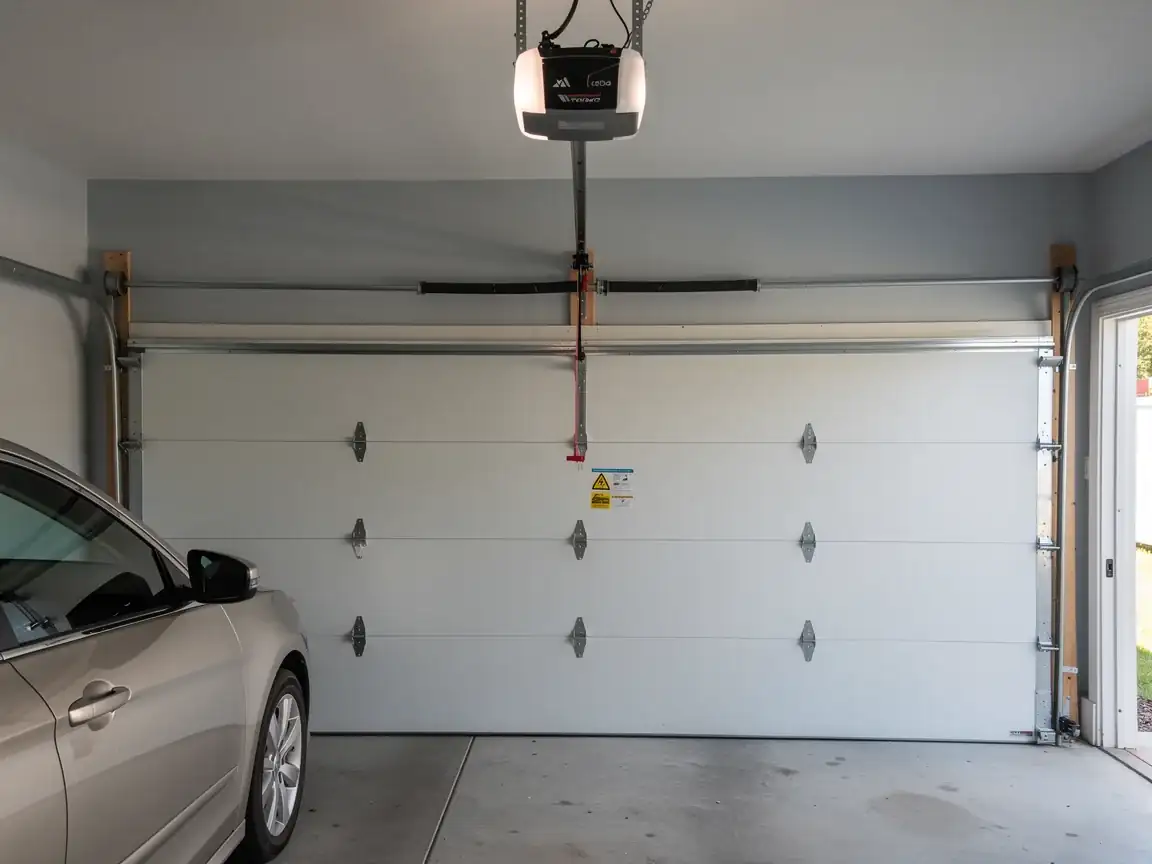
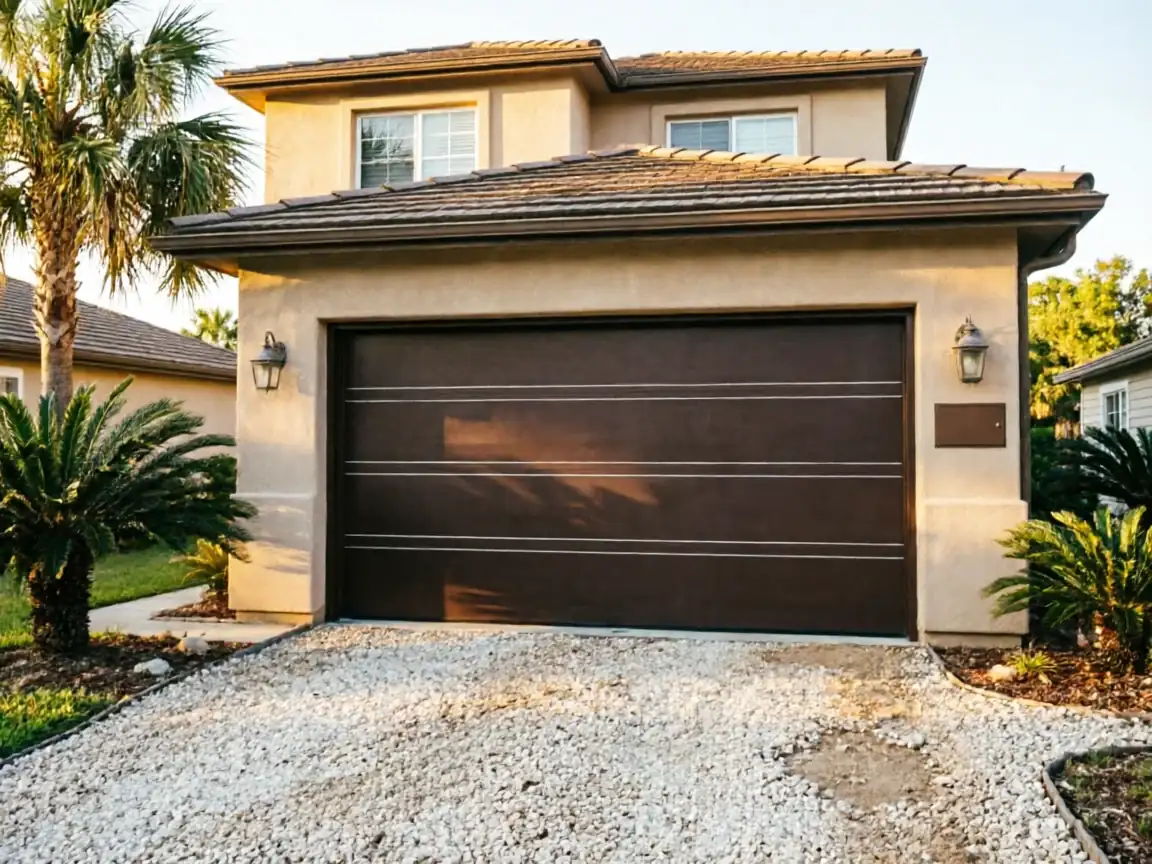
Oldsmar's homes mostly went up around 1988, a good decade or two after a lot of the older pockets closer to Dunedin, where the median build year across the wider service area sits closer to 1979 and plenty of stock dates back to the late 1950s. That gap matters more than it sounds like it should. A door and opener setup from 1988 was built to a different baseline than one from the 1960s or early 70s - wider standard openings, different header framing, and spring systems that were already moving away from the oldest extension-spring setups toward torsion hardware as a default. When a door in Oldsmar needs replacing, we're usually not fighting the really old stuff. We're fighting 30-plus years of one opener and one door that were matched to each other and never upgraded since, so swapping just the door without touching the opener mount or the track gauge can leave you with a door that doesn't sit right.
At a median household income of $76,100, Oldsmar runs a bit below the service area's broader median of $84,220. That's not a judgment on the town - it just tends to mean more owners here are weighing a straight replacement against patching an old door one more time, rather than defaulting straight to the top-tier insulated model. We price both ways and say so.
The Symptom
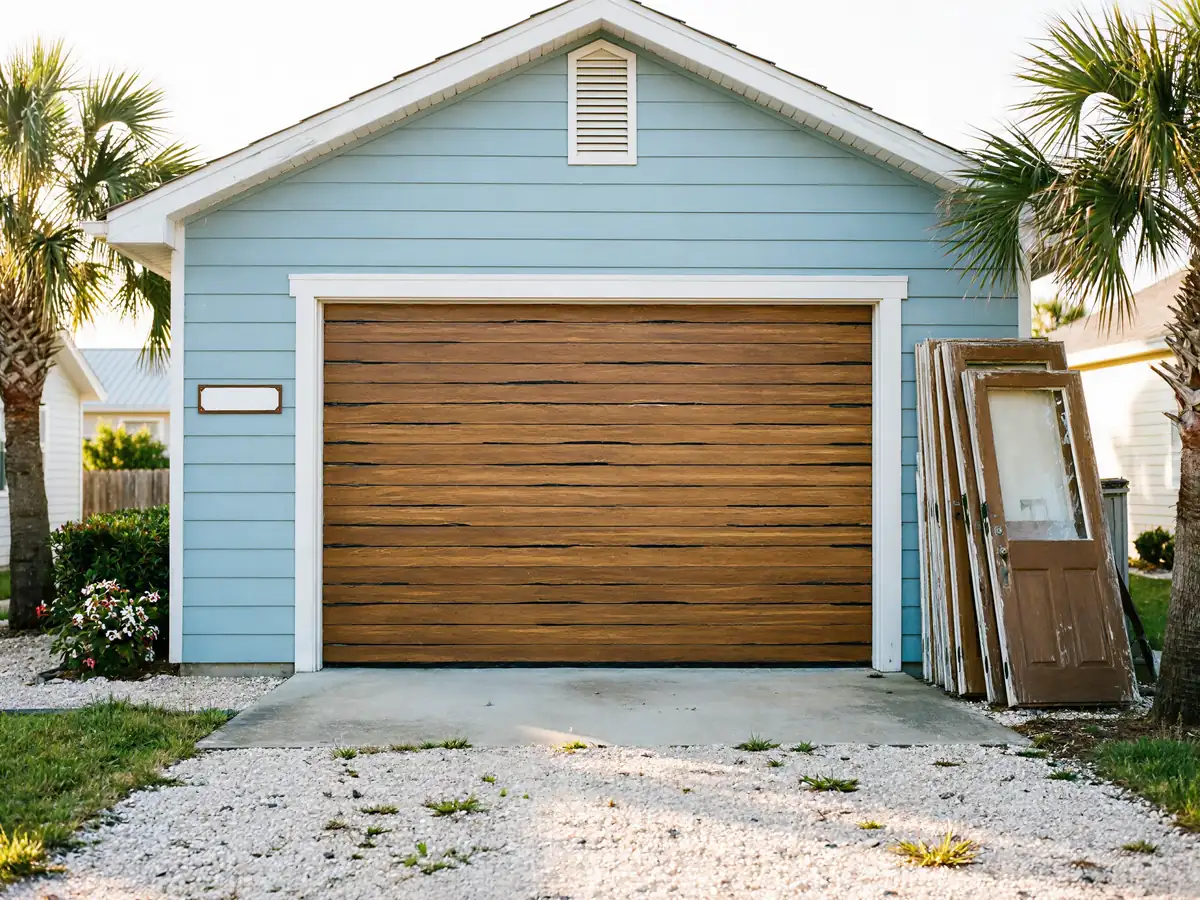
The calls we get out of Oldsmar for a new install, rather than a repair, usually start the same way: the door still closes, mostly, but it's loud doing it, or it's started sagging a little at one corner, or the owner just did the math on a 30-plus-year-old door and decided they're done babysitting it. Some of it is cosmetic - a single steel panel that's dented past looking right. Some of it is functional - an opener that's started grinding, or a door that needs two tries most mornings.
What we don't usually see in Oldsmar is the kind of total hardware collapse you get on the genuinely old end of the service area's housing stock - the doors still mounted on original side hardware from the 1960s. Oldsmar's newer build year means the failure mode is more "this has had a long run and it's time" than "this hardware predates the metric system." That's useful to know going in, because it changes what we recommend: a clean swap to a current door and opener, matched properly to the existing opening, rather than a structural rebuild of the frame around it.
Getting It Booked In
We run out of Dunedin, about 9 miles from Oldsmar
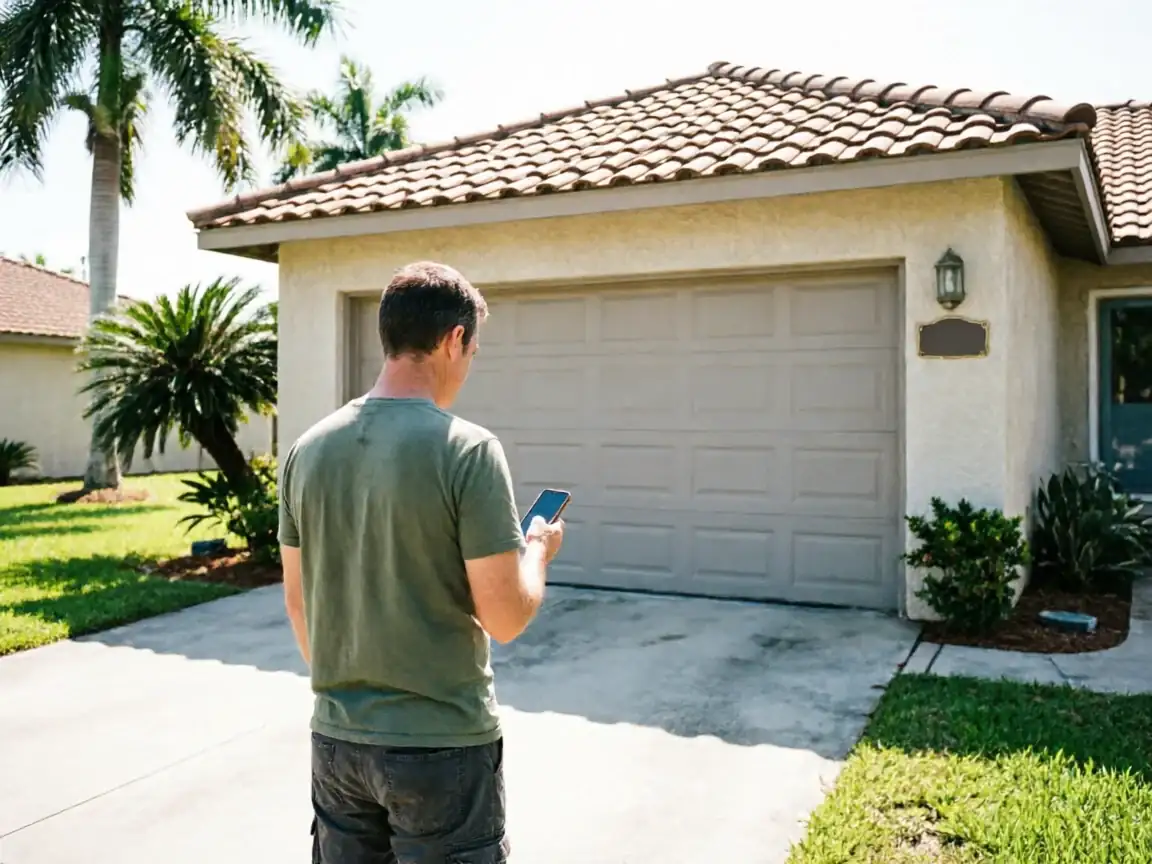
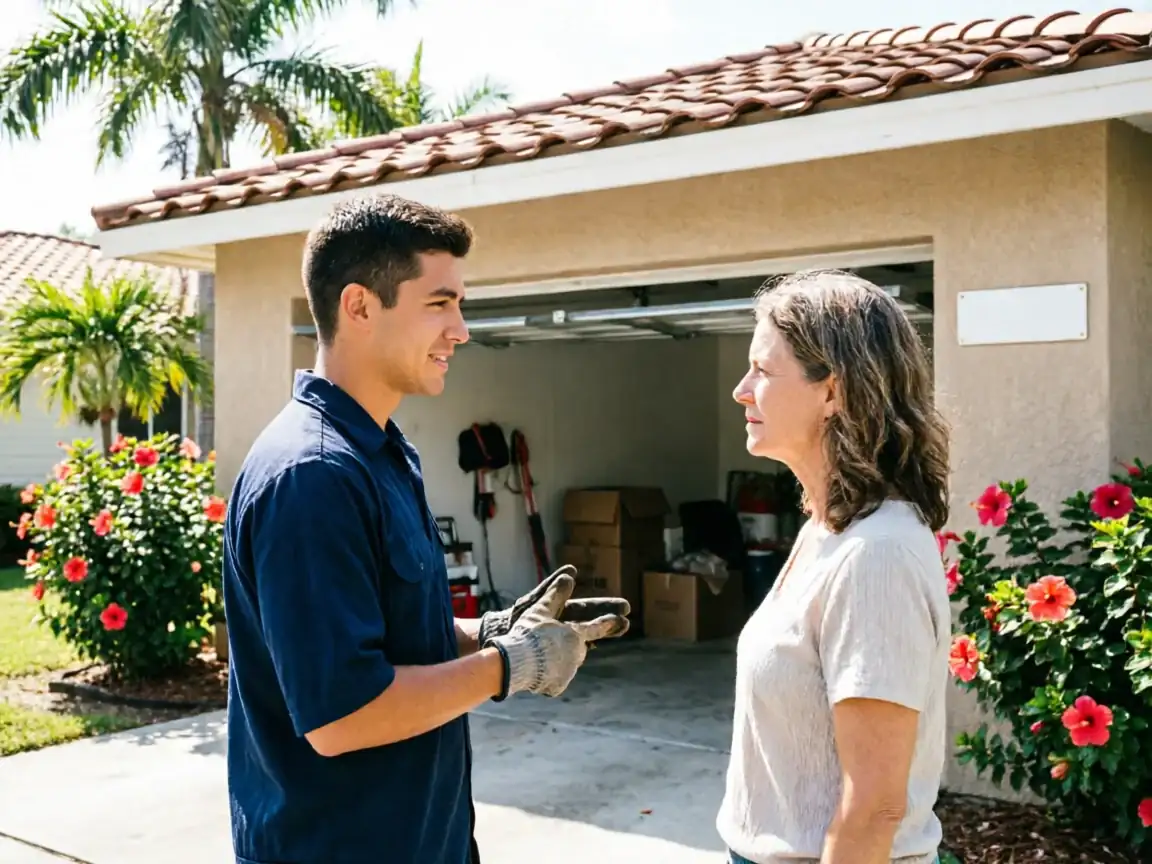
So this isn't a walk-in counter - it's a scheduled truck visit. We ask what you're seeing (sagging, noise, a dead opener, just wanting it replaced before it fails) and whether you know the rough age of the current door, since that tells us more than almost anything else about what we'll find when we get there.
- 9 miles
Measurements matter before the truck leaves Dunedin
Opening width and height, headroom above the door, and whether the opener is being replaced alongside the door all change what gets loaded. We'd rather confirm that by phone or a quick photo than show up with the wrong panel size for a 9-mile round trip.
What Is on the Truck
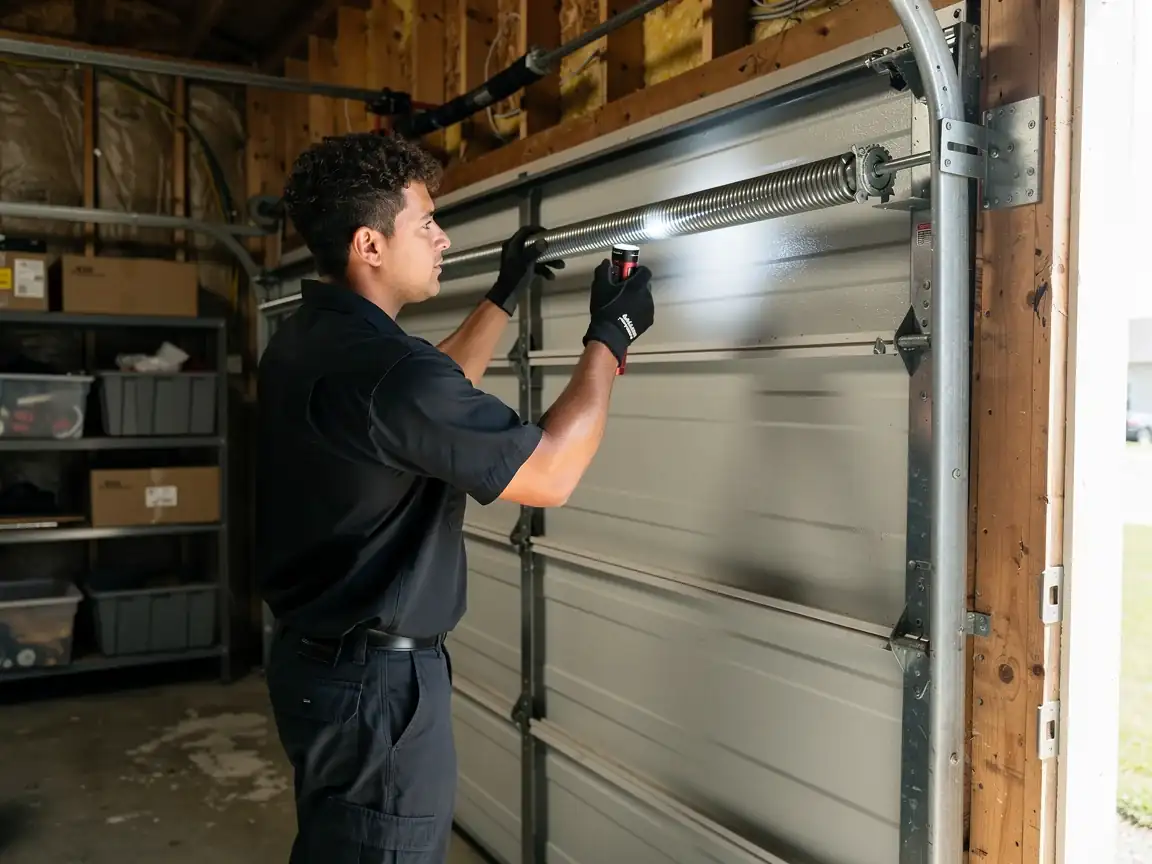
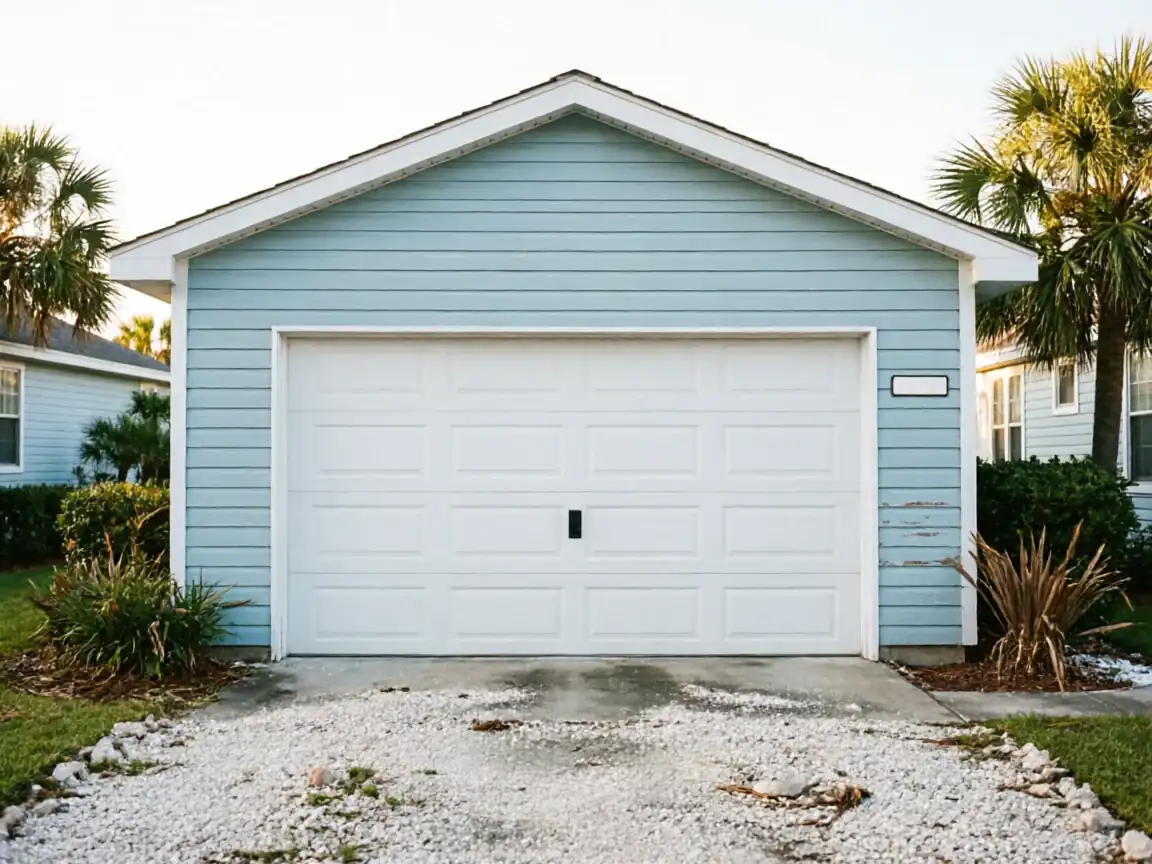
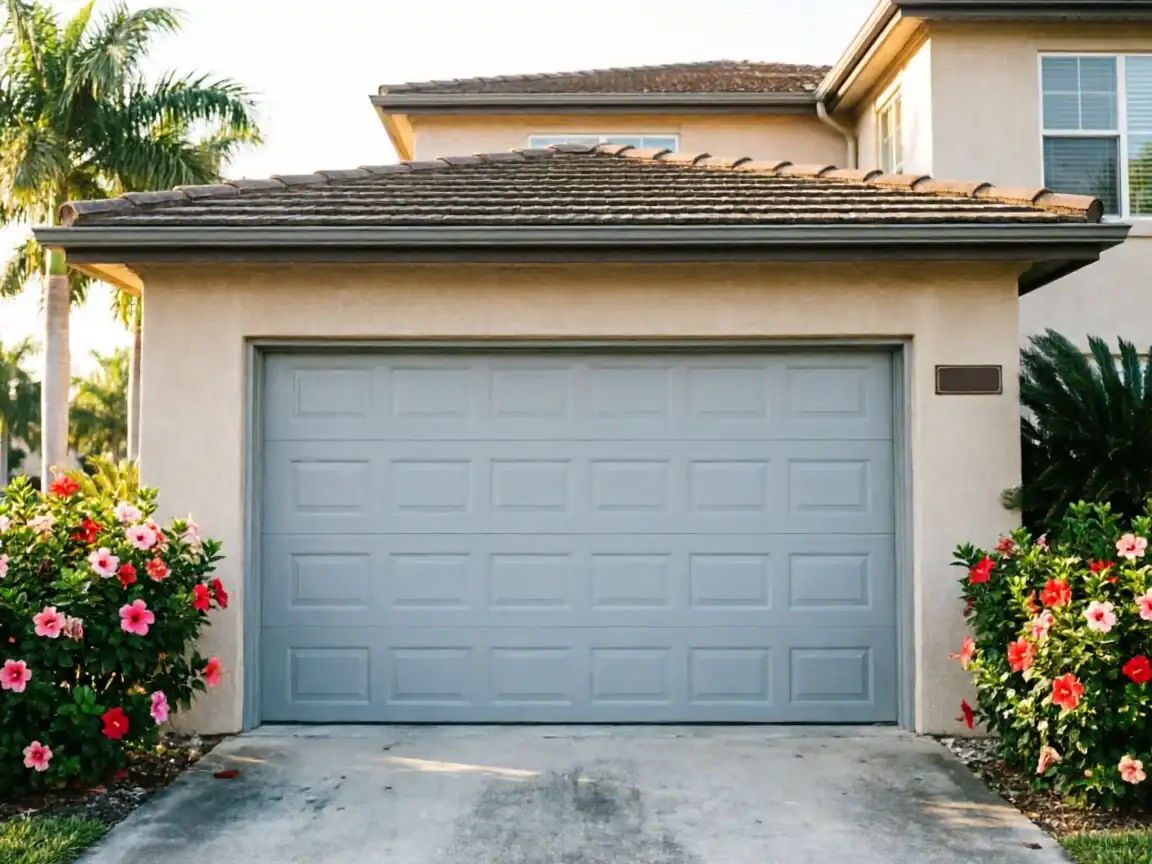
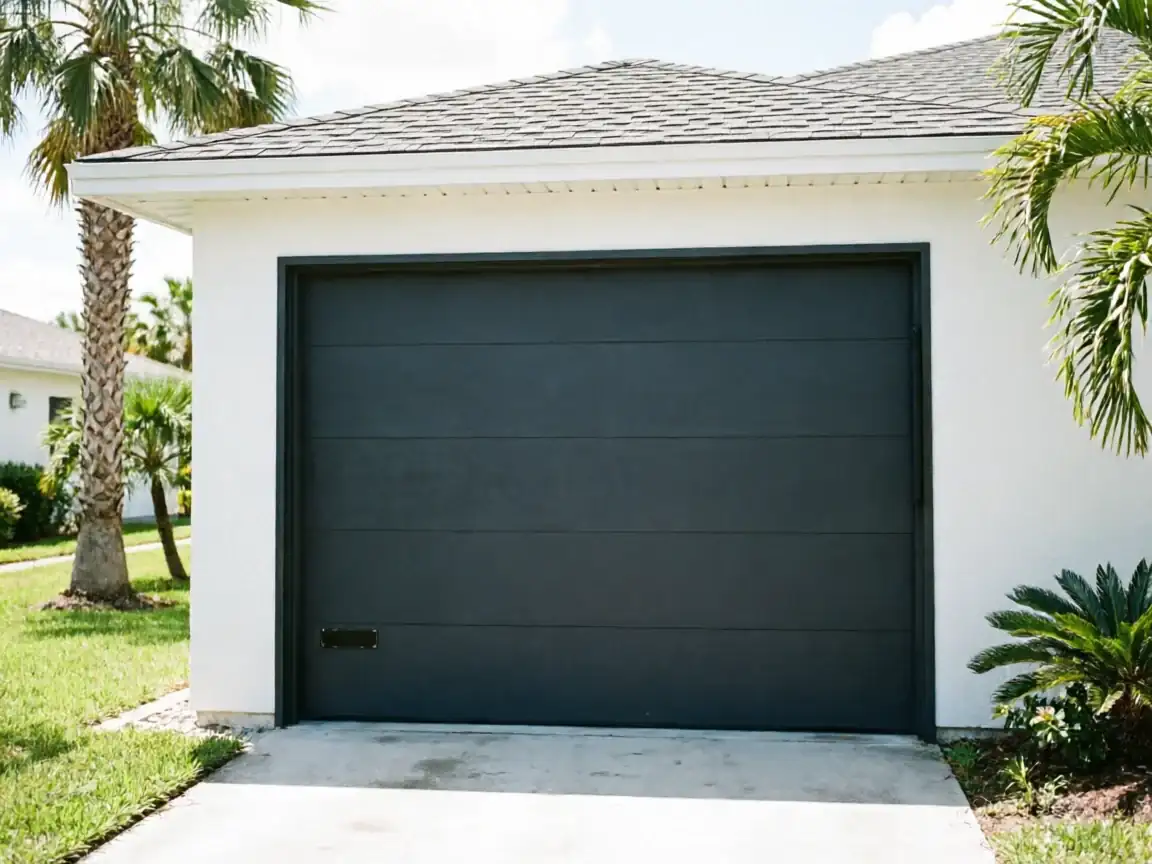
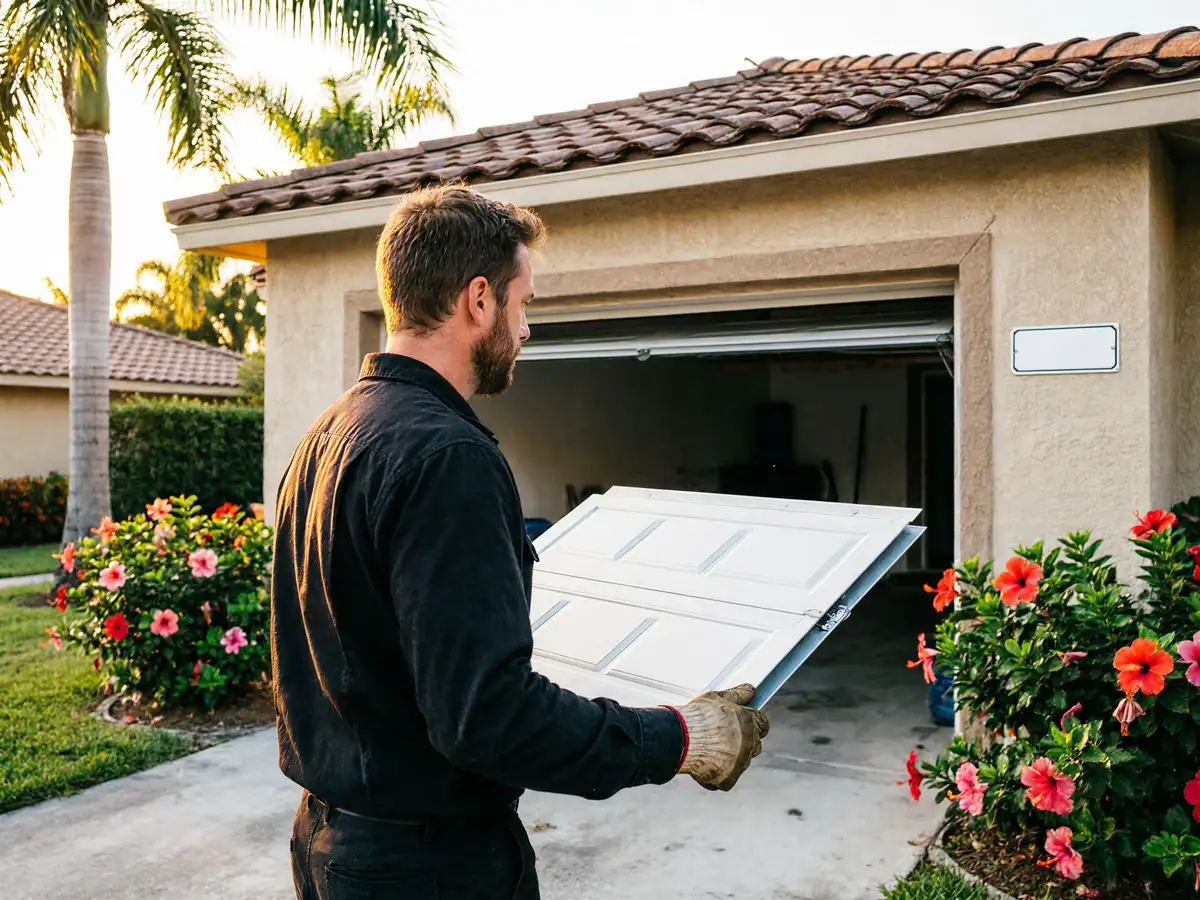
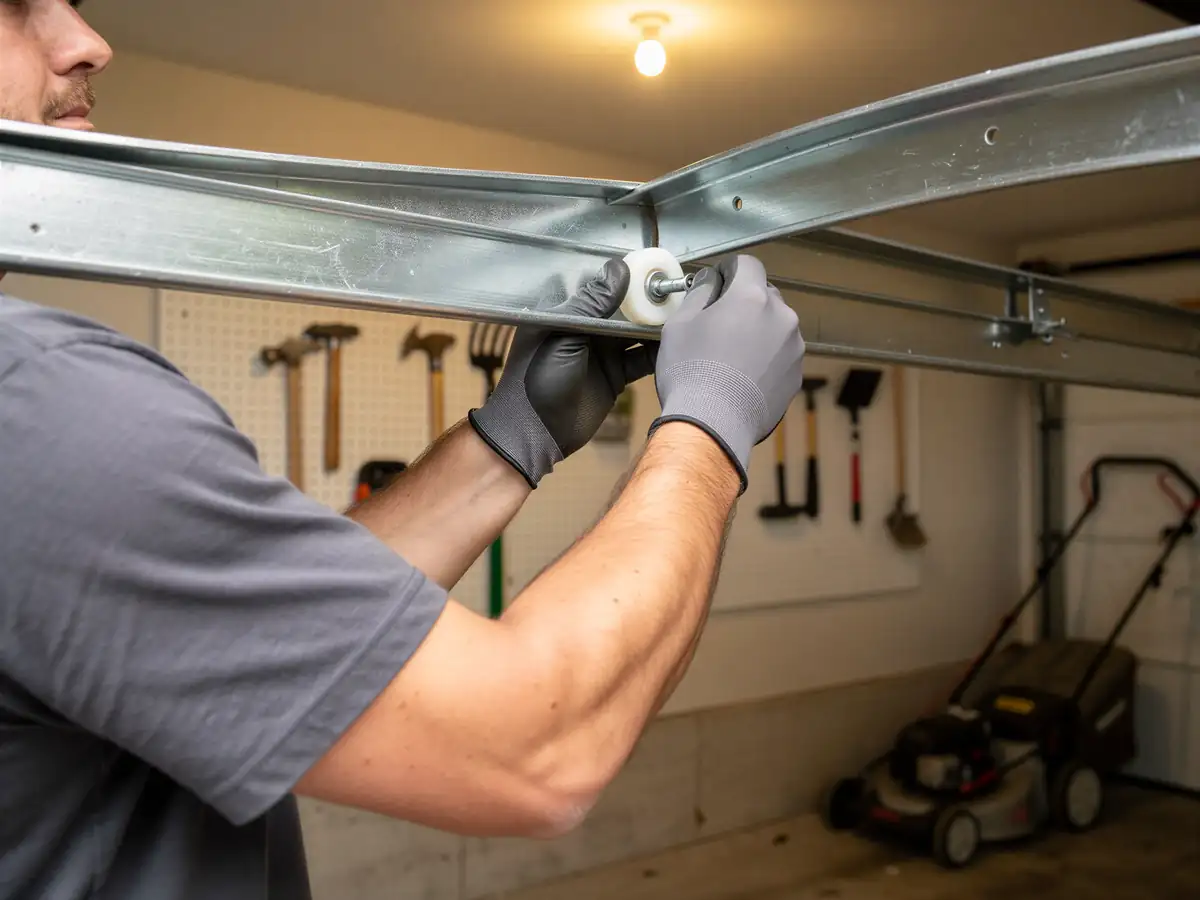
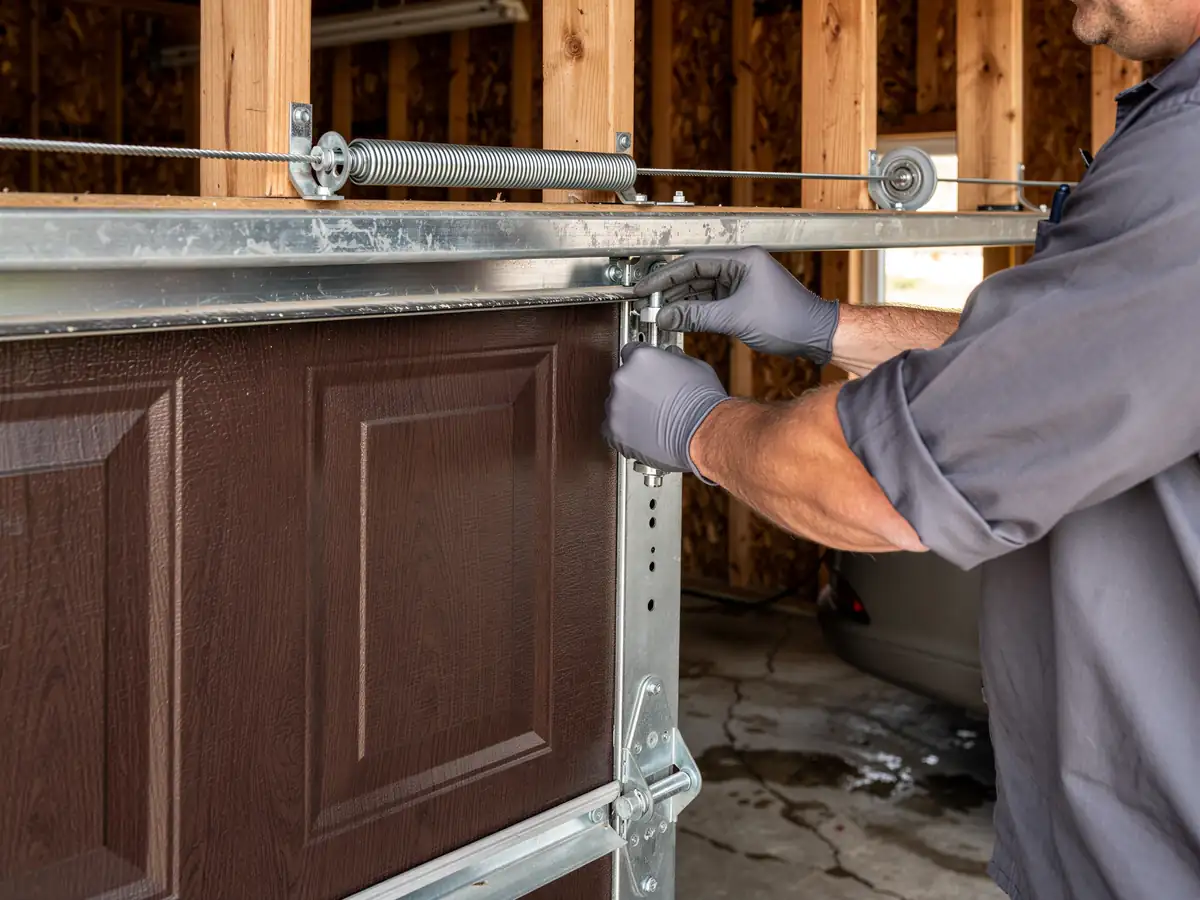
For a new install we carry standard single and double door sizes in steel panel construction, along with torsion spring assemblies sized to the door weight and track hardware to match. Given Oldsmar's mild temperate climate - no deep freeze cycles, no major snow load to design against - we're not building in the kind of insulation or sealing margin you'd spec for a harsher climate band. That keeps the standard install straightforward: it's about matching the door to the opening and getting the spring tension right, not fighting weather extremes.
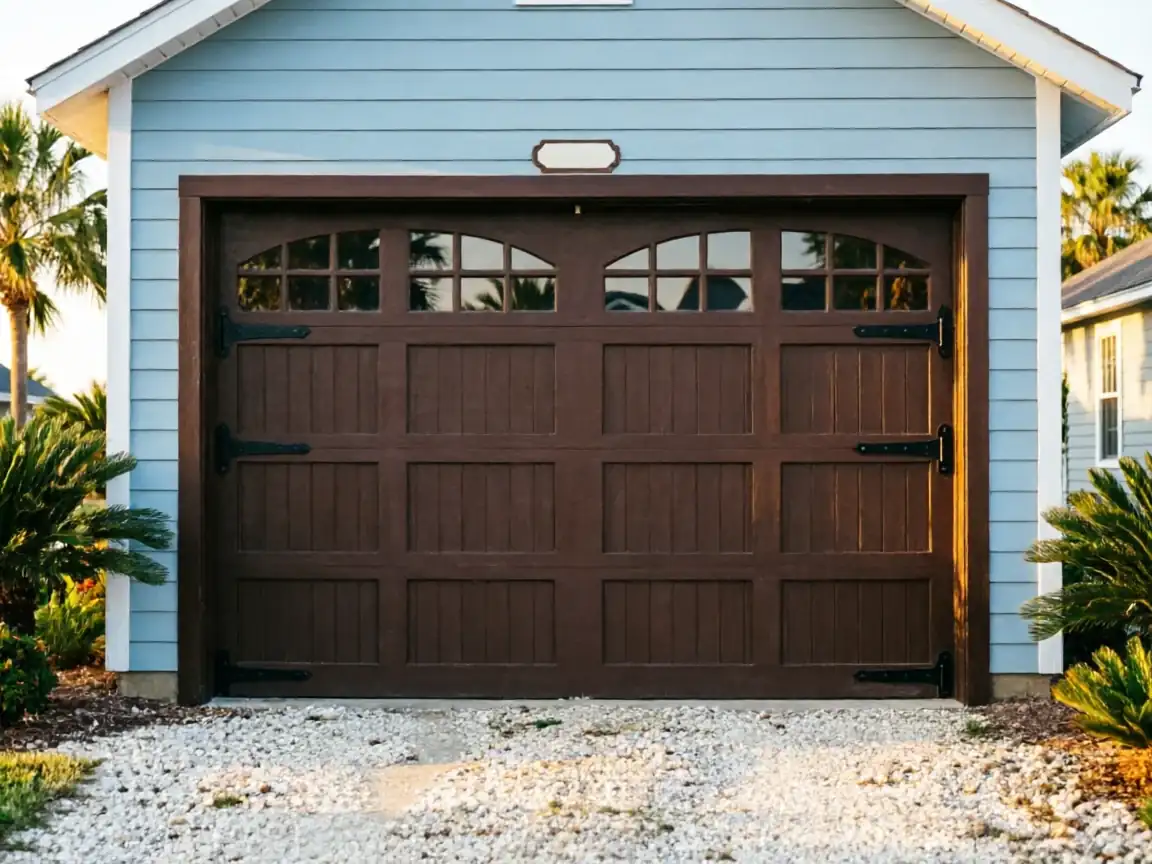
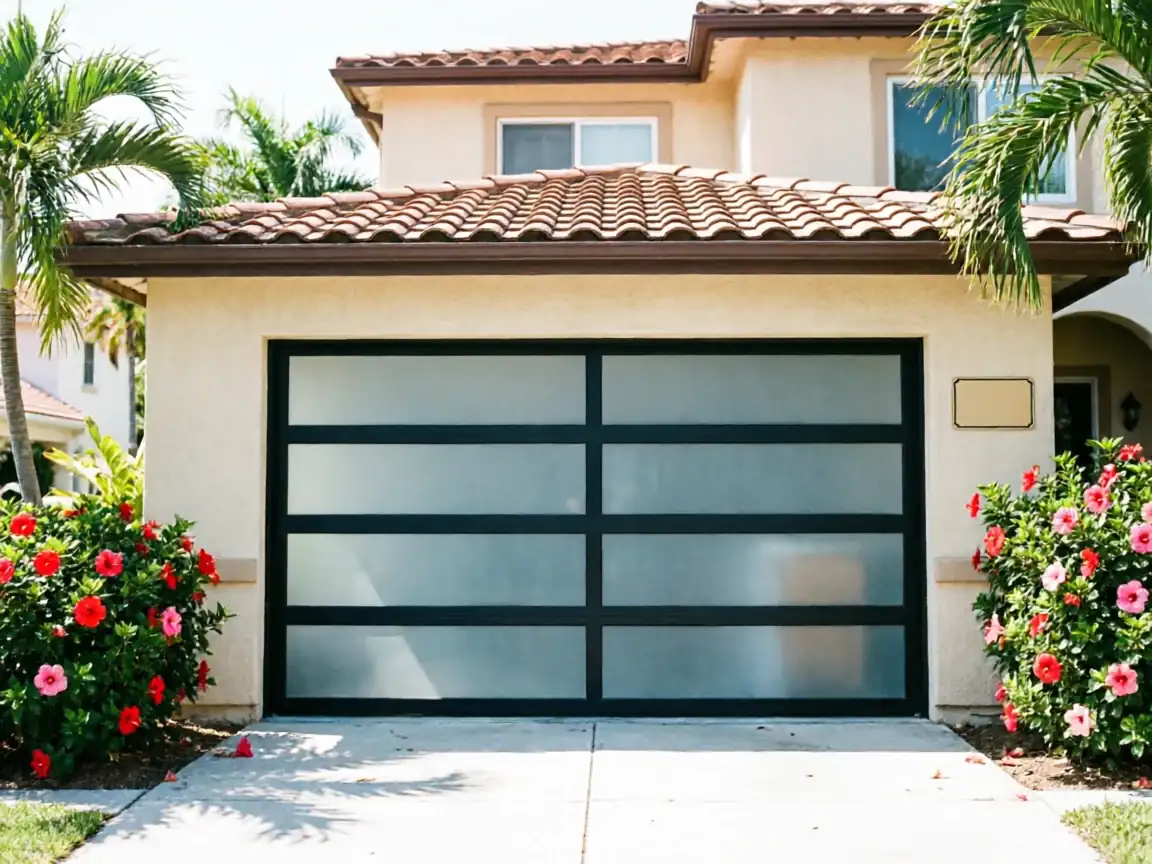
What we don't carry on the truck: custom wood doors, full carriage-house builds with glass inserts, or anything made to order. Those get quoted and ordered ahead, with a lead time, rather than installed same-visit. If that's what you want, we can set it up, but it's worth knowing upfront that it's not a truck-stock job.
What the Repair Takes
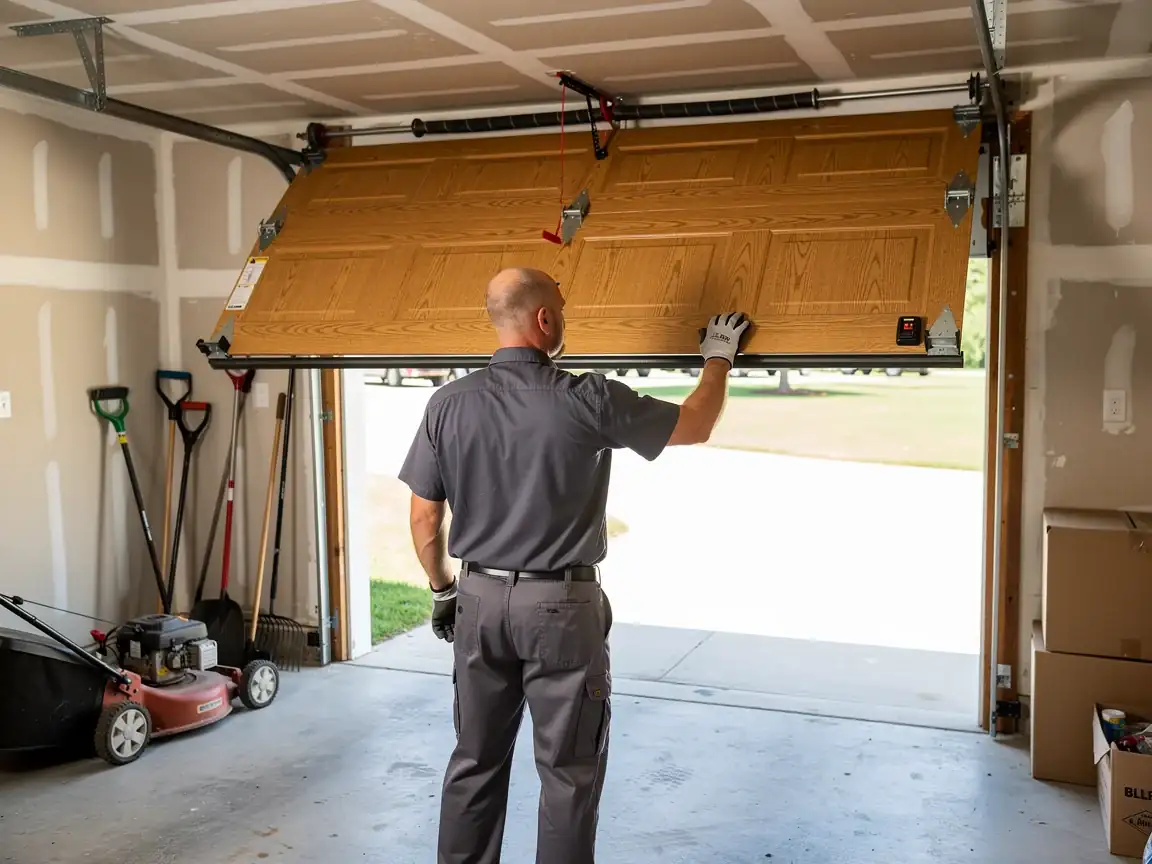
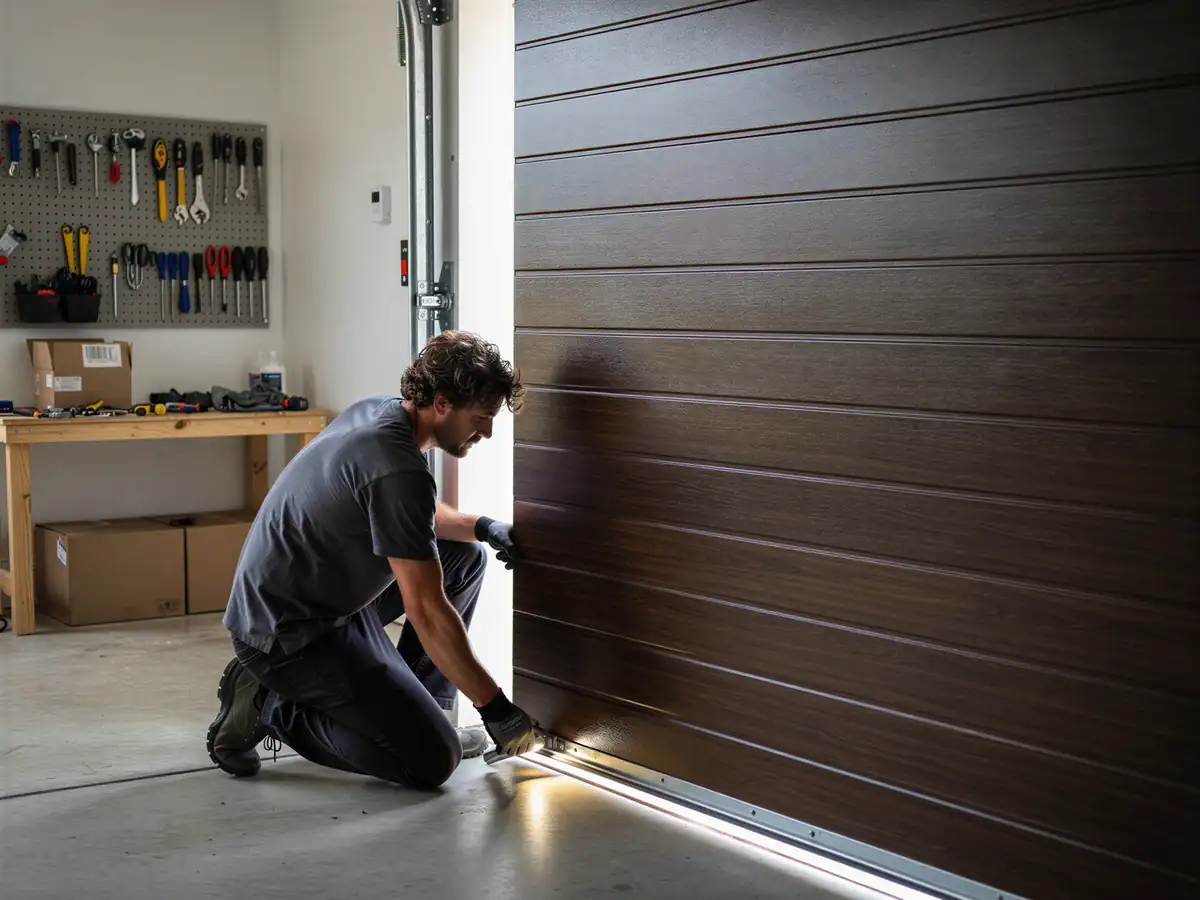
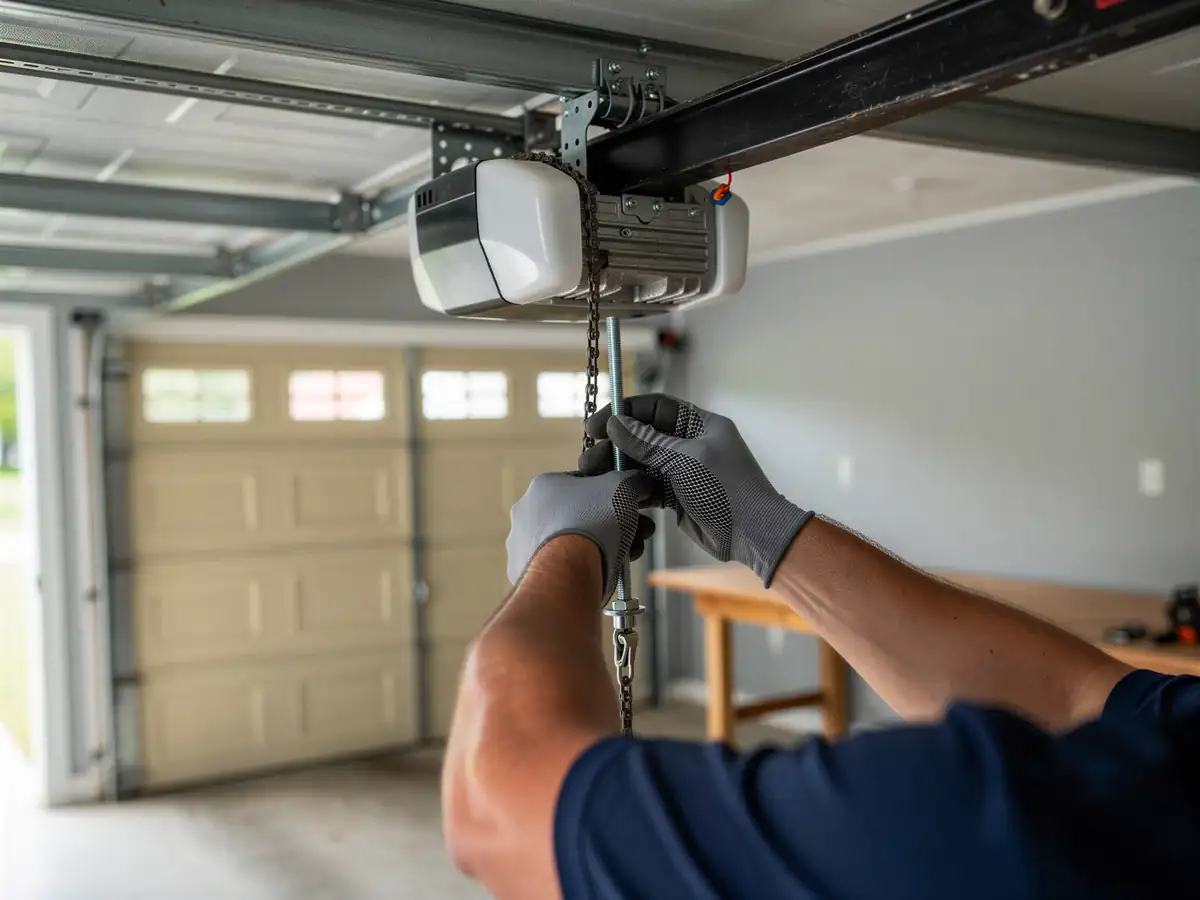
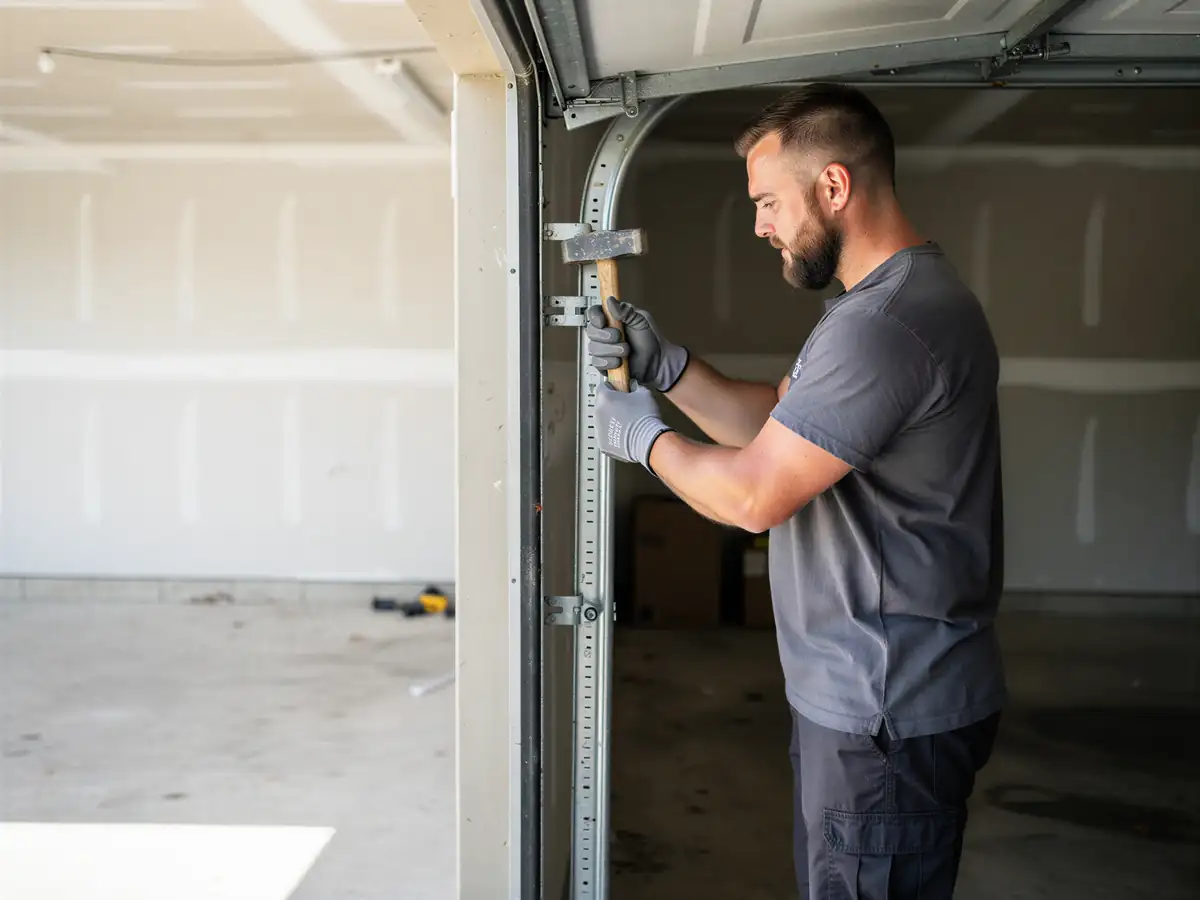
A straight new-door install, opening already framed and sized right, is a one-visit job - old door off, new door and track set, spring tensioned and tested, opener reconnected or replaced. Where it runs longer is when the opening itself needs correction: an opener mount that doesn't match the new door's header clearance, or track hardware that's rusted into the frame and has to be cut out rather than unbolted. On a late-1980s Oldsmar build, that's less common than on genuinely old framing, but it still happens, especially on original garages that have never had anything replaced.
One honest limit: if the opening is out of square or the header's been compromised by water damage, that's carpentry, not a door swap, and we'll say so rather than force a door into a bad frame. We'd rather flag that upfront than hand you a door that binds in six months.