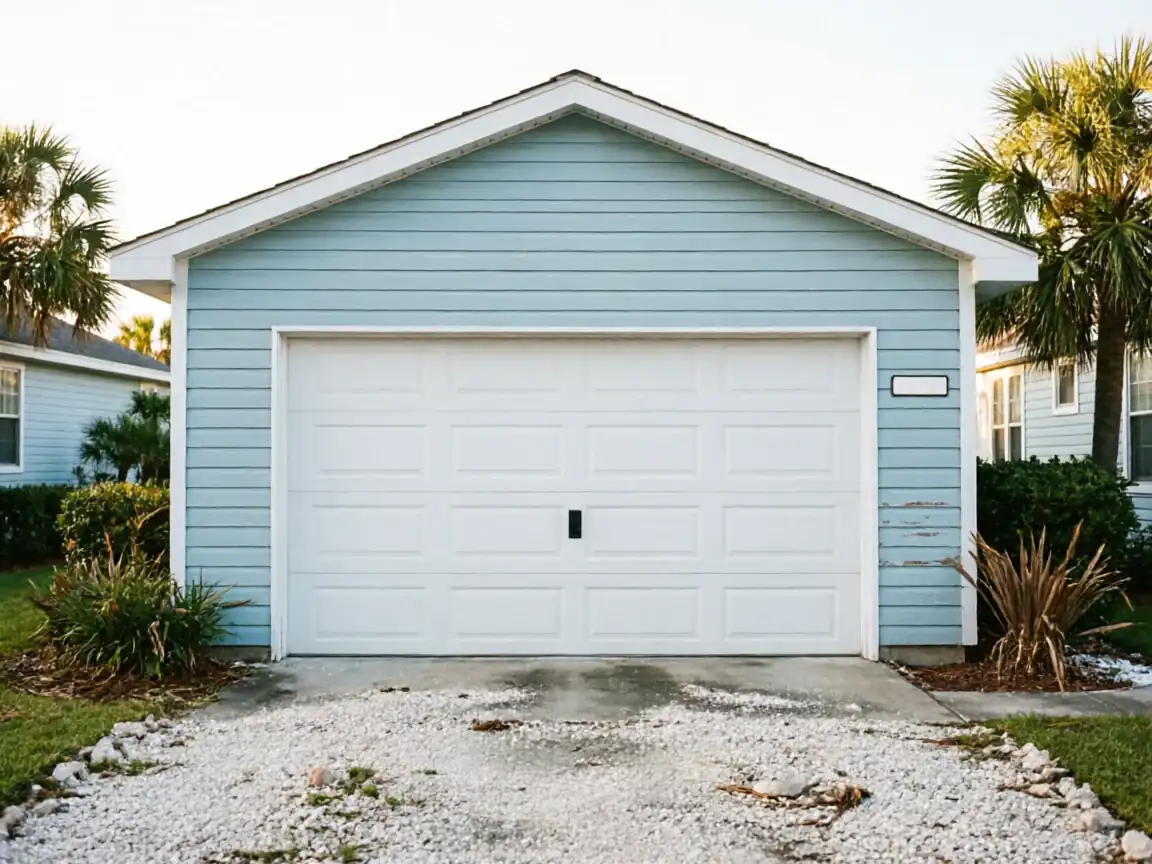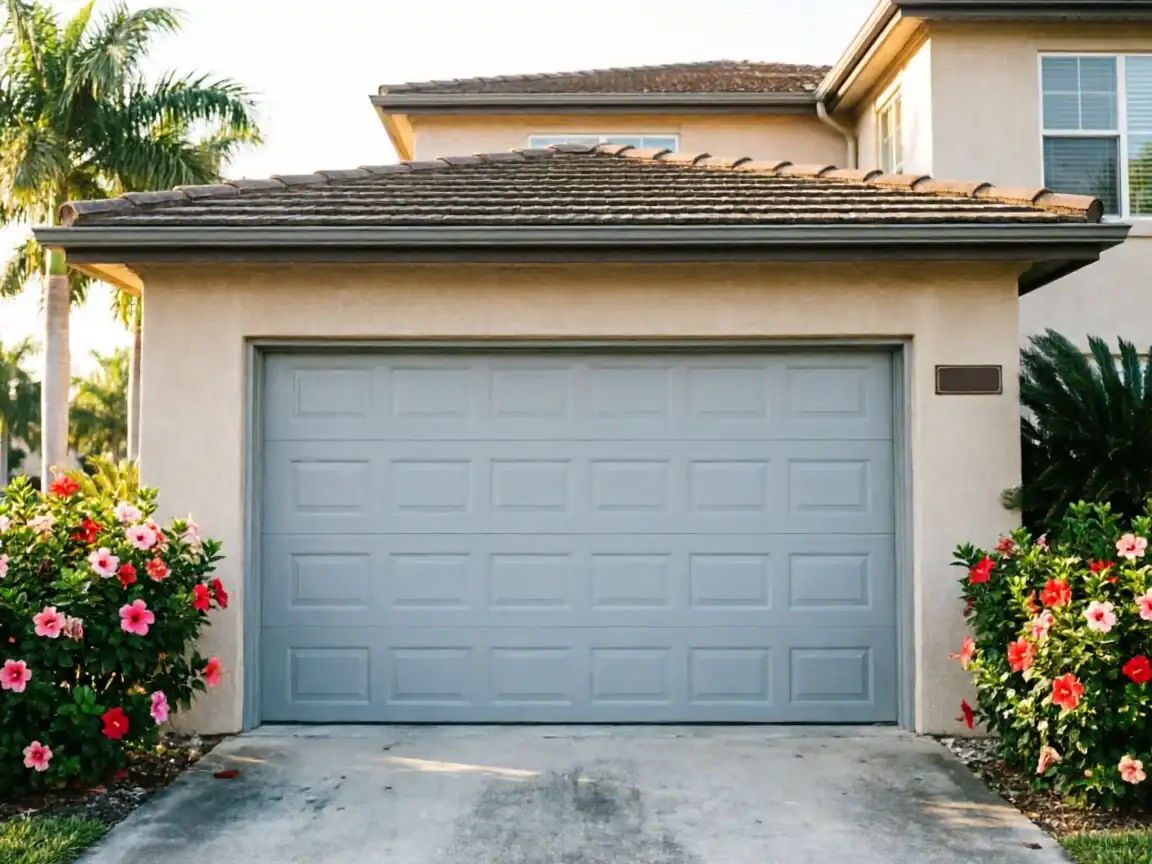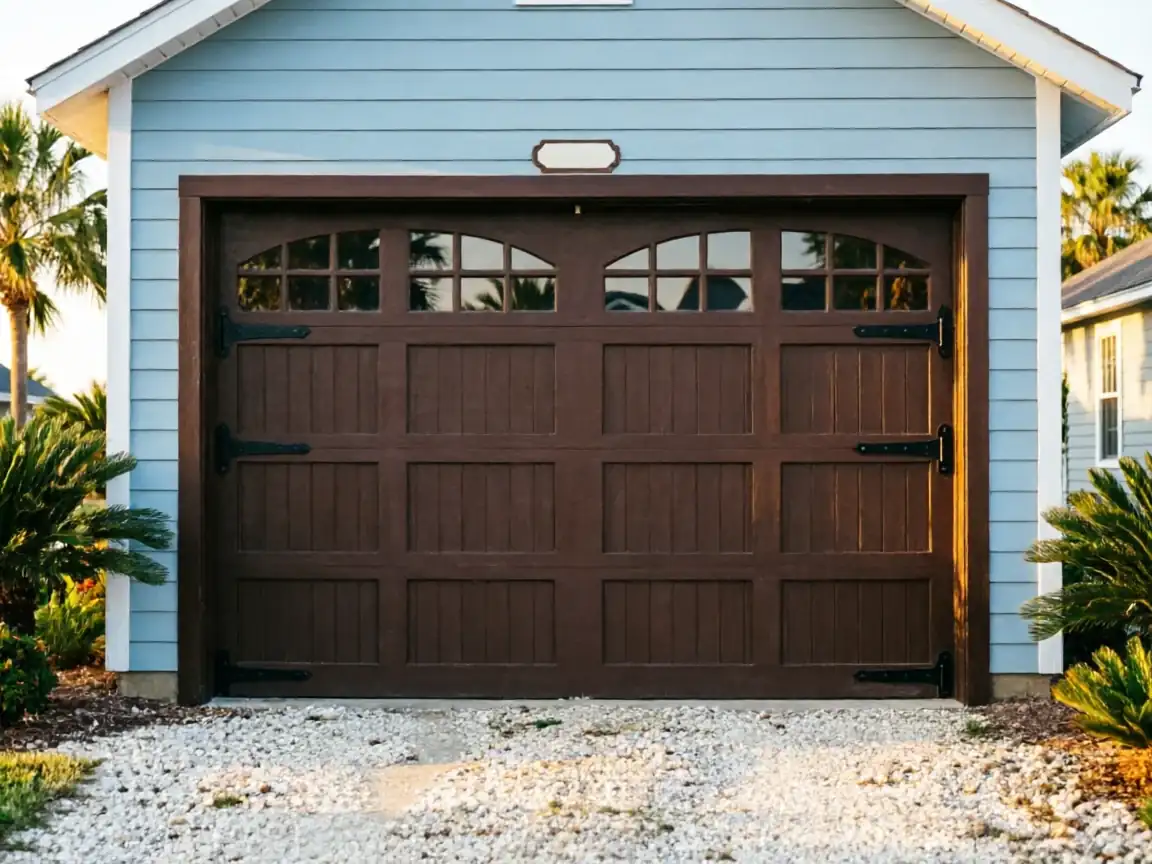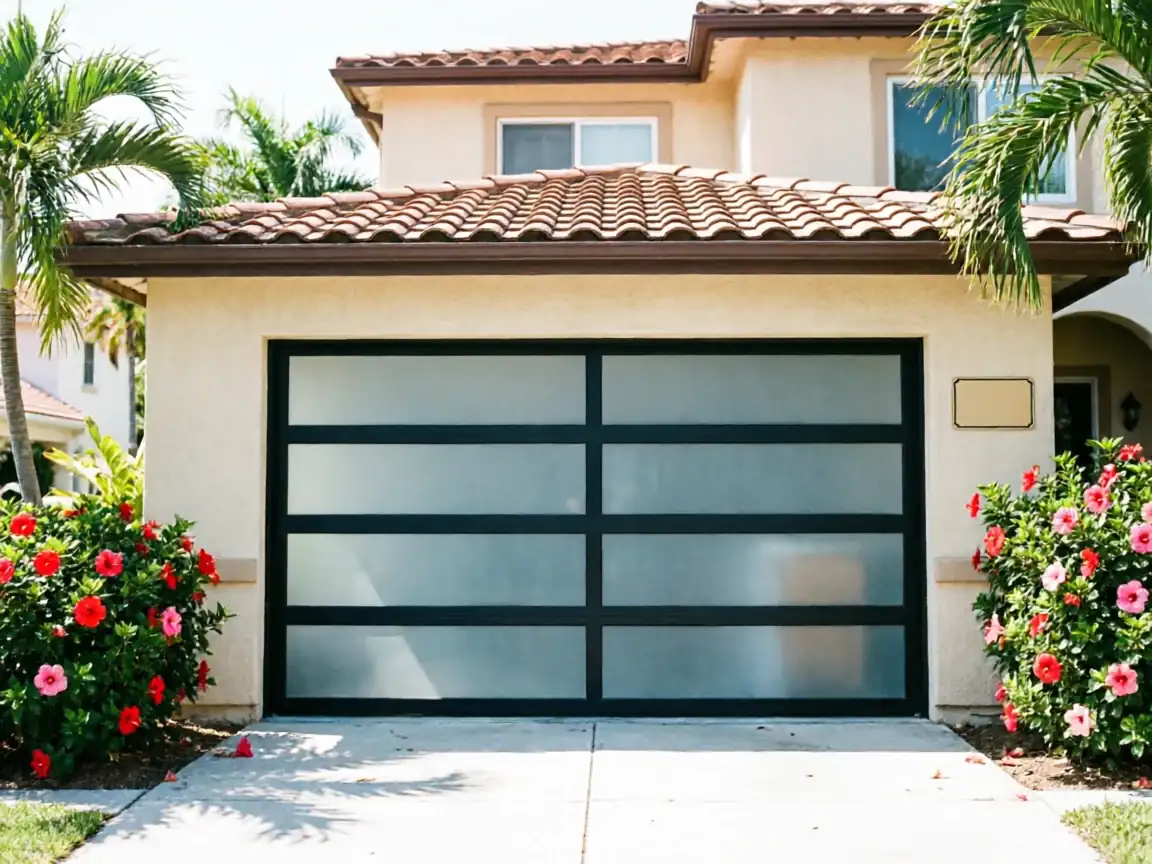
Why It Happens Here
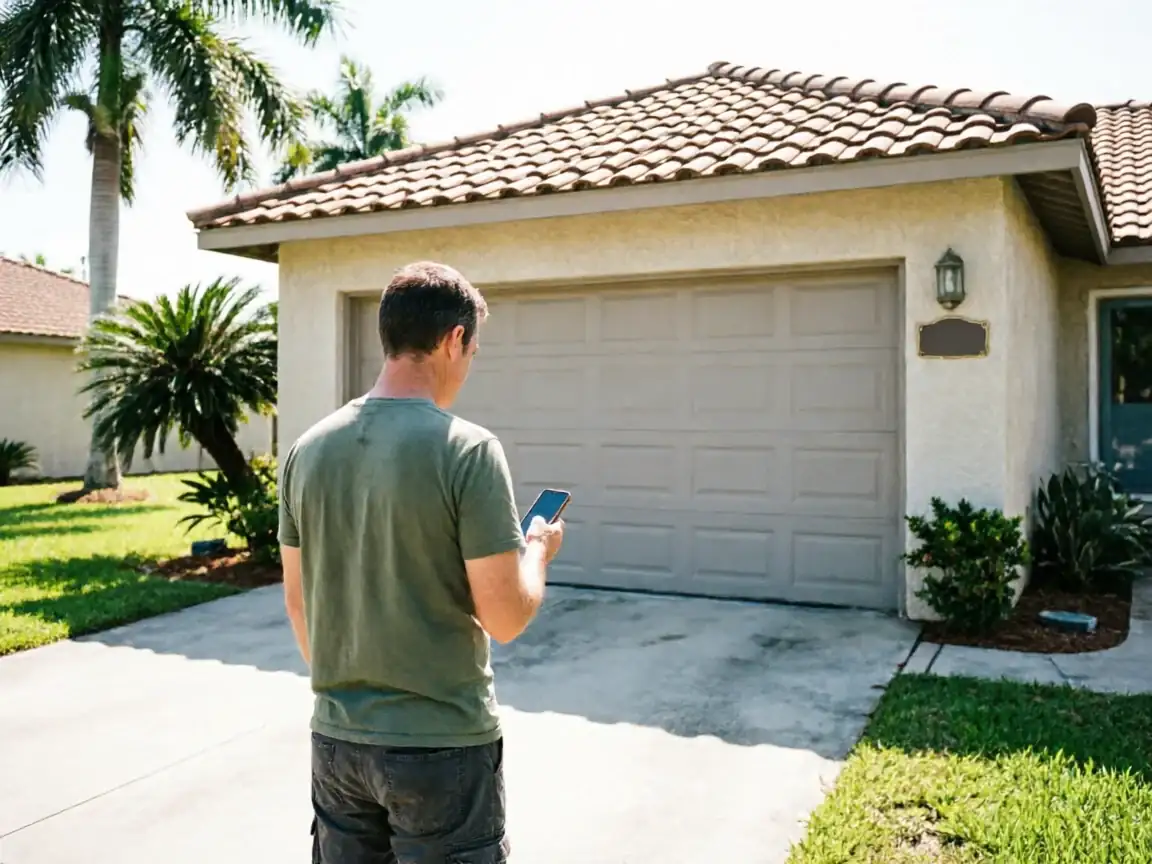
Oldsmar is a small slice of the territory we cover - about 5,451 households, compared to the roughly 142,490 across the wider service area. That size matters for how we think about the work: this isn't a town with its own depot or crew, it's one we drive to from Dunedin, 9 miles out, when a door needs us. Most of the housing stock here was built around 1988, a bit newer than the 1979 median you'll find across the broader area's older neighborhoods from the 1958-2005 build window. That later build date usually means steel rollers on nylon-lined track rather than the bare steel track you see in 1960s-70s construction elsewhere in the territory. Nylon-lined track runs quieter but the roller can still walk out of it the same way - a bent track flange, a broken roller bearing, or a door that's been forced closed over an obstruction. The mild temperate climate here doesn't cause rust-through the way a harsher climate would, but humidity still gets into bearings and track fasteners over three decades, and that slow corrosion is often what finally lets a roller jump the rail.
The Symptom
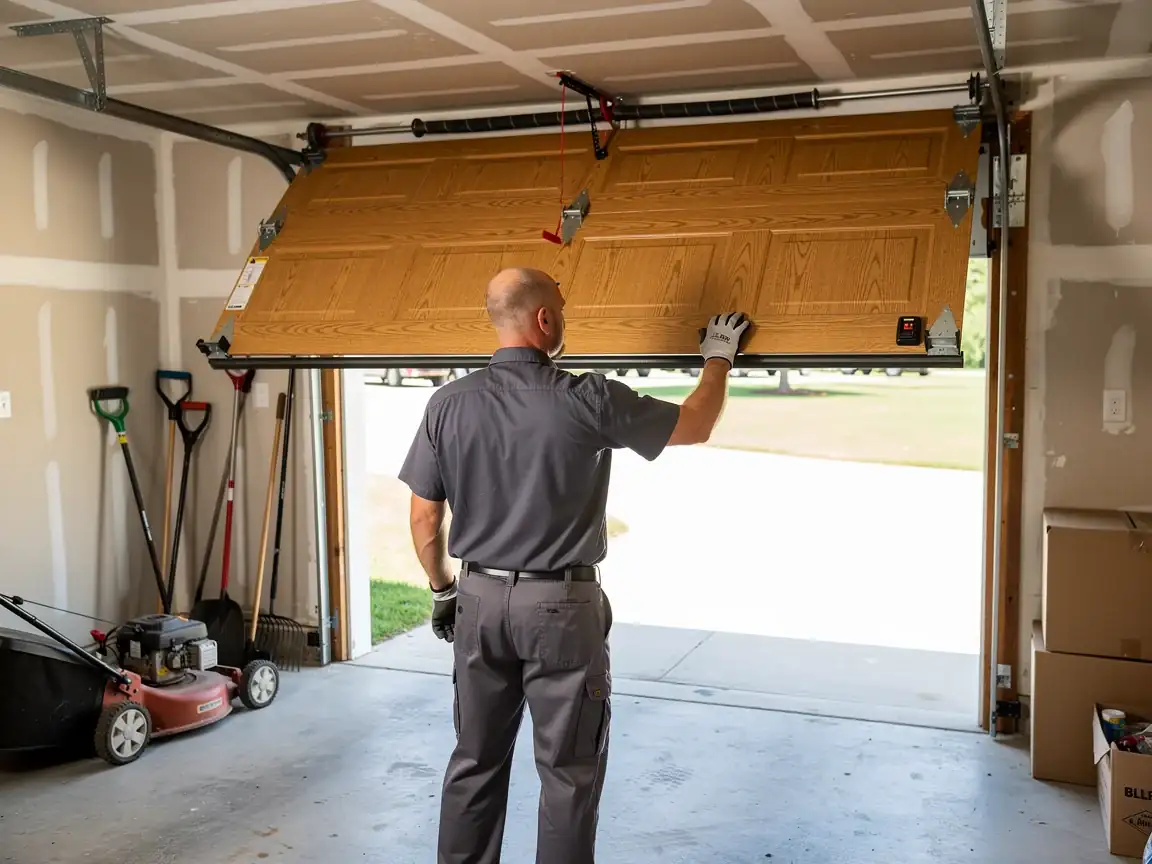
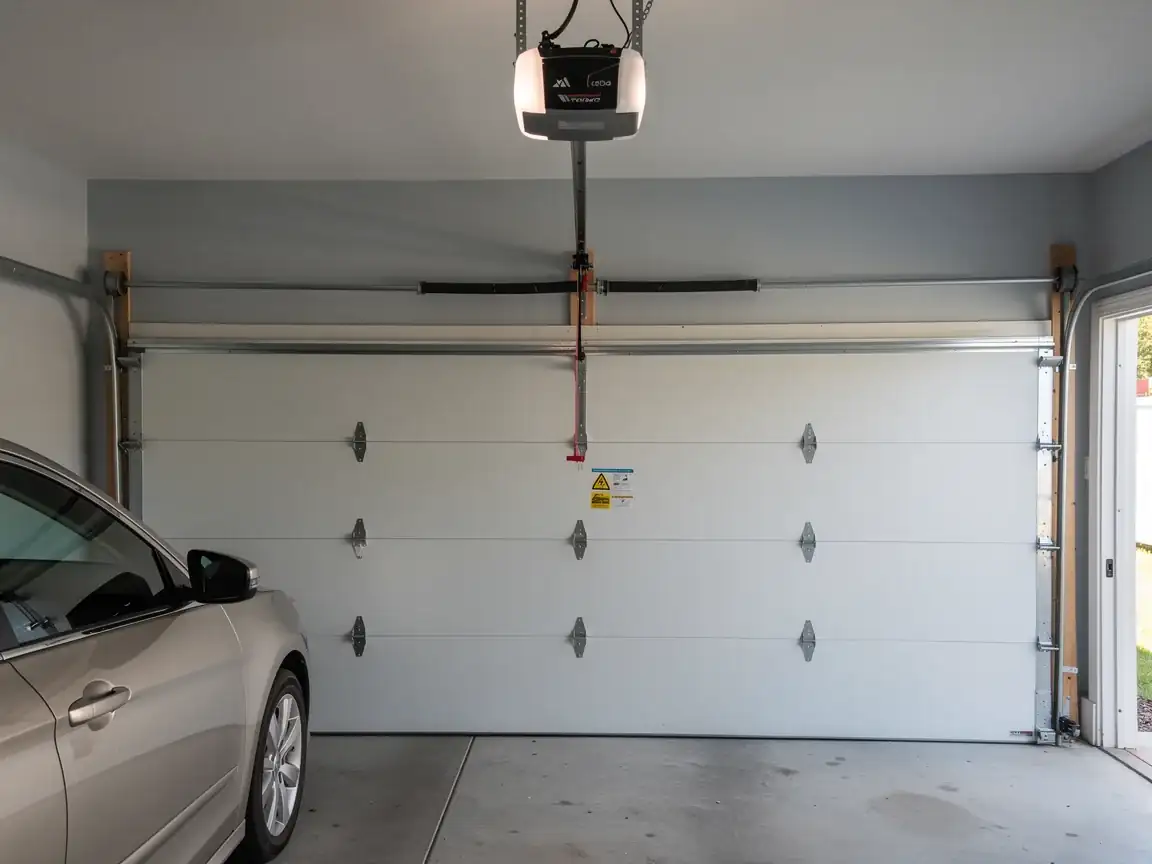
An off-track door doesn't always look dramatic. Sometimes it's a panel that sits crooked in the opening, a roller visibly outside the track on one side, or a door that reverses itself halfway up because the opener senses resistance it shouldn't be fighting. On the 1988-era construction common in Oldsmar, we also see this from a track bracket that's worked loose from the jamb over the years - the wood screws back out slightly as the house settles, the track flexes under load, and one hard stop is enough to pop a roller free. If the door is still partly on the track, don't keep running the opener. Running a motor against a door that's already off-track bends the track further and can crack a panel, turning a bracket job into a full section replacement.
What Is on the Truck
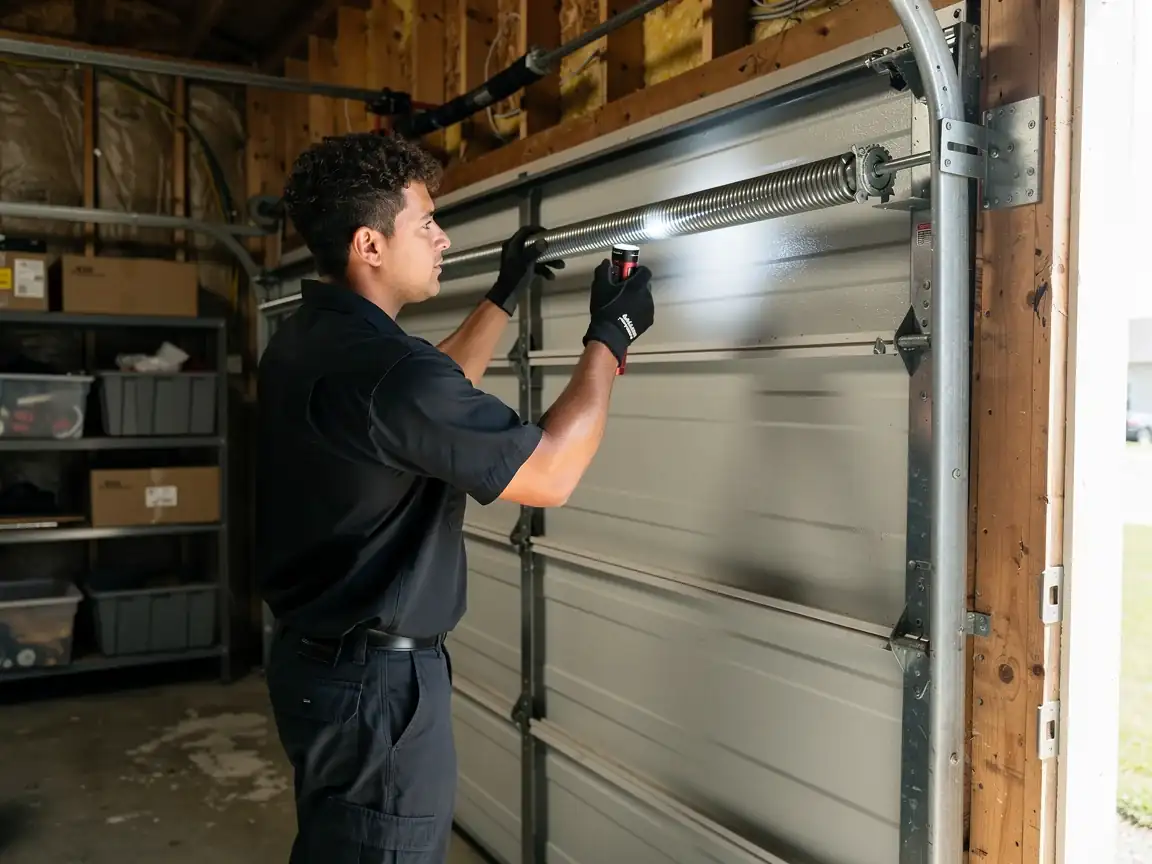
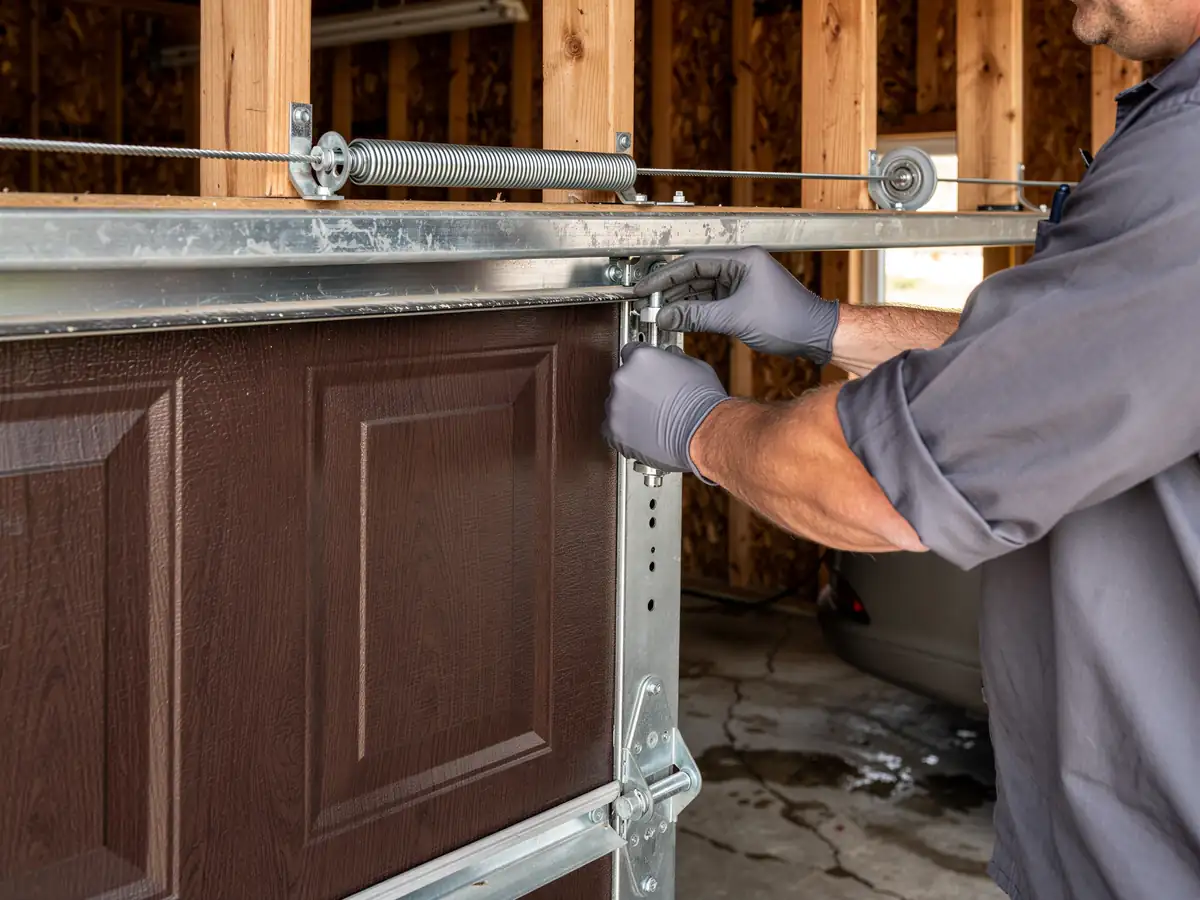
For off-track calls in homes from the late-1980s construction era, the truck carries replacement rollers (nylon and steel), track sections in standard widths, track brackets and the lag hardware to re-anchor them into jamb framing that's loosened over 35-plus years, and spring safety cables - because an off-track door almost always means working near a loaded spring, and we don't skip securing it first. What we don't carry is custom-width track or odd-size panels for doors that were modified or replaced outside standard sizing; if a previous repair used non-standard hardware, that becomes a return trip once we've confirmed the size.
What the Repair Takes
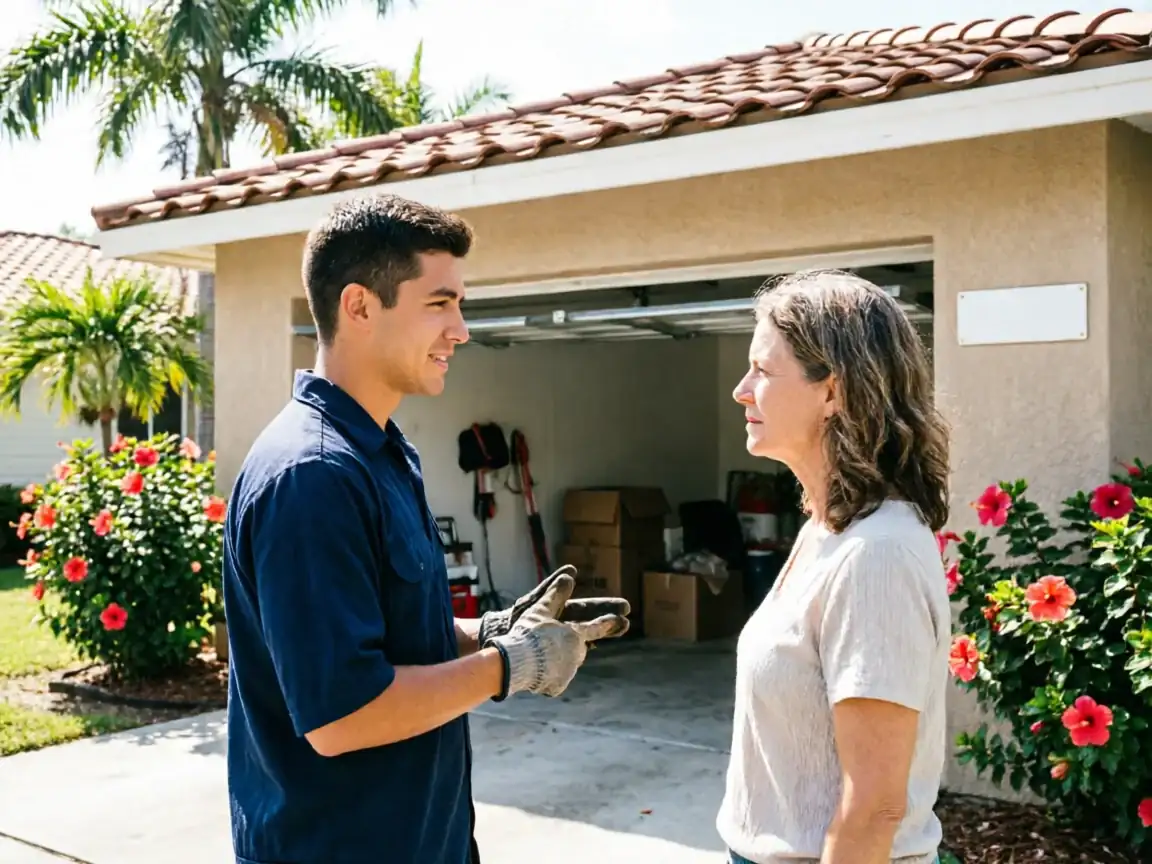
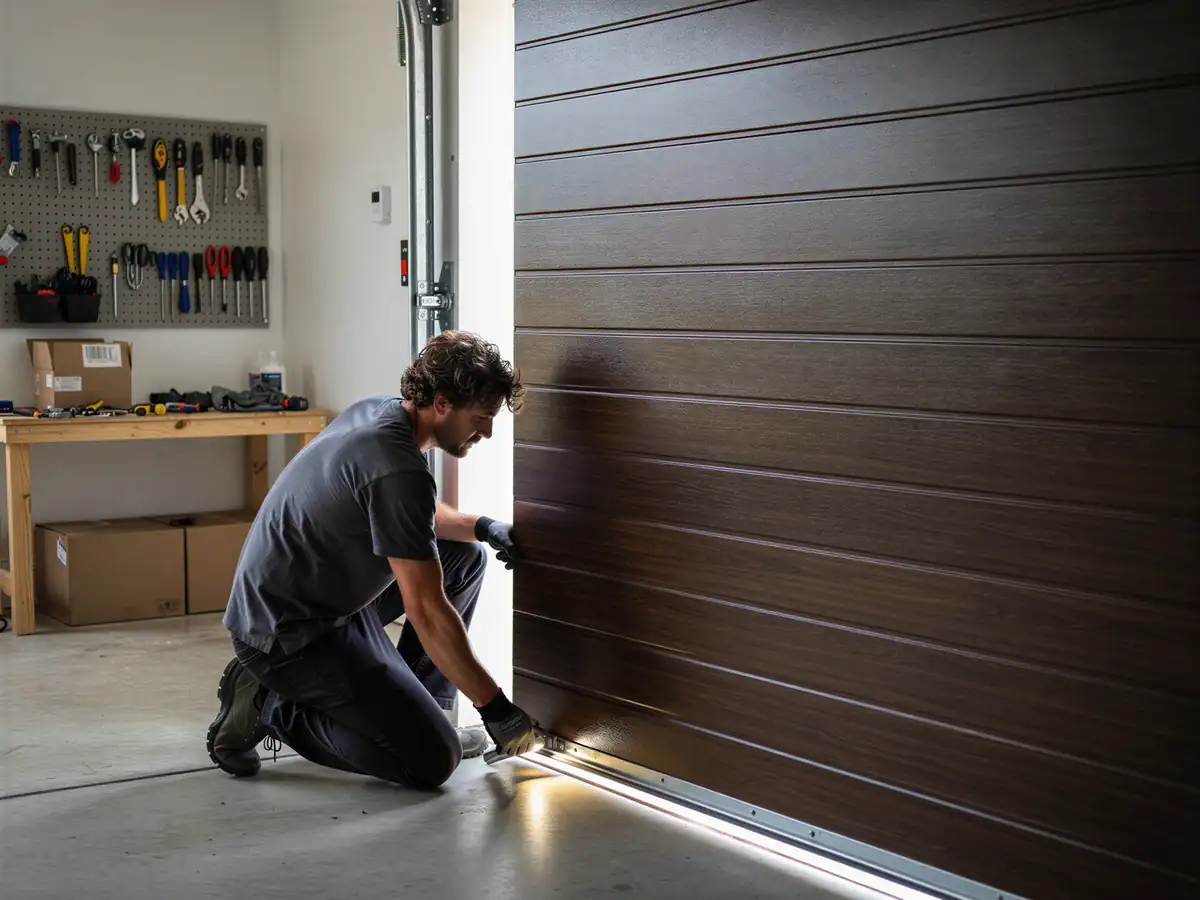
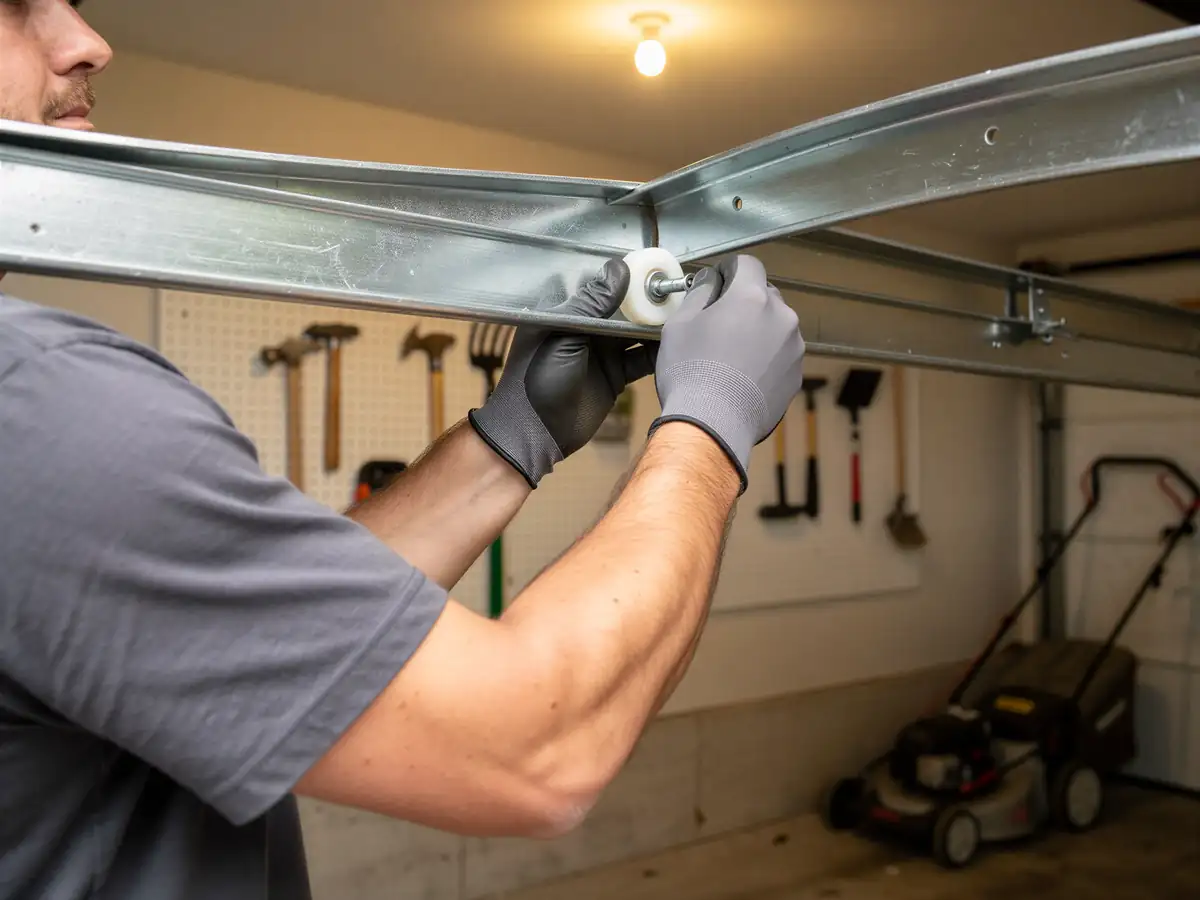
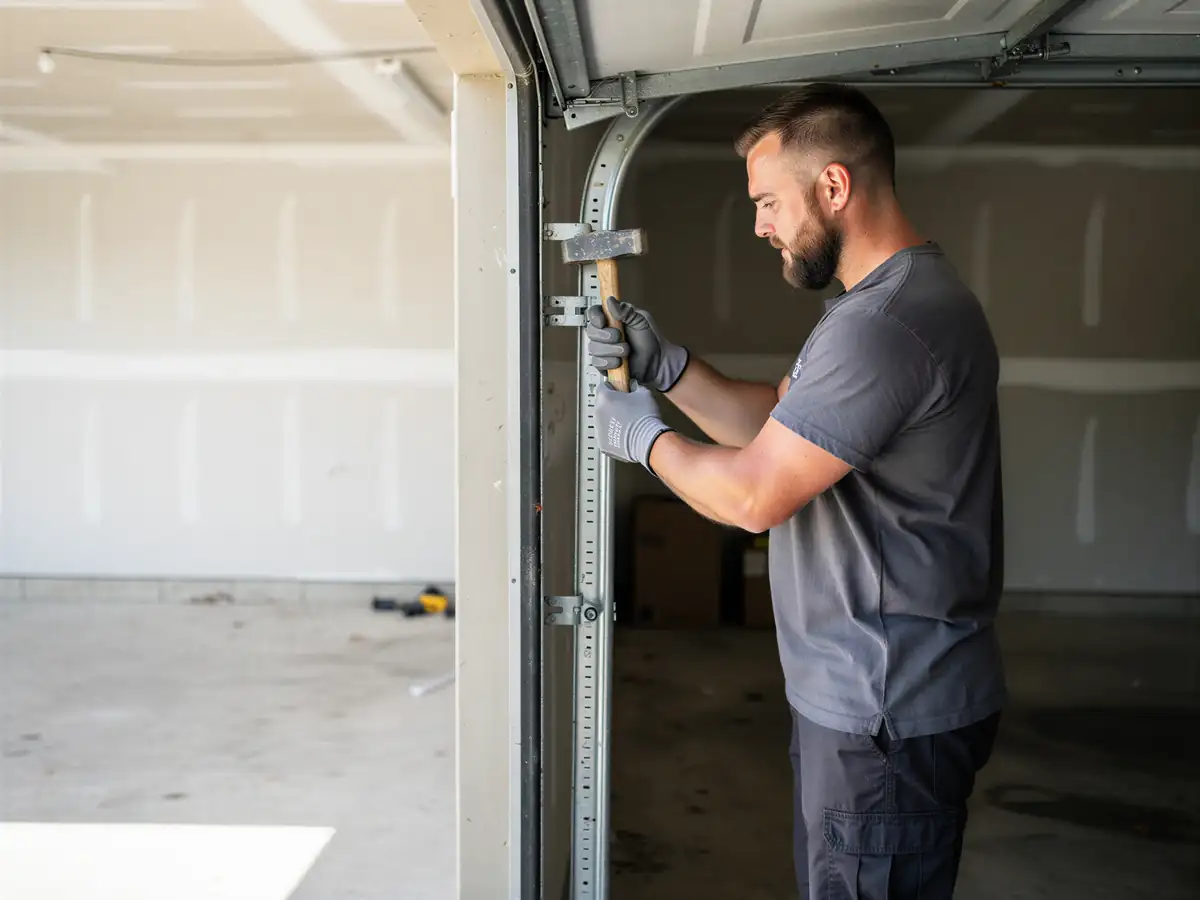
Most off-track jobs are a bracket re-set, a roller swap, and a track realignment - done in one visit once we've confirmed the spring is safely contained and the opener isn't fighting the door. If the track itself is bent rather than just knocked loose, that section gets replaced rather than bent back; a bent track that's forced straight will fail again, usually sooner than you'd think. Where the panel took damage from running the opener against the obstruction, that's a separate conversation about panel repair versus replacement, and we'll tell you honestly which one makes more financial sense rather than defaulting to the bigger job.