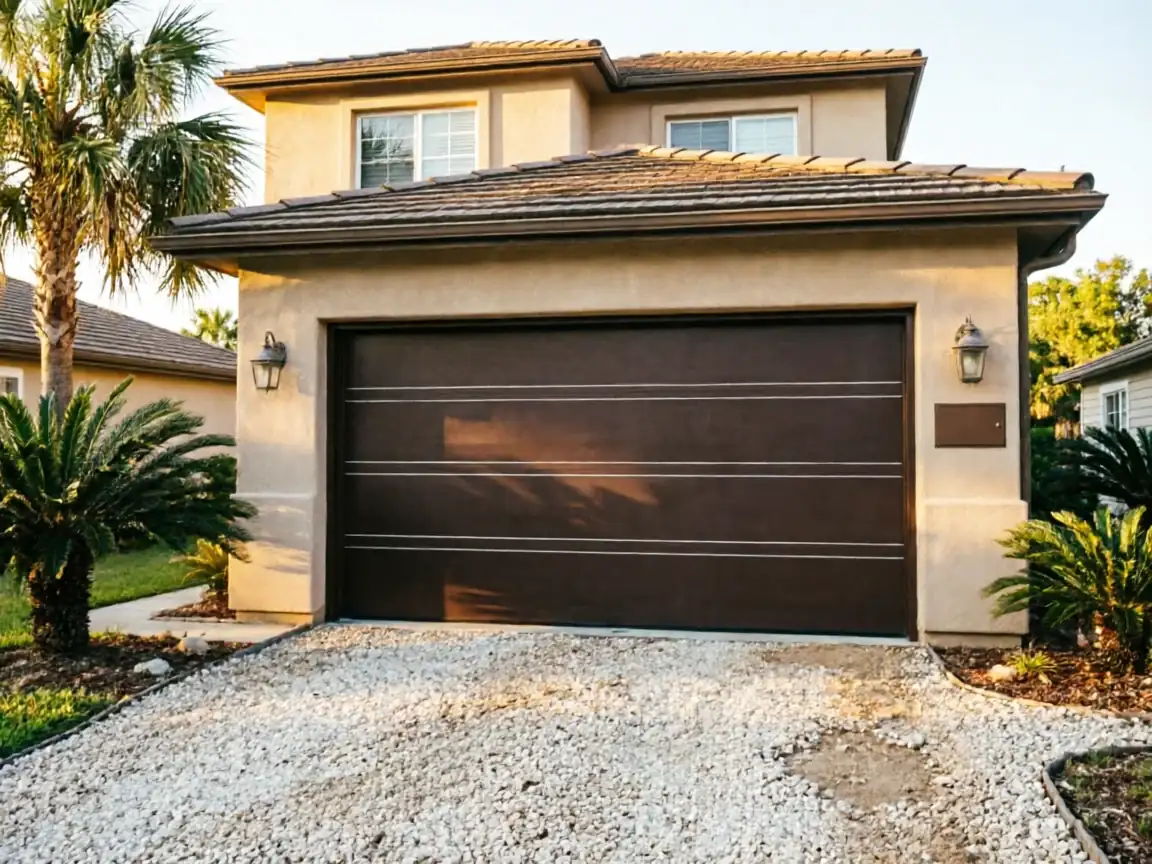
What the Repair Takes
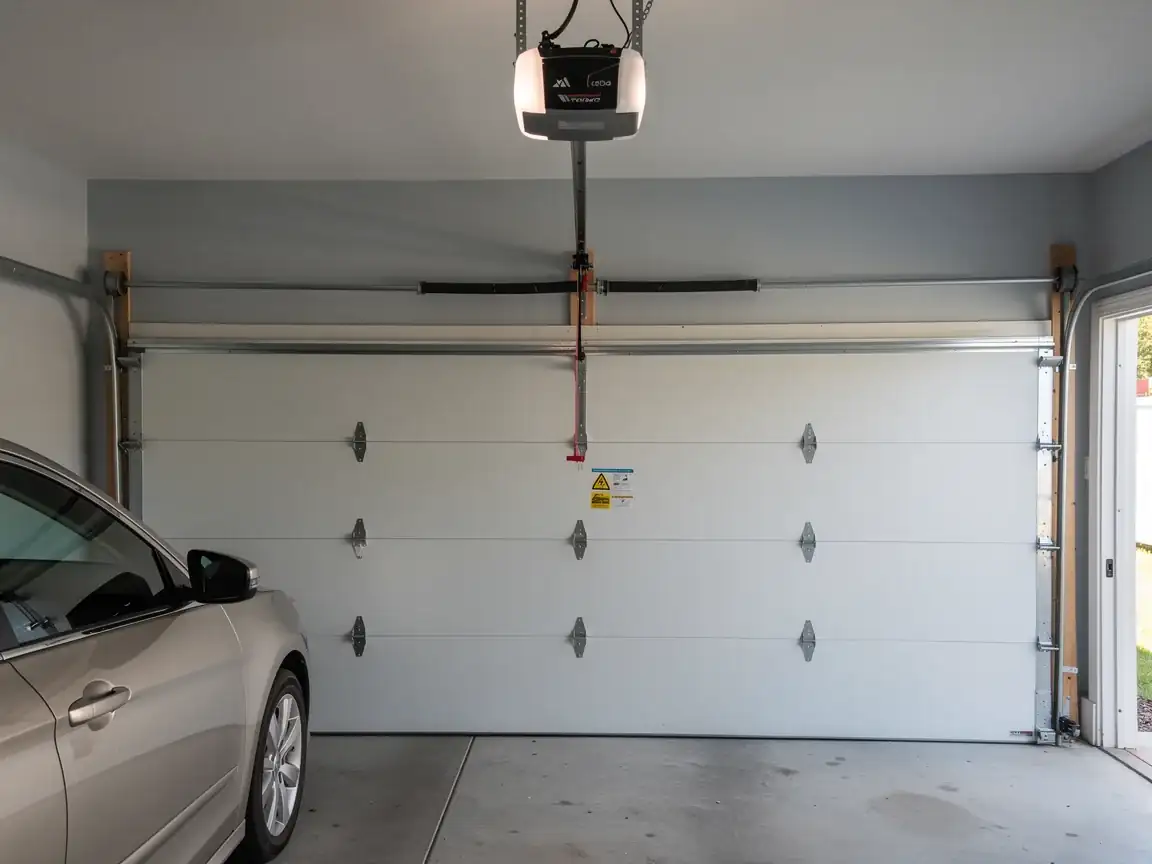
Citrus Park's housing stock centers on 1991, a good decade past the older sections of Dunedin's service area. That matters because a door and opener built in 1991 is a specific generation of hardware: steel sectional doors on torsion or extension springs rated for a shorter cycle life than what you'd find in a house from the 1960s, paired with chain-drive openers running early circuit boards instead of the solid-state logic you'd see in anything installed in the last ten years.
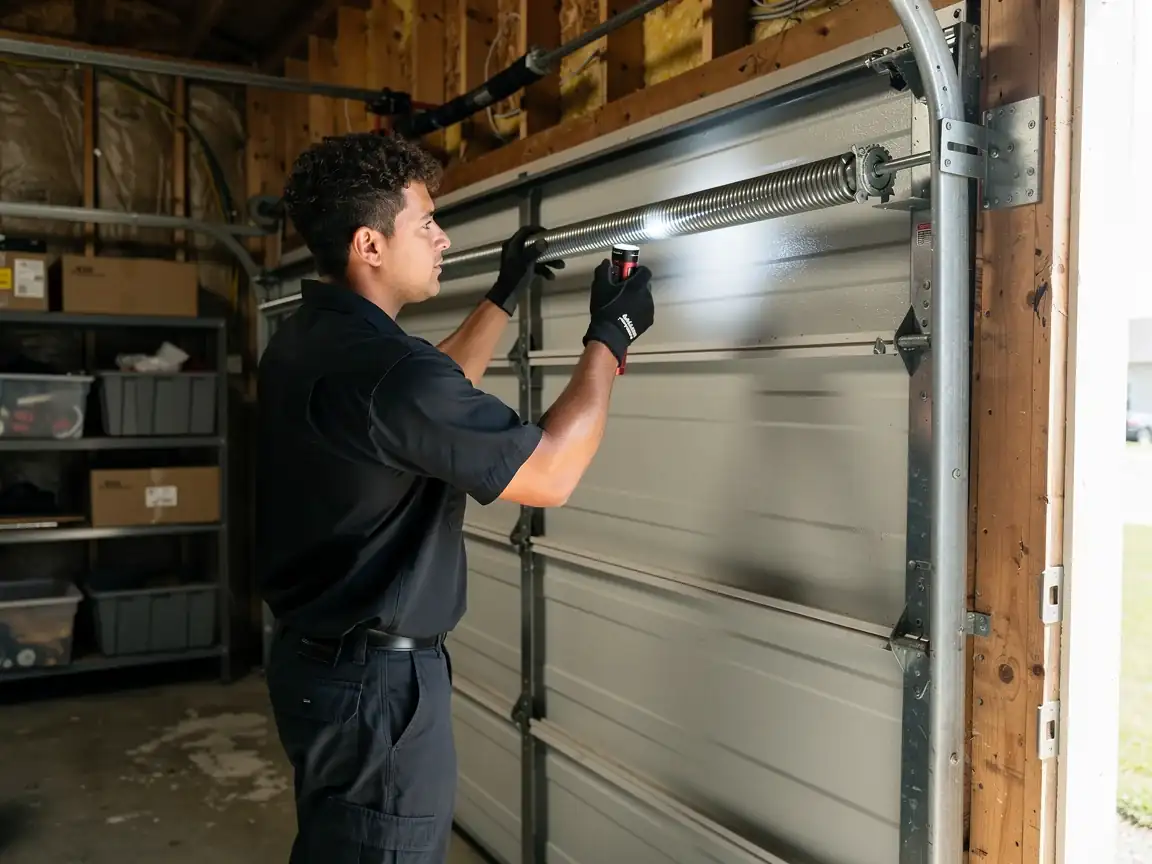
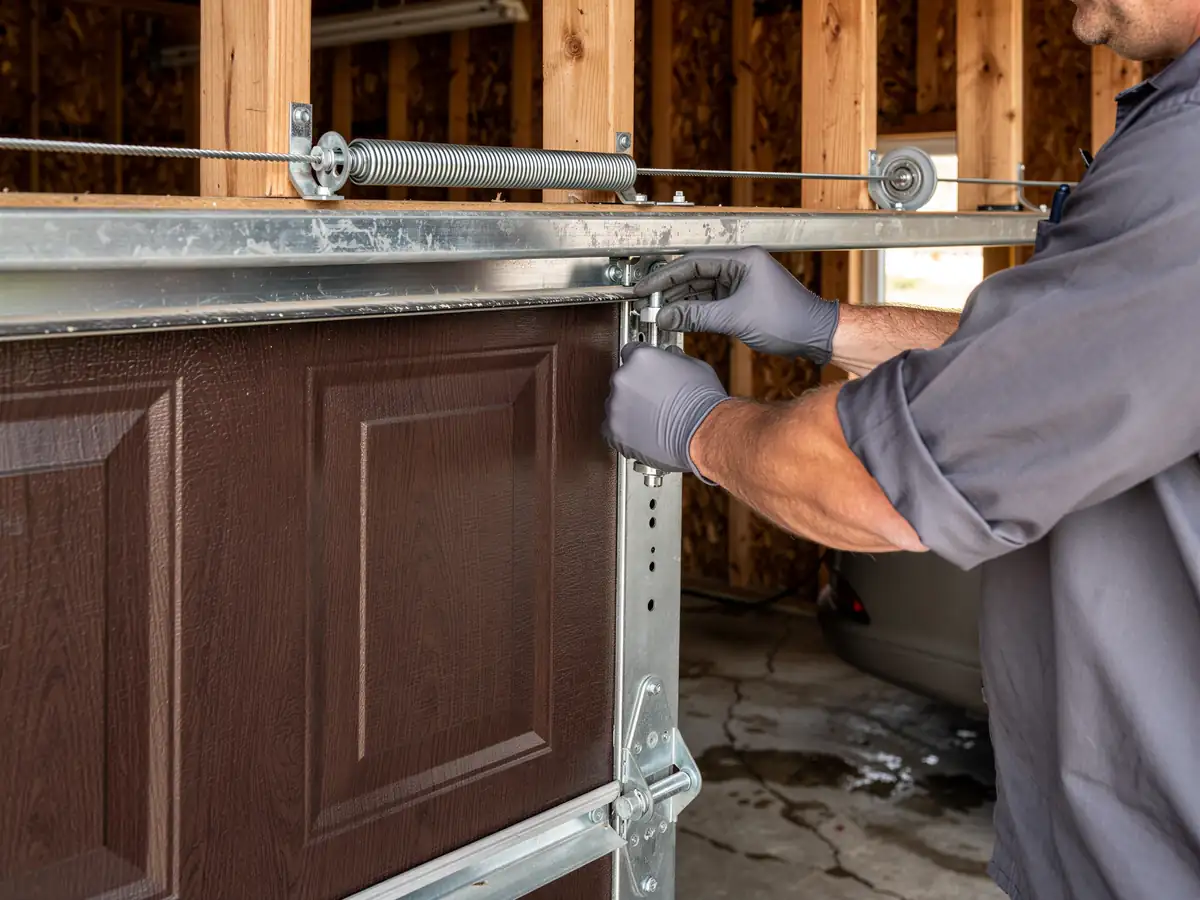
The fault we see most in this age bracket isn't a snapped cable or a bent track - it's a torsion spring that's simply worn out its coil count, or an opener board whose capacitors have dried out after three decades of Florida humidity cycling through a mild temperate climate. Neither failure looks dramatic. The door just gets heavier to lift by hand, or the opener starts grinding before it finally quits. If your house falls in that 1991 range, this is the failure pattern worth checking before you assume the whole unit needs replacing.
The Symptom
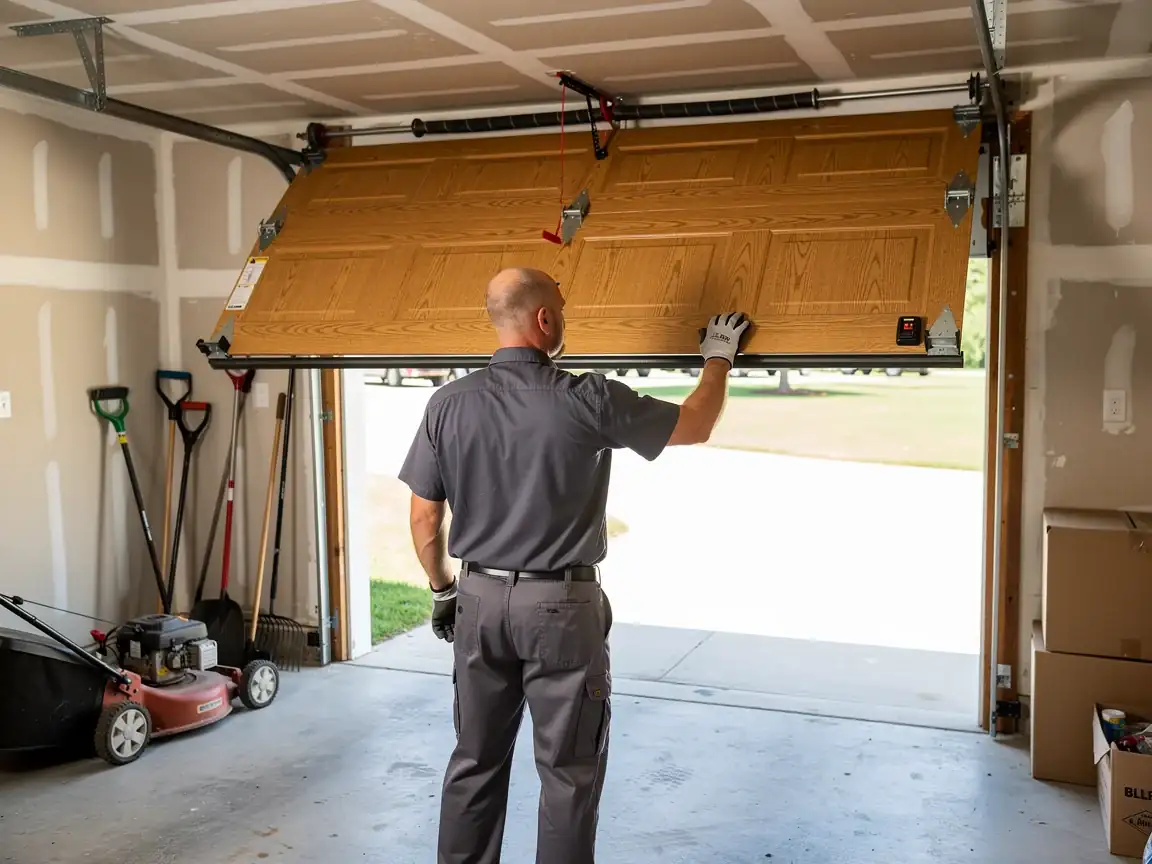
The giveaway on a 1991-era door is usually a opener that hums or clicks but the door doesn't move, or moves an inch and stops. That's a classic sign the spring has lost enough tension that the opener's drive system can't do the lifting alone anymore - it was never built to carry the full weight, just to assist a correctly sprung door.
Another pattern specific to this build era: doors that reverse partway down for no clear reason. Early safety-reversal sensors from this period drift out of alignment over the years, and in a mild climate without hard freezes or major storm cycles, that drift comes from slow settling and age rather than any one weather event. It's a nuisance fault, not an emergency one, but it's also the kind of thing that gets worse while you wait on it. If the door reverses consistently at the same point in its travel, that's the spring tension talking, not the sensor.
The DIY Question
A homeowner can reasonably handle lubricating hinges and rollers, tightening loose bolts, or clearing the photo-eye sensors of dust
None of that needs a truck.
What you shouldn't take on yourself is the torsion spring itself
These springs store enough tension to cause serious injury if the winding bars slip, and the hardware on a 1991-era door isn't always the same spec as what's sold off the shelf today - getting the wrong size spring on means it's either too weak to lift the door or wears out again in a fraction of the expected cycles. That's the honest limit here: we don't talk anyone through a spring swap over the phone, and we wouldn't want to. If your opener's circuit board is the issue rather than the spring, sometimes a straight board replacement is cheaper than a full opener swap - but on units this old, parts availability for the exact board model isn't guaranteed, and that's a call we make once we're looking at the actual unit.
What Is on the Truck
For a service area where the housing stock centers on 1991, we carry torsion and extension springs sized for that generation of door, along with the cable gauges and drums that pair with them. Mild coastal-temperate conditions here mean we see less spring failure from extreme temperature swings than you'd get further north, so wear tends to be pure cycle-count fatigue rather than weather-driven snapping - which is a different repair conversation and a different parts list.
We also carry universal circuit boards and sensor kits that cover most chain-drive openers from this era, since original boards for a specific 1991 model are often long out of production. What we don't stock on the truck is anything for a fully custom or architectural door - those get ordered in once we've confirmed the exact spec on site, which means a short wait on parts rather than a same-visit fix.
Getting It Booked In
Citrus Park sits about 16 miles from our base in Dunedin, so this isn't a job we can run out for on a whim - it gets scheduled onto the route rather than fit in as a walk-by. That's worth knowing going in: there's no local branch here, the truck comes from Dunedin.
Given that, it helps to know roughly what's wrong before the truck's loaded - a door that's heavy to lift by hand points to spring tension, an opener that hums without movement points the same direction, and a door that reverses partway down points to sensor alignment or spring tension together. Across the roughly 11,164 households out this way, the 1991-era pattern repeats often enough that we load the truck expecting it. You can see more on what we cover locally, or check the main service page for Dunedin.