Why It Happens Here
Westchase's median household income is $120,070, well above the $84,220 median across the wider service area we cover out of Dunedin. That number matters for one reason: at this income level, the math on a roller job almost always favors fixing it. A full roller set costs a fraction of a new door, and on a house this age, the rest of the hardware is usually fine, so there's no argument for replacing the whole door over a worn roller.
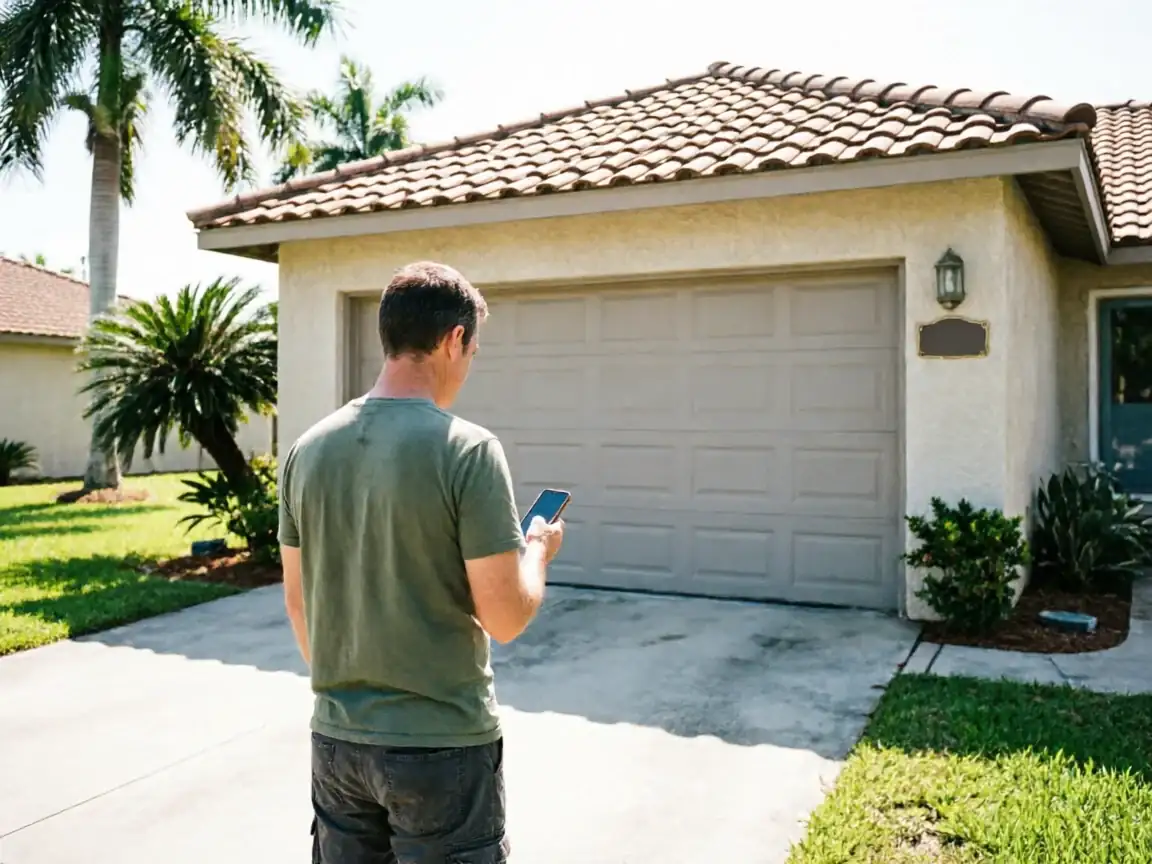
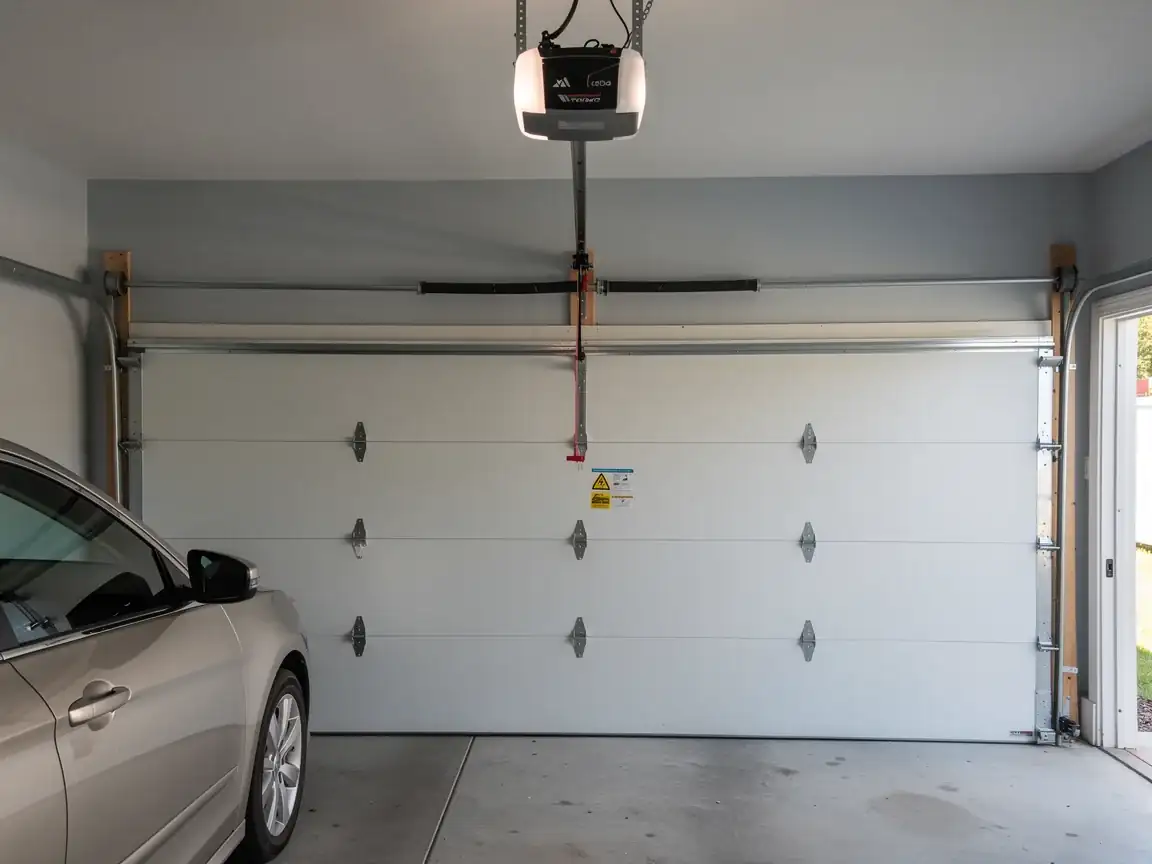
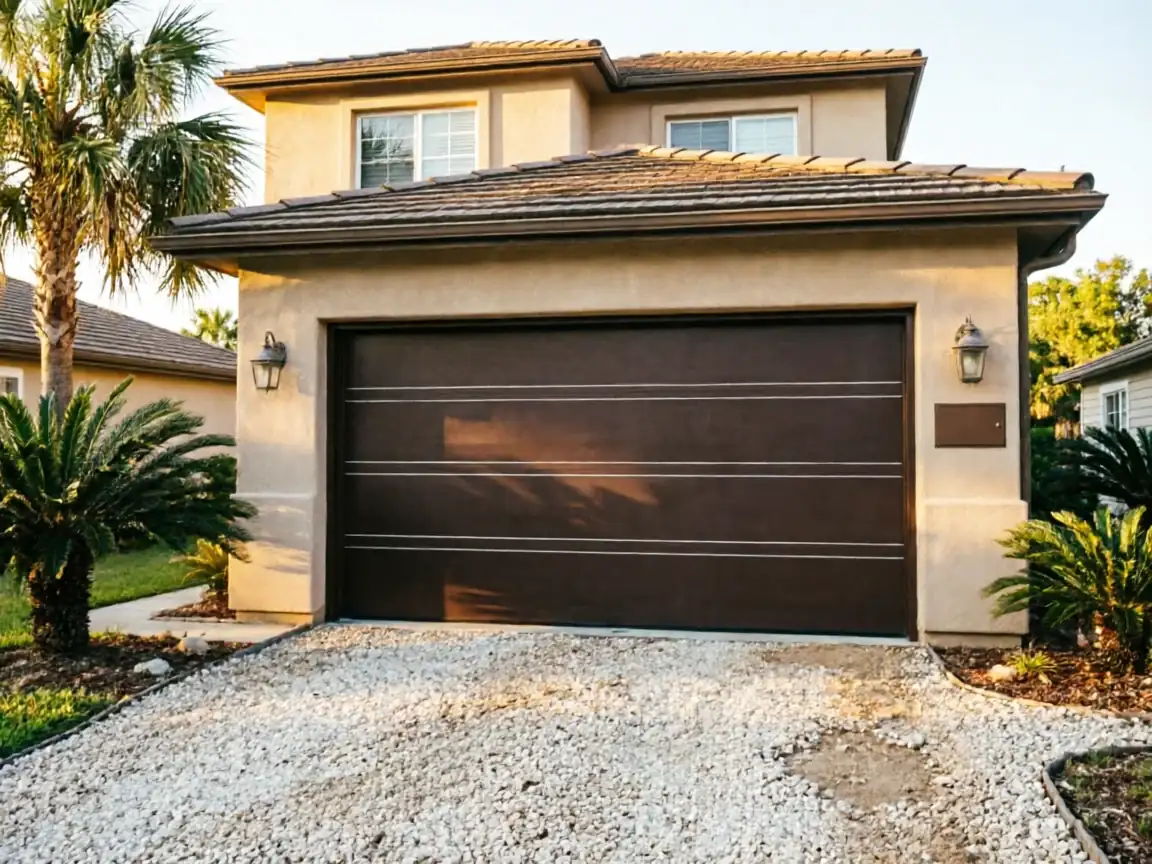
The houses themselves are a different story than most of what we see closer to Dunedin. Westchase's median year built is around 2001, two decades newer than the 1979 median across the service area, where a lot of stock dates to the 1960s and 70s. That newer construction means original torsion-spring openers and factory rollers, usually plastic or early nylon, not the older side-mounted drums we find on older doors elsewhere. Those factory rollers were built to a cost, not to last twenty-plus years of daily cycling, and twenty-plus years is about where a lot of Westchase doors are sitting now.
The mild temperate climate here doesn't help cause the wear, but it doesn't slow it down either. Rollers fail from cycle count and dried-out lubricant, not from rust or ice, so the clock just keeps running regardless of season.
The Symptom
The giveaway is noise that wasn't there before: a grinding or rattling as the door travels, usually worse at the top or bottom of the run where the roller carries more load. On a lot of these 2001-era doors, the stock rollers were plastic, and plastic doesn't fail gracefully. It cracks, flat-spots, or the roller stem wears loose in its bracket, so the door starts to wobble side to side in the track instead of running straight.
Some owners also notice the door catching or jumping slightly as it passes the point where the track bends from vertical to horizontal, that's usually the clearest sign a roller has worn down enough to bind rather than roll. If you're hearing a grind but the door still opens and closes on command, that's a roller problem, not an opener problem, and it's worth getting looked at before a cracked roller lets go mid-cycle and drops the door off the track.
Getting It Booked In
We run this job out of Dunedin
And Westchase sits about 13 miles out, farther than closer stops like Belleair or Safety Harbor, so we schedule the trip rather than treat it as a same-day drop-by. That's not a knock on the job, it's just the honest shape of the route.
- 13 miles
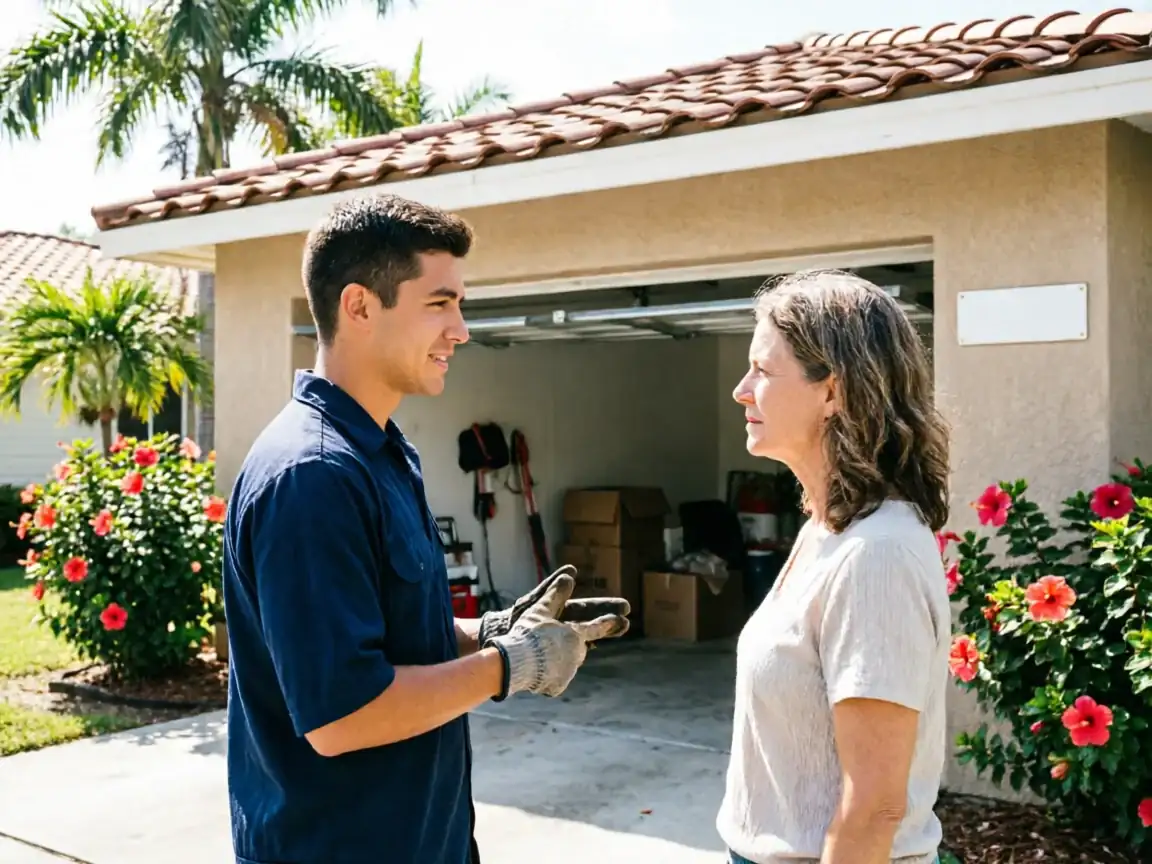
When you call, tell us what you're hearing and roughly how old the door is
Knowing the house is 2001-era stock tells us a lot before we even arrive, since it points us toward factory rollers and standard track widths rather than the older, odder hardware we sometimes run into on houses from the 60s and 70s. That lets us bring the right roller set on the first trip instead of guessing.
What the Repair Takes
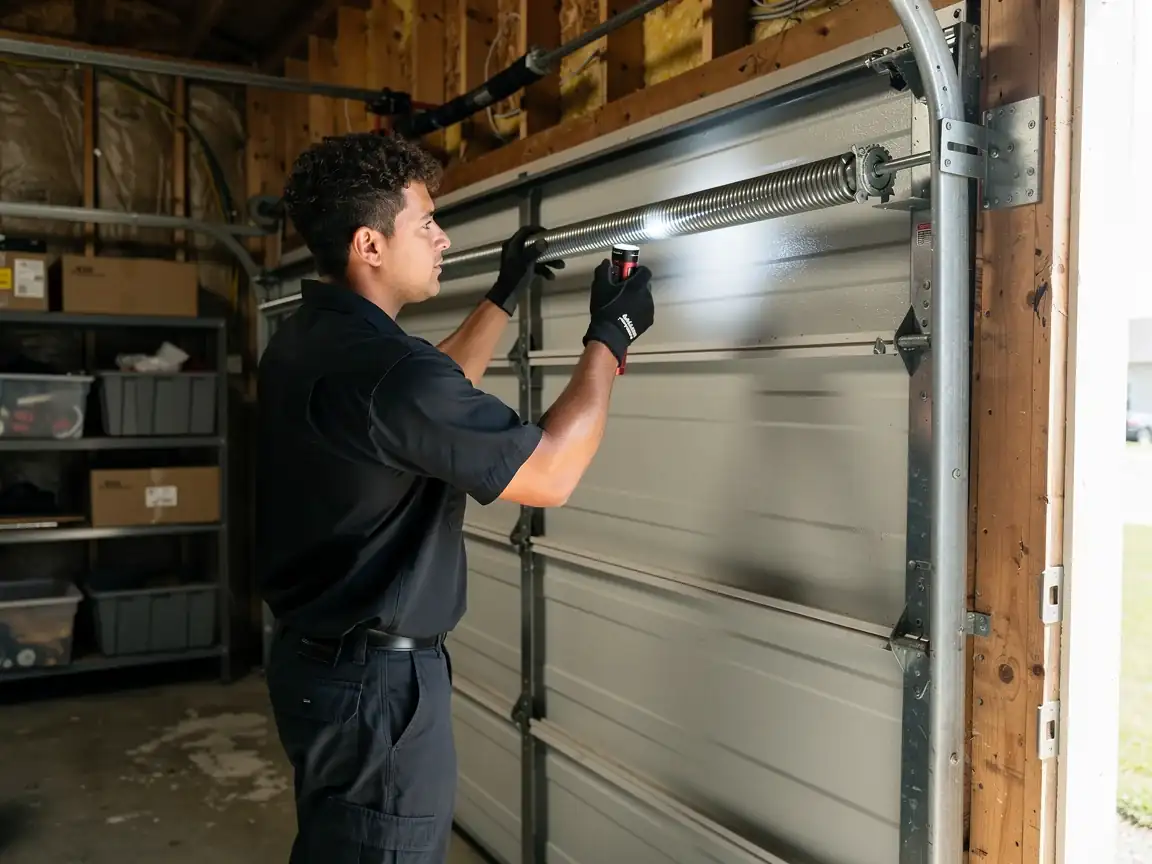
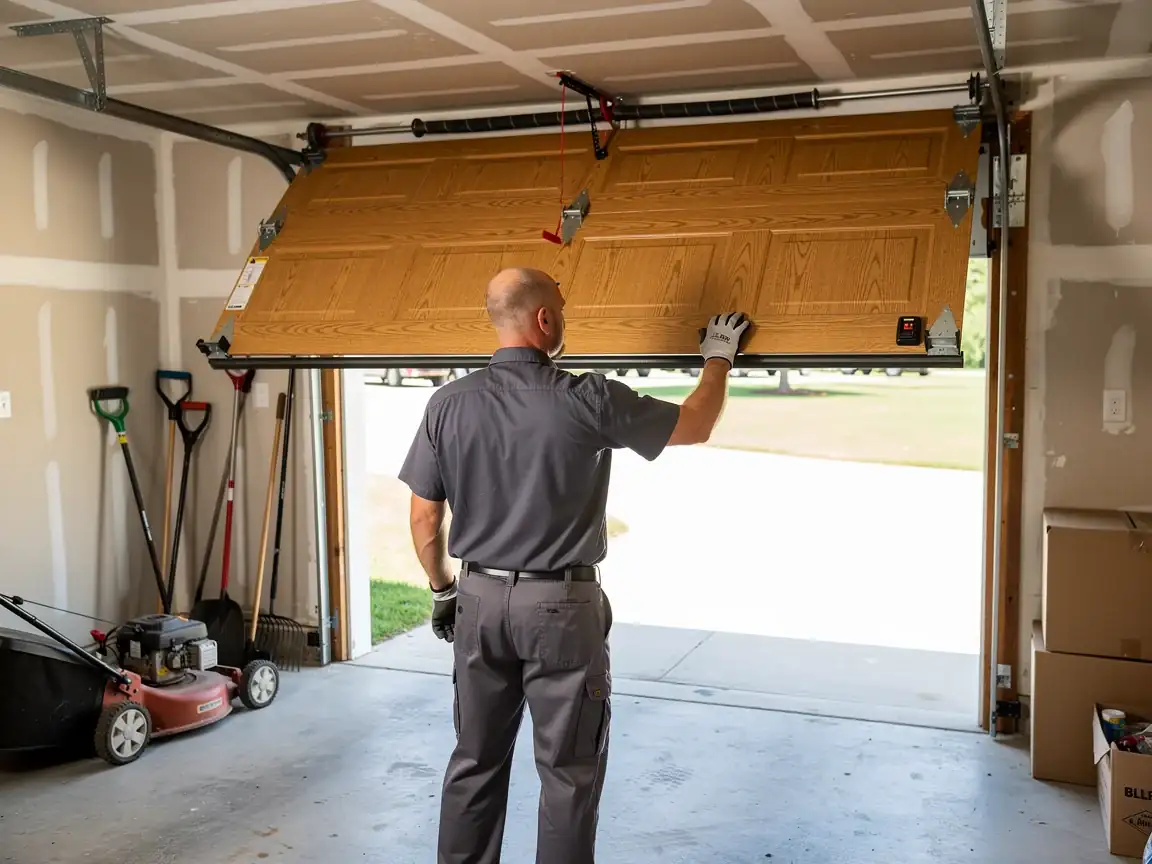
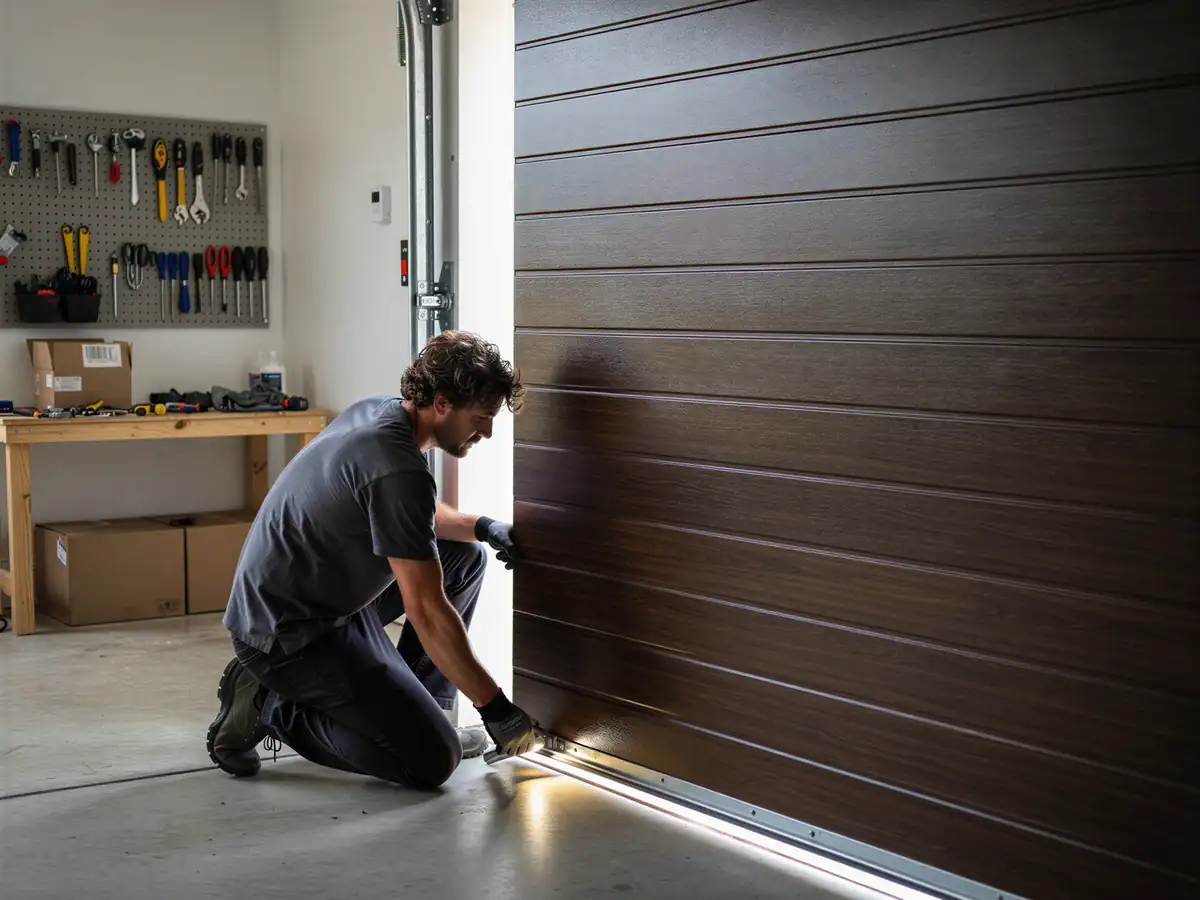
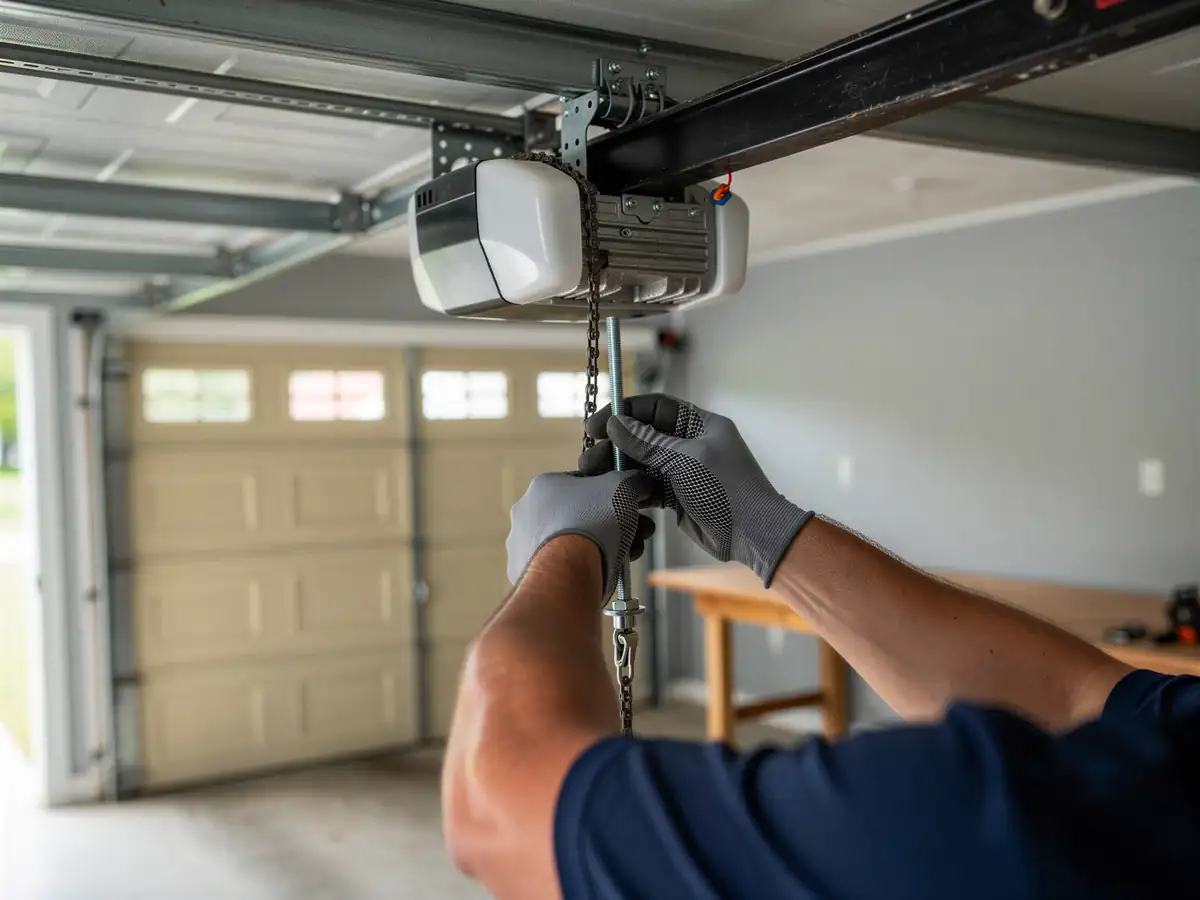
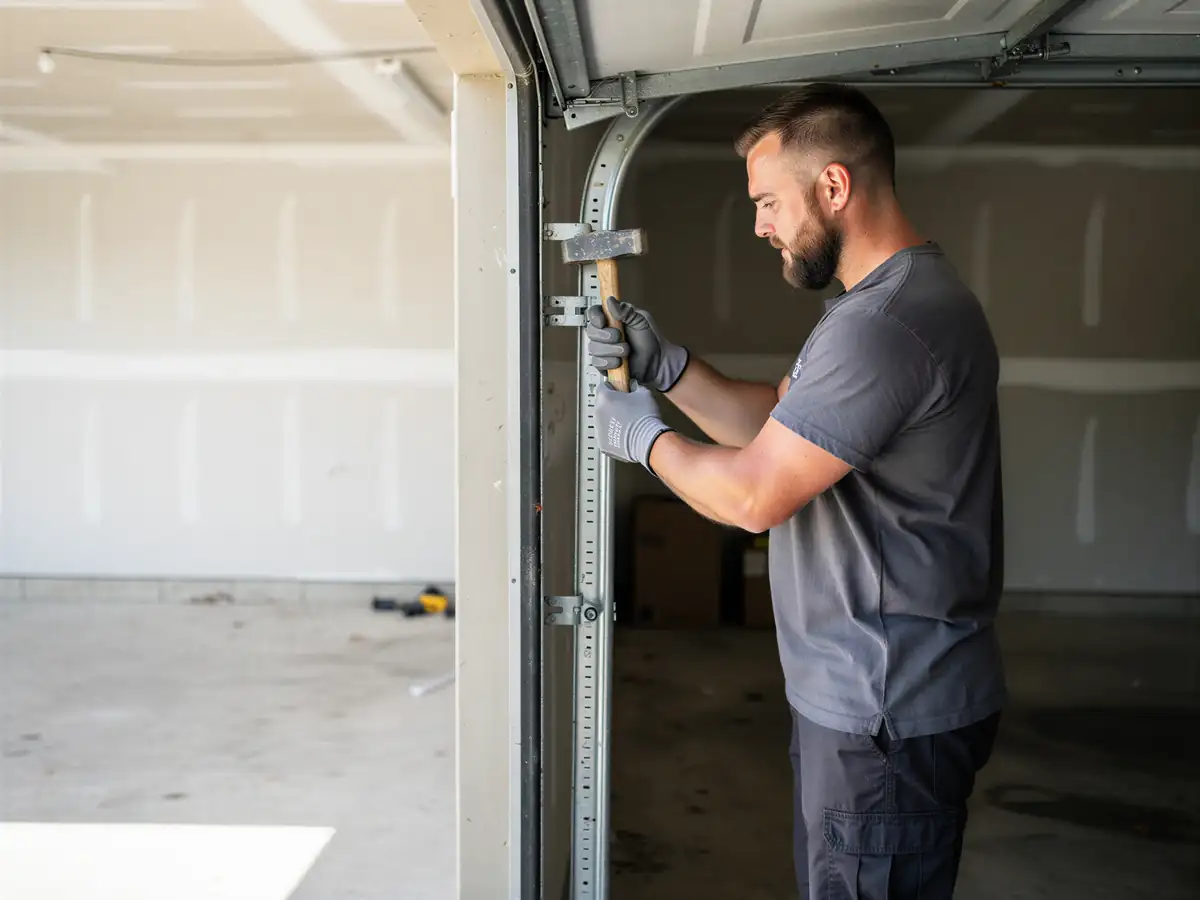
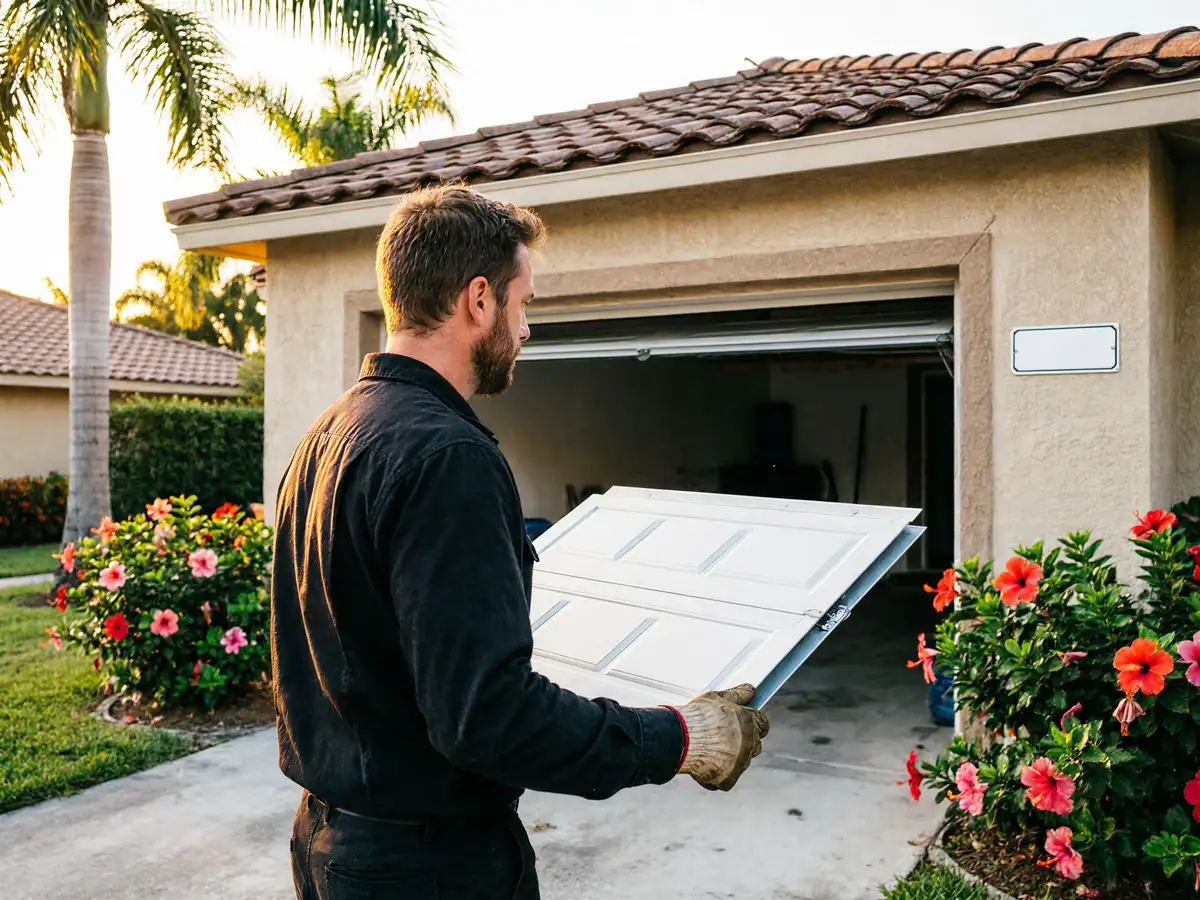
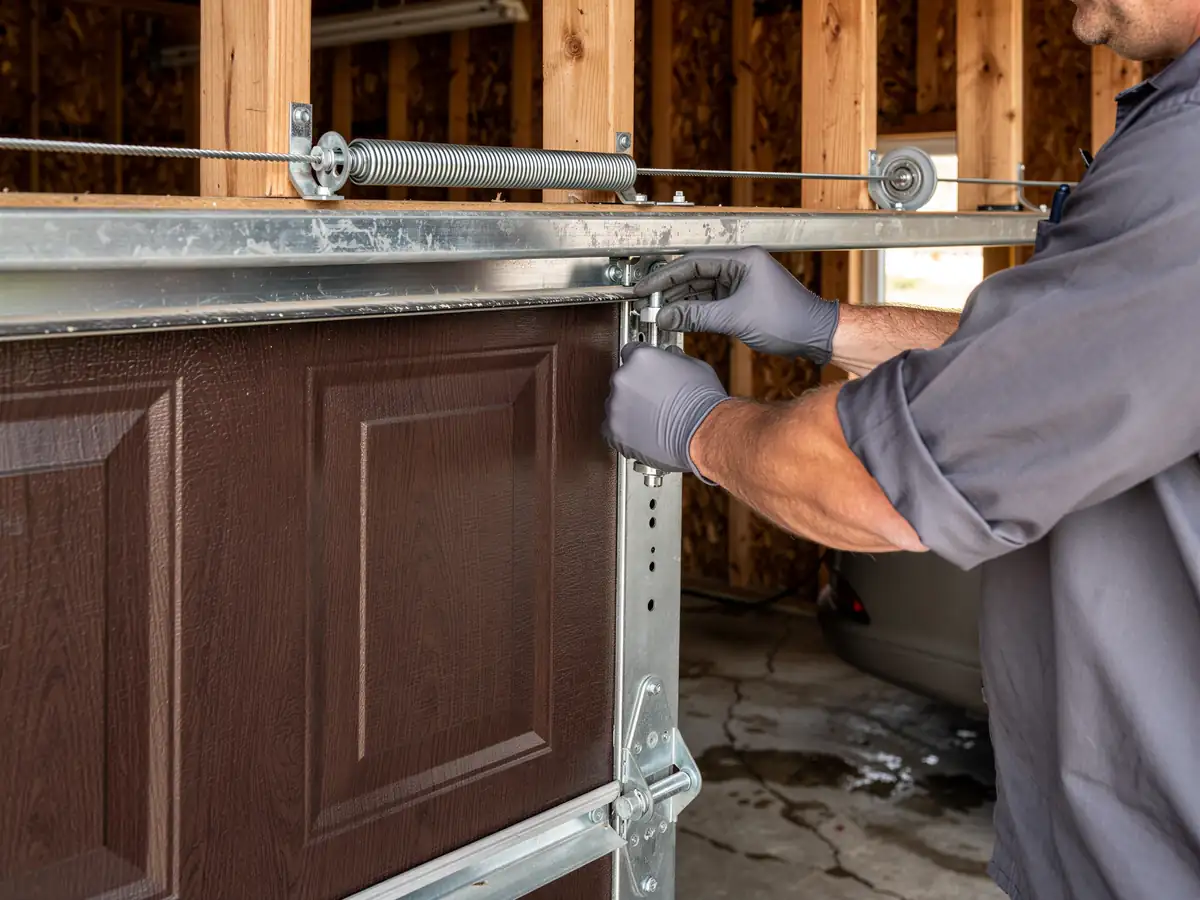
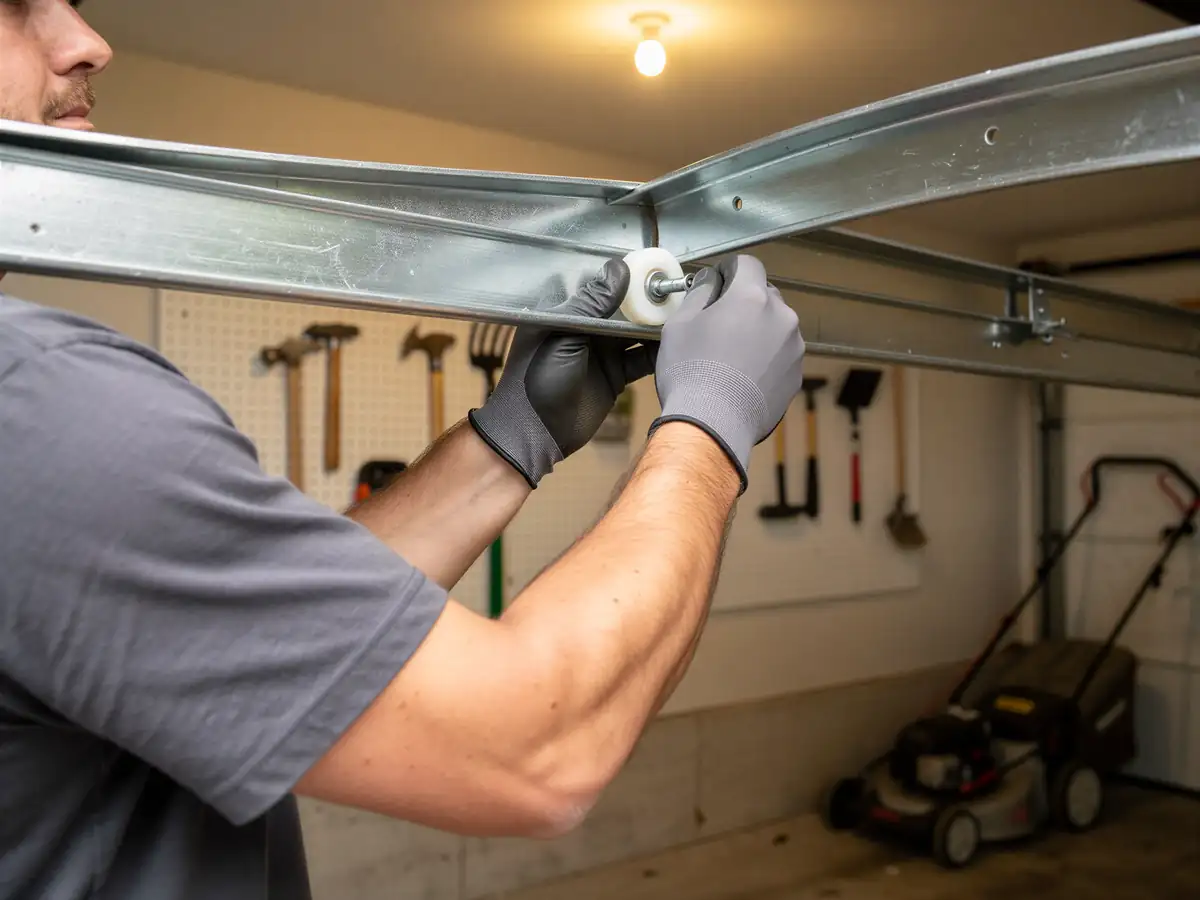
A straightforward roller swap on a double door usually means pulling the old rollers one at a time, working section by section so the door stays supported in the track, and setting new rollers to match the load rating the door actually carries. We use steel rollers with sealed bearings rather than the plastic originals, they run quieter and outlast the factory parts by a wide margin.
The honest limitation: if the track itself is bent or the roller failure has already chewed up the track channel, a roller swap alone won't fix the noise, and we'll tell you that rather than sell you rollers that won't solve the problem. On a house this age, track damage is less common than on older stock, but it does happen, usually from a car bumper or a door that's been running on a failing roller for months. If that's the case, we'll quote the track repair separately rather than bundle it in.